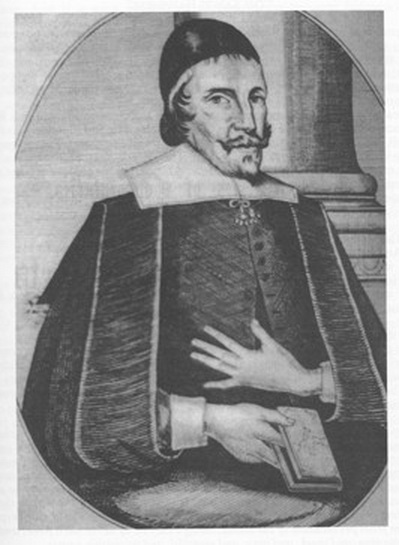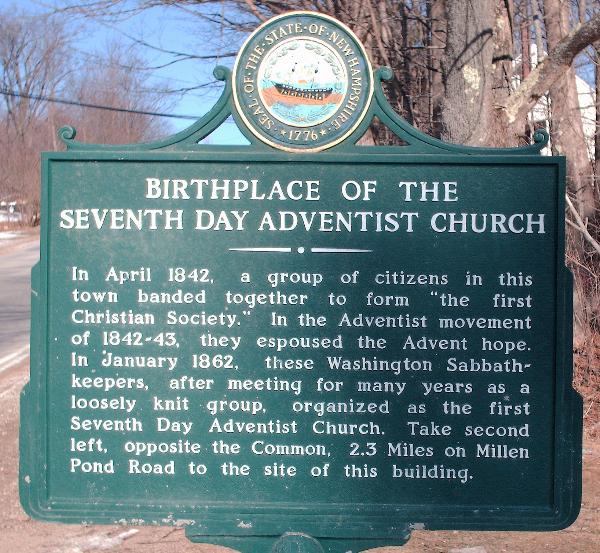
The Teachings of Seventh-day-Adventism by Dr. John H. Gerstner

Image


From retired Pastor Joe Gwynn,

A project of mine this summer has been to type four out-of-print works by the late Dr. John H. Gerstner. They are critiques of four prominent cults that ensnare thousands of unwary people. They (the booklets) are carefully footnoted and therefore can be defended with confidence. In them you will learn things (especially about their founders and history) that many of their proponents who come knocking at your door either do not know or will not admit. My purpose was to make these booklets (25-30 pages each) available for free downloading and distribution. 

They are: 
· The Teachings of Mormonism
· The Teachings of Seventh-day Adventism
· The Teachings of Christian Science
· The Teachings of Jehovah’s Witnesses

John H. Gerstner (1914–1996), M.Div. and M.Th. from Westminster Theological Seminary, and Ph.D. from Harvard University. Dr. Gerstner was Professor of Church History at Pittsburgh Theological Seminary for thirty years. After retiring, Dr. Gerstner, the favorite teacher of Dr. R.C. Sproul, was a frequent speaker at Ligonier Conferences before his death in 1996. An excellent historian and Reformed theologian, Dr. Gerstner also wrote several excellent books, including my favorite “Wrongly Dividing the Word of Truth”, an excellent critique of Dispensationalism. 

In the one true God and his Son, Jesus Christ,
Joe Gwynn 

If you want this in Word format email me.
RMS

The Teaching of

Seventh-day Adventism

John H. Gerstner

John H. Gerstner (1914–1996), M.Div. and M.Th. from Westminster Theological Seminary, and Ph.D. from Harvard University. Dr. Gerstner was Professor of Church History at Pittsburgh Theological Seminary for thirty years. After retiring, Dr. Gerstner, a favorite teacher of Dr. R.C. Sproul, was a frequent speaker at Ligonier Conferences before his death in 1996. An excellent Reformed theologian, scholar and historian, Dr. Gerstner wrote many good books.
Contents
Introduction …………………………………………………………. Page 1
1. Description and History of Seventh-day Adventism …………. Page 2
2. Doctrines of Seventh-Day Adventists …………………………. Page 11
3. Terms Frequently Used by the Seventh-day Adventists ……. Page 15
4. For Further Reading ……………………………………………………. Page 16
5. Summary of Traditional Christian Doctrines …….……….…..………… Page 18
6. Brief Definitions of the Sects ……………..…………..………………… Page 21

Introduction

The abundance of literature on various “sects” shows that there is great interest in the subject. But what is a sect? We must make our definition clear, for there is wide difference of opinion on its meaning. 

Evangelicals generally use sect when referring to those denominations which do not hold to fundamental biblical principles … especially the deity of Christ and His atonement. This booklet is written from the evangelical perspective.

The teaching of Seventh-day Adventism is designed as a ready reference booklet. It is meant to be a quick guide to the wealth of literature on this subject, and it includes a valuable table and glossary.

The general exposition in the first chapter gives an easily-grasped overview of the sect. The following chapter, “Doctrines of Seventh-day Adventists” provides the reference material which summarizes the first chapter and adds some more technical data. Chapter two contains the basic theological structure of Seventh-day Adventists stated objectively and concisely. The text itself gives a fuller exposition of some of the cardinal points outlined in the first chapter. 

Chapter three. “Terms Frequently Used by Seventh-day Adventists,” gives some of the most common terms in the vocabulary of this sect. Sects often have their own precise definitions for common religious words, and the glossary makes this immediately evident.

Chapter four, “For Further Reading,” lists both primary and secondary sources for further study of the theology and practice of the sect.

A summary of the essential teachings of traditional Christianity appears in chapter five. This summary is included to provide a basis for comparison with the doctrines of Seventh-day Adventists. This chapter is designed to be used as a frame of reference.

To make the theologies of different sects clearer, their teachings have been summarized in the “Chart of Comparative Doctrines” at the end of chapter six. This tabular outline classifies the doctrines of Seventh-Day Adventists, and continuing with the teachings of Jehovah’s Witnesses, Mormons, and Christian Scientists, this chart allows the reader to see at a glance the position of each group on various Christian doctrines.

1. Description and History of Seventh-day Adventism*

In the mid-nineteenth century, feelings that men were experiencing the Last Days were rife:

This was the grand clue – of the seventy weeks as the first segment of the 2,300 years, cut off for the Jews and climaxing with the Messiah – that burst simultaneously upon the minds of men in Europe and America, and even to Asia and Africa. This was the great advance truth that led to the emphasis upon the 2,300 years from 457 B.C. to A.D. 1843 or 1844 which we have surveyed. Clearer and clearer became the perception in the first four decades of the nineteenth century, until it reached its peak in America in the summer and autumn of 1844, contemporaneously with the predicted time of the prophecy.[1]

This is the historical setting which the outstanding Adventist scholar, Leroy Froom, in his massive and erudite volumes of The Prophetic Faith of Our Fathers, finds for the work of William Miller, whom he seems to regard as the first of the Adventists. Sears in Days of Delusion, Minnigerode in The Fabulous Forties, and others also seemed award of the fact that “in no other period in American history were ‘the last days’ felt to be so imminent as in that between 1820 and 1845”[2] Froom’s work shows us that this phenomenon was by no means restricted to this continent. 

William Miller

It was on the crest of this eschatological wave that William Miller was borne, and in its trough Seventh-day Adventism followed. Miller was born in Pittsfield, Massachusetts, on February 15, 1782. A reputable farmer, good soldier, and captain in the War of 1812, and apparently an outstanding citizen, he did not become famous until religious vicissitudes led him to a closer study of the Scriptures. At first, he was a rather typical, earnest member of the local Baptist church, but some skeptical friends of his eventually swept him into a frigid deism. After he had found his religious faith again, he applied himself much more earnestly to the study of the Bible. (Some would say that he applied himself too earnestly.) This pious farmer utilized every spare moment for sixteen years with his Bible and his concordance. Still, it is understandable that such a person, being unprotected by the corrective of church tradition, might very well fall into some naïve and extreme notions. Miller showed admirable restraint when, feeling that he had made a great discovery of the very imminent return of his Lord, he was able to say:
My great fear was, that in their joy at the hope of a glorious inheritance soon to be revealed, they would receive the doctrine without sufficiently examining the Scriptures in demonstration of its truth. I therefore feared to present it, lest by some possibility I should be in error, and be the means of misleading any.[3]

Still, one wonders why this untrained farmer did not hesitate to take the platform and announce to the world with bold certainty the outcome of his calculations about obscure prophetic predictions. As William Biederwolf said, “We was as ignorant of Hebrew as a Hottentot is of the Klondike.[4] That fact could have given him some reason for holding back from ex cathedra deliverances about the meaning of the 2300 days that are not supposed to be days and the seventy weeks that are not weeks. But after being asked to speak at a little church in Dresden, and there to continue for a week of services, it was not long before Miller was writing to his friend, Hendrys, “I devote my whole time, lecturing.”

The Growth of Adventism

By 1840 Adventism was becoming a significant religious movement. It was in that year that the influential Adventist periodical, The Signs of the Times, made its appearance to spread the imminency message far and wide. But more important still, the number of preachers and lecturers of the rousing message that Christ was due in 1843 had so increased that they quite naturally began a loose organization – always the first step toward a new sect. On October 13, 1840, a conference was held at the Reverend Joshua V. Hines’ Chardon Street Chapel, Boston. Great camp meetings began to characterize the ever-widening reach of the Adventist push. 

Finally, the great year of Millerite expectation, March 21, 1842 to March 21, 1843, came and went, but Christ was nowhere to be seen. Miller waited in vain – a disappointed man aware that he had made a mistake but was incapable of finding it. Six weeks later he wrote to his disillusioned followers:

Were I to live my life over again, with the same evidence that I then had, to be honest with God and man I should have to do as I have done. Although opposers said it would not come, they produced no weighty arguments. It was evidently guesswork with them; and I then thought, and do now, that their denial was based more on an unwillingness for the Lord to come than on any arguments leading to such a conclusion. [This was a most uncharitable remark, for many of these critics were lovers of the Lord and His glorious appearing who simply did not expect Him in 1843.] I confess my error, and acknowledge my disappointment: yet I still believe that the day of the Lord is near, even at the door; and I exhort you, my brethren, to be watchful, and not let that day come upon you unaware.[5]

Millerite hopes were now down but not out. 1844 dragged on flatly. Meetings went on flatly. At Exeter, New Hampshire, on August 12th, a camp meeting was dragging on when, rather suddenly, as if driven by the silent demand of a grieving multitude, one of the brothers announced that the return of Christ would be in the seventh month of the current Jewish year. The proposal caught on. The fading hopes lived again. A fixed date was set and once again, more fervently than ever before, the Millerites set out to warn the world; only this time Miller was to catch the fire rather than start it. October 22: The end of the world!

In then weeks the great day was at hand. In a Philadelphia store window the following sign was displayed: “This shop is closed in honor of the King of kings, who will appear about the 20th of October. Get ready, friends, to crown Him Lord of all.”[6] A group of two hundred left the city, just as Lot had left Sodom before impending doom. Most of the Millerites gave up their occupations during the last days; farmers left their crops in the fields. But the usual meetings in which believers gathered were surprisingly orderly and free of fanaticism. The sober Adventist research reveals that the stories of the Millerites climbing up mountains and poles and clothing themselves in white ascension robes were tall tales; the charges of Adventist insanity are reversed by sober, critical investigation.[7] Be all this as it may, the excitement was naturally very great and the second disappointment shattering. 

But hope seemed to spring eternal among the Adventists. Their basic Christian faith would not be crushed. And though they were no longer adjusting their timetable for the Lord’s return, they did keep their Adventist hope alive. On April 29, 1845, they assembled at Albany to take inventory of their hopes and state their faith. This meeting held them together.

Five years after Christ did not come to Miller, Miller went to be with Christ. “At the time appointed,” his tombstone at Low Hampton reads, “the end shall be.” 

Mrs. Ellen G. White

Miller was succeeded in the leadership of the Adventist movement by a person who was in every respect different from him. One obvious difference was that she was a woman – Mrs. Ellen G. White. She was a visionary where Miller had been a rather sober student. Miller always attempted to ground his witness on his exposition of the Bible, but Mrs. White went beyond the Bible with her numerous “revelations.” When Miller was mistaken he admitted it, but Mrs. White denied any error. While Miller was frankly disappointed, Mrs. White turned defeat into victory by reinterpretation.

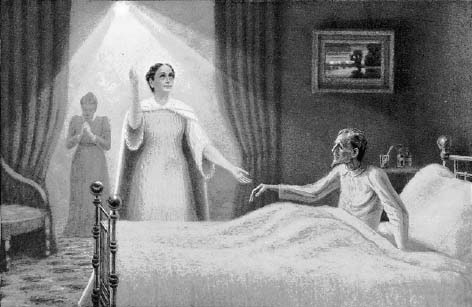
Her very first vision was the cue: in 1844, right after the grand disillusionment, Mrs. White “saw” the Adventists marching straight to heaven. Mrs. White had a job for life as seer, and the Adventists had new assurance. Until her death in 1915, she was the outstanding Adventist leader. And, judging from Jan Van Baalen’s remark, though her teachings sometimes caused embarrassment, she still holds sway:

… it will not do for officials of this church to invite the present writer to forget about Mrs. White and to read current S.D.A. publications, while these same current publications state, “For her emphasis of Bible truth, for her application of specific doctrines, for her simplification of the deep things of God … the S.D.A. denomination and the world in general owe a great debt to Ellen G. White.”[8]

The Theology of Seventh-day Adventists

There is every indication that Seventh-day Adventism holds many of the catholic Christian doctrines. Miller, for example, 1n 1822 wrote a brief creed. As Francis Nichol says, “Any Calvinistic Baptist would probably subscribe to all except one of them, with scarcely a change of a word. In fact, if we eliminate from his creed Calvin’s dour doctrine of predestination, and the Baptist statement on the mode of baptism, virtually all conservative Protestant bodies would subscribe to the views set down”[9] Later Seventh-day Adventists have done very little to alter these views: they have merely modified Miller somewhat, held to the general Arminian system, and added several distinctive positions (especially pertaining to the atonement, the Sabbath, and the future). 

The Adventists accept the inspiration and authority of the Bible. Unfortunately, they also accept the inspiration and authority of Mrs. Ellen G. White. As a matter of fact, it seems highly doubtful that the Seventh-day Adventists would ever have come into existence but for the notion that in 1844 Christ entered into the heavenly sanctuary and they could never have become sure of such an idea without the visions of Mrs. White. The Adventists held their prophetress in high esteem. Biederwolf, however, was not so impressed by her abilities as a seeress. He lists a long number of unfulfilled visions, such as the following:

In one of her visions her accompanying angels told her that the time of salvation for all sinners ended in 1844. She now claims the door of mercy is still open.

In another vision she discovered that women should wear short dresses with pants and she and her sister followers dressed this way for eight years. But the ridiculous custom has now been abandoned … [10]

It is not in the realm of theology that Adventism deviates so greatly from the catholic Christian tradition, nor with respect to the person of Christ, but in its view of the atonement. “ ‘We dissent,’ they say, ‘from the view that the atonement was made upon the cross as is generally held.’ ”[11] The atonement was begun then but it was not ended then. For, “by a life of perfect obedience and by His sacrificial death, He satisfied divine justice, and made provision for atonement for the sins of men …”[12] Christ’s work as an atoning priest, according to Adventists, is not yet complete. He has yet to make the great atonement for sins. The formal blotting out of sins is still in the future. What delays Him? What is He doing now? In 1844 He entered the heavenly sanctuary and presumably is still there. He will complete the atonement when He comes out of the sanctuary and lays the sins of His people on Satan, who, like ancient Azazel, bears them away forever. 
Adventists hold to a rigorous system of sanctification in which a strict conformity to divine commands is appropriately enjoined. Characteristic of the group is an Old Testament legal favor to their laws. This is undoubtedly an outgrowth of their vigorous defense of the Jewish Saturday as the continuing Christian Sabbath. In their eagerness to show that the lay is still binding, there is proportionately high regard for other Old Testament laws (generally thought by other Christians to be abrogated). 

The following reasons refute the Adventist insistence on the perpetual obligation to observe the Lord’s Day on Saturday. First, although the Sabbath Day is perpetually binding as a part of the moral law, it does not follow that ancient legal features of that day are likewise necessarily binding – certainly not if there is evidence that they have been altered by later revelation. The particular day of the week is surely unimportant. A seventh day may be essential, but which seventh day could not possibly be essential. Just as Saturday could not have originally been most appropriate as symbols of the day of rest after creation, so Sunday became most appropriate as the day of rest after redemption. The Hebrew word for “Sabbath” means “rest,” not “Saturday.” Saturday was shown to be the intended Sabbath, when god gave a double portion of manna on the preceding day. In the new dispensation Sunday was shown to be the intended Sabbath when God raised His Son on that day.

Second, the New Testament does indicate that just such a change was made. Christ arose on Sunday, appeared on Sunday, the disciples assembled on Sunday, offerings were made on Sunday, and John was in the Spirit on Sunday.

The third reason grows out of the second and serves as a distinct confirmation of it. The practice of the early church revealed an early observation of Sunday as the new Sabbath, although the old Sabbath was observed when the church was still a part of Israel. Biederwolf has conveniently gathered the statements from the early Fathers:

The Epistle of Barnabus (A.D. 100) says, “Wherefore also we keep the eighth day with joyfulness, the day on which Jesus rose from the dead.” 

The Epistles of Ignatius (A.D. 107), a pupil of the apostles, whose writings were recommended by Polycarp, a friend of St. John’s, says, “And after the observance of the Sabbath, let every friend of Christ keep the Lord’s day as a festival, the resurrection day, the queen and chief of all days.”

Also from Ignatius: “Those who were concerned with old things have come to newness of confidence, no longer keeping sabbaths, but living according to the Lord’s day, on which our life as risen again through Him depends.” 

In the Writings of Justin Martyr (A.D. 145), it is said, “But Sunday is the day on which we all hold our communion assembly, because it is the first day of the week and Jesus Christ our Saviour on the same day rose from the dead.” 

For some time Jewish Christians continued to keep both the Sabbath and Sunday, but such were accommodated as weaker brothers. According to Justin Martyr in his Dialogue with Trypho, chapter 47: “But if some through weakmindedness, wish to observe such institutions as were given by Moses, along with their hope in Christ, yet choose to live with the Christians and the faithful, as I have said before, not inducing them either to be circumcised, like themselves, or to keep the Sabbath, or to observe any other such ceremonies, then I hold that we ought to join ourselves to such, and associate with them in all things as kinsmen and brethren.” 

Apostolic Constitutions (Second Century): “On the day of the resurrection of the Lord, that is, the Lord’s day, assemble yourselves together without fail, giving thanks to God and praising Him for those mercies bestowed upon you through Christ.” 

Dionysius of Corinth (A.D. 170), in an epistle to the Church of Rome, wrote: “Today we kept the Lord’s holy day in which we read your letter.” 

Melito of Sardis (A.D. 175) wrote a treatise on “The Lord’s Day.” 

Irenaeus (A.D. 160-200) says: “The mystery of the Lord’s resurrection may not be celebrated on any other day than the Lord’s Day and on this alone should we observe the breaking of the Paschal Feast.” 

Clement of Alexandria (A.D. 174) wrote: “The old seventh day has become nothing more than a working day.” 

Bardesanes (A.D. 180) says in his book of The Laws of Countries: “On one day, the first of the week, as we assemble ourselves together.” 

Tertullian (A.D. 200) says in his Apologeticus: “In the same way we devote Sunday to rejoicing, from a far different reason than sun-worship, we have some resemblance of to some of you ‘The Jews’, who devote the day of Saturn (Saturday) to ease and luxury.” In another of his works he wrote: “He who argues for Sabbath keeping and circumcision must show that Adam and Abel and the just of old times observed these things … We observe the day of the Lord’s resurrection laying aside our worldly business.” 

Origen (A.D. 185-255) says: “John the Baptist was born to make ready a people for the Lord, a people fit for Him at the end of the Covenant now grown old, which is the end of the Sabbath.” He further wrote, “It is one of the marks of a perfect Christian to keep the Lord’s day.” 

Victorianus (A.D. 300) says: “On the Lord’s day we go forth to our bread with the giving of thanks. Lest we should appear to observe any Sabbath with the Jews, which Christ himself the Lord of the Sabbath in his body abolished” (On the Creation of the World, section 14). 

Peter, Bishop of Alexandria (A.D. 306), says: “But the Lord’s day we celebrate as the day of joy because on it He rose again.” 

Eusebius (A.D. 324) of the Ebionites says: “They also observed the Sabbath and other discipline of the Jews just like them, but on the other hand, they also celebrate the Lord’s day very much like us.” (Ecclesiastical History, pages 112f.).

A fourth argument is the inherently inconsistent position of the Adventists on the Saturday Sabbath. For one thing, they are obliged to abandon some of the strict Jewish regulations, such as the one forbidding the picking up of sticks to make a fire. Unfortunately, some Adventists actually regard all who observe Sunday as having received the mark of the beast.[13] They say that “evangelical churches that do not observe the seventh day are the ‘false church’ …”[14] The United States government becomes a dragon when it makes Sabbath laws; the Adventists work earnestly against laws that protect the American Sunday.[15] One evangelist goes so far as to make refusal to observe Saturday the “unpardonable sin.”[16]

This defensive spirit developed early in the movement when it was found that most of the evangelical churches were not sympathetic to the Millerite expectation. First, Fitch told Adventists of their obligation to come out of other churches, Protestant no less than Romanist.[17] This sentiment spread rapidly. But Miller himself was able to say as late as 1844: “ ‘I have not advised anyone to separate from the churches to which they may have belonged, unless their brethren cast them out, or deny them religious privileges … I have never designed to make a new sect …’ “[18] Joshua Himes came over to the separatist viewpoint finally, but Miller held out, though rather silently, to the end. Present-day Adventism requires would-be members to confess that the “Seventh-day Adventist Church is ‘the remnant church’ “[19] This remnant and only true church (as they say) practices baptism by immersion, observes the Lord’s Supper, and follows a congregational organization. 

Unquestionably, the outstanding distinctive of the Adventist church is its eschatology. Its doctrine of the intermediate state – soul sleep – it shares with some other sects. (“The state to which we are reduced by death is one of silence, inactivity and entire unconsciousness.”[20]) But, its doctrine of the Second Coming is uniquely its own. After Miller was disappointed in 1843 and again in 1844, one of the Adventists, Hiram Edson, claimed a vision of Christ entering the heavenly sanctuary. So Christ had returned – only not to earth, but to heaven. Mrs. White later gave this vision her imprimatur and filled out the various details.
How did the Adventists conclude that Christ would return in 1844? Basically they accepted Miller’s calculations. Miller reasoned this way: Daniel 8:14 says that the sanctuary would be restored in “two thousand and three hundred days.” Miller believed that a prophetic day equals one year. So he calculated that it was two thousand and three hundred years before the sanctuary was to be cleansed by Christ’s return. But what was the date from which we are to calculate? Miller saw that there was the seventy weeks’ passage in Daniel 9. He figured this meant seventy weeks of years; that is, seventy times seven years or four hundred ninety years, Four hundred ninety years, the prophecy said, until the Messiah be cut off. When was Christ cut off? A.D. 33. Four hundred ninety years earlier brought us to the date of 457 B.C., and that was the date of the determination of the decree allowing Ezra to return. Now add to this date the twenty-three hundred years of Daniel 8:14. The result is 1843. 

History has demonstrated conclusively that Miller was wrong. And Miller was wise enough to admit it, although he could detect no error in his calculations. But when Edson revealed that “the sanctuary to be cleansed is heaven,” and Crozier found him a proof text in Hebrews 8:1-1, Mrs. White canonized the discovery.[21] It does behoove us, however, since history must needs be silent on such a claim, to investigate whether this fanciful rendering is made out of a whole cloth like the alleged ascension robes of the Adventists. 

First, then, let us note what Hebrews 8:1-2 has to say: “ … we have such a high priest, one who is seated at the right hand of the throne of the Majesty in heaven, a minister in the sanctuary and the true tent which is set up not by man but by the Lord.” It does surely indicate that there is a heavenly sanctuary, and that Christ is its priest. But it also indicates that He has already sat down (presumably, having completed His work of atonement). It is clearly taught in Scripture that Christ cried out on the cross, “It is finished”; that the veil separating the Holy Place from the Holy of Holies tore from top to bottom (indicating that Christ made possible a new way of access to the throne of God): and that Jesus fulfilled all the Old Testament prophecies and types of atonement, making further sacrifices unnecessary. Had the Adventists not been driven to despair and disappointment, they probably would not have denied all these things.

According to Adventists, now that Christ has entered the heavenly sanctuary, He makes an “investigative judgment,” to use Mrs. White’s term; that is, He investigates the professed believers to see who are really in the faith. When this is completed, He will return to the world. At His return, the righteous who are living will be translated to heaven, and the righteous dead will be resurrected and taken to the same place. There they will spend the millennium – and not on the earth. The earth will be desolate during the whole period. But, meanwhile, the punishment of the wicked will be determined. After this unique millennium, Christ will return to the earth with the righteous “where eternity will be spent.”[22] Satan and the wicked will be annihilated.

2. Doctrines of the Seventh-day Adventists

Doctrine of the Bible

The Bible is inspired, but not verbally and infallibly so. The prophetess, Mrs. Ellen G. White, apparently regarded her interpretations on a par with the Bible. “When I send you a testimony of warning and reproof, many of you declare it to be merely the opinion of Sister White. You have already insulted the Spirit of God (Ellen G. White, Testimonies, Vol. V, pp. 661, 664). The Seventh-day Adventists have acknowledged her authority and continue to maintain it today, as this official statement of the General Conference reported in the “Seventh-Day Journal, The Advent Review and Herald, shows: “Seventh-Day Adventists hold that Ellen G. White performed the work of a true prophet during the seventy years of her public ministry … as Samuel was a prophet … As Jeremiah was a prophet … as John the Baptist …, so we believe that Mrs. White was a prophet to the Church of Christ today” (October 4, 1928). Such a statement places Mrs. White in the category with the recognized inspired agents of the Bible; the following does the same by condemning a person who accepted some parts of her testimonies and not others with these words: “This is precisely the attitude taken by the ‘higher critics’ toward the Bible. They single out certain parts of the Bible and assert that these are not inspired. But no more subtle nor effective method can be employed than this to break down all faith in all inspired writings … The Ellen G. White books are a tower of spiritual power … a guiding light to the Adventist people” (The Advent Review and Herald, April 4, 1957). T. E. Rabok summarized the whole matter: “The Bible is not verbally inspired; and neither are the writings of Ellen G. White (BHP, p. 194) – yet both are inspired. The Articles of Faith affirm the Bible to be the “unerring rule of faith and practice” (1957 Yearbook, p. 4, italics mine).

Doctrine of God

God is tri-personal and His essential attribute is love. “It is the supreme revelation between Himself and all created life – yes, the supreme revelation between the Persons of the ever-blessed Trinity” (A. S. Maxwell, Your Friends the Adventists, p. 18). Only God is immortal, according to the Adventists (Ochat, TB, p. 42). 

Doctrine of Man

The Seventh-day Adventists differ very little from most Protestant churches in their teaching concerning the nature of man. This is clear from the official statement: “Mortal man possesses a nature inherently sinful and dying. Eternal life is the gift of God through faith in Christ” (1957 Yearbook, p. 4). Nevertheless, one writer (Ochat) says: “If man had never sinned, he would have lived eternally.” This seems in keeping with Mrs. White’s conception that “his [man’s] nature was in harmony with the will of God. His mind was capable of comprehending divine things. His affections were pure; his appetites and passions were under the control of reason. He was holy and happy in bearing the image of God, and in perfect obedience to his will” (Patriarchs and Prophets, p. 45). She goes further, saying “So long as they [Adam and Eve] remained loyal to the divine law, their capacity to know, to enjoy, to love, would continually increase” (ibid., p. 51). The first parents had “no bias toward evil” (p. 49), but nevertheless they did have a “desire for self-indulgence, the fatal passion” (p. 48). Man’s very freedom required his ability to transgress God’s commands and this he did. Though Adam was holy and growing in holiness, still “it was possible [italics mine] for Adam before the fall, to form a righteous character …” (Ellen G. White, Steps to Christ, p. 65).

Doctrine of Sin

A clear definition of the imputation of Adam’s guilt is not to be found in Seventh-day Adventist teaching. Mrs. White says that Adam could have formed a righteous character, “But he failed to do this, and because of his sin our natures are fallen, and we cannot make ourselves righteous” (SC, p. 65). “The unaided human will has no real power to resist and overcome evil” (Ellen G. White, Ministry of Healing, p. 429). There is apparently an exception in the case of unbelief, for belief may and must precede regeneration. This implies fallen man’s ability to believe. 

Doctrine of Christ

“Jesus Christ is very God, being of the same nature and essence as the Eternal Father (1957 Yearbook, p. 4). Deviating from Christian orthodoxy, the Adventists teach that Christ took a polluted human nature: “In His humanity Christ partook of our sinful fallen nature. If not, then He was not ‘made like unto His brethren,’ was not ‘in all points tempted like we are,’ did not overcome as we have to overcome, and is not therefore, the complete and perfect Saviour man needs and must have to be saved” (Bible Readings for the Home Circle, 1915 ed., p. 115). Our Saviour took humanity, with all its liabilities. He took the nature of man, with the possibility of yielding to temptation” (Ellen G. White, The Desire of Ages, p. 117). Some writers believe that the Adventists no longer hold this doctrine of the Incarnation. Their latest official statement neither affirms nor denies it: “While retaining His divine nature He took upon Himself the nature of the human family, lived on earth as a man, exemplified in His life as our Example the principles of righteousness …” (1957 Yearbook, p. 4). The handling of the classical text on this point, Hebrews 4:15, in the Seventh-day Adventist Bible Commentary is significant. With reference to Christ’s being tempted “in all points,” the Commentary says: “In some mysterious way that we can not understand, our Lord experienced the full weight of every conceivable temptation the ‘prince of this world’ (John 12:31) could press upon Him, but without in the least degree, even by a thought, responding to any of them.” Christ’s being “without sin” is explained thus: “Herein lies the unfathomable mystery of the perfect life of our Saviour. For the first time human nature was led to victory over its natural tendency to sin.” This last statement assumes that Christ possessed a “natural tendency to sin,” which He conquered. 

Doctrine of Redemption

Though God is just, He has mercifully provided a way of salvation through Christ. All have an opportunity to be saved. Those who reject Christ are not damned but annihilated. Those who do believe receive the greater benefit of reconciliation. The Adventist theory of the atonement is as follows: (1) Christ who lived “in blameless obedience to His own eternal law of righteousness offered up a complete, perfect, and all-sufficient sacrifice for the sins of men” (A. S. Maxwell, Your Friends the Adventists, p. 19). This was not the atonement, however, for, say the Adventists, “we dissent from the view that the atonement was made upon the cross” (Fundamental Principles, p. 2). (2) In 1844, “attended by heavenly angels, our great High Priest enters the Holy of Holies … to there make an atonement for all who are shown to be entitled to his benefits” (Ellen G. White, The Great Controversy, p. 308). This is Mrs. White’s reference to the “investigative judgment” which Christ is thought to have made in the Holy of Holies in heaven. (3) “Before He [Christ] takes His throne as King, He will make the great atonement … and their sins will be blotted out” (FP). The completion of the atonement comes when Christ, emerging from the Holy of Holies, lays the sins of those who have been found to be true believers upon Azazel (or Satan), who carries away the sins of the world into the wilderness. 

The Seventh-day Adventists (who are not especially articulate on this point) consider justification to be an infused, rather than imputed, righteousness. As Mayer observes, “Faith takes hold of Christ’s divine power, inducting the believing into the covenant relationship where the Law of God is written on his heart, and through the enabling power of the indwelling Christ his life is brought into conformity with the divine precepts” (Religious Bodies of America, p. 435). Though often charged with legalism, the Seventh-day Adventists insist that salvation is by faith in Christ and not based on the works of the law, though those are always present. They attempt to avoid both antinomianism and legalism.

With the power of Christ within, the Seventh-day Adventist is to work out his own sanctification by strict conformity to the law of God. The law as given in the Old Testament remains largely unchanged for the Adventist. He believes that the sixth commandment requires abstinence from war, tobacco, alcohol, and other detrimental social or personal practices. “The Seventh-day Adventists make the use of intoxicants and tobacco in any form the ground for exclusion from church fellowship” (R. S. Howells, His Many Mansions, p. 36). By far the greatest concern is with the fourth commandment. “Sabbath” in the commandment is taken to mean Saturday rather than the day of rest. It is therefore taught that the holy day could never be changed to another day in the week without overthrowing the fourth commandment. Saturday Sabbath was founded at the creation and Adam’s fall was caused by his violation of it, according to some Adventist interpretations of Hosea 6:7. This command is the center of the whole law. “in support of this assertion they say that of 497 words which make the Decalog in the English form (AV) the word ‘is’ of the Sabbath Commandment (‘This is the Sabbath of the Lord’) is the 249th word, or exactly in the center of the Decalog” (Carlyle B. Haynes, The Christian Sabbath, p. 34). Sunday observance is the mark of the beast referred to in Revelation 16:2, which mark is on the harlot of Babylon, according to Revelation 14 (cf. White, The Great Controversy, 1911 ed., p. 449). Sunday worship was, according to the Prophets, the abomination which had to be cleansed from the Holy of Holies when Christ entered in 1844. The evangelist D. E. Venden, The Chaos of Cults, p. 188). 

Doctrine of the Church

The general Christian interpretation of the New Testament church in relation to the Old Testament Israel is that it is the same in “substance” (all are believers in the mercy of God) and different only in the “accidents” (the mode of worship, etc.). The Adventists tend to reject even the modal differences between the Old Testament and New Testament church. Thus, the very day of worship must not be changed; dietary laws are still in force; Jerusalem is still the proper center of worship; the payment of the tithe is required; circumcision and the Passover are still observed (cf. Paul Scheurlen, Die Sekten der Gegenwart, p. 20). 

A tendency to separate from professing Christendom, since she is the harlot of Babylon with the mark of the beast, was to be anticipated. Separation occurred in spite of the advice of the original leader of the movement, William Miller (Signs of the Times, Jan. 31, 1844, p. 196). “S.D.A. requires for baptism a confession that the S.D.A. Church ‘the remnant Church’ (excluding all others!)” (Van Baalen, CC, p. 188). The papacy is Anti-Christ (Dan. 7:25), the first beast of Revelation. Since “followers of Christ will be led to abstain from all intoxicating drinks, tobacco, and other narcotics, and to avoid body and soul defiling habit and practice,” vast masses of professing Christians are implicitly unchurched. This principle does not spear to prevent cooperation with some other denominations.

The organization of the Seventh-day Adventists is rather Baptistic. A group of believers may form a local, autonomous congregation which is supervised by one or more elders. Local congregations join to form larger unions. A General Conference is convened quadrennially. Seventh-day Adventists are not only Baptistic in their practice of baptism of adults only and that by immersion. Also practiced at their quarterly meetings is the rite of foot-washing (Howells, His Many Mansions, pp. 351.; Questions on Doctrine, p. 24). 

Doctrine of the Future

(1) Christ entered into the heavenly Holy of Holies. William Miller, on the basis of Daniel 8:14 (interpreting 2300 days as 2300 ye4ars), concluded that 2300 years were to elapse prior to the return of Christ. But 2300 years from what date? Miller thought it was 457 B.C. (AD, chap. II) from which the following calculation was made … ( – 457 B.C. + 2300 years = 1843 A.D.), the date of the return. Later he modified his calculation to 1844, then repudiated the whole scheme when Christ did not return. The Seventh-day Adventists adopted the view that Christ did come, but not to earth – rather to the heavenly Holy of Holies to purify it and instigate the Investigative Judgment. (2) Investigative Judgment. Christ entered the heavenly Holy of Holies and began the searching of hearts to see who were true Christians. “This work of judgment in the heavenly sanctuary began in 1844. Its completion will close human probation” (1975 Yearbook, p. 5). (3) Christ will come out of the Holy of Holies and lay the guilt of His people on Azazel. (4) Imminently He will come to the earth to annihilate the wicked and resurrect His people, living and dead (the souls sleep at death until this resurrection [Fundamental Principles, p. 12]). He will take them with Him to heaven for the millennium, leaving Satan on the desolate earth. (5) Christ will return to earth to accomplish three purposes: a. Destroy Satan; b. Purify the earth by fire (II Peter 3:10); Live with His resurrected saints (the 144,000) on the regenerated earth for eternity.

3. Terms Frequently Used by the Seventh-day Adventists

Annihilation: The doctrine that unbelievers will not be eternally punished but will be destroyed.

Armageddon: Impending battle in Palestine between the hosts of Christ and Antichrist, which will issue in the destruction of the latter.

Azazel: The name of the scapegoat used in the sacrifice on the day of atonement. Mrs. White taught that Azazel was a type of Satan, who was the scapegoat for the sins of God’s people.

Great Controversy: Mrs. White’s most basic writing, describing the great historic struggle between God and the devil.

Investigative Judgment: Refers to the activity of Christ, which began in 1844 when He entered the Holy of Holies. Until His second advent, He will examine the hearts of all professing Christians to ascertain their sincerity.

Liberty: A magazine expressing Adventist principles of the Sabbath and advocating separation of church and state.

Midnight Cry: The announcement which immediately precedes the return of Christ; the term is based on the parable of the ten virgins (Matt. 25:1-13). 

Millennium: The coming visible reign of Christ on earth during which an effective enforced peace will prevail and evangelization will be accelerated. 

Patriarchs and Prophets: One of the more important of the many writings of Mrs. Mary Ellen White.

Signs of the Times: An Adventist periodical.

Soul-sleep: At death, the soul of the Christian passes into a state of unconsciousness until the return of Christ.

2300: “Unto two thousand and three hundred days; then shall the sanctuary be cleansed” (Daniel 8:14). This is taken to mean 2300 years from the defiling of the temple in 457 B.C. ( – 457 B.C. + 2300 years = 1843 A.D. ). 1843, therefore was the date calculated by William Miller to be the time of Christ’s return. Later he figured it at 1844. Still later, the movement adopted Mary Ellen White’s interpretation that Christ did return in 1844, but not to earth – instead, He entered the heavenly Holy of Holies to present the blood of the atonement. 

4. For Further Reading

Andross, Mrs. MatildaStory of the Adventist Message. Washington, D. C.; Review and Herald Publishing Co., n.d.

Bible Readings for the Home: A Topical Study in Question and Answer Form. Washington, D.C.: Review and Herald Publishing Co., 1947.

Bliss, SylvesterMemoirs of William Miller, Generally Known as a Lecturer on the Prophecies, and the Second Coming of Christ. 1853. Reprint. New York: AMS Press, n.d.

Froom, LeRoy EdwinThe Prophetic Faith of Our Fathers. 4 vols. Washington, D.C.: Review and Herald Publishing Co., 1950.
______ “Seventh-day Adventists.” In the American Church of the Protestant Heritage, edited by Vergilius T. Ferm. 1953. Reprint. Westport, Conn.: Greenwood Press, Inc., n.d.

Hoekema, Anthony ASeventh-day Adventism. Grand Rapids: Wm. B. Eerdmans Publishing Co., 1974.

Lewis GordonThe Bible, the Christian, and Seventh-day Adventists. Nutley, N.J.: Presbyterian & Reformed Publishing Co., 1966.
______ Confronting the Cults. Nutley, N.J.: Presbyterian & Reformed Publishing Co., 1966.

Lindsell, Harold. “What of Seventh-day Adventism?” Christianity Today, March 31, 1958 and April 14, 1958.

Loughborough, J. N. The Great Second Advent Movement, its Rise and Progress. 1905. Reprint. New York: Arno Press, n.d.

Martin, Walter R. The Truth About Seventh-day Adventism. Grand Rapids: Zondervan Publishing House, 1960.
_______ The Kingdom of the Cults. Grand Rapids: Zondervan Publishing House, 1965.

Nichol, Francis D. “The Growth of the Millerite Legend.” Church History, vol. 21, no. 4 (1952, pp. 296 ff.
_______ The Midnight Cry. A Defense of the Character and Conduct of William Miller and the Millerites, Who Mistakenly Believed that the Second Coming of Christ would take place in the Year 1844. 1944. Reprint. New York: AMS Press, n.d.

Olsen, M. Ellsworth. A History of the Origin and Progress of Seventh-Day Adventists . 1925. Reprint. New York: AMS Press, n.d. 

Sears, Clara Endicott. Days of Delusion. New York: Houghton Mifflin Co., 1924.

Seventh Day Adventists Answer Questions on Doctrine. Washington, D.C.: Review and Herald Publishing Co., 1957.

Smith,Uriah. The Prophecies of Daniel and the Revelation. Nashville: Southern Publishing Association, 1949.

Talbot, Louis T. What’s Wrong with Seventh-day Adventism? Findlay, Ohio: Dunham Publishing Co., 1956.

White, Ellen G. The Desire of Ages; the Conflict of the Ages Illustrated in the Life of Christianity. Mountain View, Calif.: Pacific Press Publishing Assn., 1940.

5. Summary of Traditional Christian Doctrines.

In the following chapter we present views which are held by the church without exception (unless so indicated). There are three main branches of the catholic (universal) church: Protestant, Eastern Orthodox, and Roman Catholic. These have differences among them, but there is a remarkable consensus of viewpoint on the basic structure of Christian doctrine. This fact is justification for use of the term “the catholic church.” We have chosen quotations from official creeds of these branches to illustrate the various doctrines.

Doctrine of the Bible

The catholic church believes the sixty-six books of the Old Testament and New Testament to be the plenarily inspired Word of God. The Roman Church adds to this number some of the apocrypha. The Roman and Eastern Orthodox churches seem to give ecclesiastical tradition virtually equal authority with Scripture. The Protestant churches, however, hold tosola scriptura. Thus, the Lutheran Formula of Concord affirms: “We believe, confess, and teach that the only rule and norm, according to which all dogmas and all doctors ought to be esteemed and judged, is no other whatever than the prophetic and apostolic writings both of the Old and of the New Testament.” The French Confession of Faith says of the Bible that “inasmuch as it is the rule of all truth, containing all that necessary for the service of God and for our salvation, it is not lawful for men, nor even for angels, to add to it, to take away from it, or to change it.” The American Revision of the Thirty-nine Articles of the Church of England states: “Holy Scripture containeth all things necessary to salvation: so that whatsoever is not read therein, nor may be proved thereby, is not to be required of any man, that it should be believed as an article of the Faith, or be thought requisite or necessary to salvation.” 

Doctrine of God

The Athanasian Creed, accepted as an ecumenical creed by all branches of the church, reads: “ … we worship one God in Trinity, and Trinity in Unity, Neither confounding the Persons, nor dividing the Substance (Essence). For there is one Person of the Father, another of the Son, and another of the Holy Ghost is all one, the Glory equal, the Majesty co-eternal. Such as the Father, such is the Son, and such is the Holy Ghost. The Father uncreated, the Son uncreated, and the Holy Ghost uncreated. The Father incomprehensible (unlimited or infinite), the Son incomprehensible, and the Holy Ghost incomprehensible. The Father eternal, the Son eternal, and the Holy Ghost eternal. And yet they are not three eternals, but one eternal … so the Father is God, the Son is God, and the Holy Ghost is God. And yet they are not three Gods, but one God … the Unity in Trinity and the Trinity in Unity is to be worshiped.” The Westminster Shorter Catechism teaches: “There are three persons in the Godhead: the Father, the Son, and the Holy Ghost; and these three are one God, the same in substance, equal in power and glory.” 

Doctrine of Man

Again we may use the Westminster Shorter Catechism, for it expresses what all catholic churches believe about man. “God created man, male and female, after his own image, in knowledge, righteousness, and holiness, with dominion over the creatures.”

Doctrine of Sin

The Roman Catholic statement made at the Council of Trent contains a catholic affirmation: “ … Adam, when he had transgressed the commandment of God in Paradise, immediately lost the holiness and justice wherein he had been constituted; and … he incurred, through the offense of that prevarication, the wrath and indignation of God, and consequently death, with which God had previously threatened him, and, together with death, captivity under his power who thenceforth had the empire of death, that is to say, the devil, and that the entire Adam, through the offense of prevarication, was changed , in body, and soul, for the worse … this sin of Adam … [is] transfused into all by propagation, not by imitation … “ All catholic churches say at least this much; some, such as the Reformed, make more of the consequences of the Fall. 

Doctrine of Christ

We may use the historic confession of the Council of Chalcedon (A. D. 451), for this has been recognized through the ages by all branches of orthodox Christendom as a true statement concerning the person of Jesus Christ. “ … our Lord Jesus Christ, the same perfect in Godhead and also perfect in manhood; truly God and truly man, of a reasonable [rational] soul and body; consubstantial [coessential] with the Father according to the Godhead, and consubstantial with us according to Manhood; in all things like unto us, without sin; begotten before all ages of the Father according to the Godhead, and in these latter days, for us and for our salvation, born of the Virgin Mary, the Mother of God, according to the Manhood; one and the same Christ, Son, Lord, Only-begotten, to be acknowledged in two natures, inconfusedly, unchangeably, indivisibly, inseparably; the distinction of natures by no means taken away by the union, but rather the property of each nature being preserved, and concurring in one. Person and Substance, not parted or divided into two persons, but one and the same Son, and only begotten, God the Word, the Lord Jesus Christ …”

We note that the expression, “Mary, the Mother of God,” is a genuinely catholic expression. It does not mean that Mary was the genetrix of God, but that the human nature which was begotten in her womb was united with the eternal Son of God. So Mary was the mother of the child who was God; i.e., the mother of God.

Doctrine of Redemption

The satisfaction view of the atonement is the truly classic view of the catholic church. This could be shown from Protestant, Roman, or Eastern Orthodox creeds. We will show it by a citation from “The Longer Catechism” of the Eastern Orthodox Church: “Therefore as in Adam we had all fallen under sin, the curse, and death, so we are delivered from sin, the curse, and death in Jesus Christ. His voluntary suffering and death on the cross for us, being of infinite value and merit, as the death of one sinless, God and man in one person, is both a perfect satisfaction to the justice of God, which had condemned us for sin to death, and a fund of infinite merit, which has obtained him the right, without prejudice to justice, to give us sinners pardon of our sins, and grace to have the victory over sin and death.” 

There is a great difference among the three divisions of Christendom concerning the appropriation of this redemption achieved by Christ. The Protestant churches teach that it is by faith alone; the other branches incline to the view that it is by faith and works, or by faith considered as the beginning of works. 

All branches of the church teach that the Christian has an obligation to endeavor to keep the moral law of God and that a person who does not do so is a reprobate. There is a doctrine in the Roman Church which is inconsistent with this, but nevertheless she teaches the above explicitly. 

Doctrine of the Church

The Westminster Confession of Faith contains a definition of the church shared by all bodies of Christendom which accept the notion of the invisibility of the church. “The catholic or universal church, which is invisible, consists of the whole number of the elect, that have been, are, or shall be gathered into one, under Christ the head thereof; and is the spouse, the body, the fullness of Him that filleth all in all. The visible Church, which is also catholic or universal under the gospel (not confined to one nation, as before under the law), consists of all those, throughout the world, that profess the true religion, and of their children, and is the kingdom of the Lord Jesus Christ, the house and family of God, out of which there is no ordinary possibility of salvation.” 

Doctrine of the Future

While there has been less defining of the doctrine of the future by the catholic church than has been true of other doctrines, what has been stated is unanimously affirmed. All branches of Christendom are agreed that there is a place of eternal felicity, called heaven, where redeemed men and unfallen angels dwell in the gracious presence of God. It is also taught that there is a place of eternal misery, called hell, where all unredeemed men and fallen angels dwell in the wrathful presence of God. The Roman Catholic Church maintains, in addition, the existence of purgatory, the limbus patrum, and the limbus infantum. Universal salvation has been taught by various individuals, but no church recognized by catholic Christianity has affirmed it.

6. Brief Definitions of the Sects

Seventh-day Adventism teaches that salvation is attained by faith in the atonement made by Christ in 1844. This faith must be expressed in obedience to the ethical teachings of the Bible (including the Saturday Sabbath) and in acceptance of the doctrinal teachings of the Bible (including the imminent premillennial return of Christ).

Jehovah’s Witnesses claim to be the only consistent Bible students. They find the vindication of Jehovah to be the fundamental aim of history. This vindication of Jehovah is accomplished by the atonement of the first-born creature, Jesus, and expressed by the witnessing to an impending Armageddon. At this battle Jehovah and His witnesses will be vindicated and the final consummation of things will begin.

Mormonism is built on a revelation subsequent to the Bible, called the Book of Mormon. According to this book, the church is to be recognized on the basis of a creed which teaches a plurality of created gods, repudiates justification by faith, and teaches a salvation achieved by the merit of obeying divine laws.

Christian Science is a formula for health and wealth by right thinking, but its thinking denies the reality of poverty and sickness. 

Doctrines Traditional Christian Mormonism Seventh-day Adventism Jehovah’s Witnesses Christian Science
Bible Verbally inspired Inspired Bible and Book of Mormon Reluctant to affirm verbal inspiration; vague about status of Mrs. White Verbally inspired Bible inspired andScience and Health is its inspired interpretation
God Three Persons in one essence Polytheism Approximately traditional Christian view Uni-personal Impersonal and pantheistic
Man Body & soul created good Pre-existent soul takes body at birth in this world Body-soul creature; created neutral or with inclination to evil Body; soul not distinguishable from body Soul only; body is an illusion
Sin Result of Adam’s disobedience; corruption of nature and action It was necessary for Adam to sin. This brought mortality without guilt No clear doctrine of imputation of Adam’s sin; man now polluted Adam’s sin brought liability to temporal death “There is no sin” – it is an illusion
Christ One divine person in two distinct natures (divine-human) Called creator but only pre-existent spirit who took body at incarnation Like traditional view but represents human nature as having tendency to sin First born creature; changed into man at birth in this world Christ is a divine idea; Jesus is mere human

Redemption

Faith in atonement as expressed by holy life Atonement gives man chance to earn salvation Believing in atonement made in heaven plus holy living including observance of the Saturday Sabbath Christ’s ransom gives man chance to earn salvation Salvation is casting out idea of sin
Church Mystical union of all true believers; visible union of all professed believers Other churches apostate; efficient hierarchical organization Seems to regard itself as true remnant church Traditional church rejected; 144,000 witnesses make up Church A denomination like Protestant, Roman Catholic, and Jewish
Future Eternal heaven, eternal hell, temporary purgatory (R.C.) Pre-millennial reign at Independence, MO; tends toward universal salvation Annihilation of the wicked; millennium in heaven and eternity on new earth Earthly millennium during which final probation leading to annihilation or eternal life Universal salvation in future when idea of sin gradually dies

*There may be a difference of opinion as to whether the Seventh-day Adventists should be classified as a “sect.” Dr. Walter Martin classifies them as an evangelical group and makes a strong case for his view in his book, The Truth about Seventh-day Adventism. We would urge all interested students to secure Dr. Martin’s book and reread this booklet in the light of that book.
[1] L. E. Froom, Prophetic Faith of Our Fathers, Vol. III, p. 749.

[2] Fawn Brodie, No Man Knows My History, p. 101.

[3] William Miller, Apology and Defense, p. 16, cited by Francis D. Nichol, Midnight Cry, p. 34.

[4] Nichol, Midnight Cry, p. 57.

[5] Bliss, Memoirs of William Miller, p. 256, cited by Nichol, Midnight Cry, p. 171.

[6] Cf. Nichol, Midnight Cry, pp. 238 ff., 362f., 413.

[7] Cf. Francis D. Nichol, “The Growth of the Millerite Legend” in Church History, vol. XXI, no. 4, December 1952, pp. 296 ff.

[8] Jan Karel Van Baalen, The Chaos of Cults, 1956 edition, p. 2224.

[9] Nichol, Midnight Cry, p. 36.

[10] Biederwolf, Seventh-day Adventism, pp. 8f.

[11] Fundamental Principles (S.D.A. tract), p. 2, cited by Biederwolf, Seventh-day Adventism, p. 24.

[12] What Do Seventh-day Adventists Believe? (S.D.A. tract), p. 6, cited by Van Baalen, Chaos of Cults, p. 173.

[13] Ellen G. White, The Great Controversy, 1911 ed., p. 449.

[14] “Are You on the Right Bus?” in Signs of the Times, Nov., 1945, cited by Van Baalen, Chaos of Cults, 1956 edition, p. 229.

[15] Blakely, American State Papers on Freedom, pp. 260 ff. and passim.

[16] Cf. Van Baalen, Chaos of Cults, 1956 edition, p. 229.

[17] Nichol, Midnight Cry, p. 148.

[18] Signs of the Times, Jan. 31, 1844, cited by Nichol, Midnight Cry, pp. 159f.

[19] Cf. Van Baalen, Chaos of Cults, 1956 edition, p. 229.

[20] Fundamental Principles, p. 12.

[21] Loughborough, The Great Second Advent Movement, p. 192.

[22] Clark, The Small Sects in America, 2nd edition, p. 42.
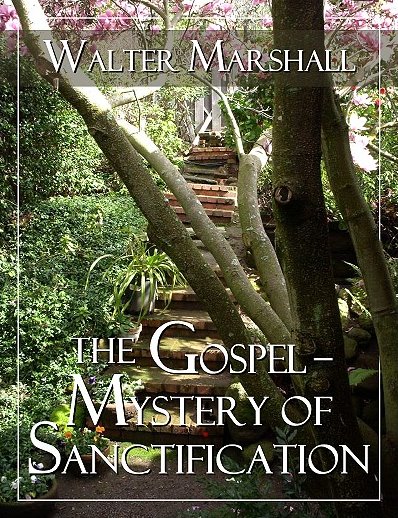
Sundry Quotes from Solid Reformed Men on Law and Gospel

Image


Thomas Boston, Works, 3:377:

The doctrines of the gospel believed with the heart, teach us that, denying ungodliness and worldly lusts, we should live soberly, righteously, and godly in the present world. As Christ is the end of the law, so I may say, the law is the end of the gospel; for it is the great design of the gospel revelation, to bring back sinners to that righteousness and holiness which the law requires. The gospel never gains its end among a people, till a strain of piety and holiness run through their whole lives.


David Clarkson (Works 1:315):

The righteousness of Christ turns the law into gospel to a believer, and of a doctrine full of dread and terror, renders it the most acceptable message that ever was brought to the world. The law, which stands as the angel with a flaming sword, to bar all flesh out of paradise, when the righteousness of Christ is applied, it becomes an angel to carry every believer into Abraham’s bosom; Christ’s righteousness added, it loses its name, and we call it gospel. The way in both seems to be the same for substance; perfect obedience is requisite in both. They differ in the circumstances of the person performing this obedience. In the law it was to be personal, in the gospel his surety’s performance is sufficient.

However, if there be any terror, dread in the law, Christ’s righteousness removes it; if any grace, comfort in the gospel, Christ’s righteousness is the rise of it. Take away Christ’s righteousness, and the gospel can give no life; take it away, and the law speaks nothing but death; no life, no hope of life without it, either in law or gospel.

Thomas Goodwin (Works, 6:261):
As faith turns the commands of the law into gospel in a regenerate man’s heart, so conscience, in an unregenerate man, turns the gospel into law. As faith writes the law in the heart, and urgeth the duties of it upon evangelical grounds and motives—as the love of Christ, conformity to him, union with him, and the free grace of God—so in a man unregenerate, gospel duties are turned into legal, through the sway and influence of conscience, and that dominion which the covenant of works hath over him.

Samuel Rutherford (The Covenant of Life Opened, 198-199).

The obedience of faith, or Gospel-obedience, in the fourth place, hath less of the nature of obedience than that of Adam, or of the elect angels, or that of Christ’s. It’s true we are called obedient children, and they are called the commandments of Christ, and Christ hath taken the moral law and made use of it in an evangelic way, yet we are more (as it were) patients in obeying gospel-commands. Not that we are mere patients, as Libertines teach; for grace makes us willing, but we have both supernatural habits and influences of grace furnished to us from the grace of Christ, who hath merited both to us; and so in Gospel-obedience we offer more of the Lord’s own and less of our own because he both commands and gives us grace to obey. And so to the elect believer the Law is turned in Gospel, he by his grace fulfilling (as it were) the righteousness of the Law in us by begun new obedience, Rom. 8:4.

Westminster Confession of Faith, 19.6,

It [the moral law] is likewise of use to the regenerate, to restrain their corruptions, in that it forbids sin: and the threatenings of it serve to show what even their sins deserve; and what afflictions, in this life, they may expect for them, although freed from the curse thereof threatened in the law. The promises of it, in like manner, show them God’s approbation of obedience, and what blessings they may expect upon the performance thereof: although not as due to them by the law as a covenant of works. So as, a man’s doing good, and refraining from evil, because the law encourages to the one and deters from the other, is no evidence of his being under the law; and not under grace.

Walter Marshall (The Gospel Mystery of Sanctification Opened, p. 235, 1981 EP ed.).

Here you have holiness as a free gift received by faith, an act of the mind and soul. Whosoever will may come, take it and drink freely, and nothing is required but a willing mind (John 7:38; Isa. 55:1; Rev. 22:17). But the law is an intolerable burden (Matt. 23:4; Acts 15:10), if duty be laid on us by its terms. We are not left in this way to conquer lusts by our endeavours, which is a successless work, but what is duty is given, and the law is turned into promises (Heb. 8:6-13; Ezek. 36:25, 26; Jer. 31:33; 32:40). We have all now in Christ (Col. 3:11; 2:9, 10, 15, 17). This is a catholic medicine, instead of a thousand. How pleasant would this free gift, holiness, be to us, if we knew our own wants, inabilities and sinfulness? How ready are some to toil continually and macerate their bodies in a melancholy legal way to get holiness, rather than perish forever? And therefore, how ready should we be, when it is only, ‘Take, and have; believe, and be sanctified and saved?’ (2 Kings 5:13). Christ’s burden is light by His Spirit’s bearing it (Matt. 11:30). No weariness, but renewing of strength (Isa. 40:31).

Thomas Case (Puritan Sermons, 5:524, 525):

Hold fast the models of divine truth in your practice. – A practical memory is the best memory: to live the truths which we know, is the best way to hold them fast.

There are heretical manners as well as heretical doctrines. “Profane Christians live against the faith, whilst heterodox Christians dispute against the faith” [Augustine]. There be not a few that live antinomianism and libertinism, and atheism, and popery, whilst others preach it. Apostates are practical Arminians; a profane man is a practical atheist. Whilst others, therefore, live error, do you live the truth; whilst others deny the gospel, do you live the gospel: “As ye have received” the truth as it is in Jesus, “so walk ye” in it, to all well-pleasing (Col. 2:6; 1:10). Without this, a man forsakes the truth, while he doth profess it: “They profess that they know God, but in their works they deny him, being abominable, and disobedient, and unto every good work reprobate” (Titus 1:16).

Yea, to live the truths we hear, is the way, not to hold them only, but to hold them forth to others; as the apostle speaks, “Holding forth the word of life” (Phil. 2:16). It is a metaphor taken either from fire-lights upon the sea-coasts burning all night; the use whereof is to give notice to seamen of some neighbouring rocks and quicksands that may endanger their vessel: or else from torch-bearers in the night-time; who hold out their lights, that passengers may see their way in the dark. According to which metaphor our Saviour calls true, real Christians “the light of the world, a city set on a hill,” to enlighten the dark world with their beams of holiness (Matt. 5:14). It is a blessed thing when the conversations of Christians are practical models of gospel-truths, walking Bibles, holding forth “the graces” or “excellencies,” “of Him who hath called them out of darkness into his marvellous light” (1 Pet. 2:9).

John Owen (Works 3:278-279):

There are two sorts of things declared in the gospel: —
1st. Such as are absolutely its own, that are proper and peculiar unto it, — such as have no footsteps in the law or in the light of nature, but are of pure revelation, peculiar to the gospel. Of this nature are all things concerning the love and will of God in Christ Jesus. The mystery of his incarnation, of his offices and whole mediation, of the dispensation of the Spirit, and our participation thereof, and our union with Christ thereby, our adoption, justification, and effectual sanctification, thence proceeding, in brief, everything that belongs unto the purchase and application of saving grace, is of this sort. These things are purely and properly evangelical, peculiar to the gospel alone…

2dly. There are such things declared and enjoined in the gospel as have their foundation in the law and light of nature. Such are all the moral duties which are taught therein. And two things may be observed concerning them:—
(1st.) That they are in some measure known unto men aliunde from other principles. The inbred concreated light of nature doth, though obscurely, teach and confirm them…
(2dly.) There is on all men an obligation unto obedience answerable to their light concerning these things. The same law and light which discovereth these things doth also enjoin their observance. Thus is it with all men antecedently unto the preaching of the gospel unto them. In this estate the gospel superadds two things unto the minds of men:—
(1st.) It directs us unto a right performance of these things, from a right principle, by a right rule, and to a right end and purpose; so that they, and we in them, may obtain acceptance with God. Hereby it gives them a new nature, and turns moral duties into evangelical obedience.
(2dly.) By a communication of that Spirit which is annexed unto its dispensation, it supplies us with strength for their performance in the manner it prescribes.

Ralph Erskine (Sermons 2:22):

The believer’s own obedience to the law, or his gospel-obedience, and conformity to the law, wrought in him, and done by him, through the help of the Spirit of grace; even this obedience of his, I say, hath not the legal promise of eternal life, as if it were the legal condition of his obtaining eternal life: no, his gospel-obedience hath indeed a gospel-promise, connecting it with eternal life, as it is an evidence of his union to Christ, in whom all the promises are Yea and Amen; and as it is a walking in the way to heaven, without which none shall ever come to the end; “For without holiness it is impossible to see God.” – But the legal promise of eternal life made to obedience, and which makes our personal obedience to be the cause and matter of our justification, and as the proper condition of salvation and eternal life, this is the promise of the law, or covenant of works; and this promise it is now wholly divested of, as to the believer in Jesus Christ, who hath taken his law-room, and yielded that perfect obedience, to which the promise of eternal life is now made: and the reason why, I say, the promise of eternal life is now made to Christ’s perfect obedience in our room and stead, is, Because, the law, or covenant of works, made no promise of life properly, but to man’s own personal obedience; it made no mention of a surety; but now, in sovereign mercy, this law-rigour is abated, and the Surety is accepted, to whose obedience life is promised.

Reverend Matthew Winzer

Dear reader,

Do you understand the promise of the gospel in relation to gospel obedience? When you perform moral duties are you looking to the promise of the gospel and trusting that this obedience is accepted for Christ’s sake, and thereupon blessed of God to be the way of walking to heaven? Or do you perform moral duties out of obedience to the law, and on the understanding that law-rigour condemns all your works as the most filthy unrighteousness, so that nothing you do can ever be acceptable? These are very important questions. If good works are not done by faith in Jesus Christ, they are not good works; they are condemned at the bar of God’s justice. But if good works are done by faith in Jesus Christ, God “is pleased to accept and reward that which is sincere, although accompanied with many weaknesses and imperfections” (Westminster Confession of Faith, 16.6).

I pray that God will enable you to see the important difference between serving the law and serving the gospel.
Reverend Matthew Winzer

Thomas Brooks’ Nine Strong Consolations – Point #8

“…Now remember that this imputed righteousness of Christ procures acceptance for our inherent righteousness. When a sincere Christian casts his eye upon the weaknesses, infirmities, and imperfections that daily attend his best services, he sighs and mourns. But if he looks upward to the imputed righteousness of Jesus Christ, it shall bring forth his infirm, weak, and sinful performances perfect, spotless, and sinless, and approved according to the tenor of the gospel. They become spiritual sacrifices, and he cannot but rejoice (1 Peter 2:5). For as there is an imputation of righteousness to the persons of believers, so there is also an imputation to their services and actions . . . so the imperfect good works that are done by believers are accounted righteousness, or as Calvin speaks, “are accounted for righteousness, they being dipped in the blood of Christ.” They are accounted righteous actions; and so sincere Christians shall be judged according to their good works though not saved for them (Revelation 11:18; 20:12; Matthew 25:34-37).

And it is observable in that famous process of the last judgment (Matthew 25:34-37), that the supreme Judge makes mention of the bounty and liberality of the saints, and so bestows the crown of life and the eternal inheritance upon them. Though the Lord’s faithful ones have eminent cause to be humbled and afflicted for the many weaknesses that cleave to their best duties, yet on the other hand, they have wonderful cause to rejoice and triumph that they are made perfect through Jesus Christ, and that the Lord looks at them through the righteousness of Christ as fruits of His own Spirit (Hebrews 13:20, 21; 1 Cor. 6:11). The saints’ prayers being perfumed with Christ’s odors are highly accepted in heaven (Revelation 8:3, 4). Upon this bottom of imputed righteousness, believers may have exceeding strong consolation and good hope through grace, that both their persons and services do find singular acceptation with God as having no spot or blemish at all in them. Surely righteousness imputed must be the top of our happiness and blessedness!…”

Richard Sibbes (Works, 5:187):

Question. Now, what is it to do all things evangelically? To clear that point.

Answer. To do all things evangelically is, first of all, for a man to know that he is in the same state of grace, and that he hath his sins pardoned, and that he is accepted in Christ to life and salvation. That is the ground of all evangelical obedience. He must know that he is in the covenant of grace; that he hath the forgiveness of sins, and a right to life everlasting in Christ. And then comes obedience answerable to that condition; that is, a desire to obey God in all things: a grief that he cannot do it so well as he would; a prayer that he might do it so; and an endeavour together with prayer that he may do so, and some strength likewise with endeavour. For a Christian, as I said before, he hath the Spirit of God, not only to set him to an endeavour, but to give him some strength. So there is a desire, and purpose, and prayer, and grief of heart, and endeavour, and likewise some strength in evangelical obedience.

A Christian then in the gospel can do all things when he hath his sins forgiven, and is accepted in Christ, when he can endeavour to do all, and desire to do all, and in some measure practise all duties in truth. For the gospel requires truth and not perfection. That is the perfection that brings us to heaven in Christ our Saviour. We have title to heaven; in him is the ground, because forgiveness of sins is in him. Now a Christian’s life is but to walk worthy of this, and to fit himself for that glorious condition that he hath title unto by Christ, to walk sincerely before God. Sincerity is the perfection of Christians. Let not Satan therefore abuse us. We do all things, when we endeavour to do all things, and purpose to do all things, and are grieved when we cannot do better. For mark, this goes with evangelical obedience always. God pardons that which is ill, for he is a Father. He hath bound himself to pardon, ‘I will pity you as a father pitieth his child,’ Ps. 103:18. From the very relation he hath took upon him, we may be assured he will pity and pardon us, and then he will accept of that which is good, because it is the work of his own Spirit, and will reward it. This in the covenant of grace he will do. A Christian can do all then; and wherein he fails, God will pardon him. What is good, God will accept and reward; and what is sick and weak in him, God will heal, till he have made him up in Christ.

What is the Gospel?

Image

Jeremiah Burroughs…. Gospel Conversation.

The good tidings concerning Christ, for so the word “gospel” in the Greek signifies nothing else but the good tidings.… All mankind was lost in Adam and became the children of wrath, and was put under the sentence of death…. God has thought upon the children of men. He has provided a way of atonement to reconcile them to Himself again. Namely the Second Person in the Trinity takes man’s nature upon him and becomes the Head of a second covenant, standing charged with man’s sin, and answering for it by suffering what the Law and Divine Justice required. He made satisfaction and kept the Law perfectly, which satisfaction and righteousness He offered up unto the Father as a sweet savor of rest for the souls of those that are given to Him.

And now this mediation of Christ is, by the appointment of the Father, preached to the children of men, of whatever nation or rank, freely offering this unto sinners for atonement for them, requiring them to believe in Him and, upon believing, promising not only a discharge of all their former sins, but that they shall never enter into condemnation, that none of their sins or unworthiness shall ever hinder the peace of God with them, but that they shall, through Him be received into the number of sons. They shall have the image of God renewed again in them, and they shall be kept by the power of God through faith unto salvation. These souls and bodies shall be raised to the height of glory that such creatures are capable of. They shall live forever, enjoying the presence of God and Christ in the fullness of all good.This is the gospel of Christ. This is the sum of the gospel that is preached unto sinners.

Gospel Conversations pp. 4,5

What is the Gospel.. Antinomian view?

https://rpcnacovenanter.wordpress.com/2012/12/07/depraved-christianity-might-be-antinomian-christianity-pt-3/

The Gospel includes more than just our justification. It also includes our sanctification and glorification. Some theologians today remove the Good News (Gospel Truth) of our Sanctification and future Glorification from the Gospel.   I am not willing to go as far as some are going in their Modern Reformed Thought.  I have heard some who teach at a School in Escondido, California say that theology like the theology mentioned in the following  link are “serious error”.  https://rpcnacovenanter.wordpress.com/2012/09/19/sundry-quotes-from-solid-reformed-men-on-law-and-gospel/  I disagree whole heartedly and would plead with them to reconsider.

https://rpcnacovenanter.wordpress.com/2012/12/07/depraved-christianity-might-be-antinomian-christianity-pt-3/


Lutheran / Reformed differences recognized during the time of the Westminster Divines

Image

Anthony Burgess on the difference between Lutheran and Reformed views of the covenant and law/gospel:

“We have confuted (proven to be incorrect) the false differences, and now come to lay down the truth, between the law and the Gospel taken in a larger sense.  

And, first, you must know that the difference is not essential, or substantial, but accidental: so that the division of the Testament, or Covenant into the Old, and New, is not a division of the Genus (classification) into its opposite Species; but of the subject, according to its several accidental administrations, both on Gods part, and on mans. It is true, the Lutheran Divines, they do expressly oppose the Calvinists herein, maintaining the Covenant given by Moses, to be a Covenant of Works, and so directly contrary to the Covenant of Grace. Indeed, they acknowledge that the Fathers were justified by Christ, and had the same way of salvation with us; only they make that Covenant of Moses to be a superadded thing to the Promise, holding forth a condition of perfect righteousness unto the Jews, that they might be convinced of their own folly in their self-righteousness.” (Vindication of the Morall Law,  Lecture 26  p.251)

I so need to get a copy of this book.  I know Reformation Heritage books has it.  Thanks ole buddy Mark Van Der Molen for bringing this small tidbit to life.

Book can be downloaded here.

http://westminsterassembly.org/wp-content/uploads/Burgess-Vindiceae-text-complete.pdf

I am sorry but it has dawned on me that this might be hard to grasp and understand on one level because Aristotelian terminology is being used above.  I am speaking about the terms essential, substantial, and accidental in the quote above.  It is Aristotelian thought.  Accidental is non essential property of the substance.  It is a part of it but it is not essential.  That doesn’t mean it is randomly thrown in or unnecessary when we consider God’s providential working. It is unnecessary for the substantial to exist.  As an example most people have legs. It is not necessary for you to have a leg to exist and survive but God did put it there for a reason and purpose. The term accidental should not be read as a modern day American would read it and think of a mishap or car wreck.  I am not sure I am explaining it well but the language above has a context and I hope I have helped out a bit.  Historical context and understanding are very important here. I hope that helps out a little.

To help further explain the above situation, one of the differences between Lutheran and the Westminsterian understanding is that Lutherans believe that the substance of the Mosaic and New Covenant differ.  The position of the Westminster Confession of Faith is that the Substance of the New Covenant and Mosaic Covenant is the same.  Some Modern Day Reformed Thinkers do not believe that to be the case as Lutherans described back in Anthony Burgess’ day didn’t either.  Meredith Kline in his later years departed from the biblical and confessional understanding of the Westminster Confession of Faith.  Doctors Michael Horton, R. Scott Clark, and I believe Darryl G. Hart and David Van Drunnen depart from it also.  This has lead to the unbiblical way they dichotomize law and grace instead of proving the proper distinctions between them.    It is also leading to various views concerning Natural Law and Kingdom Theology that some theologians are having problems with today.

Just for reference let me link to a few blog posts to help us understand what I am communicating.

What is Republication of the Covenant of Works?

https://rpcnacovenanter.wordpress.com/2013/02/04/what-is-republication-of-the-covenant-of-works/

(What is the Gospel?) Depraved Christianity might be Antinomian Christianity pt. 3

(What is the Gospel?) Depraved Christianity might be Antinomian Christianity pt. 3

‘Modern Day Reformed Thought’ and Two Kingdoms

‘Modern Day Reformed Thought’ and Two Kingdoms

The Mosaic Covenant, same in substance as the New? 

The Mosaic Covenant, same in substance as the New?

Possible Misconceptions about Galatians. Law and Gospel are opposed?

Possible Misconceptions about Galatians. Law and Gospel are opposed?

Westminster Confession of Faith Chapter 19. The Law and the Covenant of Works.

Westminster Confession of Faith Chapter 19. The Law and the Covenant of Works.

The Mosaic Covenant and the Modern Day Justification and Sanctification Controversy

The Mosaic Covenant and the Modern Day Justification and Sanctification Controversy

That should be enough to help you get started in understanding this discussion now.

‘Modern Day Reformed Thought’ and Two Kingdoms

Image

This topic is being discussed and exposed a bit finally. Finally, it is being done with some balance and correct thinking. There are a few posts in this discussion One Kingdom vs. Two Kingdom’s” on the Puritanboard which lead to some great comments and links.  One link is an interview with Dr. Jack Kinneer who is a Professor at Reformed Presbyterian Theological Seminary discussing this topic.

It is found here.

http://www.viewcrestchurch.org/ompodcast/om1002.mp3


Listening to the interview with Dr. Jack Kinneer I walked away with this…

Here are very brief Stereo-Typical ways of understanding these issues according to the Host of the show.

The Non Two Kingdom View is a Tranformationalist and or a Theonomic view saying, “If we can just make the culture Christian everything will Change and Christ’s Kingdom will come.”

The Two Kingdom view says that Culture Transformation is not the job of the Church. The Church receives the Kingdom.  It doesn’t create one.  The job of the Church is to take the sacraments, hear the word preached, be fathers and mothers and plumbers and just go on with our life.  If Jesus wants to do something through it and for us He can.

Those are the two extremes…

The Host then asks Dr. Kinneer if his definitions are correct.

Dr. Jack Kinneer of Reformed Presbyterian Theological Seminary
replies,
“What you have is the American A view and the American B view.”
What you don’t have is the Historical C view. 

Amen Dr. Kinneer! That is what I have been trying to tell some of the guys who are writing and discussing this issue now days. 

Also Dr. Kinneer notes, that as all aberrations and heresies in theology tend to distort the doctrine of Christ, some of the of Two Kingdoms teachers distort the doctrine of Christ (Christology) also.  A lot depends on how you define Two Kingdoms Theology.  I believe it should be called a two fold government, to be more precise. 

Both definitions the host defined were basically true but fall short of the Historical doctrine. And I would declare that the most vocal Modern Day Reformed Church Seminary Professors have no idea what the Historic view is.  I deduce this by what I am hearing come out of the mouths of today’s Seminary Students, Graduates, and their Professor’s writings and comments. I can also assess this by the personal discussions I have been having with these men and younger theologians who have been taught by these guys.

These Authors and Professors are arguing against a view that is easily knocked down by their arguments. When they finally start to deal with the Historical view that Dr. Kinneer is declaring then their arguments will start to hit a brick wall.  For one thing the historical view is not liberal and that is one of the main associations attributed to One Kingdom Theology.

This issue has a root problem in my estimation.  It is the Law / Gospel issue that is being discussed in the Reformed Church.  Some people are separating the Law so far from life and the gospel that the very Gospel of Christ is being truncated.  They have gone from one extreme of refuting self-justification (works righteousness) to something that is turning into antinomianism.  They view Sanctification and Glorification as separate from the Gospel.  Dr. Michael Horton and many others around him teach that the  Gospel is only an outward declarative statement about what God has done to pay a penalty for sin.   According to past interaction with these guys, those of us who hold to the view the Reformed Divine’s held to, that the Law turns into Gospel, are in “Serious Error.”  They are divorcing the Law of Christ from the Gospel.  They are also divorcing the work of Christ in us, the hope of Glory and a life of being conformed in the image of Christ, from the Gospel.

Newer Blog posts…..  https://rpcnacovenanter.wordpress.com/2014/05/14/the-law-turned-into-gospel-gospel-obedience/

The Charge of Lutheranism is not about distinction, it is about dichotomy

The root problem in a lot of this is a poor Christology (understanding His Mediatorial Kingship) and a poor understanding of the Covenant of Grace.  The Covenant of Grace administers both the Old and New Covenant.   Some say the Old Covenant is not the same in substance as the New Covenant.  According to them the Mosaic Covenant differs in substance from the Abrahamic Covenant also.  They say that only the Abrahamic Covenant is renewed in the New Covenant.  This is in direct contradiction to the Westminster Confession of faith Chapter 7 sections 5 and 6 which states that they are of the same substance as they are administrations of the Covenant of Grace.  The Old Covenant is the same in substance as the New and Abrahamic Covenant because they are Administrations of the Covenant of Grace.  The same people that are saying this are the same people voicing this Newer Natural Law / Two Kingdom model that is being criticized here.  At the root they all have Meredith Kline as a Mentor and hold to his thought concerning the Old  (Mosaic) Covenant.  Dr. R. Scott Clark voices it in his Covenant Theses point 13 of Biblical / Exegetical section.  In so doing all this they are becoming Lutheran in their view of the Mosaic Covenant and saying that the Law is opposed to the Gospel.  This is having a terrible affect upon the Church and Society in my estimation.  They are dichotomizing the law and the gospel in a way that the scriptures don’t.  Even Anthony Burgess a Divine  and Scottish Commissioner of the Westminster Confession of Faith recognized this problem of the Lutherans back then.   https://rpcnacovenanter.wordpress.com/2012/09/18/lutheran-reformed-differences-back-during-the-time-of-the-westminster-divines/

Oh yeah, they may claim to have a majority of the old guys as their teachers but they are propagating them through the eyes of a few who held to minority views or Klinean eye wear.  The below is where you can find Dr. Clark’s thoughts.

http://clark.wscal.edu/covtheses.php
Biblical / Exegetical section….
13.The Mosaic covenant was not renewed under Christ, but the Abrahamic covenant was.

Some have titled this theology Klhortian I call it Modern Reformed Thought because a lot of Western California Guys have adopted it and are promoting it with their media machine.  It is a shame this is being propagated so loudly.  It kind of reminds me of how dispensationalism got such a strong hold by media presentation through the Scoffield Reference Bible.  I think I have made my point.

Klhorotonian Theology

http://citeseerx.ist.psu.edu/viewdoc/download?doi=10.1.1.737.5521&rep=rep1&type=pdf&fbclid=IwAR3Djotk6sWLDlEjIiyRBcm895iEGrpYFZ5RYppsXxF7DG6A7pKKK8Oa9NE

I hope I am understanding things aright.  Orthodoxy and Orthopraxy are so closely linked.  I believe this is being proven in this situation.  May we all be graced by the King and have eyes to see and ears to hear what the Spirit is saying.  I hope I am seeing and hearing correctly.  Weigh what I say heavily.  Don’t just accept it as truth.  I am a man.  I can be just as deceived as I believe others to be.

Be Encouraged,

As a side note and recommendation this will be a topic in the upcoming Confessional Presbyterian Journal.  It won’t be Polemic as I have been because it will be done by Scholars from various sides of the issue if I am not mistaken.  I am not a Scholar.  Please Remember That!  But that doesn’t make anything I have said any less true.  Just weigh it more heavily.  LOL

The Confessional Presbyterian Journal should be out sometime this Winter.  Here is the link to it.

http://www.cpjournal.com/

The Teachings of Christian Science by Dr. John H. Gerstner

Image

From retired Pastor Joe Gwynn,

A project of mine this summer has been to type four out-of-print works by the late Dr. John H. Gerstner. They are critiques of four prominent cults that ensnare thousands of unwary people. They (the booklets) are carefully footnoted and therefore can be defended with confidence. In them you will learn things (especially about their founders and history) that many of their proponents who come knocking at your door either do not know or will not admit. My purpose was to make these booklets (25-30 pages each) available for free downloading and distribution.

They are:
· The Teachings of Mormonism
· The Teachings of Seventh-day Adventism
· The Teachings of Christian Science
· The Teachings of Jehovah’s Witnesses

John H. Gerstner (1914–1996), M.Div. and M.Th. from Westminster Theological Seminary, and Ph.D. from Harvard University. Dr. Gerstner was Professor of Church History at Pittsburgh Theological Seminary for thirty years. After retiring, Dr. Gerstner, the favorite teacher of Dr. R.C. Sproul, was a frequent speaker at Ligonier Conferences before his death in 1996. An excellent historian and Reformed theologian, Dr. Gerstner also wrote several excellent books, including my favorite “Wrongly Dividing the Word of Truth”, an excellent critique of Dispensationalism.

In the one true God and his Son, Jesus Christ,
Joe Gwynn 

If you want this in Word format email me.
RMS

The Teachings of

Christian Science

John H. Gerstner

John H. Gerstner (1914–1996), M.Div. and M.Th. from Westminster Theological Seminary, and Ph.D. from Harvard University. Dr. Gerstner was Professor of Church History at Pittsburgh Theological Seminary for thirty years. After retiring, Dr. Gerstner, a favorite teacher of Dr. R.C. Sproul, was a frequent speaker at Ligonier Conferences before his death in 1996. An excellent Reformed theologian, scholar, and historian, Dr. Gerstner wrote many good books.

Contents
Introduction …………………………….……………………..….…………. Page 2
1. Description and History of Christian Science …………….…. Page 3
2. Doctrines of Christian Science .………………..….………..…….. Page 15
3. Terms Frequently Used by the Christian Scientists ……….. Page 19
4. For Further Reading ……………………………………………………. Page 20
5. Summary of Traditional Christian Doctrines …….………….. Page 21
6. Brief Definitions of the Sects …………….………………………… Page 24

Introduction

The abundance of literature on various “sects” shows that there is great interest in the subject. But what is a sect? We must make our definition clear, for there is wide difference of opinion on its meaning.

Evangelicals generally use sect when referring to those denominations which do not hold to fundamental biblical principles … especially the deity of Christ and His atonement. This booklet is written from the evangelical perspective.

The teachings of Christian Science is designed as a ready reference booklet. It is meant to be a quick guide to the wealth of literature on this subject, and it includes a valuable table and glossary.

The general exposition in the first chapter gives an easily-grasped overview of the sect. The following chapter, “Doctrines of Christian Science” provides the reference material which summarizes the first chapter and adds some more technical data. Chapter two contains the basic theological structure of Christian Science stated objectively and concisely. The text itself gives a fuller exposition of some of the cardinal points outlined in the first chapter.

Chapter three. “Terms Frequently Used by Christian Scientists,” gives some of the most common terms in the vocabulary of this sect. Sects often have their own precise definitions for common religious words, and the glossary makes this immediately evident.

Chapter four, “For Further Reading,” lists both primary and secondary sources for further study of the theology and practice of the sect.

A summary of the essential teachings of traditional Christianity appears in chapter five. This summary is included to provide a basis for comparison with the doctrines of Christian Science. This chapter is designed to be used as a frame of reference.

To make the theologies of different sects clearer, their teachings have been summarized in the “Chart of Comparative Doctrines” at the end of chapter six. This tabular outline classifies the doctrines of Seventh-Day Adventists, and continuing with the teachings of Jehovah’s Witnesses, Mormons, and Christian Scientists, this chart allows the reader to see at a glance the position of each group on various Christian doctrines.

1. Description and History of Christian Science

Mary Baker Eddy

A devout sharp-tempered Calvinist, surer of hell fire than of his crops and seasons, he believed in its extreme form the awful doctrine that the majority of the human race were destined to eternal damnation. From this dark and forbidding view of human destiny a serene and cultivated wife and six healthy children, three of either sex, failed to detach him. Then a seventh child was born, She was a girl and received the name of Mary.[1]

H. A. L. Fisher hints at what the evidence itself shouts. The ideas of Mary Baker Eddy (Eddy) were a reaction against the Reformed faith of her father.

Indeed, the whole history of the sect could have as its golden text the word of the apostle Paul: “The time will come when they will not endure sound doctrine; but after their own lusts shall they heap to themselves teachers, having itching ears; and they shall turn away their ears from the truth, and shall be turned unto fables.”[2]

Mary Baker Eddy was not the only one to rebel against the Reformed faith; the same was also true of Joseph Smith, founder of the Mormons. His parents had not been as attached to it as Mary Baker’s, but it was the same basic tradition of the churches with which he was familiar. Seventh-day Adventist William Miller was actually a Calvinist, but was unwilling to be bound by its eschatological restraints. We know that Charles Taze Russell (of the Jehovah’s Witnesses) was reared as a Covenanter. The “chaos of the cults” is a somber study in rebellion.

At twelve years of age, Mary was denying predestination and other truths while being admitted to the Congregational Church at Tilton, New Hampshire. The next years were largely spent nursing ills, having unpleasant stays with relatives and friends, and acquiring two husbands. In 1843 she married George Washington Glover, who died in 1844. In 1845 their son was born, the only child Mary ever had. It can hardly be said that she brought him up, however, for he was sent off to school and farmed out with relatives. The saying was that Mary did not seem to care for her lamb. In 1853 she entered into an unhappy marriage with a dentist named Patterson, who apparently was not fond of her chronic sickness. When he left her, she said it was for another woman. Georgine Milmine says it was because he could stand her no longer.

Phineas P. Quimby

Before this separation took place, however, the turning point in Mary Baker Glover Patterson’s life had taken place. In 1862 the ailing woman was healed by Phineas P. Quimby at the International Hotel in Portland, Maine. Who was Quimby? According to H. A. L. Fisher, “Phineas P. Quimby was one of those adventurers, more common perhaps in the New World than the Old, who, navigating the sea of knowledge without the charts and compass of education, end always by discovering to their own intimate satisfaction results which have eluded the wisdom of the ages.”[3] On this voyage without charts one thing Quimby had discovered was that people are often healed by a little dose of psychology and a big dose of mesmerism. So, he dubbed Mrs. Patterson’s head after putting his hands in water, and then put her to sleep. When she awoke, all sickness was gone. This made her a grateful patient and faithful disciple, dedicating her life to preaching the Quimby gospel of salvation. For the next years she devoted herself to propagating Quimbyism.

What was Mrs. Patterson doing in the years 1864-1870? These were the “wander years” during which she went from home to home, creating more or less trouble in almost every one of them. She was teaching the Quimby “science” of healing, using for this purpose a manuscript which she said had been written by “Dr. P. P. Quimby” and having her students copy it, while she guarded it most jealously. There is an unbroken chain of witnesses and affidavits and other evidences to prove this important fact beyond a doubt.[4]
The manuscript she used for her teaching was a copy of Quimby. George A. Quimby of Belfast, Me., has lent the writer one of his father’s manuscripts, entitled “Questions and Answers.” This is in the handwriting of Mr. Quimby’s mother, the wife of Phineas P. Quimby, and is dated, in Mrs. Quimby’s handwriting, February, 1862 – nine months before Mrs. Eddy’s first visit to Portland.[5]

The evidence that Eddyism was really Quimbyism is substantial. First, there was the Rev. W. F. Evans, who in 1869 wrote a book entitled The Mental Cure. According to Edwin Dakin, this volume is important “in any consideration of Mrs. Eddy’s career, for it shows indubitably the wealth of inspiration which Quimby generated.” Dakin’s opinion is in line with with Milmine, Snowden, and others, who cite statements such as this from Evans: “Disease being in its root a wrong belief, change that belief and we cure the disease. By faith we are thus made whole.” Second, there was Andrew Jackson Davis, who had the same ideas which Mrs. Eddy later developed, as Snowden clearly shows. Third, we have Julius A. Dresser, an early student of Quimby and father of New Thought. His True History of Mental Science is a strong argument for Mrs. Eddy’s dependence on Quimby. Fourth, not only are the ideas Quimby’s, but
the very language seems adopted from the same source. “The key words of Mrs. Eddy’s book, ‘science,’ ‘truth,’ ‘principle,’ mind,’ ‘error,’ ‘matter,’ ‘belief,’ which she uses in a peculiar sense as a kind of jargon or lingo, are all derived from Quimby who used them in the same peculiar sense.”[6] Still, there was a glaring difference between Quimby and Mrs. Eddy: Quimby seems not to have used religion in his healing, while Mrs. Eddy was first and foremost a religious theorist.[7] This difference between Quimbyism and Eddyism is emphasized by W. F. Evans in his book, Mental Medicine, published in 1872. After giving Quimby credit for great success in healing, he continues: “But all this was only an exhibition of the force of suggestion, or the action of the law of faith, over a patient in the impressionable condition.”

The Christian Science Church

In any case, the crisis in Mrs. Patterson’s life was now past. Whatever the source of her new theology, it was now hers and it made her, and made Christian Science. In 1866, she said, Christian Science was discovered.[8] She continued to work, applying its principles and teaching others (for substantial fees) at Lynn, Massachusetts, until 1882. Meanwhile, in 1875, she had bought a house, published her first edition of Science and Health, and with eight others formed “The Christian Scientists.” In 1877 she married Asa Gilbert Eddy, who was a good enough businessman to see that the second edition of Science and Health paid. In the same year the new movement’s name was changed to “Christian Science Association.” A couple of years later it was organized as the Christian Science Church. In 1882, the prophetess moved to the hub of her universe, Boston, after organizing the Metaphysical College and publishing the third edition of Science and Health. But, great healer that she was, she could not change her husband’s mind about dying. She attributed his death to MAM, malicious animal magnetism, or mental murder,[9] the same cause to which she later told her followers to attribute to her own death.

The rest of Mrs. Eddy’s life was a triumphal procession among her own ranks, while suffering constantly from enemy magnetism. Her admirers go to extremes in their description of her marvelous achievements. Others, not admirers, are prepared to grant that Mrs. Eddy’s rise in fortune, power, and influence was truly outstanding. In spite of all this, she moved from place to place to escape the relentless mental persecution. It was this persecution, apparently, which made her leave Boston in 1889, and which probably made her move to Concord to Newton in 1908, and which finally killed her in 1913. At least that is what the official verdict was, according to the dying wishes of Mrs. Eddy, as revealed in this conversation with her trusted associate Dickey: “Mr. Dickey, if I should ever leave here, will you promise me that you will say that I was mentally murdered?’ ‘Yes, Mother.’”[10]

Since Mrs. Eddy

Since Mrs. Eddy – what? Altman Swihart has written a book bearing that title, in which he discusses only two major divisions in Christian Science since Mrs. Eddy – those of Mrs. Stetson and Mrs. Bill. These are only two of many. In spite of many divisions, however, the movement which has centered in the Mother Church has continued and grown. It is difficult to prove that it has grown as much as some Scientists and others claim. Indeed, “Mrs. Eddy in a Message to her Church in 1901, answering a critic of her work, challenged him to match a record which could start thirty years ago without a Christian Scientist on earth, and in this interval number one million.”[11] Fisher quotes an American writer who, in 1912, said “there were then ten thousand Christian Science healers in the United States, and an annual supply of some six million Christian Science patients.”[12] Probably it was such figures which gave Mark Twain a scare and made him prophecy:

It is a reasonable safe guess that in America in 1920 there will be ten million Christian Scientists, and three million in Great Britain; that these figures will be trebled in 1930, that in America in 1930 politically formidable, and in 1940 the governing power of the Republic – to remain that, permanently. And I think it a reasonable guess that the Trust … will then be the most insolent and unscrupulous and tyrannical politico-religious master that has dominated a people since the palmy days of the Inquisition.[13]

Riley and Snowden noted years ago that the expansion of Christian Science was largely among “the richest pay streak of our civilization.” Christian Science has an overwhelming preponderance of its members in cities and of the female sex. Studies also reveal that although this is a “cult of American ladies,” women do not hold positions of top leadership; that although most of its converts are not poor, they do not represent many influential people of the cities; that those studying Christina Science exceed those adhering to it; and that nearly all of the converts come from the churches rather than from the world.

A Look at Mary Baker Eddy

So much for Mary Baker Eddy’s religious movement. What shall we think of Mary Baker Eddy? What did she think of herself? A recent Christian Scientist, Arthur Todd, asks if Christian Scientists worship Mrs. Eddy. “Do they consider her another Christ?” The answer, he says, is an emphatic NO!”[14] Then he appeals to Mrs. Eddy herself in support of this modest attitude:

In a letter to the New York Herald just after the original Mother Church Edifice was dedicated, she wrote: “A dispatch is given me, calling for an interview to answer for myself, “Am I the second Christ?’ Even the question shocks me. What I am is for God to declare His infinite mercy. As it is, I claim nothing more than what I am, the Discoverer and Founder of Christian Science, and the blessing it has been to mankind which eternity enfolds … There was, is, and never can be but one God, one Christ, one Jesus of Nazareth …”[15]

But let us compare this seemingly modest demurer with the following letter she wrote to her devoted Mrs. Stetson:

Darling Augusta, My Precious Child … Jesus was the man that was a prophet and the best and greatest man that ever has appeared on earth, but Jesus was not Christ, for Christ is the spiritual individual that the eye cannot see. Jesus was called Christ only in the sense that you say, a Godlike man. I am only a Godlike woman, God-anointed, and I have done a work that none other can do. As Paul was not understood and Jesus was not understood at the time they taught and demonstrated, so I am not. As following them and obeying them blessed all who did thus – so obeying me and following faithfully blesses all who do this …”[16]

This would surely support Mrs. Stetson’s own view of Mary Baker Eddy which she expresses thus: “Christ Jesus was the masculine representative of the fatherhood of God. In this age Mary Baker Eddy is the feminine representative of the motherhood of God.’ “[17]

To be fair to the Christian Scientists we must say that the present Christian Science organization disowns Mr. Stetson and her followers. Our later discussion of the Scientist doctrine of Christ will make it clear that the difference between Jesus and other Christians is a matter of degree. The above statements indicate that even that degree of difference hardly existed between Jesus and Mr. Eddy. In perfect consistency with her high opinion of herself, she could run her affairs thus: “At two day’s notice any member of three years’ standing or upwards might be ordered, on pain of excommunication, to serve in Mrs. Eddy’s household for a period of more than three years. “He that loveth father or mother more than me is not worthy of me’ was the text quoted in support …”[18] All of these charges reveal the truth of Snowden’s observation: “The most serious allegations pertaining to Mr. Eddy are sustained by her own words found in her acknowledged writings, for in such matters she is always the most damaging witness against herself.”

So much for Mary Baker Eddy, the woman. What of Mary Baker Eddy, the author? In her own opinion she was the woman of Revelation 12,[19] the custodian of the key to the Scriptures. We have already noted her unacknowledged dependence on Quimby. And Snowden points out her more than coincidental likeness to Ann Lee, the founder of the Shakers.

The Shakers always prayed to “Our Father and Mother which is in heaven,” while Mrs. Eddy’s “spirituality interpreted” version of The Lord’s Prayer begins, “Our Father- Mother God.” The Shakers proclaimed Ann Lee to be the woman of the Apocalypse, and Mrs. Eddy made the same suggestion with reference to herself. The Shakers called Ann Lee “Mother,” and Mrs. Eddy arrogated this name to herself and forbade her followers to bestow it upon others, although afterwards she withdrew the privilege of applying it to herself and denied that she had ever authorized such use. The Shakers called Ann Lee was inspired, and Mrs. Eddy made the same claim. Ann Lee declared that she had the gift of healing, and this was Mrs. Eddy’s chief stock in trade. The Shakers called their organization “The Church of Christ,” and Mrs. Eddy adopted this name with the addition of “Scientist.” The Shakers forbade audible prayer, and Mrs. Eddy disapproved of it and has none of it, in her services. Ann Lee enjoyed celibacy, and Mrs. Eddy, though practicing marriage liberally herself, discouraged it in others.[20]

One volume on Christian Science is entitled, Mary Baker Eddy Purloins from Hegel. That she would not hesitate to steal a sermon is clear from a comparison of her writing with a sermon on Blair. We pass over the fact that she could not make two sentences fit together, she and almost all her critics saying that there is never any reason why one sentence of hers follows rather than precedes another. And not only do they stand in hopeless relationships, but in themselves many of the sentences convey nothing but equivocation and ambiguity. And all this she seems to have intended.[21] The secret of the success of Science and Health, it seems to us, is its overpowering use of repetition. Asher friend Bronson Alcott said: “No one but a woman or a fool cold have written it.”[22]

The Theology of Christian Science

What is the basic nature of the Christian Science system? A recognized Christian Science authority answers this way: “… it is a restatement of primitive Christianity – without the creeds, rituals and dogmas which have grown up through various interpretations of those teachings.”[23] The contention is thus that Christian Science is primitive, pure, uninterpreted Christianity versus creedal, impure, interpreted Christianity. Of course, any system must be an interpretation; it may be more or less sound interpretation, but interpretation is must be. And those sects which do (and virtually all sects do) claim to be purely uninterpreted Christianity are simply claiming infallibility for their interpretation and fallibility and error for all others.

Why, then, has it had an attraction for Christians? Some Christians are attracted to it because there is an element of Christianity in Christian Science which could deceive the very elect. “A pseudoscience does not necessarily consist wholly of lies. It contains many truths and even valuable ones.”[24] Here was, to adapt the expression from Trueblood, a cut-flower mortality in part, for “though she [Mrs. Eddy] had liberated herself at an early age from the formidable terrors of the Calvinistic creed, she stood for temperance and strict living.”[25] It is this moral note which constitutes the attractiveness of Christian Science.

What is the source of authority in Christian Science? The Bible alone? Clearly not, because Mary Baker Eddy had to provide a key to the Bible. Is her Key to the Scriptures the source of authority? No, because there are different keys to the Key. Mrs. Stetson thought she had the key to the Key and Mrs. Bill was sure she had it, and a number of others have said that they had it. But the corporation founded by Mary Baker Eddy claims to have the Key – the only Key to the Key. And most Christian Scientists agree with this claim. So Christian Scientists are those who recognize the Mother Church and its hierarchy. This is their source of authority.

This keeper of the Key to the Key rejects criticism and refuses to admit error. All this is quite suavely defended by Mr. Todd:

Not unnaturally the dramatic emergence and spread of Christian Science as a major religious phenomenon of the last eighty years finds expression in a multifarious literature. Books, pamphlets, and periodical articles abound, some ignorantly hostile, some malicious, some well intentioned but inaccurate. Hence it has become necessary to set up in library cataloguing two categories, ‘authorized’ (i.e., Mrs. Eddy’s own writing or publications of The Christian Publishing Society) and ‘unauthorized’ (miscellaneous publications of varied derivation and content).[26]

As a result of this censorship policy, note what has happened to Christian Science literature, to Science and Health itself. Snowden said that he had “not been able to obtain or even to see a copy of the first edition of Science and Health, although he applied for it to the Christian Science publishers and headquarters, but Miss Milmine gives an extended quotation from it that bears the marks of its being in Mrs. Eddy’s own unaided style …”[27] ‘The first edition of Science and Health has been so far as possible suppressed.’”[28]

Then there is the matter of the life of Mrs. Eddy. Miss Wilbur wrote an “authoritative” life of Mary Baker Eddy, virtually devoid of documentary evidence. Miss Milmine wrote a scholarly life of Mrs. Eddy: “the copyright was eventually purchased by a friend of Christian Science, and the plates from which the book was printed were destroyed, according to information which appears to be authentic and accurate. The author has been informed that the original manuscript was also acquired.”[29] Julius Dresser finally published the Quimby manuscripts and showed whence came Eddyism. According to Dakin, “The first edition of this very valuable work, which contained the letters which the then Mrs. Patterson addressed to Dr. Quimby, is already exceedingly rare. Copies are available in the Library of Congress, the New York Publishing Library, and the Boston Public Library. The second edition, with the letters missing, is readily available in most public libraries and from the publishers.” Tomlinson’s Twelve Years with Mary Baker Eddy, carry the imprimatur of the Christian Science Publishing Company. But what happened to the witness of another who knew Mrs. Eddy but wrote about her less favorably? It is said that Memoirs of Mary Baker Eddy by Adam Dickey was published by his widow three years after the author’s death. Mrs. Dickey was a member of the Mother Church in good standing, and was promptly persuaded to withdraw the publication. All copies were recalled. The Dickey account of the atmosphere in Mrs. Eddy’s home and the occurrences there forms one of the most extraordinary documents in her history, for it is the work of a loyal disciple who served in Mrs. Eddy’s household for several years and died as one of the ruling officials of the church.

In any system the doctrine of God is utterly crucial; this is nowhere more apparent than in Christian Science. God is all. God is the “All-in-all.” God is good. These statements are reiterated time and time again by Mary Baker Eddy and other Scientists. This pantheistic notion obviously and explicitly rules out al individuality, all materiality, all evil, all sickness, indeed, all. For, if God is all, all is nothing but God. “Limitless personality is inconceivable,” we are taught in No and Yes.[30] One divine personality is objectionable enough; tripersonality is that much more offensive to Scientists. “The theory of three persons in one God (that is, a personal Trinity of Tri-unity) suggests, says Marty Baker Eddy, polytheism, rather than the one ever-present I am.”[31] Another Christian Science author has written: “By the Trinity, Christian Scientists mean the unity of Father, Son and Holy Spirit – but do not accept the Trinity as three persons in one. Life, Truth, and Love are ‘the triune personality called God.’ (Science and Health).”[32]

The Christian Science view of Christ is obvious from all this, as well as from what was said earlier about the person of Mrs. Eddy. “Jesus is the human man, and Christ is the divine idea, hence the duality of Jesus the Christ.” Science and Health teaches that “the Christian believes that Christ is God … Jesus Christ is not God.”[33] “No wonder Mrs. Eddy wrote to her friend and disciple, Judge Hanna, ‘I have marveled at the press’s and pulpit’s patience with me when I have taken away their Lord.’”[34]

In all this pantheism, where does evil come in? Answer: it doesn’t. It is ruled out, that is, thought out. Albert Gilmore explains why evil cannot exist (though this is not quite true to Christian Science form): “Could God’s handiwork ever become less than perfect, we should have the impossible situation of imperfection from infinite perfection.” This is a valid statement of a real philosophical puzzle. However, pantheistic Christian Science has no doctrine of God’s “handiwork” … that is a creation notion, not an emanation doctrine. Precisely because the good God is all, and all is God, therefore all is good, and therefore there could not possibly be evil. Evil is an illusion; or, as the Scientists put it: “All sin is insanity in different degrees.”

If God, who is spiritual, is all, then nothing unscriptural can exist. Matter, therefore, cannot exist. If matter cannot exist, certainly an aberration of matter, called sickness, cannot exist. By a wave of her metaphysical wand, Mary Baker Eddy banishes sin, sickness, and suffering forever from the universe. Christ had to go to the cross to do that, but Mrs. Eddy had only to sit and ponder. Having received this command from the general, Gilmore and the other lieutenants rush in with the announcement: “Sin and disease are figments of the moral or carnal mind, to be destroyed, healed, by knowing their unreality.”[35] But which is greater to say: “Arise, take up thy bed and walk,” or, “Thy sins be forgiven thee”? Christian Science finds both of these equally easy. It heals men by assuring them that they are not sick, and it saves men by assuring them that they have never sinned. “We acknowledge God’s forgiveness of sin in the destruction of sin and the spiritual understanding that casts out evil as unreal. But the belief in sin is punished as long as the belief lasts … Furthermore, since the real man has never departed from his original state of perfection, he is not in need of salvation. He is saved now, and reposing in the bosom of the Father; he has always been saved – that is, as God’s idea, the expression of Mind, man is forever held in the divine consciousness.”[36] “Not the image of God, the real man, but the mortal, the counterfeit, is in dire need of salvation from the constrictions, false beliefs, and limitations which so generally attach themselves to the material sense of man.”[37]

Practices of Christian Scientists

Now that this gospel of complete spiritual and mental health is an actual and present possession needing only to be realized, it is carried through with a certain degree of consistency. First, Christian Science promotes a calm and poised exterior, as was illustrated by the man who left Christian Science because he “ ‘got tired of being so monotonously happy.’ “[38]Second, Christian Science frowns on hospitals: “Do Christian Scientists go to hospitals? The teaching and faith of Christian Science reject medical treatment. To the extent that a man or woman relies on material methods of healing, he or she is not relying fully on Christian Science.”[39] Third, Christian Science does not approve of quarantines: “Incidentally, Christian
Scientists and their children obey all quarantine regulations because they don’t want their neighbors to become fearful of their safety because Christian Scientists refrain from material methods.” More recently Robert Peel has written that “the stubborn, irreducible facts of experience have shown that under ordinary circumstances any attempt to mix Christian Science and medicine seriously lessens the efficacy of each.”[40] “Incidentally, Christian Scientists feel that reliance on spiritual methods alone, to safeguard public health, is wise only in proportion to the spiritual understanding of health among the people of the area involved.[41] Fourth, consistent with its disbelief in suffering, it does in effect discourage sympathy.[42] Fifth, it despises poverty, which it regards as a false belief in material lack or material limitation.[43]

One of Mrs. Stetson’s early students said that when Jesus cured the demon-possessed man in the tombs, the people came out and found the man in his right mind and fully clothed. The question might be asked: Where did the wearing apparel come from? The answer is simple. Jesus understood Principle and so clothes immediately covered this man’s body … Thus, if someone who is not a Christian Scientist is poor and needs help, the best aid that a Christian Scientist can give him is to send out the impersonal love and the realization that divine Love enables all to make their demonstration of succor. Merely to give clothes to a poor non-Christian Scientist is of no special value, for he is in his present condition through his own fault, or through lack of understanding. What he needs most is Principle, not matter. But in the case of the Christian Scientist who is not becoming prosperous, it is proper to assist him in making his demonstration. To aid such a one is to contribute to his spiritual growth.[44]

But, while Christian Science is admirably consistent in the application of its principles at many points, it also shies away from such implications at other points. For example, if sickness is unreal, why should surgery and anesthesia be permitted? If the standard answer, because of the prejudices of the mortal mind, were accepted, it would wreck the entire system. By what rhyme or reason can a Christian Scientist who rejects doctors, despises hospitals, and refuses vaccination, say: “To stop utterly eating and drinking until your belief changes in regard to these things were error’ ”?[45] If sin is unreal, why should not the libertine exonerate himself even while he indulges? And what can the Christian Scientist reply to Van Baalen’s question: “Can you blame critics of ‘Divine Science’ that they point out the suspicious truth that Mrs. Eddy asserted that in the present stage of our understanding Science, we can only demonstrate against sickness, and not against hunger and money?”[46] But, most fundamental of all, why deny the existence of all evil and then posit a “Mortal Mind” which is the source of all evil including death, yea, even the death of the founder?

Christian Science stood theoretically demolished before it ever arose; but what of its practical refutation? Take the testimonials, for example, which fill the last pages of Science and Health. What of the eighty-four there listed? Well, what of the thousands which could not be mentioned? As to notorious cases of failure and disaster and death, they have been recorded in such numbers and with such proofs as must stagger the faith of even the most devoted and credulous Christian Scientists.”[47] The eminent French Scientist, Paget, after a careful study of Christian Science healing gave the following testimony:

They bully dying women, and let babies die in pain; let cases of paralysis tumble about and hurt themselves; rob the epileptic of their bromide, the syphilitic of their iodide, the angina cases of their amyl nitrate, the heart cases of their digitalis; let appendicitis go to uraemic peritonitis, gastric ulcer to perforation of the stomach, nephritis to uraemic convulsions, and strangulated hernia to the miserere mei of gangrene; watch, day after day, while a man or woman bleeds to death; compel them who should be kept still to take exercise; and withhold from all cases of cancer all hope of cure.[48]

Fisher adds: “To be ill in itself is bad enough; to attribute that illness to a moral and intellectual disability is worse still; to hold, as did the Founder, that illness or false beliefs may often be caused by the malevolence of an enemy, is worst of all.”[49] One writer remarked that a highway robber asks for your money or your life; Christian Science asks for both.

What of the moral fruits of Christian Science? The Bible is one thing; Mrs. Eddy’s key to it is another. They are two radically different systems of thought and, like the White Nile and Blue Nile when they merge at Omdurman, they are still clearly distinguishable from each other. All this has its ethical consequence. Christian Science is a special language which only those who use it understand and which can be very misleading to the uninitiated.

In Christian Science all actions may be considered either from a spiritual or a human standpoint. In the metaphysical realm these is no sin, sickness, death, or error. Testifying on this basis, Mrs. Stetson’s students could admit a fact from one standpoint and then deny it from the other. By employing these tactics the witnesses were able to evade the issues, so that the Board had great difficulty in deciding which of these statements to credit. When Anna Holden, for example, was asked if she were testifying in the absolute or fourth dimension, she replied: “Certainly – I try to stay where Mrs. Eddy tries to take us. There is no human plane. I recognize only one.” Then she was asked if she ate cereal for breakfast. She replied, “I did not have any this morning – only milk and a roll. Divine Love feeds me, and from this standpoint I take my material food.” The amazing discovery was then made that several students had testified in the civil courts during the Brush Will Case, etc., from a purely spiritual plane, and that the lawyers and the judge had not detected the significance of this method. The witnesses believed that they had acted in perfect accord with the true Christian Science.[50]

Let us take a glance at Christian Science’s idea of the church. Of course, she considers herself the only true church; she alone has the Key to the Scriptures, and, as already discussed, the Key to the Key. Mrs. Eddy’s regarding herself as a Protestant was apparently designed to prevent anyone from thinking that she was a Roman Catholic. Mrs. Stetson was emphatically anti-Roman. Channing was asked, “Do Christian Scientists consider themselves Protestants?” His jejune answer indicates that they are Protestant in name only: “Yes, Christian Science is a truly Protestant religion, although it embodies several distinguishing characteristics. Protestantism, it should be remembered, began as a protest against certain organizations or forms of worship. Christian Science also protests against mortal sense.”[51] Mr. Todd quite modestly states what he regards to be the true picture of the situation: “Current practice in radio circles and elsewhere is to set up four major religious classifications in the United States, namely, Protestant, Catholic, Jewish, and Christian Science.”[52]

We have already indicated how strategically important the organization of Christian Science is to the perpetuation of its censored dogmatism. Mary Baker Eddy’s Church Manual is the official directory of the church. However, the real power is in the hands of the Board of Directors (self-perpetuating), who elect all officers of the church, including the Readers. Fisher gives us an interesting description of the directors who were active in Mrs. Eddy’s day. The general characterization apparently still holds:

The powers nominally invested in the Reverend Mother had long, in effect, been exercised by a Board of Directors. Five well-dressed, level-headed, substantial North Americans, such as would grace any club window in Beacon Street, continued to carry on the old firm in the old way and under the old prospectus. No heroic memories are associated with the names of Archibald McLellan, Allison V. Stewart, John V. Dittimore, Adam H. Dickey, and James A. Neal, the five directors appointed in 1904, upon whose shoulders was now imposed the sole responsibility for the director of the growing Church.[53]

Christian Science worship consists largely of reading from the Bible and from Science and Health as a commentary on the Scripture readings, singing Christian Science hymns, and occasionally (and immaterially) observing the sacraments of baptism and the Lord’s Supper.[54]

Nor is Christian Science lacking in eschatology. It has a doctrine of the second coming of Christ. “ ‘Some modern exegesis on the prophetic Scriptures cites 1875 as the year of the second coming of Christ. In that year the Christian Science textbook, Science and Health, with Key to the Scriptures, was first published.’ “[55]

2. Doctrines of Christian Science

Doctrine of the Bible

The Bible is the inspired Word of God (Mary Baker Eddy, Science and Health, pp. 126 f., 269 f.). However the Bible is sometimes criticized (AH, pp. 521 f.) and literal interpretations scored (Miscellaneous Writings, p. 169). There is but one Word of God and Mary Baker Eddy is its interpreter. Her book, Science and Health (SH), is the “Key to the Scriptures.” Mrs. Eddy was not only infallible in her interpretation of the Bible, but apparently equally authoritative in her commands to followers. Members of her church could be commanded, on penalty of excommunication, to serve in her household (Fisher, Our New Religion, p. 137). She was also believed to be impeccable, as a letter of Mr. Wiggin reveals in in which he affirmed that one of Mrs. Eddy’s followers had said she would not trust her sight if she saw Mrs. Eddy committing a crime (Snowden, The Truth About Christian Science, p. 94). In order to protect the truth of Mrs. Eddy’s teaching, the Christian Science Church labels publications “authorized” or “unauthorized” (Todd, “Christian Science” in Ferm, RTC, p. 377). This denomination is equally zealous in labeling and censoring the writings of her critics. It has been observed that this group has attempted a censorship of speech and press that even the vast and confident Roman Catholic Church has not attempted (Binder, Modern Religious Cults and Society, p. 99). A Roman Catholic apologist insists on this very point (Hangston, “Literature on Christian Science” in The Catholic Mind Through Fifty Years, ed. By Masse, pp. 50 ff.).

Doctrine of God

“God is incorporeal, divine, supreme, infinite Mind, Spirit, Soul, Principle …” (SH, pp. 465 f. passim). God’s being is infinite and therefore impersonal. “Limitless personality is inconceivable” (Mary Baker Eddy, No and Yes, p. 20; Swihart, Since Mrs. Eddy, p. 91; SH, pp. 265, 331). Certainly God is not tri-personal. “Life, Truth, and Love are ‘the triune Principle called God’ “ (Channing, “What Is a Christian Scientist?” in Look, Nov. 18, 1952, p. 57; SH). God is frequently identified with all and this doctrine is buttressed by appeal to verses such as 1 Corinthians 15:28 (God is “all in all”; cf. Scheurlen, Die Sekten der Gegenwart, p. 114). The pantheistic strain is of far-reaching significance. Though Christian Science reads like philosophical idealism and has drawn some features from the German idealist Hegel (Haushalter, Mary Baker Eddy Purloins from Hegel, it is quite different. Idealism “does not at all deny the reality of matter or resolve it into a subjective illusion or delusion, but only discovers and demonstrates, as it believes, the true nature of matter as a mode of the divine life” (Snowden, TCS, p. 14). According to Mrs. Eddy, God is all and all is God, and there is nothing else beside. Thus angels “are pure thoughts from God” (SH, p. 298) and the devil has “neither corporeality nor mind” (SH, pp. 256, 331, 584, 917). The doctrine of Christ is set forth below. The Holy Spirit is Christian Science. “This Comforter I understand to be Divine Science” (SH, p. 55).

Doctrine of Man

Since God is all, and man, the true or spiritual man, is part of God, man possesses the attributes of God. “He is co-existent with God. As far back as the being of God is the being of man. ‘Searching for the origin of man is like enquiring into the origin of God himself, the self-existent or eternal’ ” (Haldeman, Christian Science, p. 112; SH, p. 535). “Hence,” writes Gilmore, “the real man as God’s likeness, without material accompaniments, has existed forever. When Jesus asserted, “Before Abraham was, I am,’ he undoubtedly referred to his true selfhood as the Son of God, as the Christ-man” (“Christian Science,” in Braden’s Varieties of American Religion, p. 163).

Doctrine of Sin

“There is no sin” is a refrain in SH (cf. pp. 447, 475, 481, passim). This is a consistent deduction from the fundamental principle of the system; namely, God is all and God is good. Gilmore argues: “Could God’s handiwork ever become less than perfect, we should have the impossible situation of imperfection from infinite perfection” (“CS,” pp. 158 f.). “Furthermore,” he continues, “since the real man has never departed from his original state of perfection, he is not in need of salvation. He is saved now, and reposing in the bosom of the Father; he always has been saved – that is, as God’s idea, the expression of Mind, man is forever held in the divine consciousness.”

If sin and evil have no reality, it is apparent that Christian Science regards all ideas of sin and evil as illusions. They are the product of “Mortal Mind” (though Mortal Mind itself is never explained). (SH, p. 311); that is, a soul is never lost through sin, but it is the very sense of sin which is sinful because it is the illusory product of Mortal Mind.

Doctrine of Christ

Christian Science makes a sharp distinction between Jesus and Christ. “Jesus is not the Christ” (Miscellaneous Writings, p. 84). Jesus is the human man and Christ is the divine idea. “The Christian believes that Christ is God … Jesus Christ is not God” (SH, p. 361). “Jesus was called Christ only in the sense that you say, a Godlike man. I am only a Godlike woman, God-anointed, and I have done a work that none other could do.” This needs to be borne in mind when Todd responds to the question: “Do they [Christian Scientists] worship her [Mrs. Eddy]?” “The answer is an emphatic NO!” (Todd, “CS,” p. 374). Mrs. Eddy is not regarded as Christ any more than Jesus is regarded as Christ – nor any less. Often Mrs. Eddy is viewed as the feminine representative of God, the motherhood of God, while Jesus is the masculine representative of God, the fatherhood of God (cf. Mrs. Stetson in Swihart, Since Mrs. Eddy, p. 56).

Jesus was virgin born. “The illumination of Mary’s spiritual sense put to silence material law and its order of generation, and brought forth her child by the revelation of Truth, demonstrating God as the Father of men” (SH, p. 29). “Mary’s conception of him was spiritual” (SH, p. 332). This is sufficient to indicate that Christian Science believes the virgin, the child, and the birth to be nonmaterial, purely spiritual. “Jesus was not always wise: “Had wisdom characterized all His sayings, He would not have prophesied His own death and thereby hastened or caused it’ ” (L. D. Wetherhead, “City Temple Tidings,” Nov., 1950, p. 259, in Davies, Christian Deviations, p. 39). Jesus’ death was an illusion. “Jesus seemed to die, though flesh never had life” (SH, p. 78). His resurrection is thus interpreted: “To accommodate himself to immature ideas … Jesus called the body, which by spiritual power he raised from the grave, ‘flesh and bones’ ” (SH, p. 45).

Doctrine of Redemption

As noted above, Jesus only seemed to die (because He only seemed to live – in the flesh). The disciples mistakenly thought Jesus had died (SH, p. 44). “Paul writes: ‘For if, when were enemies, we were reconciled to God by the [seeming] death of His Son …’ ” (SH, p. 45). Christian Science necessarily rejects the evangelical doctrine of the sacrifice of Christ because there is no real death or sacrifice. Science and Health (p. 25) denies the sufficiency of the blood of Christ to atone, apparently ignoring the general doctrine that all things physical, such as blood, are not real in any case. “One sacrifice, however great is insufficient to pay the debt of sin. The atonement requires constant self-immolation on the sinner’s part” (SH, p. 23; cf. p. 24). The self-immolation by which atonement comes is the casting out of the idea of sin. “We acknowledge God’s forgiveness of sin in the destruction of sin and the spiritual understanding that casts out evil as unreal.” (SH, p. 497). The punishment of the wrong belief seems to be the wrong belief itself. “But the belief in sin is punished so long as the belief lasts” (SH, p. 497).

The working out of this scheme of redemption in the realm of ethics is antinomian. Distinguishing between the unreal world, which men think real, and the spiritual world, which Christian Scientists regard as the only reality, has led to misrepresentations (Swihart, Since Mrs. Eddy, p. 77). Similarly, Mrs. Eddy told her confidential secretary, Adam Dickey, by use of ambiguous language, that she would not die.

The most conspicuous application of Christian Science salvation principles is to sickness. Perhaps the most succinct statement of Christian Science theory of sickness is this: “Man is never sick, for Mind is not sick and matter cannot be” (SH, p. 393). “Sin and disease.” Writes Gilmore, “are figments of the mortal or carnal mind, to be destroyed, healed, by knowing their unreality” (“CS,” p. 166). Since this mortal or carnal mind by its figments creates sickness “the less mind there is manifested in matter, the better. When the unthinking lobster loses its claw, it grows again. If the science of life were understood, it would be found that the senses of mind are never lost, and that matter has no sensation. Then the human limb (supposing it were lost through sickness, disease or accident) would be replaced as readily as the lobster’s claw – not with an artificial limb, but with a genuine one” (SH).

The diseases of animals are the products of mortal minds of men. Since all sickness everywhere comes from mind, all healing comes by dispelling its figments. Medicine is unnecessary to the true believer in Christian Science. “The teaching and faith of Christian Science basically reject medical treatment. To the extent that a man or woman relies on material methods of healing, he or she is not relying on Christian Science” (Channing, “What Is a Christian Scientist?” p. 58).

Doctrine of the Church

Christian Science regards itself as a denomination distinct from Protestant or Roman Catholic (Gilmore, “CS,” p. 157). As to organization, “the affairs of the Mother Church are administered by the Christian Science Board of Directors, which elects a representative, the first and second readers, a clerk, and a treasurer. The Board of Directors is a self-perpetuating body electing all officers of the church annually, with the exception of the readers, who are elected by the board for a term of three years” (Mead, Handbook of Denominations, p. 53).

Christian Science believes in baptism but Christian Scientists do not practice baptism in the material form; to them, baptism means purification from all material sense” (Channing, “WICS,” p. 57). The Lord’s Supper is observed according to the directions of Science and Health (pp. 32-35). The Lord’s Prayer is used with a Christian Science interpretation. Actually, prayer, in the ordinary sense of the word, seems to be precluded by the theology of Christian Science: “Shall we ask the divine Principle to do His own work? His work is done, and we have only to avail ourselves of God’s rule … to work out our own salvation” (SH, p. 3). Christian Science has a marriage ceremony, for “until it is learned that generation rests on no sexual basis, let marriage continue” (SH, p. 274). “Until time matures, human growth, marriages and progeny will continue unprohibited in Christian Science” (Misc. Wr.,p. 289).

Doctrine of the Future

“If the change called death destroyed the belief in belief in sin, sickness, and death, happiness would be won at the moment of dissolution, and be forever permanent; but this is not so … The sin and error which possess us at the instant of death do not cease at that moment, but endure until the death of these errors … Universal salvation rests on progression and probation, and is unattainable without them. Heaven is not a locality, but a divine state of Mind in which all the manifestations of Mind are harmonious and immortal … No final judgment awaits mortals, for the judgment-day of wisdom comes hourly and continually …” (SH, pp. 290 f.).

3. Terms Frequently Used by Christian Scientists

Angels: God’s thoughts passing to man; spiritual intuitions.

Animal Magnetism: Just as right thinking enables a person to experience the good which is, so wrong thinking by animal magnetism causes a person to experience (or seem to experience) the evil which is not.

At-One-Ment: The unity between the mind of man and the mind of God, which Christ did not so much effect as demonstrate. This is antithetical to the orthodox position of atonement through expiation and reconciliation.

Board of Directors: Self-perpetuating group of five men who, guided by Mrs. Eddy’s Church Manual, govern the Christian Science Church, electing all its officers.

Father-Mother God: The infinite spirit, thought to possess comprehensive virtues expressed by this dual designation.

Hell: Anything negative such as mortal belief, error, lust, remorse, hatred, revenge, sin, sickness, or death.

Malicious Animal Magnetism: An evil disposition against another person (from which Mrs. Eddy complained of suffering), which may even bring sickness and death.

MAM: Common designation of Malicious Animal Magnetism.

Man: The compound idea of infinite spirit; the spiritual image and likeness of God; the full representation of Mind.

Mortal Mind: The source of all the illusions about sin, sickness, and evil. Its own source, according to the critics of Christian Science, is never explained.

Pantheism: The doctrine that all (pan) is God (theos); or, that God is identifiable with the totality of things. Christian Science argues that because God is good, and God is all, all is good (and evil, therefore, is illusion).

Science and Health: Short title of Mary Baker Eddy’s book, which is the foundational authority of her teaching.

4. For Further Reading

Beasley, Norman. The Continuing Spirit. New York: Duell, Sloan and Pearce, 1956.
_______ The Cross and the Crown. New York: Hawthorne Books, Inc., 1952.

Braden, Charles S., Christian Science Today: Power, Policy, Practice. Dallas: Southern Methodist University Press, 1958.

Dakin, Edwin Franden. Mrs. Eddy, The Biography of a Virginal Mind. 1930. Reprint. Gloucester, Mass.: Peter Smith Publisher, Inc., n.d.

Dresser, Horatio W., ed. The Quimby Manuscripts. 1921. Reprint. Secaucus, N.J.: University Books, Inc., n.d.

Eddy, Mary Baker, The First Church of Christ Scientist and Miscellany. Boston: Trustees of Mary Baker Eddy, 1913.
________ Science and Health With Key to the Scriptures. Boston: Trustees of Mary Baker Eddy, 1939.

Fisher, H. A. L., Our New Religion: An Examination of Christian Science. Folcraft Library Editions, 1933.

Gilmore, Albert Field. “Christian Science” in Varieties of American Religion, Charles S. Braden, ed. 1936. Reprint. Plainview, N.Y.: Books for Libraries, n.d.

Hoekema, Anthony A. Christian Science. Grand Rapids: Wm. B. Eerdmans Publishing Co., 1974.

Laird, Margaret. Christian Science Re-Explored. New York: William-Frederick Press, 1966.

Milmine, Georgine. The Life of Mary Baker G. Eddy and the history of Christian Science. 1909. Reprint. Grand Rapids: Baker Book House, 1971.

Peel, Robert. Christian Science: Its Encounter with American Culture, New York: Holt, Rinehart and Winston, 1958.

Smith, Clifford. Historical Sketches from the Life of Mary Baker Eddy and the History of Christian Science. Boston: Christian Science Publishing Society, 1946.

Todd, Arthur James. “Christian Science” from Religion in the Twentieth Century. Vergilius T. Ferm, ed. 1948. Reprint. Westport, Conn: Greenwood Press, Inc., n.d.

Wilbur, Sibyl. The Life of Mary Baker Eddy. Boston: Christian Science Publishing Society, 1908.

5. Summary of Traditional Christian Doctrines.

In the following chapter we present views which are held by the church without exception (unless so indicated). There are three main branches of the catholic (universal) church: Protestant, Eastern Orthodox, and Roman Catholic. These have differences among them, but there is a remarkable consensus of viewpoint on the basic structure of Christian doctrine. This fact is justification for use of the term “the catholic church.” We have chosen quotations from official creeds of these branches to illustrate the various doctrines.

Doctrine of the Bible

The catholic church believes the sixty-six books of the Old Testament and New Testament to be the plenarily inspired Word of God. The Roman Church adds to this number some of the apocrypha. The Roman and Eastern Orthodox churches seem to give ecclesiastical tradition virtually equal authority with Scripture. The Protestant churches, however, hold tosola scriptura. Thus, the Lutheran Formula of Concord affirms: “We believe, confess, and teach that the only rule and norm, according to which all dogmas and all doctors ought to be esteemed and judged, is no other whatever than the prophetic and apostolic writings both of the Old and of the New Testament.” The French Confession of Faith says of the Bible that “inasmuch as it is the rule of all truth, containing all that necessary for the service of God and for our salvation, it is not lawful for men, nor even for angels, to add to it, to take away from it, or to change it.” The American Revision of the Thirty-nine Articles of the Church of England states: “Holy Scripture containeth all things necessary to salvation: so that whatsoever is not read therein, nor may be proved thereby, is not to be required of any man, that it should be believed as an article of the Faith, or be thought requisite or necessary to salvation.”

Doctrine of God

The Athanasian Creed, accepted as an ecumenical creed by all branches of the church, reads: “ … we worship one God in Trinity, and Trinity in Unity, Neither confounding the Persons, nor dividing the Substance (Essence). For there is one Person of the Father, another of the Son, and another of the Holy Ghost is all one, the Glory equal, the Majesty co-eternal. Such as the Father, such is the Son, and such is the Holy Ghost. The Father uncreated, the Son uncreated, and the Holy Ghost uncreated. The Father incomprehensible (unlimited or infinite), the Son incomprehensible, and the Holy Ghost incomprehensible. The Father eternal, the Son eternal, and the Holy Ghost eternal. And yet they are not three eternals, but one eternal … so the Father is God, the Son is God, and the Holy Ghost is God. And yet they are not three Gods, but one God … the Unity in Trinity and the Trinity in Unity is to be worshiped.” The Westminster Shorter Catechism teaches: “There are three persons in the Godhead: the Father, the Son, and the Holy Ghost; and these three are one God, the same in substance, equal in power and glory.”

Doctrine of Man

Again we may use the Westminster Shorter Catechism, for it expresses what all catholic churches believe about man. “God created man, male and female, after his own image, in knowledge, righteousness, and holiness, with dominion over the creatures.”

Doctrine of Sin

The Roman Catholic statement made at the Council of Trent contains a catholic affirmation: “ … Adam, when he had transgressed the commandment of God in Paradise, immediately lost the holiness and justice wherein he had been constituted; and … he incurred, through the offense of that prevarication, the wrath and indignation of God, and consequently death, with which God had previously threatened him, and, together with death, captivity under his power who thenceforth had the empire of death, that is to say, the devil, and that the entire Adam, through the offense of prevarication, was changed , in body, and soul, for the worse … this sin of Adam … [is] transfused into all by propagation, not by imitation … “ All catholic churches say at least this much; some, such as the Reformed, make more of the consequences of the Fall.

Doctrine of Christ

We may use the historic confession of the Council of Chalcedon (A. D. 451), for this has been recognized through the ages by all branches of orthodox Christendom as a true statement concerning the person of Jesus Christ. “ … our Lord Jesus Christ, the same perfect in Godhead and also perfect in manhood; truly God and truly man, of a reasonable [rational] soul and body; consubstantial [coessential] with the Father according to the Godhead, and consubstantial with us according to Manhood; in all things like unto us, without sin; begotten before all ages of the Father according to the Godhead, and in these latter days, for us and for our salvation, born of the Virgin Mary, the Mother of God, according to the Manhood; one and the same Christ, Son, Lord, Only-begotten, to be acknowledged in two natures, inconfusedly, unchangeably, indivisibly, inseparably; the distinction of natures by no means taken away by the union, but rather the property of each nature being preserved, and concurring in one. Person and Substance, not parted or divided into two persons, but one and the same Son, and only begotten, God the Word, the Lord Jesus Christ …”

We note that the expression, “Mary, the Mother of God,” is a genuinely catholic expression. It does not mean that Mary was the genetrix of God, but that the human nature which was begotten in her womb was united with the eternal Son of God. So Mary was the mother of the child who was God; i.e., the mother of God.

Doctrine of Redemption

The satisfaction view of the atonement is the truly classic view of the catholic church. This could be shown from Protestant, Roman, or Eastern Orthodox creeds. We will show it by a citation from “The Longer Catechism” of the Eastern Orthodox Church: “Therefore as in Adam we had all fallen under sin, the curse, and death, so we are delivered from sin, the curse, and death in Jesus Christ. His voluntary suffering and death on the cross for us, being of infinite value and merit, as the death of one sinless, God and man in one person, is both a perfect satisfaction to the justice of God, which had condemned us for sin to death, and a fund of infinite merit, which has obtained him the right, without prejudice to justice, to give us sinners pardon of our sins, and grace to have the victory over sin and death.”

There is a great difference among the three divisions of Christendom concerning the appropriation of this redemption achieved by Christ. The Protestant churches teach that it is by faith alone; the other branches incline to the view that it is by faith and works, or by faith considered as the beginning of works.

All branches of the church teach that the Christian has an obligation to endeavor to keep the moral law of God and that a person who does not do so is a reprobate. There is a doctrine in the Roman Church which is inconsistent with this, but nevertheless she teaches the above explicitly.
Doctrine of the Church

The Westminster Confession of Faith contains a definition of the church shared by all bodies of Christendom which accept the notion of the invisibility of the church. “The catholic or universal church, which is invisible, consists of the whole number of the elect, that have been, are, or shall be gathered into one, under Christ the head thereof; and is the spouse, the body, the fullness of Him that filleth all in all. The visible Church, which is also catholic or universal under the gospel (not confined to one nation, as before under the law), consists of all those, throughout the world, that profess the true religion, and of their children, and is the kingdom of the Lord Jesus Christ, the house and family of God, out of which there is no ordinary possibility of salvation.”
Doctrine of the Future

While there has been less defining of the doctrine of the future by the catholic church than has been true of other doctrines, what has been stated is unanimously affirmed. All branches of Christendom are agreed that there is a place of eternal felicity, called heaven, where redeemed men and unfallen angels dwell in the gracious presence of God. It is also taught that there is a place of eternal misery, called hell, where all unredeemed men and fallen angels dwell in the wrathful presence of God. The Roman Catholic Church maintains, in addition, the existence of purgatory, the limbus patrum, and the limbus infantum. Universal salvation has been taught by various individuals, but no church recognized by catholic Christianity has affirmed it.

6. Brief Definitions of the Sects

Seventh-day Adventism teaches that salvation is attained by faith in the atonement made by Christ in 1844. This faith must be expressed in obedience to the ethical teachings of the Bible (including the Saturday Sabbath) and in acceptance of the doctrinal teachings of the Bible (including the imminent premillennial return of Christ).

Jehovah’s Witnesses claim to be the only consistent Bible students. They find the vindication of Jehovah to be the fundamental aim of history. This vindication of Jehovah is accomplished by the atonement of the first-born creature, Jesus, and expressed by the witnessing to an impending Armageddon. At this battle Jehovah and His witnesses will be vindicated and the final consummation of things will begin.

Mormonism is built on a revelation subsequent to the Bible, called the Book of Mormon. According to this book, the church is to be recognized on the basis of a creed which teaches a plurality of created gods, repudiates justification by faith, and teaches a salvation achieved by the merit of obeying divine laws.

Christian Science is a formula for health and wealth by right thinking, but its thinking denies the reality of poverty and sickness.

Doctrines Traditional Christian Mormonism Seventh-day Adventism Jehovah’s Witnesses Christian Science
Bible Verbally inspired Inspired Bible and Book of Mormon Reluctant to affirm verbal inspiration; vague about status of Mrs. White Verbally inspired Bible inspired andScience and Health is its inspired interpretation
God Three Persons in one essence Polytheism Approximately traditional Christian view Uni-personal Impersonal and pantheistic
Man Body & soul created good Pre-existent soul takes body at birth in this world Body-soul creature; created neutral or with inclination to evil Body; soul not distinguishable from body Soul only; body is an illusion
Sin Result of Adam’s disobedience; corruption of nature and action It was necessary for Adam to sin. This brought mortality without guilt No clear doctrine of imputation of Adam’s sin; man now polluted Adam’s sin brought liability to temporal death “There is no sin” – it is an illusion
Christ One divine person in two distinct natures (divine-human) Called creator but only pre-existent spirit who took body at incarnation Like traditional view but represents human nature as having tendency to sin First born creature; changed into man at birth in this world Christ is a divine idea; Jesus is mere human
Redemption Faith in atonement as expressed by holy life Atonement gives man chance to earn salvation Believing in atonement made in heaven plus holy living including observance of the Saturday Sabbath Christ’s ransom gives man chance to earn salvation Salvation is casting out idea of sin
Church Mystical union of all true believers; visible union of all professed believers Other churches apostate; efficient hierarchical organization Seems to regard itself as true remnant church Traditional church rejected; 144,000 witnesses make up Church A denomination like Protestant, Roman Catholic, and Jewish
Future Eternal heaven, eternal hell, temporary purgatory (R.C.) Pre-millennial reign at Independence, MO; tends toward universal salvation Annihilation of the wicked; millennium in heaven and eternity on new earth Earthly millennium during which final probation leading to annihilation or eternal life Universal salvation in future when idea of sin gradually dies

[1] Herbert A. L. Fisher, Our New Religion, An Examination of Christian Science, pp. 61.

[2] II Timothy 4:3, 4.

[3] Our New Religion, pp. 19f.

[4] James H. Snowden, The Truth About Christian Science. The Founder and the Faith. Philadelphia, 1920, pp. 68 f.

[5] Ibid., p. 71, quoted from Milmine, The Life of Mary Baker Eddy and History of Christian Science, pp. 128 f.

[6] Ibid., p. 79.

[7] Cf. Fisher, Our New Religion, who, after reading the Quimby manuscripts felt that he (Quimby) was not a believer in religion in the healing area, p. 23.

[8] Mary Baker Eddy, Retrospection and Introspection, p. 24.

[9] Fisher, describing Mr. Eddy’s death, says: “Then in an access of human weakness, the devoted wife invoked medical aid. Dr. Rufus K. Noyes was a distinguished Boston physician. He diagnosed the illness as heart disease, and prescribed ‘rest and tonic, digitalis and strychnine.’ To the Reverend Mother the diagnosis and remedies were alike impermissible. Mr. Eddy was suffering from a suggestion of arsenical poison emanating from the ill-will of his enemies … The way to cure Mr. Eddy was to direct a strong counter-battery of prayer for his recovery against the formidable spiritual artillery which was being deployed against him” (Our New Religion, p. 57).

[10] Altman K. Swihart, Since Mrs. Eddy, p. 95.

[11] Arthur J. Todd, “Christian Science,” in Vergilius Ferm, Religion in the Twentieth Century, p. 358.

[12] Fisher, Our New Religion, p. 155.

[13] Mark Twain, Christian Science, 1907, p. 72, quoted by Snowden, Truth About Christian Science, p. 273.

[14] Todd, Christian Science, p. 374.

[15] Ibid. p. 375.

[16] Swihart, Since Mrs. Eddy, p. 53.

[17] Ibid., p. 56.

[18] Fisher, Our New Religion, p. 157.

[19] Mary Baker Eddy, Science and Health, pp. 560 f.

[20] Marry Baker Eddy, Science and Health, pp. 560 f.

[21] “The truth is, she does not care to have her paragraphs clear, and delights in so expressing herself that her words may have various readings and meanings.” Snowden, ibid., p. 94, from Wiggin’s letter.

[22] Jan Karel Van Baalen, The Chaos of Cults, 1956 edition, p. 101.

[23] Albert Field Gilmore, “Christian Science” in Charles S. Braden, Varieties of American Religion, p. 157.

[24] Oliver W. Holmes in Snowden, Truth About Christian Science, p. xiii.

[25] Fisher, Our New Religion, p. 108.

[26] Todd, “Christian Science,” p. 377.

[27] Snowden, Truth About Christian Science, p. 85.

[28] Ibid., quoted from Dresser, A History of the New Thought Movement, p. 111.

[29] Edwin Franklin Dakin, Mrs. Eddy, the Biography of a Virginal Mind, p. 541. Christian Science headquarters tell us that the Milmine biography “could be bought freely by anyone who wanted it until 1915, when it went out of print.”

[30] Mary Baker Eddy, No and Yes, p. 20.

[31] Mary Baker Eddy, Science and Health, p. 331.

[32] George Channing, “What Is a Christian Scientist?” in Look Magazine, November 18, 1952, p. 57.

[33] Science and Health, p. 361.

[34] James M. Campbell, What Christian Science Means and What We Can Learn from It, p. 129, cited in Thomas McKee, Eddyism Examined, p. 10.

[35] Gilmore, Christian Science,” p. 166.

[36] Science and Health, p. 497.

[37] Gilmore, “Christian Science,” p. 159.

[38] Snowden, Truth About Christian Science, p. 265.

[39] Channing, “What is a Christian Scientist?” p. 58.

[40] Robert Peel, Christian Science, p. 162.

[41] Channing, “What Is a Christian Scientist?” p. 58.

[42] Read moving story in McKee, Eddyism Exposed, p. 11.

[43] Snowden, Truth About Christian Science, p. 263; Wilby, What Is Christian Science? P. 163.

[44] Swihart, Since Mrs. Eddy, pp. 44 ff.

[45] Fisher, Our New Religion, p. 91.

[46] Van Baalen, Chaos of Cults, 1956 edition, p. 103.

[47] Milmine, Life of Mary Baker Eddy and History of Christian Science, pp. 324 ff.; Peabody, Masquerade, pp. 103-120; Stephen Paget, The Faith and Works of Christian Science, pp. 130-190.

[48] Snowden, Truth About Christian Science, p. 243, quoted from Stephen Paget, Faith and Works of Christian Science. 

[49] Fisher, Our New Religion, p. 195.

[50] Ibid., p 77.

[51] Channing, “What Is a Christian Scientist?”, pp. 56 f.

[52] “Christian Science,” p. 360.

[53] Our New Religion, p. 138 f.

[54] Science and Health, pp. 32 ff.; cf. Snowden, Truth About Christian Science, pp. 211 ff.

[55] Message to the Mother Church for 1900, cited in Swihart, Since Mrs. Eddy, p. 53.

By Affliction He Teaches Us Many Precious Lessons

Image

Expository Thoughts on Mark – Mark 4:35-41

THESE verses describe a storm on the sea of Galilee, when our Lord and His disciples were crossing it, and a miracle performed by our Lord in calming the storm in moment. Few miracles recorded in the Gospel were so likely to strike the minds of the disciples as this. Four of them at least were fishermen. Peter, Andrew, James, and John, had probably known the sea of Galilee, and its storms, from their youth. Few events in our Lord’s journeyings to and fro upon earth, contain more rich instruction than the one related in this passage.

Let us learn, in the first place, that Christ’s service does not exempt His servants from storms. Here were the twelve disciples in the path of duty. They were obediently following Jesus, wherever He went. They were daily attending on His ministry, and hearkening to His word. They were daily testifying to the world, that, whatever Scribes and Pharisees might think, they believed on Jesus, loved Jesus, and were not ashamed to give up all for His sake. Yet here we see these men in trouble, tossed up and down by a tempest, and in danger of being drowned.

Let us mark well this lesson. If we are true Christians, we must not expect everything smooth in our journey to heaven. We must count it no strange thing, if we have to endure sicknesses, losses, bereavements, and disappointments, just like other men. Free pardon and full forgiveness, grace by the way and glory at the end,—all this our Savior has promised to give. But He has never promised that we shall have no afflictions. He loves us too well to promise that. By affliction He teaches us many precious lessons, which without it we should never learn. By affliction He shows us our emptiness and weakness, draws us to the throne of grace, purifies our affections, weans us from the world, makes us long for heaven. In the resurrection morning we shall all say, “it is good for me that I was afflicted.” We shall thank God for every storm.

Let us learn, in the second place, that our Lord Jesus Christ was really and truly man. We are told in these verses, that when the storm began, and the waves beat over the ship, he was in the hinder part “asleep.” He had a body exactly like our own,—a body that could hunger, and thirst, and feel pain, and be weary, and need rest. No wonder that His body needed repose at this time. He had been diligent in His Father’s business all the day. He had been preaching to a great multitude in the open air. No wonder that “When the even was come,” and His work finished, he fell “asleep.”

Let us mark this lesson also attentively. The Saviour in whom we are bid to trust, is as really man as He is God. He knows the trials of a man, for He has experienced them. He knows the bodily infirmities of a man, for He has felt them. He can well understand what we mean, when we cry to Him for help in this world of need. He is just the very Saviour that men and women, with weary frames and aching heads, in a weary world, require for their comfort every morning and night. “We have not an high priest which cannot be touched with the feeling of our infirmities.” (Heb. 4:15.)

Let us learn, in the third place, that our Lord Jesus Christ, as God, has almighty power. We see Him in these verses doing that which is proverbially impossible. He speaks to the winds, and they obey Him. He speaks to the waves, and they submit to His command. He turns the raging storm into a calm with a few words,—”Peace, be still.” Those words were the words of Him who first created all things. The elements knew the voice of their Master, and, like obedient servants, were quiet at once.

Let us mark this lesson also, and lay it up in our minds. With the Lord Jesus Christ nothing is impossible. No stormy passions are so strong but He can tame them. No temper is so rough and violent but He can change it. No conscience is so disquieted, but He can speak peace to it, and make it calm. No man ever need despair, if He will only bow down his pride, and come as a humbled sinner to Christ. Christ can do miracles upon his heart.—No man ever need despair of reaching his journey’s end, if he has once committed his soul to Christ’s keeping. Christ will carry him through every danger. Christ will make him conqueror over every foe.—What though our relations oppose us? What though our neighbours laugh us to scorn? What though our place be hard? What though our temptations be great? It is all nothing, if Christ is on our side, and we are in the ship with Him. Greater is He that is for us, than all they that are against us.

Finally, we learn from this passage, that our Lord Jesus Christ is exceedingly patient and pitiful in dealing with His own people. We see the disciples on this occasion showing great want of faith, and giving way to most unseemly fears. They forgot their Master’s miracles and care for them in days gone by. They thought of nothing but their present peril. They awoke our Lord hastily, and cried, “carest thou not that we perish?” We see our Lord dealing most gently and tenderly with them. He gives them no sharp reproof. He makes no threat of casting them off, because of their unbelief. He simply asks the touching question, “Why are ye so fearful? How is it that ye have no faith?”

Let us mark well this lesson. The Lord Jesus is very pitiful and of tender mercy. “As a father pitieth his children, even so the Lord pitieth them that fear Him.” (Psalm 103:13.) He does not deal with believers according to their sins, nor reward them according to the iniquities. He sees their weakness. He is aware of their short-comings. He knows all the defects of their faith, and hope, and love, and courage. And yet He will not cast them off. He bears with them continually. He loves them even to the end. He raises them when they fall. He restores them when they err. His patience, like His love, is a patience that passeth knowledge. When He sees a heart right, it is His glory to pass over many a short-coming.

Let us leave these verses with the comfortable recollection that Jesus is not changed. His heart is still the same that it was when He crossed the sea of Galilee and stilled the storm. High in heaven at the right hand of God, Jesus is still sympathizing,—still almighty,—still pitiful and patient towards His people.—Let us be more charitable and patient towards our brethren in the faith. They may err in may things, but if Jesus has received them and can bear with them, surely we may bear with them too.—Let us be more hopeful about ourselves. We may be very weak, and frail, and unstable; but if we can truly say that we do come to Christ and believe on Him, we may take comfort. The question for conscience to answer is not, “Are we like the angels? are we perfect as we shall be in heaven?” The question is, “Are we real and true in our approaches to Christ? Do we truly repent and believe?”

Bishop J. C. Ryle

The Covenant of Grace Identical in both Old and New Testament

WILHELMUS à BRAKEL 

The Covenant of Grace Identical in both Old and New TestamentImage

Question #1: When was this covenant of grace initiated? Answer: Due to a misunderstanding concerning the nature of the covenant of grace, the Socinians and Arminians, who are in this respect like-minded, claim that it did not exist in the Old Testament. Although they admit that it was announced that a Savior would come at a given time, and that a covenant of grace would be established at a given time, they claim that there was no such covenant during the Old Testament dispensation. They claim that those living in that dispensation were not partakers of this covenant, did not receive any promises concerning eternal salvation, and did not receive eternal life by faith and hope in a future Savior. Instead, they received it by grace, that is, on the basis of their virtuousness. To this we respond that, although the administration of the covenant was very different in both testaments, this covenant, as far as essence is concerned, existed as well in the Old Testament — being initiated with Adam — as presently in the New Testament.

Proof #1: This is first of all confirmed by the fact that immediately after the fall this covenant was established in Paradise by way of the promise in Gen_3:15, “It (the seed of the woman) shall bruise thy head (the serpent).” This Seed of the woman is the Lord Jesus, who without the involvement of a man was born of the Virgin Mary. Such never has been nor ever shall be true for any man. Christ alone, and no one else, has bruised the head of the serpent, that is, the devil. “That through death He might destroy him that had the power of death, that is, the devil” (Heb_2:14); “For this purpose the Son of God was manifested, that He might destroy the works of the devil” (1Jn_3:8). Christ, the Seed of the woman, who would bruise the head of the devil, is promised here, which can be deduced from the threat made to the serpent. This promise was not addressed to Adam and Eve, but only within their hearing. From this it follows that the covenant of grace was not established with Adam and Eve, and in them with all their descendants as was true for the covenant of works. Rather, Adam and Eve, hearing this promise, had to receive the promised Savior for themselves in order to be comforted, as every believer has done subsequent to the giving of this promise, which shall become evident in what follows.

Proof #2: The gospel, which is the offer of this covenant, is proclaimed in the Old Testament as well as in the New Testament. “And the Scripture, foreseeing that God would justify the heathen through faith, preached before the gospel unto Abraham, saying, In thee shall all nations be blessed” (Gal_3:16. He said “in thee,” that is, in thy Seed, which is Christ. “He saith not, And to seeds, as of many; but as of one, And to thy Seed, which is Christ” (Gal_3:16). Abraham believed this good news, not for the heathen who still would come and believe, but for himself. It was to his personal benefit, it being unto justification, which is an acquittal from guilt and punishment, and a granting of the right unto eternal life. This is confirmed in Gen_15:6, “And he believed (note: not “the Lord,” but) in the Lord; and he counted it to him for righteousness”; “And the Scripture was fulfilled which saith, Abraham believed God, and it was imputed unto him for righteousness: and he was called the friend of God” (Jam_2:23).

That the gospel was proclaimed to him was not an extraordinary privilege afforded to Abraham alone. The church of the Old Testament had the identical privilege, which is evident from Heb_4:2 a, “For unto us was the gospel preached, as well as unto them.” It is proclaimed to us in order that we would receive it to our benefit, and thus likewise also to their benefit. The reason why many did not profit from this was not to be attributed to the fact that it was not offered unto them, but due to their not receiving it by faith. “But the Word preached did not profit them, not being mixed with faith in them that heard it” (Heb_4:2 b). Thus, in the Old Testament dispensation Christ was proclaimed and offered in the gospel, and everyone was obligated by means of this gospel to believe in Christ unto justification as Abraham did. The covenant of grace therefore existed in the Old Testament.

Observe this also in reference to Moses. “By faith Moses, when he was come to years, refused to be called the son of Pharaoh’s daughter, esteeming the reproach of Christ greater riches than the treasures in Egypt: for he had respect unto the recompense of the reward” (Heb_11:24Heb_11:26). Moses knew Christ, believed in Christ, esteemed Christ as being precious, and had the promises in view through Christ. This chapter enumerates an entire register of Old Testament believers, and the benefits of which they became partakers by faith in Christ.

Proof #3: The Surety of the covenant was equally efficacious in the Old Testament as in the New, and thus this covenant existed then as well as now. “Jesus Christ the same yesterday, and to-day, and for ever” (Heb_13:8). “Today” refers to the present time, “for ever” refers to the future, and “yesterday” refers to the past. The apostle does not merely state that Christ was, is and shall be, but he says that Christ has always been the same; that is, unto reconciliation, comfort, and help. Therefore one ought not to faint under oppression. By “yesterday” we cannot understand the time immediately prior to Paul, that is, the period of Christ’s sojourn upon earth. It is very evident that the apostle exhorts the believers to be steadfast, since Christ at all times — that is, as soon as the church came into existence and as long as the church shall exist — is the same faithful Savior. “Yesterday” therefore refers to the time prior to Christ’s incarnation, which also is confirmed by the statement that Christ has been slain before the foundation of the world. “Whose names are not written in the book of life of the Lamb slain from the foundation of the world” (Rev_13:8). The words “from the foundation of the world” may not be made to relate to the words “whose names are not written in the book of life.” There is no need to go back to that earlier phrase, and Christ never is said to be slain without any modifying statement. Even if one were to interpret these words as such, namely, “whose names are not written in the book of life of the Lamb before the foundation of the world,” it remains an established fact that there was a book from before the foundation of the world in which the names of believers were written. This is the book of the Lamb, that is, of Christ, and thus Christ’s death is noted as being efficacious at that time, since no one can be written in that book except it be for the efficacy of His death by being slain. It is very simple and clear, however, that one should join the words as the apostle does: “the Lamb, slain from the foundation of the world.”

Question: But in what manner has Christ been slain since that time? The apostle appears to contradict this inHeb_9:26, where we read, “For then must He often have suffered since the foundation of the world.”

Answer: The apostle shows that the death of Christ had to occur but once, and that this one sacrifice was efficacious from the foundation of the world. He thus forcefully confirms that this one death of Christ already was efficacious then, this being such as if He both at that time and since that time had actually suffered. He thus confirms that Christ is the same yesterday and today. Christ was not slain in actuality from the foundation of the world, but rather as far as the efficacy of His sacrifice was concerned. From that moment believers believed in Him through the sacrifices, wherein they beheld the death of the Savior to come, and received Him by faith unto justification. This was true of Abel and Enoch, for we read, “By faith Abel offered unto God a more excellent sacrifice than Cain, by which he obtained witness that he was righteous, for before his translation he had this testimony that he pleased God” (Heb_11:4-5). Abel sacrificed in faith, Abel pleased God, and Abel was righteous. This expresses irrefutably that Abel saw Christ represented in his sacrifice.

Proof #4: Believers in the Old Testament had all the spiritual benefits of the covenant of grace, and thus they, as is true for us in the New Testament, had the covenant itself.

(1) God was their God and their Father. “I am the Lord thy God” (Exo_20:2); “I am thy God” (Isa_41:10); “But now, O Lord, thou art our Father” (Isa_64:8); “Wilt thou not from this time cry unto Me, My Father?” (Jer_3:4).

(2) They had the forgiveness of sins. “As for our transgressions, Thou shalt purge them away” (Psa_65:3); “Thou forgavest the iniquity of my sin. Selah” (Psa_32:5).

(3) They had the spirit of adoption unto children, “to whom pertaineth the adoption” (Rom_9:4); “We having the same Spirit of faith” (2Co_4:13); “Thy Spirit is good; lead me into the land of uprightness” (Psa_143:10).

(4) They had peace of conscience with God. “Thou hast put gladness in my heart” (Psa_4:7); “Truly my soul waiteth upon God” (Psa_62:1).

(5) They had childlike communion with God. “When I awake, I am still with Thee” (Psa_139:18); “But it is good for me to draw near to God” (Psa_73:28).

(6) They were partakers of sanctification. “O how love I Thy law! it is my meditation all the day” (Psa_119:97).

(7) After death they entered eternal bliss, for which they longed. “For he looked for a city which hath foundations. But now they desire a better country, that is, an heavenly” (Heb_11:10Heb_11:16). They were the recipients of this salvation. “But we believe that through the grace of the Lord Jesus Christ we shall be saved, even as they” (Act_15:11).

The apostle neither refers here to the heathen, nor does he elevate the salvation of the heathen above the salvation of the Jews, but his reference was to the fathers who could not bear the yoke and nevertheless were saved by faith. From this he affirms that their expectation of salvation was also by faith and not by the works of the ceremonial law. From this he concludes that one must not impose the requirement of circumcision and the keeping of the ceremonial law upon the Gentiles. From all this it is evident that believers under the Old Testament enjoyed the benefits of the covenant of grace, had the covenant itself and were partakers of the same covenant with us, having all eaten the same spiritual meat and having drunk the same spiritual drink (1Co_10:3-4). Therefore the apostle Peter called the Jewish nation, “The children of the prophets, and of the covenant which God made with our fathers, saying unto Abraham, And in thy seed shall all the kindreds of the earth be blessed” (Act_3:25).

Objection #1: In the Old Testament believers did not receive the promises, “not having received the promises” (Heb_11:13).

Answer: The promises to which the apostle here refers have reference to the incarnation of Christ, which they saw from afar, believed, and embraced.

Objection #2: “For the law made nothing perfect” (Heb_7:19).

Answer: The ceremonial laws to which the apostle refers here lacked efficacy of satisfaction, but did point to Christ. They were a stimulus for a better hope. By faith in a Messiah to come they were perfect in Him (Col_2:13).

Objection #3: In Heb_9:8 we read “that the way into the holiest of all was not yet made manifest, while as the first tabernacle was yet standing.”

Answer: Christ is the way (Joh_14:6). Christ consecrated the way to God and to glory through the veil, that is to say, His flesh (cf. Heb_10:19-20). The text states that as long as the ceremonies were still in effect, Christ had not yet actually paid the ransom, nor merited salvation for His own. When this occurred, however, these ceremonies no longer served a purpose. The apostle does not say that no one entered heaven during that time period, which is something most opposing parties would not dare to deny. Enoch, Elijah, Moses, Abraham, Isaac, and Jacob would rebuke them. Neither does the apostle state that the way to heaven was not known as yet, for whoever possesses faith, hope, and love, also knows the way. He stated rather that Christ Himself — who would accomplish that which the entire tabernacle service could not bring to pass, that is, the salvation of sinners — had not yet come in the flesh.

Objection #4: The apostle stated that Christ “hath abolished death, and hath brought life and immortality to light through the gospel” (2Ti_1:10). Thus light and life were not present prior to Christ’s incarnation.

Answer: The text indeed states that Christ is He who has brought life and immortality to light. It does not mention, however, that Christ did this only subsequent to His incarnation, and not prior to His coming. We have shown above that Christ, who is the same yesterday and today, was thus engaged in the Old Testament, the gospel having been proclaimed also during that time. This text, however, refers to the measure of revelation, and to the revelation of the gospel unto the Gentiles, which, prior to this, had only occurred in Israel. This is confirmed in verse 11, where we read, “Whereunto I am appointed a preacher, and an apostle, and a teacher of the Gentiles.” The apostle states this expressly when he says, “Which in other ages was not made known unto the sons of men, as it is now revealed … that the Gentiles should be fellow heirs. … Unto me, who am less than the least of all saints, is this grace given, that I should preach among the Gentiles the unsearchable riches of Christ” (Eph_3:5-6Eph_3:8). In like manner Act_16:25-26 is to be understood, where we read, “… according to the revelation of the mystery, which was kept secret since the world began, but now is made manifest, and by the scriptures of the prophets, according to the commandment of the everlasting God, made known to all nations for the obedience of faith.” From this it is evident that there is not a distinction between the Old and the New Testament as far as the way of salvation is concerned, but the distinction is between the Jewish nation, which at that time was the only recipient of revelations, and the Gentiles who now have the very same revelation.

Objection #5: Consider the following texts. “And these all, having obtained a good report through faith, received not the promise, God having provided some better thing for us, that they without us should not be made perfect” (Heb_11:39-40); “Unto whom it was revealed, that not unto themselves, but unto us they did minister the things” (1Pe_1:12). It is evident from these texts that they who lived during the Old Testament period did not partake of these benefits.

Answer: These texts expressly refer to the incarnation of Christ, it being evident that these promises were not received while these saints lived. They proclaimed that Christ at one time would come, but that they did not expect Him during their time. In this respect they did not minister unto themselves but unto us who live subsequent to the coming of Christ, and may behold and enjoy the fulfillment of that promise. And thus we enjoy better things than they; that is, they are better since the fulfillment of the promise is better than the promise itself. It thus follows that these texts do not refer to the enjoyment of the benefits of the covenant, for they were partakers of this as much as we are (which has already been shown); the apostle pointed to this in the text itself when he stated, “that they without us should not be made perfect.” They thus were made perfect, not by the works of the law, but through Christ, whose coming they had in the promises of which we have the fulfillment. They were therefore not saved on any different basis than we, for we and they are saved by the very same Surety. The New Testament is superior to the Old Testament only as far as administration is concerned.

The Existence of an Additional, External Covenant with Men Denied 
Question #2: Did God, either in the Old or New Testament, establish a different, external covenant in addition to the covenant of grace?

Answer: Before we answer this question it is necessary to define what an external covenant is.

(1) An external covenant is a relationship between God and man; it is a friendly covenant, or association.

(2) The parties of this covenant are, on the one side, the holy God who is of purer eyes than to behold evil (Hab_1:13), who has no pleasure in wickedness, with whom evil shall not dwell, in whose sight the foolish shall not stand, who hates the workers of iniquity, who shall destroy them that speak leasing, and who abhors the bloody and deceitful man (Psa_5:5-6). The other party is the unregenerate, whose throat is an open sepulchre, whose tongue use deceit, who have the poison of asps under their lips, whose mouth is full of cursing and bitterness, whose feet are swift to shed blood, whose ways are destruction and misery, who do not know the way of peace, and who do not have the fear of God before their eyes (Rom_3:13-18). As long as they remain in this condition, they are the children of wrath (Eph_2:3), and vessels of wrath fitted to destruction (Rom_9:22). These would have to be the parties of this covenant.

(3) The promises of such a covenant merely relate to physical blessings, be it the land of Canaan, or in addition to that, food and clothing, money, delicacies, and the delights of this world.

(4) The condition is external obedience, merely consisting in external observance of the law of the ten commandments and the ceremonies, church attendance, making profession of faith, and using the sacraments, participation being external and without the heart.

(5) Such a covenant would be without a Mediator, being immediately established between God and man.

(6) In the Old Testament this would be the national covenant established only with the seed of Abraham. This covenant would have been an exemplary covenant to typify the spiritual service in the days of the New Testament. In the New Testament it would be a covenant to establish the external church. All of this would constitute an external covenant, it being essentially different in nature than the covenant of works and the covenant of grace.

Upon closer examination of such an external covenant (even though proponents of such a covenant do not perhaps appreciate such a close examination), the question is whether there is such an external covenant? Some deny that such is the case in the New Testament, but claim it existed in the Old Testament. Others maintain that such a covenant also exists in the New Testament. We, however, make a distinction between external admissioninto the covenant of grace, and an external covenant. We maintain that there have always been those who externally have entered into the covenant of grace, and who, without faith and conversion but without giving offense, mingle among the true partakers of the covenant. Their external behavior, however, does not constitute an external covenant. God is not satisfied with such an external walk but will punish those in an extraordinary measure who flatter Him with their mouths and lie to Him with their tongue. Thus, there is an external entranceinto the covenant of grace, but not an external covenant. This we shall now demonstrate.

First, the person who joins himself to the church or ever has joined the church never has had such a covenant in view by which he would merely obtain some physical benefits. He has salvation in view. Thus, such an external covenant would be without partakers. This is not to suggest that man does not desire physical benefits, but he does not seek to obtain them by way of such a covenant. Man is neither acquainted with nor believes in such a covenant. There is no such covenant proposed to man, nor is he wooed or enticed to enter it. There is not one text in the entire Word of God supporting such a covenant. Therefore, whatever is neither offered nor pursued does not exist.

Secondly, it is inconsistent with the holiness of God that God, as we have expressly described Him to you, could enter into a covenant of friendship with man, who is as we have just portrayed him. It is inconsistent with God’s nature that He would find pleasure in external religion, without the involvement of the heart. God demands the heart, even when He promised Canaan and other external blessings. “And thou shalt love the Lord thy God with all thine heart, and with all thy soul. And it shall be, when the Lord thy God shall have brought thee into the land,” etc. (Deu_6:5Deu_6:10). God expresses a dreadful threat to those who serve Him without the heart. “Forasmuch as this people draw near Me with their mouth, and with their lips do honour Me, but have removed their heart far from me … therefore, behold, I will proceed to do a marvelous work among this people, even a marvelous work and a wonder” (Isa_29:13-14). Thus, it can neither be consistent with God’s nature that He be satisfied with external obedience, nor that He by virtue of a covenant of friendship would bestow external blessings upon external obedience. Furthermore, how can it be consistent with the veracity of God to exercise external friendship and yet internally be filled with holy hatred, to bless externally by virtue of a covenant and yet inwardly be truly inclined to condemn the sinner, for the sinner to belong externally to God in a friendly relationship and yet internally be truly a child of His wrath? If men were to interact in this manner among themselves and establish covenants in this manner, would such a practice not be despised by the ungodly? “Far be it from the Almighty that He should commit iniquity” (Job_34:10). And even if it could be consistent with God’s nature, which it cannot, it would be a covenant of works and thus be imperfect. Human activity would be the condition, and the promises would relate to the physical. However, God cannot establish a covenant of works with the impotent sinner, which we shall demonstrate at the appropriate time.

Evasive Argument: God bestows external blessings upon many because of correct, external behavior. This can be observed in Ahab, the ungodly king of Israel. “seest thou how Ahab humbleth himself before Me? because he humbleth himself before Me, I will not bring the evil in his days: but in his son’s days will I bring the evil upon his house” (1Ki_21:29).

Answer: It is one thing to maintain that God, by His common grace and in certain situations, bestows external blessings upon the ungodly. This we readily admit, for, “The Lord is good to all: and His tender mercies are over all His works” (Psa_145:9). However, it is another thing to maintain that God does this by virtue of an external covenant, and thus, due to a relationship with the unregenerate and the ungodly, bestows external blessings upon them on the basis of externally good behavior. This we deny vehemently. The example of Ahab is no proof whatsoever, for the blessing bestowed upon him in response to his external manifestation of humility did not proceed from an external covenant (this being the point of contention here which needs to be proven), but by virtue of God’s common grace and longsuffering.

Thirdly, if God could establish a covenant of friendship with the unregenerate without a Mediator of reconciliation, as is claimed by some, this necessarily being the proposition, there would be no need for the Surety Jesus Christ and one would be able to be saved without satisfaction of the justice of God. If God is able to establish a covenant of friendship with a sinner for the purpose of bestowing external blessings upon external obedience, doing so apart from a Mediator of reconciliation, God would likewise be able to establish a covenant unto salvation without a Mediator of reconciliation, thus promising eternal life to all the godly by virtue of their sincerity. If that were possible, there would be no need for Christ, for all of this could then transpire without Him. This, however, is impossible, as will be shown in the next chapter, and therefore it is also impossible for such an external covenant to exist. From this it is at once evident that holding to an external covenant undermines Reformed truth and gives opportunity for dissension.

Fourthly, such a covenant either has sacraments or has none. If there are none, then it is not a covenant, for God has never established a covenant without seals. If there are sacraments, which are they? Circumcision and the Passover in the Old Testament and baptism and the Lord’s Supper in the New Testament? This cannot be, for then the same sacraments would be of two essentially different covenants, which is an absurdity. Besides, the sacraments of the covenant of grace only have reference to Christ, and are signs and seals of the righteousness of faith (Rom_4:11). Since this covenant would neither have Christ as its Surety nor spiritual promises and the righteousness of faith, these seals cannot be sacraments of an external covenant. In addition to this, no one has a right to partake of the seals of the covenant of grace unless he is a true believer, since they are seals of the righteousness of faith. This position, however, maintains that the unregenerate are true members of this external covenant, who nevertheless may not partake of the sacraments. Therefore, the sacraments cannot be seals of this external covenant, from which follows that there is no such covenant.

Fifthly, whatever one proposes concerning this external covenant (such as external obedience) is comprehended in the covenant of grace. This obedience, however, proceeds from and is in harmony with an internal, holy spiritual frame. The covenant of grace includes of necessity all the external as well as the spiritual promises requisite unto salvation. Both aspects are confirmed in the following passages. “For ye are bought with a price: therefore glorify God in your body, and in your spirit, which are God’s” (1Co_6:20); “I beseech you therefore, brethren, by the mercies of God, that ye present your bodies a living sacrifice, holy, acceptable unto God” (Rom_12:1); “And I will give unto thee, and to thy seed after thee, the land wherein thou art a stranger, all the land of Canaan, for an everlasting possession; and I will be their God” (Gen_17:8); “Godliness is profitable unto all things, having promise of the life that now is, and of that which is to come” (1Ti_4:8).

Since the covenant of grace also obligates us to external obedience, and also has external promises, there is no need for an external covenant, which would require and promise all matters and benefits already comprehended in the covenant of grace.

Evasive Argument: One may suggest that all these reasons are not compelling since this external covenant presupposes the covenant of grace and coalesces with it.

Answer: (1) This does not confirm the matter, since this covenant must be viewed as being of an entirely different nature. It must therefore be considered independently. Thus, all these reasons remain in full force.

(2) The unregenerate, even though they externally enter into the covenant of grace, are not essentially in the covenant. With an external covenant, however, they would be actual and true members (and thus would be true partakers) of it without any reference to the covenant of grace. Thus they, not being true members of the covenant of grace and therefore without Christ and the promise, would be considered as true members of this external covenant. The covenant of grace is therefore not the issue here at all. Hence, the suggestion that an external covenant, which presupposes the covenant of grace, is established with the unregenerate holds no water. Thus, this evasive argument is without substance and our proof remains in force.

Objection #1: In the Old Testament the entire nation, head for head, the godly and the ungodly, had to enter into the covenant. They were all required to partake of the sacraments, were all in this covenant and used the sacraments, and many broke the covenant. There was thus an external covenant which in its essential nature was entirely different from the covenant of grace. For this covenant has been established with believers only and thus cannot be broken.

Answer: (1) The covenant of grace is an incomprehensible manifestation of the grace and mercy of God. When God offers this covenant to someone, it is an act of utmost wickedness to despise it, and to refuse to enter into it. Therefore everyone to whom the gospel is proclaimed is obligated to accept this offer with great desire and with all his heart, and thus to enter into this covenant. This fact is certain and irrefutable. Thus, the obligation to enter the covenant does not prove it to be an external covenant.

(2) The ungodly, being under obligation to enter into the covenant of grace, were not permitted to remain ungodly, for the promise of this covenant also pertains to sanctification. They were to be desirous for sanctification, and this desire was to motivate them to enter into the covenant. Therefore, if someone remained ungodly, it would prove that his dealings with God were not in truth — as ought to have been the case. It would confirm that he had entered into the covenant in an external sense, as a show before men, and that he was not a true partaker of the covenant.

(3) They were required to use the sacraments in faith. If they did not use them in this way, they would provoke the Lord. Neither in the Old nor New Testament do the ungodly have a right to the use of the sacraments. Unto such God says, “What hast thou to do to declare My statutes, that thou shouldest take My covenant in thy mouth?” (Psa_50:16).

(4) Just as the ungodly merely enter the covenant under pretext, so they likewise break it again and their faith suffers shipwreck. Thus they manifest by their deeds that they have neither part nor lot in the word of promise. Their breach of covenant was not relative to an external covenant but relative to the covenant of grace into which they entered externally. The manner whereby they entered into this covenant was thus consistent with the breach of this covenant. With all that was within them they destroyed the covenant of grace by changing it into a covenant of works.

(5) In a general sense God established this covenant with the entire nation, but not with every individual. Everyone was to truly enter into this covenant by faith.

Objection #2: In the New Testament the church consists of believers and the unregenerate, the latter being by far the majority. The unregenerate are not in the covenant of grace, and yet they are members of the covenant. Consequently, they are in an external covenant, in view of which there is also an external or visible church. Children of believers, who as they grow older manifest themselves as being ungodly, are thus called holy(1Co_7:14). This can only be the holiness of an external covenant. From this it follows that there is such an external covenant.

Answer: (1) The unregenerate are in, but not of the church. They are not true members constituting the church, but are merely parasites. All who are present in someone’s home do not necessarily belong to this home and the family members. The unregenerate have externally gained entrance into the church, but the external entrance into the covenant of grace does not constitute an external covenant.

(2) There is only an external church as far as the external congregation in its totality is concerned, but not relative to individual members where the evil intermingle with the good.

(3) The children of believers are called “holy” not in reference to an external covenant, but in reference to the covenant of grace, into which the parents, be it externally or in truth, have entered, and to which they may also entrust their children, doing so by virtue of their baptism. They also have no other covenant in view than a covenant by which they and their children can be saved. Thus, we have presented the covenant of grace in all its ramifications to you, and it is our wish that everyone would be endeared to it and truly enter into it. Amen.

The Mosaic Covenant, same in substance as the New?

Image

Westminister Confession of Faith

Chapter VII

Of God’s Covenant with Man

4. This covenant of grace is frequently set forth in Scripture by the name of a testament, in reference to the death of Jesus Christ the Testator, and to the everlasting inheritance, with all things belonging to it, therein bequeathed.

5. This covenant was differently administered in the time of the law, and in the time of the gospel: under the law, it was administered by promises, prophecies, sacrifices, circumcision, the paschal lamb, and other types and ordinances delivered to the people of the Jews, all foresignifying Christ to come; which were, for that time, sufficient and efficacious, through the operation of the Spirit, to instruct and build up the elect in faith in the promised Messiah, by whom they had full remission of sins, and eternal salvation; and is called the old testament.

6. Under the gospel, when Christ, the substance, was exhibited, the ordinances in which this covenant is dispensed are the preaching of the Word, and the administration of the sacraments of baptism and the Lord’s Supper: which, though fewer in number, and administered with more simplicity, and less outward glory, yet, in them, it is held forth in more fullness, evidence and spiritual efficacy, to all nations, both Jews and Gentiles; and is called the new testament. There are not therefore two covenants of grace, differing in substance, but one and the same, under various dispensations.

I started to discover some troubling trends in the Reformed Faith concerning views of Law and Gospel that made me start to dig deeper into why men were saying the Law and Gospel totally opposed each other.  These men were saying that the Law only condemns and that the Gospel no where commands anything.  These kind of comments were leading other men to become and teach Antinomianism (antinomian basically teaches that the Law of God (even the moral Law) is irrelevant to life) and deny certain aspects of the Gospel.  My search led me to the place where many of these men were divorcing Grace and Law.  I found the source for this teaching to be worked out from doctrines formulated during the time of the Reformation.  It had its root in a hermeneutic that was trying to relate how the Mosaic Covenant and New Covenant related to each other.  This led me to other places and to different questions.  Ultimately it led me to the Westminister Confession of Faith since one of the main propagators of this teaching was an Orthodox Presbyterian Minister named Meredith G. Kline.   I started to question even if his teaching even lined up with the confessional standard he claimed to adhere to.   You can read that discussion at this link.

http://www.puritanboard.com/f30/kline-karlburg-not-confessional-concerning-mosaic-69258/

At that link I was trying to get some feedback concerning an article which was published in the Westminster Theological Journal. VL. 66.2 Fall which you can download in pdf form.

PDF download.

http://tinyurl.com/9xbtega

I use to hold to a theological position somewhat similar to the Orthodox Presbyterian Professor named Meredith Kline and somewhat that of John Owen concerning the Mosaic Covenant.

5). This covenant thus made, with these ends and promises, did never save nor condemn any man eternally. All that lived under the administration if it did attain eternal life, or perished for ever, but not by virtue of this covenant as formally such. It did, indeed, revive the commanding power and sanction of the first covenant of works; and therein, as the apostle speaks, was “the ministry of condemnation,” 2 Corinthians 3:9; for “by the deeds of the law can no flesh be justified.” And on the other hand, it directed also unto the promise, which was the instrument of life and salvation unto all that did believe. But as unto what it had of its own, it was confined unto things temporal. Believers were saved under it, but not by virtue of it. Sinners perished eternally under it, but by the curse of the original law of works.
John Owen
Commentary on Hebrews Chapter 8
pp. 85.86 Goold

I have recently been helped in understanding this situation a bit more clearly by Pastor Patrick Ramsey’s Journal article and I have found that I disagree with Meredith Kline and others that hold to similar postions of a works paradigm that is found being taught in the Mosaic Covenant. While Owen’s view and Kline’s differ a bit I believe they have some similarities when it comes to the idea of Republication of the Covenant of Works.  I believe Kline and his modern day disciples hold to something called a “co-ordinate” covenant view (which sees two covenants working side by side, law and grace in antithesis) concerning the Mosaic Covenant.  This view  was rejected by the Majority of Divines who wrote the Westminster Confession of Faith. These modern day reformers do not believe the Mosaic Covenant is purely an administration of the Covenant of Grace although it is partially administered through it.  These men believe the  Mosaic Covenant is an administration of the Covenant of Grace as it relates only to justification.  You can learn about this by reading the article that was published in the Westminster Journal (http://tinyurl.com/9xbtega) and by reading chapters 16-18 in ‘A Puritan Theology Doctrine for Life’  by Mark Jones and Joel Beeke.

Trying to understand this works paradigm is not easy.  I think Patrick Ramsey does a good job in revealing the misconceptions that surround the issues from the most noted passages Romans 10:5 and Leviticus 18:5.  In fact when we look at Paul’s references Pastor Ramsey notes how we might perceive that St. Paul is pitting Moses against Moses and the Old Testament against the Old Testament by his New Testament writings. Especially if we just lift passages out of texts without considering other passages Paul also referenced. Paul isn’t pitting the OT against the OT or Moses against Moses when we look at the fuller context for understanding.

I believe I will let Pastor Ramsey’s words explain at this point.

Paul’s Use of Lev. 18:5 in Rom. 10:5
Pastor Patrick Ramsey

The following is (I trust) a simple but not simplistic explanation of Paul’s use of Leviticus 18:5 in Romans 10:5.

In 9:30-10:5 Paul explained the reason the Jews did not attain righteousness even though they pursued it. They mistakenly pursued it by works (9:32). Hence, they stumbled over the stumbling stone (9:33). They sought to establish their own righteousness (10:3). Ignorant of the right way to righteousness, although they should have known better, they zealously pursued life on the basis of their own obedience to the law.

In Rom. 10:5 Paul describes this wrong way of pursuing life (righteousness) from the OT, namely Leviticus 18:5 (see also Neh. 9:29; Eze. 20:11, 13, 21): “For Moses writes about the righteousness that is based on law, that the person who does the commandments shall live by them.” Now the fact that Paul appeals to Moses to describe the wrong way, or if you will, the Pharisaical way of pursuing righteousness, is somewhat perplexing. As a result, this verse, along with its counterpart in Gal. 3, is quite controversial among commentators and theologians.

Here is the difficulty from three different perspectives. First, in 9:32, Paul had said that the law itself did not teach that righteousness was based on works or obedience to the law. The Jews pursued the law as if it led to righteousness. The Jews, as the NT says elsewhere, misread the OT. And yet Paul seems to be saying in vs. 5 that the OT did in fact teach and exhort the people to pursue life/righteousness by keeping the law. How then can Paul (or the rest of the NT) condemn the Pharisees for seeking righteousness by works if that is what Moses told them to do?

Second, in vs. 8 Paul will quote Deut. 30 and later on he will cite Isaiah and Joel in direct contrast to Lev. 18:5 to describe the right way to find life and righteousness. So then it would seem that Paul pits Moses against Moses and the OT against the OT.

Third, the context of Lev. 18:5 doesn’t seem to support the way Paul uses it in Rom. 10:5. Moses exhorts Israel to keep God’s commandments in the context of redemption and covenant. Verses 1-3 highlight the point that Israel already belongs to God as his redeemed people. These verses are very similar to the prologue to the Ten Commandments, which teaches that salvation precedes obedience. God didn’t give Israel the law so that they might be saved. He saves them so that they might keep the law. In short, the context of Lev. 18:5 speaks against the idea that it teaches legalism or a work-based righteousness. Yet, that is how Paul is using this verse!

Now some have sought to solve this difficulty by saying that there is no actual contrast between verses 5 and 6. The “but” of vs. 6 should be translated “and.” The problem with this, however, is that it doesn’t fit the context of Paul’s argument. The apostle, beginning in 9:30 is contrasting two ways of seeking righteousness—works and faith—and this contrast clearly continues in vs. 5. This is confirmed by the fact that Paul speaks of works righteousness or righteousness based on law elsewhere (Gal. 3; Phil. 3:9) in a negative way.

So then how are we to understand what Paul is saying in vs. 5 (and in Gal. 3)? Well, Paul is citing Lev. 18:5 according to how it was understood by the Jews of his day; and no doubt how he understood it before his conversion. The Jews of Paul’s day saw obedience to the law (which included laws pertaining to the atonement of sins) as the source of life and as the basis of salvation. Keeping the law was the stairway to heaven. The way to have your sins forgiven and to be accepted by God was to observe the law. Lev. 18:5 provided biblical support for this Pharisaical position. And it is not hard to see why they would appeal to this verse since it says that the person who does the commandments shall live by them.

In Rom. 10:6ff Paul refutes this works-based righteousness position including the Jewish appeal to Lev. 18:5. Now he doesn’t do it in the way you or I might think of doing it. We might tend to respond to the Pharisee and say: “Look, you have completely misunderstood what Moses is saying in Lev. 18:5. The specific and general context of that verse indicates that your interpretation is incorrect…” Instead, Paul uses a technique that was quite common in his day. He counters their interpretation of Lev. 18:5 by citing another passage: Deut. 30:12-14. In other words, Paul is saying that Deut. 30 demonstrates that the Jewish understanding of Lev. 18:5 is incorrect. We of course sometimes use this type of argument today. For example, some people today appeal to James 2 to prove that we need to obey the law in order to be justified. One way to disprove that interpretation would be to cite Paul in Romans or Galatians. So Paul is not pitting Moses against Moses in vv. 5-6 or saying that Moses taught salvation by works. Rather the apostle is using one Mosaic passage to prove that the legalistic interpretation of another Mosaic passage is wrong.

A statement was also made how the Mosaic should be viewed as an administration of death. I actually believe the above helps us answer this problem but I also saw this. We as fallen people tend to want to turn the Covenant of Grace into a Covenant of Works. Many people even do this concerning the New Covenant today when they add works to the equation of justification by faith.

In light of the passage mentioned in 2 Corinthians 3, which calls the Old an administration of Death, one must also read the prior passages to understand what context St. Paul is referring to the Mosaic Covenant in.

(2Co 2:14) Now thanks be unto God, which always causeth us to triumph in Christ, and maketh manifest the savour of his knowledge by us in every place.
(2Co 2:15) For we are unto God a sweet savour of Christ, in them that are saved, and in them that perish:
(2Co 2:16) To the one we are the savour of death unto death; and to the other the savour of life unto life. And who is sufficient for these things?
(2Co 2:17) For we are not as many, which corrupt the word of God: but as of sincerity, but as of God, in the sight of God speak we in Christ.

Christ and the Gospel were Preached in Moses and the Old Testament. In fact Jesus said as much as did the author of Hebrews.

(Luk 24:27) And beginning at Moses and all the prophets, he expounded unto them in all the scriptures the things concerning himself.

(Joh 5:46) For had ye believed Moses, ye would have believed me: for he wrote of me.
(Joh 5:47) But if ye believe not his writings, how shall ye believe my words?

(Heb 4:2)
For unto us was the gospel preached, as well as unto them: but the word preached did not profit them, not being mixed with faith in them that heard it.
(Heb 4:3)
For we which have believed do enter into rest, as he said, As I have sworn in my wrath, if they shall enter into my rest: although the works were finished from the foundation of the world.

The Mosaic was an administration of death the same way the New Covenant is to those who seek to turn the New Covenant into a Covenant of Works. We are so inclined to stumble because we will not believe Moses or Christ. We naturally tend to corrupt the Word of God and the Covenant of Grace by wanting to add our works into our justification before God. In doing so we are refusing the Cornerstone and Saviour.  We become like those that Paul is speaking about, “to one they [Paul and the Apostles] are a savour of death unto death.” And how is to be considered that Paul and the Church is a savour unto death?  They are because they do what Paul says he doesn’t do in the proceeding verse, “For we are not as those who corrupt the Word of God.”  Those who corrupt the word are rejecting the Chief Cornerstone and depending upon their works or acts that contribute to their justification. The book of Galatians, Romans, and Hebrews have warnings and correctives for those who corrupt the word. But when they reject the truth they fall deeper into death. Even St. Paul acknowledged that the Law didn’t kill him. He was already dead and discovered it.

Rom 7:13    Did that which is good, then, bring death to me? By no means! It was sin, producing death in me through what is good, in order that sin might be shown to be sin, and through the commandment might become sinful beyond measure.

On another note I would mention that some say that the Mosaic was a Covenant that administered the Covenant of Grace as well as the Covenant of Works. Some differentiate that works was required in order for the Israelite’s to stay in and be blessed in the Land. They stayed in the Land based upon their works. Some say that this is different from the New Covenant. I am not seeing this difference. There are conditions set for us to remain in the Church even. For one thing Jesus himself said in Revelation 2 that he would remove a local Church’s candlestick if they didn’t repent. In 1 Corinthians 5 a man who was found to be exceedingly sinful was to be delivered to Satan and excommunicated from the Church. In Galatians 6:7 we are told that we reap what we sow.

I actually see what happened to the Church in the Old Covenant to be very gracious and just a form of discipline and general equity which we should experience now. It was grace that chastisement happened. It was grace that brought Israel back into the Land. They were the Church that was redeemed from bondage. God called them His people. They grew from dwelling in the wilderness to possessing the land. If it was by works then they would have never been brought back as they were. It looks quite the same to me as the man in 1 Corinthians 5. A casting out was performed. Excommunication was evident. Restoration by God’s grace was confirmed. The substance of both the Old pedagogical Covenant and the New are essentially the same. Salvation, regeneration, faith, repentance, justification, and sanctification for the Church is the same between both the old and new. It is all by God’s Covenant of Grace. The substance seems to be the same to me.

Well, this is some of the stuff I am seeing now days. I do believe that works are important and a big part of our salvation. But I speak of salvation as a whole. Not in the respect of purely justification. There are no works considered in our justification. I do believe that our Union in Christ brings a twofold Grace of justification and sanctification. You can not separate them from our salvation. They are not dichotomized but are distinct in the process of salvation. It is all by Grace as St. Paul said. It is all by Grace as St. Paul said. This tension seems hard to process but it is summed up in Ephesians 2:8-10 and Philippians 2:12,13.

(Eph 2:8-10) For by grace are ye saved through faith; and that not of yourselves: it is the gift of God: Not of works, lest any man should boast. For we are his workmanship, created in Christ Jesus unto good works, which God hath before ordained that we should walk in them.

(Php 2:12,13)Wherefore, my beloved, as ye have always obeyed, not as in my presence only, but now much more in my absence, work out your own salvation with fear and trembling. For it is God which worketh in you both to will and to do of his good pleasure.

Now a word from our Covenant Theologian John Ball…..

Under this Covenant, the natural seed of Abraham bore the face of the Church and state, and God had promised abundance of temporals, and of spiritual a scantling; But all under the outward administration of the Covenant, were not in like manner partakers of the blessings promised in Covenant.  For some had their part in temporal blessings only, and the outward ordinances; others were partakers of the spiritual blessings promised.  But whatever good thing any of them enjoyed either temporal or spiritual, it was conferred upon them freely according to the Covenant of Grace, and not for the dignity of their works.  It is true, the promise is conditional, if they obey, they shall reap the good things of the Land: but obedience was not a causal condition, why they should inherit the Land…So that herein there appears no intexture of the Covenant of works with the Covenant of Grace, nor any moderation of the Law to the strength and power of nature for the obtaining of outward blessings.  But rather that God out of his abundant goodness is pleased freely to confer outward blessings promised in the Covenant upon some that did not cleave to him unfainedly, that he might make good his promise unto the spiritual seed, which by word and oath he had confirmed unto the Fathers.

(John Ball, A Treatise of the Covenant of Grace [1645], 142).

I also hope you take some time to look at my blog on Galatians, the WCF and Chapter 19, and my posts on the Mosaic and the Covenant of Works in reference to republication.

Speaking of historical quotes, we see here the beautiful essential unity in substance between Old/New Covenant and law/gospel:

“These things no doubt sufficiently shew that God has never made any other covenant than that which he made formerly with Abraham, and at length confirmed by the hand of Moses. This subject might be more fully handled; but it is enough briefly to shew, that the covenant which God made at first is perpetual.
Let us now see why he promises to the people a new covenant. It being new, no doubt refers to what they call the form; and the form, or manner, regards not words only, but first Christ, then the grace of the Holy Spirit, and the whole external way of teaching. But the substance remains the same. By substance I understand the doctrine; for God in the Gospel brings forward nothing but what the Law contains. We hence see that God has so spoken from the beginning, that he has not changed, no not a syllable, with regard to the substance of the doctrine. For he has included in the Law the rule of a perfect life, and has also shewn what is the way of salvation, and by types and figures led the people to Christ, so that the remission of sin is there clearly made manifest, and whatever is necessary to be known.” ~ John Calvin on Jeremiah 31:31

Galatians 3 and 4

https://rpcnacovenanter.wordpress.com/2012/08/30/possible-misconceptions-about-galatians-law-and-gospel-are-opposed/

https://rpcnacovenanter.wordpress.com/2012/09/02/westminster-confession-of-faith-chapter-19-the-law-and-the-covenant-of-works/

https://rpcnacovenanter.wordpress.com/2012/09/18/lutheran-reformed-differences-back-during-the-time-of-the-westminster-divines/

https://rpcnacovenanter.wordpress.com/2013/02/04/what-is-republication-of-the-covenant-of-works/

The other blogs are listed in the one above for reference.

Be Encouraged,

RMS

Living Worthy Reflecting God’s Image (Jeremiah Burroughs)

Image

Jeremiah Burroughs

Member of the Westminster Assembly of Divines

The gospel of Christ is the good tidings that God has revealed concerning Christ. As all mankind was lost in Adam and became the children of wrath, put under the sentence of death, God, though He left His fallen angels and has reserved them in the chains of eternal darkness, yet He has thought upon the children of men and has provided a way of atonement to reconcile them to Himself again.

The second Person in the Trinity takes man’s nature upon Himself, and becomes the Head of a second covenant, standing charged with sin. He answers for it by suffering what the law and divine justice required, and by making satisfaction for keeping the law perfectly. This satisfaction and righteousness He tenders up to the Father as a sweet savor of rest for the souls that are given to Him.

And now this mediation of Christ is, by the appointment of the Father, preached to the children of men, of whatever nation or rank, freely offering this atonement unto sinners for atonement, requiring them to believe in Him and, upon believing, promising not only a discharge of all their former sins, but that they shall not enter into condemnation, that none of their sins or unworthiness shall ever hinder the peace of God with them, but that they shall through Him be received into the number of those who shall have the image of God again to be renewed unto them, and that they shall be kept by the power of God through faith unto salvation.

That these souls and bodies shall be raised to that height of glory that such creatures are capable of, that they shall live forever enjoying the presence of God and Christ, in the fullness of all good, is the gospel of Christ. This is the sum of the gospel that is preached unto sinners.

When you hear someone speaking of the gospel, your thoughts may be about this glad tiding that is come into the world for the salvation of sinful creatures through Jesus Christ, and all the good things that Jesus Christ, by His blood, has purchased for sinners. When ministers are called the ministers of the gospel, the meaning is that they are appointed by God as ministers to declare and to preach these glad tidings to the world. Oh, it is glad tidings to the world indeed! Could there be such glad tidings preached at hell’s gates, that there was any such way of reconciling them to God, we could not conceive of the joy that would be there. They would count it as acceptable news indeed.

Now, then, those who believe this gospel, or profess that they have entertained this gospel, these glad tidings, must be careful to walk in their conversation so it becomes this gospel, as becomes such glorious glad tidings sent to them from heaven.

As becomes. The word signifies “worthy of the gospel.” But this cannot mean that our conversation should be such as deserves all the good that there is in the gospel. No, the worthy, that is, as much as becomes the gospel, as is meet for the gospel, or as it is translated in your books, “becoming the gospel.” The Scripture says that he who eats or drinks unworthily eats and drinks to his own damnation. Why, can one eat and drink so as to be worthy of the body and blood of Christ? No, but he who eats and drinks so carries himself so in that ordinance of the Sacrament as is unbeseeming the body and blood of Christ that he comes to receive. On the other hand, those who eat and drink so as to sanctify God’s name in that ordinance (as you have heard) do it worthily, for so the same word is here in the phrase, “worthy of the gospel of Christ.” “And so bring forth fruit worthy of repentance,” said John to those who came to him. It is the same as saying, “Bring forth fruits fitting for, or meet for, repentance,” such fruit as may manifest your repentance, such fruit as may manifest your repentance, such fruit as is suitable for men or women who profess repentance for their sins. Further, I find that the word that is here translated “becoming” in another place is translated “convenient” and “meet.” It can be understood in no other sense. In 1 Corinthians 16:4 we read, “If it be meet that I shall go also…” The word translated “meet” is the same word which is translated “worthy” or, in this passage, “becoming.” If it is a comely thing, or a meet or convenient thing, then I’ll go. So, then, it’s clear that this word which we have here is “meet”, “convenient”, “suitable”, or “becoming the gospel.” “Let your conversation be such as is meet for, or becoming the gospel.”

pp.4-6 Gospel Conversation by Jeremiah Burroughs

God delights to have His image held forth in the world that men may behold something of the glory of His image. But how can the world see the image of God? They cannot see it in your hearts, but God would have it conspicuous. Therefore, have a care of your conversations (conduct) that, in your conversations, you may hold forth the image of God in the world. p.12