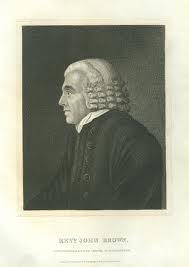
Objection to Establishmentarianism answered by John Brown of Haddington

image

Again, Joshua Hicks has noted another fine answer to an objection concerning Establishmentarianism.  The first one he noted is here. https://rpcnacovenanter.wordpress.com/2013/04/25/objection-answered-concerning-establismentarianism-a-nations-acknowledgement-of-christs-rule/

Another objection commonly put to Establishmentarianism is the fear of tyranny on the part of a non Christian magistrate.  If we press a state established religion, what if a Muslim, Mormon, __________ comes to power? Relatedly, John Brown of Haddington has this to say (and, really, I think his last sentence is quite pithily to the point):

[Objection]:The Christian law of doing to others that which we would have them do to us, demands, That we should allow every man to think, profess, and act in religion as he pleaseth. If we think men heretics, blasphemers or idolaters, our proper method is to manifest the utmost kindness and familiarity to them, that we may gain them to the truth. Every other method is no less dangerous than uncharitable. If orthodox Christian magistrates restrain and punish the spreading of Heathen, Mahometan, and Popish errors or worship,—Heathen, Mahometan and Popish princes will be thereby tempted to restrain and punish the spread of gospel-truth in their dominions, and can plead the very same right for their conduct.
[Answer]:
(1.) Strange! Did not God know the meaning of his own law of equity and kindness between man and man, and the true method of securing or propagating his own religion, when he made or encouraged the laws against seducers, idolaters, and blasphemers above mentioned;—when he commanded his people to avoid false teachers, and not so much as to lodge them in their houses.
(2) With all your pretended benevolence, Would you familiarly lodge in your in your family a notorious pick pocket or an harlot, along with your own children, in order to gain them to the ways of piety and virtue? You would not. Why then, in direct contradiction to the command of God, do you plead for familiarity with robbers of God, defilers, or murderers of souls!
(3) The Christian law of kindness and equity requires me to do all that for the real welfare of my neighbour, in subordination to the glory of God, which I could lawfully wish him, in like circumstances, to do for me? But, must I do evil that good may come, rendering my damnation just? Must I procure “my just liberty to believe and serve God according to his own appointment, by granting my neighbour an unjust, an authoritative licence to insult and blaspheme God, and worship the devil in his stead? Because I wish my neighbour to be helpful to me, in honouring God, and in labouring to render myself and others happy in time and eternity, Must I assist and encourage them in horribly dishonouring God, and destroying themselves and others. None but an atheist, who believes no real difference between moral good and evil, can pretend it.
(4.) When and Where have Faithful adherents to gospel-truth, got much liberty and safety by means of their friends encouraging and protecting gross heresy, blasphemy and idolatry?. . . .
(5) Ought Elijah to have spared, nay protected and encouraged the prophets of Baal, as a mean of securing for himself the protection of Ahab and Jezebel, or, because she was disposed to avenge their death? Must thieves and robbers be benevolently used, protected and suffered to pass unpunished, for fear of provoking their associaus to revenge the just severities used towards them? Let magistrates do their duty, and leave events to God.

(6.) Till you honestly profess yourself an atheist, who believes no intrinsical difference between moral good and evil, never pretend that magistrates, who have their whole power from God, have any power against the truth, or have a right to exercise that power derived from God for the good of mankind, to his dishonour and to the hurt of mankind. Astonishing! Because a power originating from God may be rightfully exercised in promoting his declarative glory, the spread or protection of his gospel, and the happiness of mankind,—May it, must it, therefore, in the hand of other magistrates, be rightfully exercised in promoting blasphemy and robbery of God, and worshipping of devils?—Because it may be rightfully exercised in punishing obstinate and notorious heretics, blasphemers and idolaters,—May it, must it, therefore be rightfully exercised in persecuting and murdering the faithful preachers and professors of Gospel-truths, and worshippers of the true God?—Because magistrates in Britain have a right to punish thieves and murderers, must these in France have as good a right to use Alms givers and skilful and diligent Physicians in the same manner?—Because that which tends to the highest honour of God, and temporal and eternal happiness of mankind ought to be authoritatively tolerated, nay established, every where,—may,—must, that which tends to his highest dishonour, and the most dreadful temporal and eternal ruin of mankind, be every where, in like manner, tolerated or established?—Because in a dearth, benevolent persons may be tolerated, nay highly encouraged in freely distributing wholesome provisions to the poor and needy, may, or must, malicious murderers be therefore tolerated and encouraged in distributing their poisoned morsels, especially if abundantly sweetened among the unwary infants or others?

(7.) The restraint or suitable and seasonable punishment of that which is contrary to God’s law, being commanded by himself, can never have any tendency to introduce corruptions in religion, or persecution for an adherence to gospel-truth. And if some will abuse their power, that must not hinder others, either in church or state, to use theirs aright.

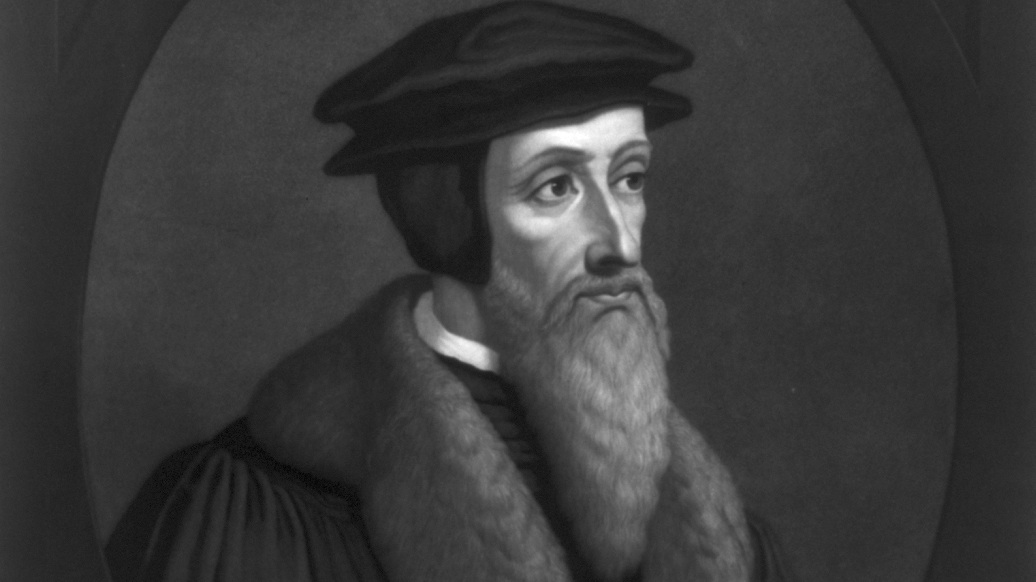
John Calvin on Civil Government and Law.

Image
Institutes of the Christian Religion
Book 4
CHAPTER 20.

OF CIVIL GOVERNMENT.

14. In states, the thing next in importance to the magistrates is laws, the strongest sinews of government, or, as Cicero calls them after Plato, the soul, without which, the office of the magistrate cannot exist; just as, on the other hand, laws have no vigour without the magistrate. Hence nothing could be said more truly than that the law is a dumb magistrate, the magistrate a living law. As I have undertaken to describe the laws by which Christian polity is to be governed, there is no reason to expect from me a long discussion on the best kind of laws. The subject is of vast extent, and belongs not to this place. I will only briefly observe, in passing, what the laws are which may be piously used with reference to God, and duly administered among men. This I would rather have passed in silence, were I not aware that many dangerous errors are here committed. For there are some who deny that any commonwealth is rightly framed which neglects the law of Moses, and is ruled by the common law of nations. How perilous and seditious these views are, let others see: for me it is enough to demonstrate that they are stupid and false. We must attend to the well known division which distributes the whole law of God, as promulgated by Moses, into the moral, the ceremonial, and the judicial law, and we must attend to each of these parts, in order to understand how far they do, or do not, pertain to us. Meanwhile, let no one be moved by the thought that the judicial and ceremonial laws relate to morals. For the ancients who adopted this division, though they were not unaware that the two latter classes had to do with morals, did not give them the name of moral, because they might be changed and abrogated without affecting morals. They give this name specially to the first class, without which, true holiness of life and an immutable rule of conduct cannot exist.

15. The moral law, then (to begin with it), being contained under two heads, the one of which simply enjoins us to worship God with pure faith and piety, the other to embrace men with sincere affection, is the true and eternal rule of righteousness prescribed to the men of all nations and of all times, who would frame their life agreeably to the will of God. For his eternal and immutable will is, that we are all to worship him and mutually love one another. The ceremonial law of the Jews was a tutelage by which the Lord was pleased to exercise, as it were, the childhood of that people, until the fulness of the time should come when he was fully to manifest his wisdom to the world, and exhibit the reality of those things which were then adumbrated by figures (Gal. 3:24; 4:4). The judicial law, given them as a kind of polity, delivered certain forms of equity and justice, by which they might live together innocently and quietly. And as that exercise in ceremonies properly pertained to the doctrine of piety, inasmuch as it kept the Jewish Church in the worship and religion of God, yet was still distinguishable from piety itself, so the judicial form, though it looked only to the best method of preserving that charity which is enjoined by the eternal law of God, was still something distinct from the precept of love itself. Therefore, as ceremonies might be abrogated without at all interfering with piety, so, also, when these judicial arrangements are removed, the duties and precepts of charity can still remain perpetual. But if it is true that each nation has been left at liberty to enact the laws which it judges to be beneficial, still these are always to be tested by the rule of charity, so that while they vary in form, they must proceed on the same principle. Those barbarous and savage laws, for instance, which conferred honour on thieves, allowed the promiscuous intercourse of the sexes, and other things even fouler and more absurd, I do not think entitled to be considered as laws, since they are not only altogether abhorrent to justice, but to humanity and civilised life.

16. What I have said will become plain if we attend, as we ought, to two things connected with all laws—viz. the enactment of the law, and the equity on which the enactment is founded and rests. Equity, as it is natural, cannot be the same in all, and therefore ought to be proposed by all laws, according to the nature of the thing enacted. As constitutions have some circumstances on which they partly depend, there is nothing to prevent their diversity, provided they all alike aim at equity as their end. Now, as it is evident that the law of God which we call moral, is nothing else than the testimony of natural law, and of that conscience which God has engraven on the minds of men, the whole of this equity of which we now speak is prescribed in it. Hence it alone ought to be the aim, the rule, and the end of all laws. Wherever laws are formed after this rule, directed to this aim, and restricted to this end, there is no reason why they should be disapproved by us, however much they may differ from the Jewish law, or from each other (August. de Civit. Dei, Lib. 19 c. 17). The law of God forbids to steal. The punishment appointed for theft in the civil polity of the Jews may be seen in Exodus 22. Very ancient laws of other nations punished theft by exacting the double of what was stolen, while subsequent laws made a distinction between theft manifest and not manifest. Other laws went the length of punishing with exile, or with branding, while others made the punishment capital. Among the Jews, the punishment of the false witness was to “do unto him as he had thought to have done with his brothers” (Deu_19:19). In some countries, the punishment is infamy, in others, hanging; in others, crucifixion. All laws alike avenge murder with blood, but the kinds of death are different. In some countries, adultery was punished more severely, in others more leniently. Yet we see that amid this diversity they all tend to the same end. For they all with one mouth declare against those crimes which are condemned by the eternal law at God, viz., murder, theft, adultery, and false witness; though they agree not as to the mode of punishment. This is not necessary, nor even expedient. There may be a country which, if murder were not visited with fearful punishments, would instantly become a prey to robbery and slaughter. There may be an age requiring that the severity of punishments should be increased. If the state is in a troubled condition, those things from which disturbances usually arise must be corrected by new edicts. In time of war, civilisation would disappear amid the noise of arms, were not men overawed by an unwonted severity of punishment. In sterility, in pestilence, were not stricter discipline employed, all things would grow worse. One nation might be more prone to a particular vice, were it not most severely repressed. How malignant were it, and invidious of the public good, to be offended at this diversity, which is admirably adapted to retain the observance of the divine law. The allegation, that insult is offered to the law of God enacted by Moses, where it is abrogated and other new laws are preferred to it, is most absurd. Others are not preferred when they are more approved, not absolutely, but from regard to time and place, and the condition of the people, or when those things are abrogated which were never enacted for us. The Lord did not deliver it by the hand of Moses to be promulgated in all countries, and to be everywhere enforced; but having taken the Jewish nation under his special care, patronage, and guardianship, he was pleased to be specially its legislator, and as became a wise legislator, he had special regard to it in enacting laws.
Kindgoms Apart “Engaging the Two Kingdoms Perspective” Pre-release….

Image

Kingdoms Apart
Engaging the Two Kingdoms Perspective

Ryan C McIlhenny

There is a portion of this book that has been made available and downloadable. I heartily recommend you download it and read it. Dr. Venema’s part is most excellent. It correctly and clearly brings David VanDrunnen’s views and interpretation of Calvin’s Two Kingdom / Natural Law Theology into question.

After you open the link just click on ‘Sample Chapters: PDF’
Then click ‘save page as’ in your browser so you can retain a copy. I will buy the book as soon as it is made available.  It is suppose to be available Oct. 2012.

There are three broad topics that are considered in Venema’s critique of Van Drunnen’s interpretation of Calvin concerning Two Kingdom’s / Natural Law.

First, Does Calvin view them (the two kingdoms) primarily in terms of two separate realms? Does he make clear identification of the spiritual kingdom with the institutional church and the natural kingdom with the remainder of human life and culture?
Second, Is there a strict correlation between the natural kingdom, which is governed by Christ as Mediator of Creation through natural law, and the spiritual kingdom, which is governed by Christ as Mediator of redemption through moral law as it is set forth in scripture?
Third, What is the relation that Calvin emphasizes between God’s purpose and work as Creator and as Redeemer. How does Calvin construe the relation between God’s purposes in creation and redemption?

http://www.prpbooks.com/Kingdoms-Apart-Engaging-the-Two-Kingdoms-Perspective-2210.html&session=7c179173247ef610b5aeab10bdcb61e1#.UGHyN9plTY0.facebook

http://www.prpbooks.com/samples/9781596384354.pdf

Please sit up and take notice of this issue.  I couldn’t agree more with the assessment of Gideon Strauss, Senior Fellow, Center for Public Justice, Washington, DC, “This is not only an academic debate. The outcome of the debate will have broad implications for Christian schools, colleges, seminaries, and churches and for Christians in the academy, politics, business, the arts, and other realms of cultural activity.”

I venture to even go a bit farther and state that this effects our understanding of Christ (Christology) and how we live our life inwardly as well as outwardly.

The download to this might be rather short lived so get it while you can.

Image