Tullian Tchividjian and Mark Jones’ Reformation 21 blog post

Image

Click here to view Dr. Mark Jones’ Reformation 21 blog post, ‘Tullian’s Trench’


Pastor Tullian Tchividjian of Coral Ridge Presbyterian Church has been removed from the list of contributors on the Gospel Coalition’s blog. I believe his older posts will remain. Maybe Dr. Mark Jones’ challenges concerning sanctification (a Christian’s growth in personal holiness) along with other prominent men such as Richard Phillips, David Murra
y, Daniel Hyde, and Kevin DeYoung have had some influence on the situation. I don’t know if the decision to remove Tullian Tchividjian from being a contributor was made by Pastor Tchividjian himself or the Council Members over at The Gospel Coalition. Either way, I have a hope that the Church is finally getting the point that this issue is important and that it is just as important as Dr. Jones declared it is in his recent Reformation 21 blog post

“In aiming to protect the doctrine of justification, Tchividjian does more harm than good to this precious doctrine. We cannot be light-hearted about this doctrine; it is worth dying for. Even so, we can’t read justification into passages that are clearly talking about sanctification, as Tchividjian is prone to do in many places. When this type of theologizing is done by preachers on a consistent basis, their preaching becomes burdensome, and preaching (and God’s commandments) should not be burdensome. Ironically, by doing this (i.e., reading justification into sanctification), Tchividjian has made, to use his words, a “category” mistake.”

I personally appreciated Mark’s challenge here.

“But perhaps TGC will have the theological fortitude to remove Tchividjian’s blog. And will others say something? Oh that Tullian would be rebuked, not defended, by those wishing to recover the Reformed confession.” MJ

Maybe it is time for some cold reality to be splashed on the face of those who claim to be Confessionally Reformed and or Presbyterian. That reality can be stated like this, Just because you attach the name Reformed to something doesn’t necessarily mean it is good Reformed Theology. Good godly men have been lovingly raising awareness over aberrations concerning the teaching of sanctification and good works for the past few years. What some guys are pawning off as Reformed Theology doesn’t appear to be sound Reformed Theology at all. And that appears to include the teaching of sanctification and good works in its various formulations as noted by Mark Jones in his Reformation 21 blog post.

Additional Follow ups…

Follow up blog post 5/20/14 …. https://rpcnacovenanter.wordpress.com/2014/05/20/tullian-exit-stage-left-dazed-and-confused/

TGC explanation 5/21/14 http://thegospelcoalition.org/article/on-some-recent-changes-at-tgc

We want to give readers help in understanding some of the changes that have gone on at The Gospel Coalition of late. One minister, Tullian Tchividjian, was asked to move his blog off our website. Two other members of the Council, Joshua Harris and C. J. Mahaney, resigned from the Council (Tullian was not a member of the Council). Each move had significantly different reasons behind it.

In Tullian’s case, it was obvious to observers that for some time there has been an increasingly strident debate going on around the issue of sanctification. The differences were doctrinal and probably even more matters of pastoral practice and wisdom. Recently it became clear that the dispute was becoming increasingly sharp and divisive rather than moving toward greater unity. Earlier in the year our executive director spent two days with Tullian in Florida. Coming out of that meeting, it was decided that Tullian would move his blog. Finally the Council at its meeting last week decided that Tullian should move his blog immediately, and we communicated this conclusion to Tullian.

I honestly believe the Westminster Confession of Faith contains one of the best summaries and sound proclamations concerning sanctification and good works. So I will just leave you with its teaching as my final thoughts here.

CHAPTER XIII.

Of Sanctification.

I. They who are effectually called and regenerated, having a new heart and a new spirit created in them, are further sanctified, really and personally, through the virtue of Christ’s death and resurrection, by his Word and Spirit dwelling in them; the dominion of the whole body of sin is destroyed, and the several lusts thereof are more and more weakened and mortified, and they more and more quickened and strengthened, in all saving graces, to the practice of true holiness, without which no man shall see the Lord.

II. This sanctification is throughout in the whole man, yet imperfect in this life: there abideth still some remnants of corruption in every part, whence ariseth a continual and irreconcilable war, the flesh lusting against the Spirit, and the Spirit against the flesh.

III. In which war, although the remaining corruption for a time may much prevail, yet, through the continual supply of strength from the sanctifying Spirit of Christ, the regenerate part doth overcome: and so the saints grow in grace, perfecting holiness in the fear of God.

CHAPTER XVI.

Of Good Works.

I. Good works are only such as God hath commanded in his holy Word, and not such as, without the warrant thereof, are devised by men out of blind zeal, or upon any pretense of good intention.

II. These good works, done in obedience to God’s commandments, are the fruits and evidences of a true and lively faith: and by them believers manifest their thankfulness, strengthen their assurance, edify their brethren, adorn the profession of the gospel, stop the mouths of the adversaries, and glorify God, whose workmanship they are, created in Christ Jesus thereunto, that, having their fruit unto holiness, they may have the end, eternal life.

III. Their ability to do good works is not at all of themselves, but wholly from the Spirit of Christ. And that they may be enabled thereunto, besides the graces they have already received, there is required an actual influence of the same Holy Spirit to work in them to will and to do of his good pleasure; yet are they not hereupon to grow negligent, as if they were not bound to perform any duty unless upon a special motion of the Spirit; but they ought to be diligent in stirring up the grace of God that is in them.

IV. They, who in their obedience, attain to the greatest height which is possible in this life, are so far from being able to supererogate and to do more than God requires, that they fall short of much which in duty they are bound to do.

V. We can not, by our best works, merit pardon of sin, or eternal life, at the hand of God, because of the great disproportion that is between them and the glory to come, and the infinite distance that is between us and God, whom by them we can neither profit, nor satisfy for the debt of our former sins; but when we have done all we can, we have done but our duty, and are unprofitable servants: and because, as they are good, they proceed from his Spirit; and as they are wrought by us, they are defiled and mixed with so much weakness and imperfection that they can not endure the severity of God’s judgment.

VI. Yet notwithstanding, the persons of believers being accepted through Christ, their good works also are accepted in him, not as though they were in this life wholly unblamable and unreprovable in God’s sight; but that he, looking upon them in his Son, is pleased to accept and reward that which is sincere, although accompanied with many weaknesses and imperfections.

VII. Works done by unregenerate men, although for the matter of them they may be things which God commands, and of good use both to themselves and others; yet, because they proceed not from a heart purified by faith; nor are done in a right manner, according to the Word; nor to a right end, the glory of God; they are therefore sinful and can not please God, or make a man meet to receive grace from God. And yet their neglect of them is more sinful, and displeasing unto God.

The Law turned into Gospel / Gospel Obedience

Image

William Perkins ‘Christ fulfilling the law’ in his Exposition of the Sermon on the Mount 5:17

Christ fulfilled the law in men. Men may be of two sorts: elect and reprobates. In His elect, He fulfilled the law two ways: first, by creating faith in their hearts whereby they lay hold on Christ, who for them fulfilled it; secondly, by giving them His own Spirit which maketh them endeavour to fulfil the law; which in Christ is accepted for perfect obedience in this life, and in the life to come is perfect indeed.

Thomas Goodwin (Works, 6:261)

As faith turns the commands of the law into gospel in a regenerate man’s heart, so conscience, in an unregenerate man, turns the gospel into law. As faith writes the law in the heart, and urgeth the duties of it upon evangelical grounds and motives—as the love of Christ, conformity to him, union with him, and the free grace of God—so in a man unregenerate, gospel duties are turned into legal, through the sway and influence of conscience, and that dominion which the covenant of works hath over him.

Samuel Rutherford (The Covenant of Life Opened, 198-199)

The obedience of faith, or Gospel-obedience, in the fourth place, hath less of the nature of obedience than that of Adam, or of the elect angels, or that of Christ’s. It’s true we are called obedient children, and they are called the commandments of Christ, and Christ hath taken the moral law and made use of it in an evangelic way, yet we are more (as it were) patients in obeying gospel-commands. Not that we are mere patients, as Libertines teach; for grace makes us willing, but we have both supernatural habits and influences of grace furnished to us from the grace of Christ, who hath merited both to us; and so in Gospel-obedience we offer more of the Lord’s own and less of our own because he both commands and gives us grace to obey. And so to the elect believer the Law is turned in Gospel, he by his grace fulfilling (as it were) the righteousness of the Law in us by begun new obedience, Rom. 8:4.

Westminster Confession of Faith 19.6

It [the moral law] is likewise of use to the regenerate, to restrain their corruptions, in that it forbids sin: and the threatenings of it serve to show what even their sins deserve; and what afflictions, in this life, they may expect for them, although freed from the curse thereof threatened in the law. The promises of it, in like manner, show them God’s approbation of obedience, and what blessings they may expect upon the performance thereof: although not as due to them by the law as a covenant of works. So as, a man’s doing good, and refraining from evil, because the law encourages to the one and deters from the other, is no evidence of his being under the law; and not under grace. 

Westminster Larger Catechism

Q. 32. How is the grace of God manifested in the second covenant?
A. The grace of God is manifested in the second covenant, in that he freely provideth and offereth to sinners a Mediator, and life and salvation by him; and requiring faith as the condition to interest them in him, promiseth and giveth his Holy Spirit to all his elect, to work in them that faith, with all other saving graces; and to enable them unto all holy obedience, as the evidence of the truth of their faith and thankfulness to God, and as the way which he hath appointed them to salvation.

The commentary of Zacharias Ursinus on the Heidelberg catechism pp. 617,18 objection 8

Obj. 8. The law is the letter which killeth, and is the ministration of death and condemnation. (2 Cor. 3 : 6, 7.) But there is no condemnation to Christians. Therefore, the law does not have respect to Christians who are in Christ Jesus.

Ans. There is here a fallacy of accident ; for the law is not in itself the letter which killeth ; since this comes to pass by the fault of men, who, the more clearly they perceive the difference between themselves and the law, the more fully do they give themselves over to despair in reference to their salvation, and are therefore slam by the law. Again, the law alone, without the gospel, is the letter, that is, it is the doctrine which merely teaches, demands obedience, denounces the wrath of God and death to such as are disobedient, without producing the spiritual obedience which it requires. But when it is joined with the gospel, which is the Spirit, it also commences to become the Spirit, which is effectual in the godly, inasmuch as those who are regenerated commence willingly and cheerfully to yield obedience to the law. The law, therefore, is the letter, 1. By itself and without the gospel. 2. In respect to those who are unregenerated. On the other hand, the gospel is the Spirit; that is, it is the ministration and means through which the Holy Ghost, which works spiritual obedience in us, is given; not indeed as though all who hear, would receive the Holy Ghost and be regenerated, but because faith, by which our hearts are quickened, so that they begin to yield obedience to the law, is received by it. It does not follow, therefore, that the law is no longer to be taught in the church; for Christ himself says: “I am not come to destroy the law, but to fulfill it.” (Matt. 5: 17.) And Paul also says, that we establish the law through faith. (Rom. 3: 31.) Christ fulfilled the law in two respects: his obedience and suffering. He was just and holy in himself and did not violate the law in a single instance, but partly performed in our behalf those things which he was not bound to do, and partly sustained the punishment of the law. He also fulfills the law in us in two ways, by teaching it and granting unto us his Spirit, that so we may commence obedience to it, as we proved when speaking of the abrogation of the law.  

Portions of Herman Bavinck’s Gereformeerde Dogmatiek, 3rd unaltered edition, vol. 4 (Kampen, J. H. Kok, 1918)

Therefore, that law has reached its end in Christ, the seed of promise (Rom.10:4); the believer is free from the law (Gal.4:26f.; 5:1), since he is redeemed through Christ from the curse of the law (Gal.3:13; 4:5), and shares in the Spirit of adoption, the Spirit of freedom (Rom.8:15; 2 Cor.3:16-17; Gal.5:18).
This freedom of faith, however, does not invalidate the law, but establishes it (Rom.3:31), since its legal requirement is fulfilled precisely in those who walk according to the Spirit (Rom.8:4). After all, that Spirit renews believers so that they delight in God’s law according to the inner man and inquire as to what God’s holy will is (Rom.7:22; 12:2; Eph.5:10; Phil.1:10), while they are spurred on through various impulses — the great mercy of God, the example of Christ, the costly price with which they have been purchased, the fellowship of the Holy Spirit, etc. — to the doing of God’s will…..
...The Gospel is temporary, but the law is eternal and is restored precisely through the Gospel. Freedom from the law consists, then, not in the fact that the Christian has nothing more to do with the law, but lies in the fact that the law demands nothing more from the Christian as a condition of salvation. The law can no longer judge and condemn him. Instead he delights in the law of God according to the inner man and yearns for it day and night.


For more great quotes visit  https://rpcnacovenanter.wordpress.com/2012/09/19/sundry-quotes-from-solid-reformed-men-on-law-and-gospel/

Without Holiness No Man Shall See The Lord

1395282_10203329602223504_934315021_n

(Heb 12:14) Follow peace with all men, and holiness, without which no man shall see the Lord:


As I studied the passage mentioned above through the years I came to the conclusion that holiness is a real important issue in the life of the believer. Our holiness matters. It doesn’t save us but it is a result of knowing Christ. I came to understand the Hebrews passage in light of something Jesus said during His sermon on the Mount.

Mat 5:19 Whosoever therefore shall break one of these least commandments, and shall teach men so, he shall be called the least in the kingdom of heaven: but whosoever shall do and teach them, the same shall be called great in the kingdom of heaven.
Mat 5:20 For I say unto you, That except your righteousness shall exceed the righteousness of the scribes and Pharisees, ye shall in no case enter into the kingdom of heaven

The Pharisees and scribes were no slackers in trying to obey the law. But their obedience and performance of it seems to be a bit off kilter as a matter of the heart. In fact the passages following the quote above signify a deeper understanding of the Law. The issue isn’t that I have never committed physical adultery but that Adultery is a matter of the heart just as is the issue of cursing a brother and hating someone being equivalent to murder.

Does our righteousness matter? Of course we can’t measure up but we start to see things differently and obey Christ and do righteous deeds so that he may be Glorified instead of us trying to be holy for our glory alone and justification. Our Holiness Matters. But it is a matter of the heart.

I think Jesus shows us a difference between the righteousness of the Pharisee and that of the just in the following passages.

(Mat 6:5) And when thou prayest, thou shalt not be as the hypocrites are: for they love to pray standing in the synagogues and in the corners of the streets, that they may be seen of men. Verily I say unto you, They have their reward.

(Mat 6:6) But thou, when thou prayest, enter into thy closet, and when thou hast shut thy door, pray to thy Father which is in secret; and thy Father which seeth in secret shall reward thee openly.

The difference is a matter of the heart. Holiness matters. Without it we need to be cautious.

 Let me add to that from the Westminster Confession of Faith to see if it can illuminate us any farther.

CHAPTER XVI.

Of Good Works.

I. Good works are only such as God hath commanded in his holy Word, and not such as, without the warrant thereof, are devised by men out of blind zeal, or upon any pretense of good intention.

II. These good works, done in obedience to God’s commandments, are the fruits and evidences of a true and lively faith: and by them believers manifest their thankfulness, strengthen their assurance, edify their brethren, adorn the profession of the gospel, stop the mouths of the adversaries, and glorify God, whose workmanship they are, created in Christ Jesus thereunto, that, having their fruit unto holiness, they may have the end, eternal life.

III. Their ability to do good works is not at all of themselves, but wholly from the Spirit of Christ. And that they may be enabled thereunto, besides the graces they have already received, there is required an actual influence of the same Holy Spirit to work in them to will and to do of his good pleasure; yet are they not hereupon to grow negligent, as if they were not bound to perform any duty unless upon a special motion of the Spiritbut they ought to be diligent in stirring up the grace of God that is in them.

IV. They, who in their obedience, attain to the greatest height which is possible in this life, are so far from being able to supererogate and to do more than God requires, that they fall short of much which in duty they are bound to do.

V. We can not, by our best works, merit pardon of sin, or eternal life, at the hand of God, because of the great disproportion that is between them and the glory to come, and the infinite distance that is between us and God, whom by them we can neither profit, nor satisfy for the debt of our former sins; but when we have done all we can, we have done but our duty, and are unprofitable servants: and because, as they are good, they proceed from his Spirit; and as they are wrought by us, they are defiled and mixed with so much weakness and imperfection that they can not endure the severity of God’s judgment.

VI. Yet notwithstanding, the persons of believers being accepted through Christ, their good works also are accepted in him, not as though they were in this life wholly unblamable and unreprovable in God’s sight; but that he, looking upon them in his Son, is pleased to accept and reward that which is sincere, although accompanied with many weaknesses and imperfections.

VII. Works done by unregenerate men, although for the matter of them they may be things which God commands, and of good use both to themselves and others; yet, because they proceed not from a heart purified by faith; nor are done in a right manner, according to the Word; nor to a right end, the glory of God; they are therefore sinful and can not please God, or make a man meet to receive grace from God. And yet their neglect of them is more sinful, and displeasing unto God.

Our righteousness is important as it is a fruit of the Spirit. Without holiness of this sort there is much to be worried about if we examine who and what we are. This is one of the reasons we are told by Saint Paul to examine ourselves at the Lord’s Table in 1 Corinthians 11 and in 2 Corinthians 13:5. In fact Jesus basically says the same thing in the Sermon on the Mount which I spoke of before. Here are the two quotes.

2Co 13:5 Examine yourselves, whether ye be in the faith; prove your own selves. Know ye not your own selves, how that Jesus Christ is in you, except ye be reprobates?

Mat 5:23 Therefore if thou bring thy gift to the altar, and there rememberest that thy brother hath ought against thee;
Mat 5:24 Leave there thy gift before the altar, and go thy way; first be reconciled to thy brother, and then come and offer thy gift.

I would caution at the same time that we must not compare our holiness, or ability to perform against our brothers capabilities. That is dangerous. St. Paul tells us this here.

2Co 10:12 For we dare not make ourselves of the number, or compare ourselves with some that commend themselves: but they measuring themselves by themselves, and comparing themselves among themselves, are not wise. 

We all are babes when we come to Christ and are only able to digest so much. We all are different and mature differently. Each of us have different issues. Some of us have deep sin and deep inclinations toward different kinds of sin. Some are much harder to overcome if we have participated in particular sin. Everyone starts off in the faith with different struggles due to our involvement with different kinds of bondage to sin. Deliverance is of the Lord and we are to work out our salvation. That will look very differently for some than others. But God will do things and he will pity us as his children.

Through the Years Psalm 130 has become important to me.

Psa 130:1 Out of the depths have I cried unto thee, O LORD.
Psa 130:2 Lord, hear my voice: let thine ears be attentive to the voice of my supplications.
Psa 130:3 If thou, LORD, shouldest mark iniquities, O Lord, who shall stand?
Psa 130:4 But there is forgiveness with thee, that thou mayest be feared.
Psa 130:5 I wait for the LORD, my soul doth wait, and in his word do I hope.
Psa 130:6 My soul waiteth for the Lord more than they that watch for the morning: I say, more than they that watch for the morning.
Psa 130:7 Let Israel hope in the LORD: for with the LORD there is mercy, and with him is plenteous redemption.
Psa 130:8 And he shall redeem Israel from all his iniquities.

I hope this helps.

Negro Slavery Unjustifiable Rev. Mcleod 1802

Exo 21:16 And he that stealeth a man, and selleth him, or if he be found in his hand, he shall surely be put to death.

The Reformed Presbyterian Church of North America was the second denomination in the United States to oppose Slavery. I believe the first was the Mennonites of German town. In their resolutions they denounced the evil in the 1600’s I believe. On 18 February 1688, they drafted a set of resolutions in opposition to slavery, or what they called “the traffic of men-body.”

Reference: http://avalon.law.yale.edu/17th_century/men01.asp

But I may stand corrected by anyone who can help me with the history.

This was one of the subjects that drew me to Christ due to the fact that I was raised to believe in the dignity of all men no matter what their ethnicity was by my parents. I was asked to join a racist organization while I was in the Navy and I refused even though I was threatened by these people. Knowing my wickedness and seeing that evil was restrained in this world, I knew there had to be a good God. Creation declared his order and control. So I ran to the scriptures for understanding. I had tried to read the scriptures as a young child but with no understanding. I was like the Ethiopian eunuch who needed understanding.

Act 8:26 And the angel of the Lord spake unto Philip, saying, Arise, and go toward the south unto the way that goeth down from Jerusalem unto Gaza, which is desert.
Act 8:27 And he arose and went: and, behold, a man of Ethiopia, an eunuch of great authority under Candace queen of the Ethiopians, who had the charge of all her treasure, and had come to Jerusalem for to worship,
Act 8:28 Was returning, and sitting in his chariot read Esaias the prophet.
Act 8:29 Then the Spirit said unto Philip, Go near, and join thyself to this chariot.
Act 8:30 And Philip ran thither to him, and heard him read the prophet Esaias, and said, Understandest thou what thou readest?
Act 8:31 And he said, How can I, except some man should guide me? And he desired Philip that he would come up and sit with him.
Act 8:32 The place of the scripture which he read was this, He was led as a sheep to the slaughter; and like a lamb dumb before his shearer, so opened he not his mouth:
Act 8:33 In his humiliation his judgment was taken away: and who shall declare his generation? for his life is taken from the earth.
Act 8:34 And the eunuch answered Philip, and said, I pray thee, of whom speaketh the prophet this? of himself, or of some other man?
Act 8:35 Then Philip opened his mouth, and began at the same scripture, and preached unto him Jesus.
Act 8:36 And as they went on their way, they came unto a certain water: and the eunuch said, See, here is water; what doth hinder me to be baptized?
Act 8:37 And Philip said, If thou believest with all thine heart, thou mayest. And he answered and said, I believe that Jesus Christ is the Son of God.
Act 8:38 And he commanded the chariot to stand still: and they went down both into the water, both Philip and the eunuch; and he baptized him.
Act 8:39 And when they were come up out of the water, the Spirit of the Lord caught away Philip, that the eunuch saw him no more: and he went on his way rejoicing.

I obviously went away rejoicing in October of 1981. I started reading the Gospels and came to know God as He gave me understanding. You can read my testimony here.

My perceived Testimony of Christ’s work in my life.

John Calvin and the Mosaic Civil and Judicial Laws

Thank You Wes.

Wes Bredenhof's avatarYINKAHDINAY

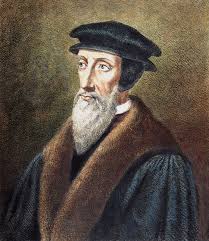
John Calvin

Today I’ll share one last excerpt from the Reformation Church History course.  This is a topic relating to John Calvin that I’ve been studying since my university years.  I was originally motivated to study it because of debates about theonomy in the CanRCs in northern Alberta.  Theonomy is a view in Christian ethics which states that the moral/civil law of the Old Testament is exhaustively and perpetually binding upon civil magistrates.  There is some overlap between that view and what John Calvin taught, but there are also some significant differences.  Some of those differences relate to the context, others to principles.  In what you’ll read below, I don’t deal with the question of the relationship of Calvin’s views to contemporary expressions of theonomy.  This is merely intended to be descriptive of the approach Calvin took.

*********************

Calvin was not only a theologian, but also a Christian political philosopher.  He gave…

View original post 3,090 more words

Antinomianism Reformed Theology’s UnWelcomed Guest

For those who think they are Confessional as R. SCOTT CLARK…

https://rpcnacovenanter.wordpress.com/2014/10/22/very-good-discussion-on-r-scott-clarks-7-point-summary-of-republication/

Now about the book..  I sincerely believe that some who host the White Horse Inn or adhere to some of the Westminster Seminary California doctrines have fallen into the errors this book describes.  Just type in anti-nomianism in the search of this site.  Also remember Clark was a major defender of Tullian.

The original title of the book was going to be ‘Antinomianism: The Golden White Devil’ which is based upon a phrase by Samuel Rutherford where he said,  “But to speak a little of this for the times; the papist is the black devil, taking away all certainty of assurance that we are in Christ, or that any man can know this. The Antinomian is the golden white devil, a spirit of hell clothed with all heaven,.”   But the title change was made by the Publisher to ‘Antinomianism: Reformed Theology’s Unwelcomed Guest’

Had it been included in the publishing campaign it  would have caused more to run out to buy the book in my estimation. Both foe and friend alike. Had Zondervan published this back in the late 80’s they would have highly encouraged the banter.  I say this remembering how they pitted books they published against each other.  They displayed John MacArthur’s book “The Gospel According to Jesus” next to Zane Hodges book “Absolutely Free” in a cardboard display case at all the local Christian bookstores.  The debates were hot.  Even Charles Ryrie wrote a responsive book, ‘So Great a Salvation,’ and Michael Horton chimed in with his book, ‘Christ the Lord’.

On a more serious note, here is Mark Jones speaking more seriously about his 4th book.

Here was my lame review of the book.   I am not a writer and don’t pretend to be.

Antinomianism

Review of Antinomiansim

Amazon site to purchase.
http://www.amazon.com/Antinomianism-Mark-Jones/dp/1596388153

For more reference to Samuel Rutherford’s comment I am going to post what Chris Coldwell has from the Puritanboard here.

ef7f3934587baad33827f2dc5304a1e4

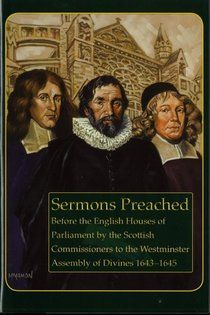
Sermons Preached before the English Houses of Parliament by the Scottish Commissioners to the Westminster Assembly of Divines, 1643–1645. p. 422-427. See context below.

Objection Four. But if I cannot come to Christ without sense of sin and poverty, then is my coming and my act of believing founded and bottomed upon something that I have before I come to Christ.
Answer. This is the question between us and Antinomians, like the very question between us and papists concerning the authority of the Scripture; but I say, as the church’s authority is not the formal reason why I believe Scripture to be the Word of God, yet the church’s authority is not excluded from being a means and motive. For faith cometh by hearing (Rom. 10:17), so Christ himself is the formal reason of my faith. I rest on Christ because he is Christ. Sense of poverty is a strong motive, for except I be driven and compelled to come to Christ, I shall never come. Sense of poverty is not the foundation of the wall, yet it may be a pinning in the wall.
Antinomians teach that inherent qualifications and all works of sanctification are but doubtful evidences to us of our interest in Christ, or that we are in the state of grace.1 What then makes me, John, Anne, by name, sure in my conscience that I am in Christ even to the full removal of all heart-questions?
That which reveals (say they) my evidence of assurance, that I am my well-beloved’s, and that he is mine, is the Spirit speaking personally and particularly to my heart with a voice, ‘Son, be of good cheer, thy sins are forgiven thee.’ And this is that broad seal of the Spirit making an immediate impression on my heart, without any begged testimony of works of sanctification, which is the revealing evidence of my interest in Christ; and the receiving evidence is faith, believing this testimony of the Spirit only because God’s Spirit saith so, not because I have evidences, by particular works of sanctification, such as are universal obedience, sincerity of heart, and love of the brethren.
But to speak a little of this for the times; the papist is the black devil, taking away all certainty of assurance that we are in Christ, or that any man can know this. The Antinomian is the golden white devil, a spirit of hell clothed with all heaven, and the notions of free grace; and first, the well-head of all is, free grace in us is a dream, sanctification inherent is a fiction; Christ is all, there is no grace existent in the creature; grace is all in Christ, and nothing but imputed righteousness, for if works of sanctification are not marks intelligible, or which can come in under the capacity of received light, to be known with any certainty or assurance, [then;]
(1) The joy and rejoicing that we have in the testimony of a good conscience, that in simplicity and godly sincerity, not with fleshly wisdom, but by the grace of God, we have our conversation in the world (2 Cor. 1:12), must be a dream. David, Job, Moses, Samuel, the prophets, and apostles, their joying in a good conscience arises from doubtful and conjectural evidences. Yea, no man can say in any assurance, I believe in Christ, in the inner man, I delight in the Law of the Lord [cf. Ps. 1:2], I am crucified to the World [Gal. 6:14], my conversation is in heaven [Phil. 3:20], for all these are inherent qualifications in the child of God, but they are doubtful and uncertain. How then has God promised to love the righteous, to reward believing with life eternal, to give the prize to him that runneth, etc.?
(2) The testimony of the Spirit bearing witness to our spirit, that we are the children of God (Rom. 8:16), is in this sense an immediate act of the Spirit, because reflex acts of the soul are performed without any other medium or means, but that whereby the direct acts are performed. I know that I know, I know that I believe, my sense by that same immediate operation of the Spirit, by the which I know God, without any other light, teaches me to know that I know God; even as by light I see colors, but my common sense needs not another sun or another light to make me know that I see colors. The lamb when it sees a wolf, though it never did see a wolf before, knows it to be an enemy, and flees; but to make it know that it knows the wolf, there is nothing required but the internal and common instinct of nature. So when I believe in Christ, that habitual instinct of the grace of God, actuated and stirred up by the Spirit of God, makes me know that I know God, and that I believe, and so that I am in Christ to my own certain feeling and apprehension; but this does not hinder, but the assurance of my interest in Christ is made evident to me by other inferior evidences. And hereby we know, that we know him, if we keep his commandments (1 John. 2:3). By the keeping of God’s commandments we do not know simply that we know God, by certainty of faith. But we know that we know God these two ways: [1] We know (the instinct of the new man being stirred up to action by that wind which bloweth when and where it listeth) our knowing of God to be sound, saving and true. We do not so much know our knowing of God, by this supernatural sense, as we know the supernatural qualification and sincerity of our knowing of God. So that we rather know the qualification of the act, that the work is done according to God, than the act according to its substance, though we do also know it in this relation, We know that we have passed from death to life, because we love the brethren (1 John 3:14): that is, our love to the brethren does evidence to us both that we are translated to the Kingdom of grace, and also it does evidence that that translation is real, true, sincere, sound and effectual by love, and all the fruits of the Spirit. [2] By these works of sanctification we have evidence that we have interest in Christ, not as by formal light suggesting to us that the immediate impression of this great and broad seal of the King of glory and his personal and particular testimony is true (for God’s Spirit needs not another witness to add authority to what He says); but because this conclusion (You John, Anna, have interest to Christ to your own feeling) must be proved by Scripture (except with Enthusiasts and fanatic Spiritualists we separate the Word and Spirit); therefore these works of sanctification prove the conclusion consequenter by Scripture and sense, and so lead us to the word of promise, thus to prove this conclusion (I John, Peter, Anna, have interest in Christ, to my own reflect, and private assurance); the major proposition is made good by Scripture, the assumption by sense, and the conclusion leads us to the certainty of faith in the promises, as:
He that believes, and makes sure his belief, by walking not after the flesh, but after the Spirit, has a clear evidence to his own feeling, that he has interest in Christ.But I, John, Peter, Anna, do believe, and do make sure my belief, by walking not after the flesh, but after the Spirit.

Therefore, I, John, Peter, Anna, have a clear evidence to my own feeling, that I have interest in Christ.

The proposition is Scripture (John 3:36; 5:24; 11:25, 26; Rom. 8:1, 2; 1 John 1:4; 2:3). The assumption is made sure by sense, not at all times, but when the wind is fair, and the Spirit is breathing upon the soul; for though I do believe and walk after the Spirit, yet to my own feeling I have only evidence of my interest in Christ, when the Spirit stirs up my sense to compare my faith, walking with the promises of God in Christ. But the Antinomian says, ‘Alas all the certainty then, and the whole personal evidence that I have to know that I have interest in Christ, is ultimately and principally resolved on this weak and rotten foundation, to wit, on my own good works, which being examined by the Law of God, will be found so sinful as they shall involve me under the curse of God, and so the debate of conscience shall stand in full vigor, and I shall never be satisfactorily resolved of my interest in Christ, for you lead me from the impression of the immediate seal of the Spirit to my good works; and this is to drive me off Christ, and put me back again to my old jailer, and my old keeper, the Law.’

But I answer, this consequence is just nothing; for if my good works of sanctification were causes of my peace of conscience, this connection had some color of truth; but though those works are sinful by concomitance, because sin cleaves to them, yet because my supernatural sense of the Spirit suggest that these works are the fruits of faith, and are done in some measure of sincerity, and flow not from the spirit of the law, but from the spirit of the gospel, therefore they lead me to Christ, and drive me upon a clear evangelic promise, that:

(1) The adhering sinfulness of my works are purged in Christ’s blood.

(2) That this promise is a shore before mine eyes. He that fights the good fight, a crown of righteousness is laid up for him (2 Tim. 4:7, 8); He that runs, shall obtain (1 Cor. 9:24). And here is an evangelic word, Blessed are they that do his Commandments, that they may have right to the tree of life, and may enter in through the gates to the city (Rev. 22:14). So that the right of your peace and clear evidence, in assurance of your right to the tree of life, is not laid upon your works, but upon the promises of the gospel. Only your inherent qualification leads you as a moral motive to look to the promises of God, which is the bottom and the foundation of your peace, even as my walking, eating, drinking, may assure me I am a living man, and from the knowledge that I live, I come to know what I stand in relation to the king, as a son and an heir of a crown. Yet my right to the crown (suppose I were the eldest son of a king) stands not on this pillar that I eat and drink and live, but upon my birth and my relation to such a father. All my inherent qualifications do well prove that the tree and stock they grow on is faith, but is it hence proved that the tree is bottomed upon the branches? Nay, but by the contrary, the branches are stocked upon the tree.

(3) If works of sanctification are no sure marks of my interest in Christ, because sin adheres to them, and the sin adhering to them involves me in condemnation, then neither can faith in Christ be a sure mark of my interest in Christ, because faith is always mixed with sinful doubting. For I do not think that Antinomians do believe with all their heart, and sin of unbelief adhering to our faith no less involves the sinner in a curse, being committed against the gospel, than sins against the law. And therefore as faith justifies, not because great and perfect, but because lively and true, as the palsy hand of a man may receive a sum of gold, no less then a strong and healthy arm, so also do our inherent works of sanctification give us evidences that we are in Christ, and so lead us to the promises of the gospel, as signs, not causes of our interest in Christ, and that under this notion, because they are sincerely performed, not because they are perfect and without all contagion of sin cleaving to them.

(4) In exalting Christ’s righteousness one way, by making Christ all, they make Christ nothing another way, by vilifying the glory of sanctifying grace. For we are not by good works to make our calling and election sure to ourselves, and in the evidence of our own consciences, if our good works are no signs of our interest in Christ.

(5) The spirit which these men make the only witness, must be known to us, by Scripture, not to be a deluding spirit, for if this spirit cannot be known by these things which are called, the fruits of the Spirit (Gal. 5:22), to wit, by love, joy, peace, long suffering, gentleness, goodness, faith, meekness, temperance, as the fruits are evidences of the life of the tree, men are to labor for faith and the raptures, impressions, and immediate and personal influence of a Spirit from heaven without any conscience of holy living; and this is the pathway for men void of all sanctification and inherent qualifications to believe they are in Christ. So the devil puts upon holiness inherent and constant walking with God, the soul scandal of fair white civility, and market morality, that so men may walk after the flesh, and believe the testimony of the broad seal of an immediate working Spirit.
———————
1. Dr. Tobias Crisp, Christ Alone Exalted [(London, 1643; ed. S. Crisp, 1690)], Sermon 15, 16, 17.

To order the Sermons book click here.
http://www.naphtali.com/products-page/product-category/pre-publication-sale-scottish-commissioners-sermons/

Four Faithful Sayings in the writings of St. Paul.


Image
Four Faithful Sayings by St. Paul….. 


Number 1
(1Ti 1:15) This is a faithful saying, and worthy of all acceptation, that Christ Jesus came into the world to save sinners; of whom I am chief.

Number 2
(1Ti 4:1) Now the Spirit speaketh expressly, that in the latter times some shall depart from the faith, giving heed to seducing spirits, and doctrines of devils;
(1Ti 4:2) Speaking lies in hypocrisy; having their conscience seared with a hot iron;
(1Ti 4:3) Forbidding to marry, and commanding to abstain from meats, which God hath created to be received with thanksgiving of them which believe and know the truth.
(1Ti 4:4) For every creature of God is good, and nothing to be refused, if it be received with thanksgiving:
(1Ti 4:5) For it is sanctified by the word of God and prayer.
(1Ti 4:6) If thou put the brethren in remembrance of these things, thou shalt be a good minister of Jesus Christ, nourished up in the words of faith and of good doctrine, whereunto thou hast attained.
(1Ti 4:7) But refuse profane and old wives’ fables, and exercise thyself rather unto godliness.
(1Ti 4:8) For bodily exercise profiteth little: but godliness is profitable unto all things, having promise of the life that now is, and of that which is to come.
(1Ti 4:9) This is a faithful saying and worthy of all acceptation.
(1Ti 4:10) For therefore we both labour and suffer reproach, because we trust in the living God, who is the Saviour of all men, specially of those that believe.
(1Ti 4:11) These things command and teach.
1Ti 4:12  Let no one despise your youth, but be an example to the believers in word, in conduct, in love, in spirit, in faith, in purity. 
1Ti 4:13  Till I come, give attention to reading, to exhortation, to doctrine. 
1Ti 4:14  Do not neglect the gift that is in you, which was given to you by prophecy with the laying on of the hands of the eldership. 
1Ti 4:15  Meditate on these things; give yourself entirely to them, that your progress may be evident to all. 
1Ti 4:16  Take heed to yourself and to the doctrine. Continue in them, for in doing this you will save both yourself and those who hear you. 

Number 3
(2Ti 2:7) Consider what I say; and the Lord give thee understanding in all things.
(2Ti 2:8) Remember that Jesus Christ of the seed of David was raised from the dead according to my gospel:
(2Ti 2:9) Wherein I suffer trouble, as an evil doer, even unto bonds; but the word of God is not bound.
(2Ti 2:10) Therefore I endure all things for the elect’s sakes, that they may also obtain the salvation which is in Christ Jesus with eternal glory.
(2Ti 2:11) It is a faithful saying: For if we be dead with him, we shall also live with him:
(2Ti 2:12) If we suffer, we shall also reign with him: if we deny him, he also will deny us:
(2Ti 2:13) If we believe not, yet he abideth faithful: he cannot deny himself.
(2Ti 2:14) Of these things put them in remembrance, charging them before the Lord that they strive not about words to no profit, but to the subverting of the hearers.
(2Ti 2:15) Study to shew thyself approved unto God, a workman that needeth not to be ashamed, rightly dividing the word of truth.

Number 4
(Tit 3:1) Put them in mind to be subject to principalities and powers, to obey magistrates, to be ready to every good work,
(Tit 3:2) To speak evil of no man, to be no brawlers, but gentle, shewing all meekness unto all men.
(Tit 3:3) For we ourselves also were sometimes foolish, disobedient, deceived, serving divers lusts and pleasures, living in malice and envy, hateful, and hating one another.
(Tit 3:4) But after that the kindness and love of God our Saviour toward man appeared,
(Tit 3:5) Not by works of righteousness which we have done, but according to his mercy he saved us, by the washing of regeneration, and renewing of the Holy Ghost;
(Tit 3:6) Which he shed on us abundantly through Jesus Christ our Saviour;
(Tit 3:7) That being justified by his grace, we should be made heirs according to the hope of eternal life.
(Tit 3:8) This is a faithful saying, and these things I will that thou affirm constantly, that they which have believed in God might be careful to maintain good works. These things are good and profitable unto men.

God’s Word is Amazing!  And to think that some people think this stuff originated from the minds of men.  

Good?

“America is great because she is good. If America ceases to be good, America will cease to be great.”
― Alexis de Tocqueville

Mat 19:16 Now behold, one came and said to Him, “Good Teacher, what good thing shall I do that I may have eternal life?”
Mat 19:17 So He said to him, “Why do you call Me good? No one is good but One, that is, God. But if you want to enter into life, keep the commandments.”

Mat 22:35 Then one of them, a lawyer, asked Him a question, testing Him, and saying,
Mat 22:36 “Teacher, which is the great commandment in the law?”
Mat 22:37 Jesus said to him, ‘YOU SHALL LOVE THE LORD YOUR GOD WITH ALL YOUR HEART, WITH ALL YOUR SOUL, AND WITH ALL YOUR MIND.’
Mat 22:38 This is the first and great commandment.
Mat 22:39 And the second is like it: ‘YOU SHALL LOVE YOUR NEIGHBOR AS YOURSELF.’
Mat 22:40 On these two commandments hang all the Law and the Prophets.”
Mat 22:41 While the Pharisees were gathered together, Jesus asked them,
Mat 22:42 saying, “What do you think about the Christ? Whose Son is He?” They said to Him, “The Son of David.”
Mat 22:43 He said to them, “How then does David in the Spirit call Him ‘LORD,’ saying:
Mat 22:44 ‘THE LORD SAID TO MY LORD, “SIT AT MY RIGHT HAND, TILL I MAKE YOUR ENEMIES YOUR FOOTSTOOL” ‘?
Mat 22:45 If David then calls Him ‘LORD,’ how is He his Son?”

1Ti 3:16 And without controversy great is the mystery of godliness: God was manifested in the flesh, Justified in the Spirit, Seen by angels, Preached among the Gentiles, Believed on in the world, Received up in glory.

Joh 1:1 In the beginning was the Word, and the Word was with God, and the Word was God.
Joh 1:2 He was in the beginning with God.
Joh 1:3 All things were made through Him, and without Him nothing was made that was made.
Joh 1:4 In Him was life, and the life was the light of men.
Joh 1:5 And the light shines in the darkness, and the darkness did not comprehend it.

Joh 1:14 And the Word became flesh and dwelt among us, and we beheld His glory, the glory as of the only begotten of the Father, full of grace and truth.
Joh 1:15 John bore witness of Him and cried out, saying, “This was He of whom I said, ‘He who comes after me is preferred before me, for He was before me.’ “

Joh 8:52 Then the Jews said to Him, “Now we know that You have a demon! Abraham is dead, and the prophets; and You say, ‘If anyone keeps My word he shall never taste death.’
Joh 8:53 Are You greater than our father Abraham, who is dead? And the prophets are dead. Who do You make Yourself out to be?”
Joh 8:54 Jesus answered, “If I honor Myself, My honor is nothing. It is My Father who honors Me, of whom you say that He is your God.
Joh 8:55 Yet you have not known Him, but I know Him. And if I say, ‘I do not know Him,’ I shall be a liar like you; but I do know Him and keep His word.
Joh 8:56 Your father Abraham rejoiced to see My day, and he saw it and was glad.”
Joh 8:57 Then the Jews said to Him, “You are not yet fifty years old, and have You seen Abraham?”
Joh 8:58 Jesus said to them, “Most assuredly, I say to you, before Abraham was, I AM.”

Php 2:5 Let this mind be in you which was also in Christ Jesus,
Php 2:6 who, being in the form of God, did not consider it robbery to be equal with God,
Php 2:7 but made Himself of no reputation, taking the form of a bondservant, and coming in the likeness of men.
Php 2:8 And being found in appearance as a man, He humbled Himself and became obedient to the point of death, even the death of the cross.

Rom 3:10 As it is written: “THERE IS NONE RIGHTEOUS, NO, NOT ONE;
Rom 3:11 THERE IS NONE WHO UNDERSTANDS; THERE IS NONE WHO SEEKS AFTER GOD.
Rom 3:12 THEY HAVE ALL TURNED ASIDE; THEY HAVE TOGETHER BECOME UNPROFITABLE; THERE IS NONE WHO DOES GOOD, NO, NOT ONE.”
Rom 3:13 “THEIR THROAT IS AN OPEN TOMB; WITH THEIR TONGUES THEY HAVE PRACTICED DECEIT”; “THE POISON OF ASPS IS UNDER THEIR LIPS”;
Rom 3:14 “WHOSE MOUTH IS FULL OF CURSING AND BITTERNESS.”
Rom 3:15 “THEIR FEET ARE SWIFT TO SHED BLOOD;
Rom 3:16 DESTRUCTION AND MISERY ARE IN THEIR WAYS;
Rom 3:17 AND THE WAY OF PEACE THEY HAVE NOT KNOWN.”
Rom 3:18 “THERE IS NO FEAR OF GOD BEFORE THEIR EYES.”
Rom 3:19 Now we know that whatever the law says, it says to those who are under the law, that every mouth may be stopped, and all the world may become guilty before God.
Rom 3:20 Therefore by the deeds of the law no flesh will be justified in His sight, for by the law is the knowledge of sin.
Rom 3:21 But now the righteousness of God apart from the law is revealed, being witnessed by the Law and the Prophets,
Rom 3:22 even the righteousness of God, through faith in Jesus Christ, to all and on all who believe. For there is no difference;
Rom 3:23 for all have sinned and fall short of the glory of God,
Rom 3:24 being justified freely by His grace through the redemption that is in Christ Jesus,
Rom 3:25 whom God set forth as a propitiation by His blood, through faith, to demonstrate His righteousness, because in His forbearance God had passed over the sins that were previously committed,
Rom 3:26 to demonstrate at the present time His righteousness, that He might be just and the justifier of the one who has faith in Jesus.

1Co 15:1 Moreover, brethren, I declare to you the gospel which I preached to you, which also you received and in which you stand,
1Co 15:2 by which also you are saved, if you hold fast that word which I preached to you—unless you believed in vain.
1Co 15:3 For I delivered to you first of all that which I also received: that Christ died for our sins according to the Scriptures,
1Co 15:4 and that He was buried, and that He rose again the third day according to the Scriptures,

Joh 1:9 That was the true Light which gives light to every man coming into the world.
Joh 1:10 He was in the world, and the world was made through Him, and the world did not know Him.
Joh 1:11 He came to His own, and His own did not receive Him.
Joh 1:12 But as many as received Him, to them He gave the right to become children of God, to those who believe in His name:

Rom 10:2 For I bear them witness that they have a zeal for God, but not according to knowledge.
Rom 10:3 For they being ignorant of God’s righteousness, and seeking to establish their own righteousness, have not submitted to the righteousness of God.
Rom 10:4 For Christ is the end of the law for righteousness to everyone who believes.
Rom 10:5 For Moses writes about the righteousness which is of the law, “THE MAN WHO DOES THOSE THINGS SHALL LIVE BY THEM.”
Rom 10:6 But the righteousness of faith speaks in this way, “DO NOT SAY IN YOUR HEART, ‘WHO WILL ASCEND INTO HEAVEN?’ ” (that is, to bring Christ down from above)
Rom 10:7 or, ” ‘WHO WILL DESCEND INTO THE ABYSS?’ ” (that is, to bring Christ up from the dead).
Rom 10:8 But what does it say? “THE WORD IS NEAR YOU, IN YOUR MOUTH AND IN YOUR HEART” (that is, the word of faith which we preach):
Rom 10:9 that if you confess with your mouth the Lord Jesus and believe in your heart that God has raised Him from the dead, you will be saved.
Rom 10:10 For with the heart one believes unto righteousness, and with the mouth confession is made unto salvation.
Rom 10:11 For the Scripture says, “WHOEVER BELIEVES ON HIM WILL NOT BE PUT TO SHAME.”
Rom 10:12 For there is no distinction between Jew and Greek, for the same Lord over all is rich to all who call upon Him.
Rom 10:13 For “WHOEVER CALLS ON THE NAME OF THE LORD SHALL BE SAVED.”

Only God is good and we need a Saviour to reconcile our hearts to God so that we can know what good is. Our hearts left alone are perverse. If it feels good do it seems to be the cry of our hearts.  But it isn’t the cry of goodness. The references about love, hate, and lust in the first Chapters of Saint Matthew’s Gospel reveal that our hearts and actions are wrong on a deep level.

That is why I love the word REPENT. There is hope. Even for me.

This is why I love America…… I am a direct descendent of William Bradford. We can’t be good without the source of Good.  Jesus Christ.  He came to reconcile us to it.

An American.
Randy Martin Snyder

Clark is not teaching the Broad view of the Westminster Divines.

And He said something about my dog not barking.

Image

http://heidelblog.net/2013/11/heidelcast-making-some-sense-of-the-republication-debate-pt-1-history/#comment-283945

Great expose’ from a comment Dr. R. Scott Clark made.  I feel vindicated.  He is not teaching according to the Westminster Standards.  He is more inline with the Theology of Meredith Kline or dare I say Lee Irons.

“That God might have arranged a temporary, national covenant with Israel such that she may be said to have “merited” temporal blessings in the land is a view that has been held in the history of Reformed theology. It is probably a minority view but it has been held.

I would not put it that way myself. As I’ve said many times, there’s too much evidence in the history of Israel for me to think that even the temporal blessings were merited. Nevertheless, it is also the case that Scripture does speak to Israel in legal terms and that, is, in my view, the material question in republication. I agree with the broad mainstream of classic Reformed writers in the 16th and 17th centuries and with the Marrow of Modern Divinity, that the old covenant (Moses-David-Prophets) was both an administration of the covenant of grace and an administration of the covenant of works.” R. Scott Clark

It is probably a minority view?  It definitely isn’t the Westminster Confessional view.   Broad Mainstream?  In my estimation Dr. Clark is teaching contrary to the Broad view of the Westminster Confession of Faith.  I am not so sure he is teaching according to the Marrow Men even.  Please just finally acknowledge it Dr. Clark.  Clark is Lutheran instead of Reformed.  Read Bavinck and the Divines of the Westminster Assembly.  Put Clark in the Holding Pen and read the Divines and Bavinck.  SMH.

Joel Beeke and Mark Jones acknowledged Owen to be in the Minority Position concerning the Mosaic Covenant. They still have great respect for Owen as I do.  Why can’t Dr. Clark acknowledge he holds to the Minority View also? (Chapter 18 of Puritan Theology) Just be honest and say what you are Dr. Clark, ‘A Minority Man’ which teaches contrary to the Westminster Assembly.

Maybe Dr. Clark isn’t skirting the issue any longer.  https://rpcnacovenanter.wordpress.com/2013/10/08/skirting-the-issue/  Maybe he just wants the minority view of yesteryear to be a Newly Revised Confessional MajorityView of today.

It seems Clark is all over the place on this topic.  He says one thing one day and another thing on a different day. Plus, the one thing he says about being inline with the Marrow Men I am not sure about.  They have risen up in my ear on the Puritanboard and in private correspondence to affirm that that isn’t true.  https://rpcnacovenanter.wordpress.com/2014/07/05/the-marrow-of-modern-divinity-and-the-recent-republication-issue/

Follow him and his interactions here if you can.

http://heidelblog.net/2013/10/is-republication-really-that-confusing/#comment-167363