
Pinehill Nature Preserve
Pinehill Nature Preserve

Pinehill Nature Preserve

At Pinehill Nature Preserve
I am stealing this from my Pastor James Faris since I uploaded the sermon. Anyways here is a very cool partial blog he did and the sermon that he preached on this.
You can read the whole blog post here. http://gentlereformation.org/2011/12/22/the-psalter-smart-phone-of-the-soul/#comment-3677
Be very Encouraged,
Randy
Apple used to use that catchy phrase “there’s an app for that.” Need to send flowers to mom? there’s an app for that. Need to know the name of the constellation of stars in the sky overhead? There’s an app for that. Need supper? There’s an app for that.
Well, whatever your circumstance of life, there’s a Psalm for that:
Contemplating origins? Think Psalm 33.
Considering the consummation of the age? Think Psalm 149.
Rising from bed? Think Psalm 5.
Going to bed? Think Psalm 4.
Awake at night? Think Psalm 63.
Ready to eat? Think Psalm 145.
Thirsty? Think Psalm 42.
Going to work? Think Psalm 104.
Celebrating the Lord’s Day? Think Psalm 122.
Checking your genealogy? Think Psalm 16.
Your beginning? Think Psalm 139.
Your birth? Think Psalm 71.
Celebrating a birthday? Think Psalm 104.
Enjoying childhood? Think Psalm 34.
Need motivation to study well? Think Psalm 111.
Gazing at the stars? Think Psalm 19.
Maturing as a youth? Think Psalm 119.
Ready to pop the question? Think Psalm 45.
Bringing children into the world? Think Psalm 128.
Questions about parenting? Think Psalm 103.
Playing with your grandchildren? Think Psalm 71.
Harvest time here? Think Psalm 65.
Seasons changing around you? Think Psalm 147.
Traveling? Think Psalm 121.
On the water? Think Psalm 107.
Remembering history? Think Psalm 78.
Talking with your financial planner? Think Psalm 49.
Tempted by the world? Think Psalm 73.
Disappointed by life? Think Psalm 77.
Weeping over your sins? Think Psalm 51.
Engaged in evangelism? Think Psalm 96.
Overcome by fear? Think Psalm 91.
Angered by the wickedness of men? Think Psalm 94.
Disappointed by civic elections? Think Psalm 2.
Rejoicing in the incarnation? Think Psalm 113.
Prone to worry? Think Psalm 130.
Growing old? Think Psalm 92.
Butchering or preparing meat? Think Psalm 8.
Going to war? Think Psalm 18.
In the process of dying? Think Psalm 6.
Mourning the death of a loved one? Think Psalm 116.
Anticipating eternity? Think Psalm 73.
Of course, you can add other life experiences to the list. Why is the Psalter the smartphone of the soul? Rowland Prothero notes: “The Book of Psalms contains the whole music of the heart of man, swept by the hand of his Maker. In it are gathered the lyrical burst of his tenderness, the moan of his penance, the pathos of his sorrow, the triumph of his victory, the despair of his defeat, the firmness of his confidence, the rapture of his assured hope. In it is presented the anatomy of all parts of the human soul. In it, as Heine says, are collected ‘sunrise and sunset, birth and death, promise and fulfillment – the whole drama of humanity.’”
Thus, we carry the Psalms in our mental pockets daily. Our minds race here to check for truths, to hear from God, and see our decisions and emotions governed when we cannot access the rest of Scripture. This has been my experience of life…from birthdays, to emergency room visits, to maternity wards, to the graveside, and beyond.
Smartphones are great, but they only go so far. They may reveal where you are in a building, but they cannot reveal what is in your building. They may map the stars in the sky, but they cannot unite you to the maker of the stars. They may point you to bread on earth, but they cannot feed you bread from heaven. The Psalms do all of these things and more. Phone programs fail, contracts expire, and phones are dropped in toilets. The Psalms hidden in the heart will never fail you. They will cause the peace of Christ to rule in your heart. They will order your life. But the Psalms only function this way in the hearts of those who own them.
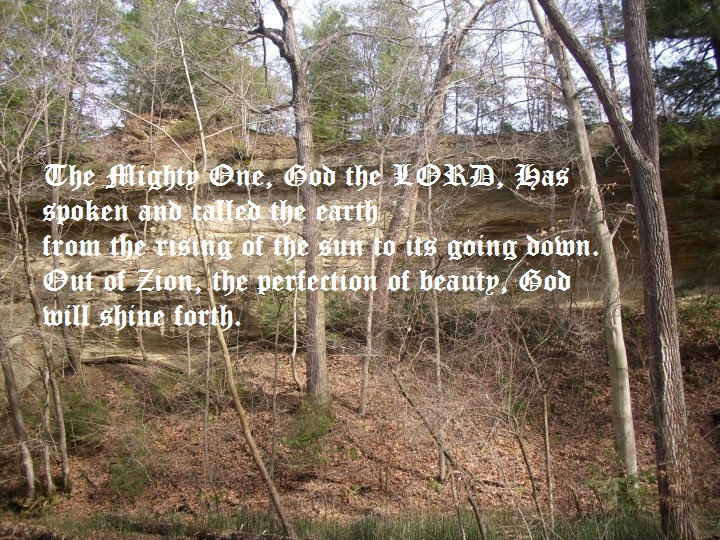
Just because it is beautiful and I am longing for a day in magnificent beauty. Tyranny of time, the good, and bondage to less means keeps me thankful for the memories we have made and for the pictures we have taken.
I love mspaint! LOL
Psalm 50:1,2
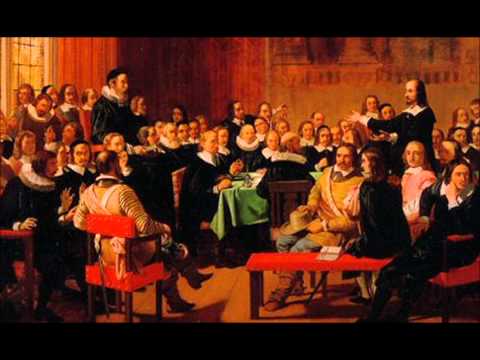
Following the book ‘The Law Is Not of Faith’ (see pp. 10-11, 43), DR. R. Scott Clark, believes that chapter 19 of the Westminster Confession of Faith “clearly suggests”that the covenant of works was republished at Mt. Sinai. The argument goes something like this: Westminster Confession of Faith 19.1 states, God gave to Adam a law, as a covenant of works. Paragraph 2 begins with “This law,” obviously referring to the law described in paragraph 1. Since the law in paragraph 1 was described as a covenant of works, the law of paragraph 2 must be as well.
This argument is nothing new as it is one that I (Pastor Patrick Ramsey) addressed in a journal article back in 2004, which you can find here. Its appearance in the book TLNF, however, may well be the first time it has appeared in print. And quite frankly I am surprised to see the editors using it because it is such a poor argument and one that is easily answered. Chapter 19 does not say that the covenant of works was delivered or republished at Mt. Sinai. It says the law was delivered at Mt. Sinai. What law? “This law” of paragraph 2 does refer to the law in paragraph 1, i.e. the one given to Adam as a covenant of works. But what the editors of the book TLNF and Clark fail to see is that “This law” is further defined in paragraphs 3, 5, and 6. In these sections we learn that “this law” is the moral law (paragraph 3), which is the perfect rule of righteousness (paragraph 2) binding on all persons in all ages (paragraph 5) and is given to true believers not as a covenant of works (paragraph 6). Therefore, WCF 19 clearly does not suggest or indicate that the covenant of works was republished at Mt. Sinai.
Now since the law that was delivered at Mt. Sinai was the moral law, it is the same law that was given to Adam in the garden. Indeed it is the same law that binds all men in every age as the Confession rightly says. Consequently, it is correct to say that part of the content of the covenant of works was republished at Mt. Sinai and for that matter in the new covenant since the moral law is restated there as well. This is what Brent Ferry calls material republication (see TLNF, 91-92). It is important to note, however, that this is republication of the law and not the covenant of works. This is why it is misleading to refer to material republication as a sense of the republication of the covenant of works. There is a difference between law and covenant or at least the Puritans thought there is. In other words, to say that the law (or content of the covenant of works) was republished is different from saying that the covenant of works was republished at Mt. Sinai.
Notice in 19.1 of the Confession that the law given to Adam is qualified by the phrase “as a covenant of works.” This qualifier is missing in paragraph 2 and it is replaced with “a perfect rule of righteousness.” In the garden the law was a perfect rule of righteousness and the condition of the covenant of works. But at Mt. Sinai the law no longer serves as the condition of a covenant of works though it does continue to be a perfect rule of righteousness. It is this Puritan and Confessional distinction that Clark and the editors of TLNF fail to incorporate in their reading of chapter 19. As a result they completely misread the Confession.
If we would follow the Confession’s teaching on the law as explained in chapter 19 it is imperative that we distinguish between the law as given to Adam from the law as given to Israel. James Durham explains:
James Durham
Then you would distinguish between this law, as given to Adam, and as given to Israel. For as given to him, it was a covenant of works; but, as given to them, it was a covenant of grace; and so from us now it calls for gospel duties, as faith in Christ (1 Tim. 1:5), repentance, hope in God, etc. And although it call for legal duties, yet in a gospel-manner; therefore we are in the first commandment commanded to have God for our God, which cannot be obeyed by sinners but in Christ Jesus; the covenant of works being broken, and the tie of friendship thereby between God and man made void. So that now men, as to that covenant, are without God in the world, and without Christ and the promises (Eph. 2:21-13). And so our having God for our God (which is pointed at in the preface to the commandments) and Christ for our Savior, and closing with his righteousness, and the promises of the covenant (which are all yea and amen in him) must go together.[1]
I might also add that I find it quite ironic that Klineans appeal to Fisher and Boston for support of the republication of the covenant of works. The position advocated by Fisher and Boston is one that is repudiated by Kline. Furthermore, their (mis)reading of chapter 19 would support the position of Fisher and Boston but there is no way it could support Kline’s republication view. Perhaps this is why they tend to argue for republication in general (“in some sense”) and not for specific views of republication. But of course it is fallacious to argue that since republication in some sense is found in the Reformed tradition that therefore a particular view of republication is Reformed. I have previously argued that the particular view espoused by Kline and Karlberg, like its closest predecessor, namely the view held by Samuel Bolton, is incompatible with the Westminster Standards.
Rev. Patrick Ramsey OPC
[1] James Durham, Practical Exposition of the Ten Commandments, 62. See Francis R. Beattie, The Presbyterian Standards (repr., Greenville, S.C.: Southern Presbyterian Press, n.d.), 249; Ball, A Treatise of the Covenant of Grace, 15, 113.
A Pastoral acquaintance of mine wrote the above. He is most correct in my estimation. I have communicated with Dr. Clark on this topic. He does believe that the law in Chapter 19 is equivalent to a Covenant of Works (in some sense). I believe he is incorrect. As Robert Shaw states, Adam was created under this Law in a natural form but then was brought under it in the form of a Covenant.
Section I.–God gave to Adam a law, as a covenant of works, by which he bound him and all his posterity to personal, entire, exact, and perpetual obedience; promised life upon the fulfilling, and threatened death upon the breach of it; and endued him with power and ability to keep it.
ExpositionThe law, as thus inscribed on the heart of the first man, is often styled the law of creation, because it was the will of the sovereign Creator, revealed to the reasonable creature, by impressing it upon his mind and heart at his creation. It is also called the moral law, because it was a revelation of the will of God, as his moral governor, and was the standard and rule of man’s moral actions. Adam was originally placed under this law in its natural form, as merely directing and obliging him to perfect obedience. He was brought under it in a covenant form, when an express threatening of death, and a gracious promise of life, was annexed to it; and then a positive precept was added, enjoining him not to eat of the fruit of the tree of knowledge, as the test of his obedience to the whole law.–Gen. ii. 16, 17. That this covenant was made with the first man, not as a single person, but as the federal representative of all his natural posterity, has been formerly shown. The law, as invested with a covenant form, is called, by the Apostle Paul, “The law of works” (Rom. iii. 27); that is, the law as a covenant of works. In this form, the law is to be viewed as not only prescribing duty, but as promising life as the reward of obedience, and denouncing death as the punishment of transgression. ….
Section II.–This law, after his fall, continued to be a perfect rule of righteousness; and, as such, was delivered by God upon mount Sinai in ten commandments, and written in two tables; the first four commandments containing our duty toward God, and the other six our duty to man.
Exposition
Upon the fall of man, the law, considered as a covenant of works, was annulled and set aside; but, considered as moral, it continued to be a perfect rule of righteousness. That fair copy of the law which had been inscribed on the heart of the first man in his creation, was, by the fall, greatly defaced, although not totally obliterated. Some faint impressions of it still remain on the minds of all reasonable creatures. Its general principles, such as, that God is to be worshipped, that parents ought to be honoured, that we should do to others what we would reasonably wish that they should do to us–such general principles as these are still, in some degree, engraved on the minds of all men. – Rom. ii. 14,15. But the original edition of the law being greatly obliterated, God was graciously pleased to give a new and complete copy of it. He delivered it to the Israelites from Mount Sinai, with awful solemnity. In this promulgation of the law, he summed it up in ten commandments; and, therefore, it is commonly styled the Law of the Ten Commandments.
Notice what Shaw states. He notes the Original Natural form of the Law that Adam was under. Then he notes that Adam was brought under a Covenant of Works when an express threatening of death, and a gracious promise of life, was annexed to the Law. This might seem strange to some of you because you have been taught and drank the Klinean (Westminster Seminary California) Kool Aid. It is kind of like the Scoffield Bible. The media has so influenced us that we just accept a certain view as biblical and as historical. But I don’t believe it is the understanding that the majority of the Divines held at the Westminster Assembly. And I think I can show this to be true.
The reason I am starting this topic on the different views of Law concerning the Covenant of Works and the Mosaic is because so much of this teaching is where Klineans (followers of Meredith Kline’s teaching) start to go off the rails when they get to the Mosaic Covenant and the Republication issue. They want to import a Covenant of Works scheme into the Mosaic Covenant that dicotomizes Law and Gospel. They make the Law and Gospel opposed to each other in a way that is unbiblical. The Law and Gospel are not opposed to each other as I note in a previous blog on the book of Galatians.
Since I wrote that blog I have been led to many Reformers of the past who share the same view I have learned. The Mosaic Law is a schoolmaster and not opposed to the Gospel. (Galatians 3:21) Samuel Rutherford, Anthony Burgess, James Durham, and Herman Bavinck all do a good job explaining this. I believe Klineanism leads to a denial that the Mosaic Covenant and the New Covenant are the same in Substance as our Confession states they are in Chapter 7.5,6. This view does lead to what I have termed Modern Reformed Thought and it appears it is leading to what some call Escondido Two Kingdom / Natural Law Theology and a poor definition of the Gospel in my estimation. It also denies some of the authority that Christ has as King. No, I am not a Theonomist. I am a Covenanter. I do believe in the Mediatorial Kingship of Christ. But that is a side issue.
The following words about this movement aren’t mine but I agree with them….
The basic problem with the new scheme is the way it makes the covenant of works co-ordinate with the covenant of grace in the Mosaic economy. They refer to the Abrahamic promise and the so-called “works principle” of the Sinaitic covenant functioning side by side. The older divines would speak of the covenant of works as subordinate to the covenant of grace. It was serving in the way we see it in action in Romans 7, for example, bringing conviction of sin and driving the people to the promised Christ. (Incidentally, the same is true with respect to the law-gospel relationship now.) Besides this ordo salutis aspect, there was also the historia salutis aspect. The outward service of weak and beggarly elements bound the people to the faith of Christ until Christ came. This was a temporary “addition” which had respect to their minority as sons and had all the appearance of making Israel look like they were servants in bondage. This has been abrogated in Christ and the son has come to maturity in the Spirit. But as to the essential nature of the Sinaitic covenant, it was always looked upon as an administration of the covenant of grace. The catechetical teaching on the preface to the ten commandments drove this point home in an experiential way which could not be easily forsaken.
Further problems arise once this basic departure is discerned. One begins to see a metaphysical reworking of the categories of grace and justice in relation to the “covenant of nature.” Instead of a providential dispensation (see Shorter Catechism question 12), the covenant of works is turned into a creational entity which characterises the natural relationship between God and man. Human morality is, in its very essence, made a covenant of works. Grace is only operative where sin abounds.
Anyways, I don’t hate anyone and I recognize that I have brothers in all walks and theological persuasions so don’t think I am out to be at anyone’s throat. I am just trying to work this out and put this in a historical setting also. I have been accused of federal vision and historical revision lately. Something about a red dog or a dog not barking…. I have been trying to work with Drs. and Professors of the faith. I am not swinging my bat from my shoulder alone. I am a man under authority. Pray for me.
May we all grow in our understanding…..
R. Martin Snyder
also reference these blogs.
Dr. Robert Strimple writes specifically on this topic also.
Dr. Robert B. Strimple on the Mosaic Covenant and Republication of the Covenant of Works
The Covenant of Life chapter XI by Samuel Rutherford
Samuel Rutherford
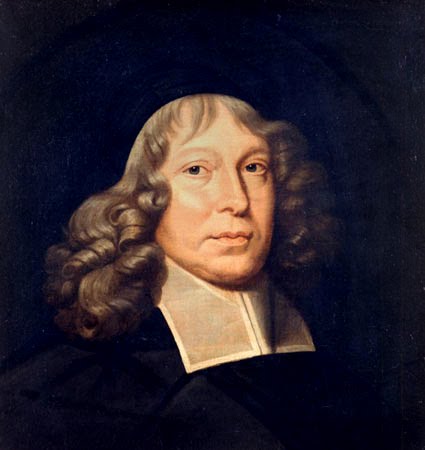
was a very prominent Scottish member of the Westminster Assembly, which sat in the 1640s. He published an extensive treatise on the covenant. It appeared in 1655, as was entitled The covenant of life opened, or, A treatise of the covenant of grace. In the eleventh chapter, Rutherford deals with several abberant views on the Mosaic covenant. First he deals with the Amyraldian view (espoused first by John Cameron, and later by Bolton), which argues that the Mosaic covenant is not a covenant of works or a covenant of grace, but rather a third “subservient” covenant. This view is rejected by the Standards, as well as the Formula Consensus Helvetica. Second, he deals with those who make the Mosaic covenant a covenant of works, completely different from the covenant of grace. This is the view of all Lutherans, as well as a very small minority of Reformed theologians. It is also rejected by the Standards (WCF 19:1-2, LC 101, etc, but we will deal with that issue elsewhere). Finally, he deals with the Arminian view. It is similar to the Amyraldian view, in that it also argues for three covenants entirely distinct in substance.
https://rpcnacovenanter.wordpress.com/2012/09/01/the-covenant-of/
https://sites.google.com/site/themosaiccovenant/samuel-rutherford/the-covenant-of-life-opened
Anthony Burgess’s Vindication of the Law and the Covenants (1647). Burgess was a prominent member of the Westminster Assembly. These lectures were internationally hailed as a solid defense of consensus Calvinism over against the more extreme views of the Calvinistic antinomians of the period, as well as those of the Papists, Socinians, and Arminians.
Burgess argues for the consensus position articulated in the Westminster Standards, that the Mosaic Law is a covenant of grace (cf. WCF 7:5-6; 19:1-2; LC #101). Over against this, he refutes three other aberrant minority views, who maintain that the Mosaic covenant was a covenant of works, a mixed covenant, or a subservient covenant. Note especially his insightful exegesis of the Ten Commandments towards the end: even the very form of the commandments presupposes that they are given in the context of a covenant of grace.
https://sites.google.com/site/themosaiccovenant/anthony-burgess
http://heritagebooktalk.files.wordpress.com/2012/02/burgess-vindiceae-text-complete.pdf
The Covenant of ‘Works and the Mosaic Law / James Durham
https://rpcnacovenanter.wordpress.com/2012/09/01/taken-frompract/
https://sites.google.com/site/themosaiccovenant/Home/wcf-19-1-2—law-as-covenant-vs-law-as-rule
The Mosaic Covenant in Reformed Theology
Also check out the Substance of the Covenants….
and my other findings.
Old Posts on the Mosaic Covenant / the New Reformed Paradigm
Following the book ‘The Law Is Not of Faith’ (see pp. 10-11, 43), DR. R. Scott Clark, believes that chapter 19 of the Westminster Confession of Faith “clearly suggests”that the covenant of works was republished at Mt. Sinai. The argument goes something like this: Westminster Confession of Faith 19.1 states, God gave to Adam a law, as a covenant of works. Paragraph 2 begins with “This law,” obviously referring to the law described in paragraph 1. Since the law in paragraph 1 was described as a covenant of works, the law of paragraph 2 must be as well.
This argument is nothing new as it is one that I (Pastor Patrick Ramsey) addressed in a journal article back in 2004, which you can find here. Its appearance in the book TLNF, however, may well be the first time it has appeared in print. And quite frankly I am surprised to see the editors using it because it is such a poor argument and one that is easily answered. Chapter 19 does not say that the covenant of works was delivered or republished at Mt. Sinai. It says the law was delivered at Mt. Sinai. What law? “This law” of paragraph 2 does refer to the law in paragraph 1, i.e. the one given to Adam as a covenant of works. But what the editors of the book TLNF and Clark fail to see is that “This law” is further defined in paragraphs 3, 5, and 6. In these sections we learn that “this law” is the moral law (paragraph 3), which is the perfect rule of righteousness (paragraph 2) binding on all persons in all ages (paragraph 5) and is given to true believers not as a covenant of works (paragraph 6). Therefore, WCF 19 clearly does not suggest or indicate that the covenant of works was republished at Mt. Sinai.
Now since the law that was delivered at Mt. Sinai was the moral law, it is the same law that was given to Adam in the garden. Indeed it is the same law that binds all men in every age as the Confession rightly says. Consequently, it is correct to say that part of the content of the covenant of works was republished at Mt. Sinai and for that matter in the new covenant since the moral law is restated there as well. This is what Brent Ferry calls material republication (see TLNF, 91-92). It is important to note, however, that this is republication of the law and not the covenant of works. This is why it is misleading to refer to material republication as a sense of the republication of the covenant of works. There is a difference between law and covenant or at least the Puritans thought there is. In other words, to say that the law (or content of the covenant of works) was republished is different from saying that the covenant of works was republished at Mt. Sinai.
Notice in 19.1 of the Confession that the law given to Adam is qualified by the phrase “as a covenant of works.” This qualifier is missing in paragraph 2 and it is replaced with “a perfect rule of righteousness.” In the garden the law was a perfect rule of righteousness and the condition of the covenant of works. But at Mt. Sinai the law no longer serves as the condition of a covenant of works though it does continue to be a perfect rule of righteousness. It is this Puritan and Confessional distinction that Clark and the editors of TLNF fail to incorporate in their reading of chapter 19. As a result they completely misread the Confession.
If we would follow the Confession’s teaching on the law as explained in chapter 19 it is imperative that we distinguish between the law as given to Adam from the law as given to Israel. James Durham explains:
James Durham
Then you would distinguish between this law, as given to Adam, and as given to Israel. For as given to him, it was a covenant of works; but, as given to them, it was a covenant of grace; and so from us now it calls for gospel duties, as faith in Christ (1 Tim. 1:5), repentance, hope in God, etc. And although it call for legal duties, yet in a gospel-manner; therefore we are in the first commandment commanded to have God for our God, which cannot be obeyed by sinners but in Christ Jesus; the covenant of works being broken, and the tie of friendship thereby between God and man made void. So that now men, as to that covenant, are without God in the world, and without Christ and the promises (Eph. 2:21-13). And so our having God for our God (which is pointed at in the preface to the commandments) and Christ for our Savior, and closing with his righteousness, and the promises of the covenant (which are all yea and amen in him) must go together.[1]
I might also add that I find it quite ironic that Klineans appeal to Fisher and Boston for support of the republication of the covenant of works. The position advocated by Fisher and Boston is one that is repudiated by Kline. Furthermore, their (mis)reading of chapter 19 would support the position of Fisher and Boston but there is no way it could support Kline’s republication view. Perhaps this is why they tend to argue for republication in general (“in some sense”) and not for specific views of republication. But of course it is fallacious to argue that since republication in some sense is found in the Reformed tradition that therefore a particular view of republication is Reformed. I have previously argued that the particular view espoused by Kline and Karlberg, like its closest predecessor, namely the view held by Samuel Bolton, is incompatible with the Westminster Standards.
Rev. Patrick Ramsey OPC
[1] James Durham, Practical Exposition of the Ten Commandments, 62. See Francis R. Beattie, The Presbyterian Standards (repr., Greenville, S.C.: Southern Presbyterian Press, n.d.), 249; Ball, A Treatise of the Covenant of Grace, 15, 113.
A Pastoral acquaintance of mine wrote the above. He is most correct in my estimation. I have communicated with Dr. Clark on this topic. He does believe that the law in Chapter 19 is equivalent to a Covenant of Works (in some sense). I believe he is incorrect. As Robert Shaw states, Adam was created under this Law in a natural form but then was brought under it in the form of a Covenant.
Section I.–God gave to Adam a law, as a covenant of works, by which he bound him and all his posterity to personal, entire, exact, and perpetual obedience; promised life upon the fulfilling, and threatened death upon the breach of it; and endued him with power and ability to keep it.
ExpositionThe law, as thus inscribed on the heart of the first man, is often styled the law of creation, because it was the will of the sovereign Creator, revealed to the reasonable creature, by impressing it upon his mind and heart at his creation. It is also called the moral law, because it was a revelation of the will of God, as his moral governor, and was the standard and rule of man’s moral actions. Adam was originally placed under this law in its natural form, as merely directing and obliging him to perfect obedience. He was brought under it in a covenant form, when an express threatening of death, and a gracious promise of life, was annexed to it; and then a positive precept was added, enjoining him not to eat of the fruit of the tree of knowledge, as the test of his obedience to the whole law.–Gen. ii. 16, 17. That this covenant was made with the first man, not as a single person, but as the federal representative of all his natural posterity, has been formerly shown. The law, as invested with a covenant form, is called, by the Apostle Paul, “The law of works” (Rom. iii. 27); that is, the law as a covenant of works. In this form, the law is to be viewed as not only prescribing duty, but as promising life as the reward of obedience, and denouncing death as the punishment of transgression. ….
Section II.–This law, after his fall, continued to be a perfect rule of righteousness; and, as such, was delivered by God upon mount Sinai in ten commandments, and written in two tables; the first four commandments containing our duty toward God, and the other six our duty to man.
Exposition
Upon the fall of man, the law, considered as a covenant of works, was annulled and set aside; but, considered as moral, it continued to be a perfect rule of righteousness. That fair copy of the law which had been inscribed on the heart of the first man in his creation, was, by the fall, greatly defaced, although not totally obliterated. Some faint impressions of it still remain on the minds of all reasonable creatures. Its general principles, such as, that God is to be worshipped, that parents ought to be honoured, that we should do to others what we would reasonably wish that they should do to us–such general principles as these are still, in some degree, engraved on the minds of all men. – Rom. ii. 14,15. But the original edition of the law being greatly obliterated, God was graciously pleased to give a new and complete copy of it. He delivered it to the Israelites from Mount Sinai, with awful solemnity. In this promulgation of the law, he summed it up in ten commandments; and, therefore, it is commonly styled the Law of the Ten Commandments.
Notice what Shaw states. He notes the Original Natural form of the Law that Adam was under. Then he notes that Adam was brought under a Covenant of Works when an express threatening of death, and a gracious promise of life, was annexed to the Law. This might seem strange to some of you because you have been taught and drank the Klinean (Westminster Seminary California) Kool Aid. It is kind of like the Scoffield Bible. The media has so influenced us that we just accept a certain view as biblical and as historical. But I don’t believe it is the understanding that the majority of the Divines held at the Westminster Assembly. And I think I can show this to be true.
The reason I am starting this topic on the different views of Law concerning the Covenant of Works and the Mosaic is because so much of this teaching is where Klineans (followers of Meredith Kline’s teaching) start to go off the rails when they get to the Mosaic Covenant and the Republication issue. They want to import a Covenant of Works scheme into the Mosaic Covenant that dicotomizes Law and Gospel. They make the Law and Gospel opposed to each other in a way that is unbiblical. The Law and Gospel are not opposed to each other as I note in a previous blog on the book of Galatians.
Since I wrote that blog I have been lead to many Reformers of the past who share the same view I have learned. The Mosaic Law is a schoolmaster and not opposed to the Gospel. (Galatians 3:21) Samuel Rutherford, Anthony Burgess, James Durham, and Herman Bavinck all do a good job explaining this. I believe Klineanism leads to a denial that the Mosaic Covenant and the New Covenant are the same in Substance as our Confession states they are in Chapter 7.5,6. This view does lead to what I have termed Modern Reformed Thought and it appears it is leading to what some call Escondido Two Kingdom / Natural Law Theology and a poor definition of the Gospel in my estimation. It also denies some of the authority that Christ has as King. No, I am not a Theonomist. I am a Covenanter. I do believe in the Mediatorial Kingship of Christ. But that is a side issue.
The following words about this movement aren’t mine but I agree with them….
The basic problem with the new scheme is the way it makes the covenant of works co-ordinate with the covenant of grace in the Mosaic economy. They refer to the Abrahamic promise and the so-called “works principle” of the Sinaitic covenant functioning side by side. The older divines would speak of the covenant of works as subordinate to the covenant of grace. It was serving in the way we see it in action in Romans 7, for example, bringing conviction of sin and driving the people to the promised Christ. (Incidentally, the same is true with respect to the law-gospel relationship now.) Besides this ordo salutis aspect, there was also the historia salutis aspect. The outward service of weak and beggarly elements bound the people to the faith of Christ until Christ came. This was a temporary “addition” which had respect to their minority as sons and had all the appearance of making Israel look like they were servants in bondage. This has been abrogated in Christ and the son has come to maturity in the Spirit. But as to the essential nature of the Sinaitic covenant, it was always looked upon as an administration of the covenant of grace. The catechetical teaching on the preface to the ten commandments drove this point home in an experiential way which could not be easily forsaken.
Further problems arise once this basic departure is discerned. One begins to see a metaphysical reworking of the categories of grace and justice in relation to the “covenant of nature.” Instead of a providential dispensation (see Shorter Catechism question 12), the covenant of works is turned into a creational entity which characterises the natural relationship between God and man. Human morality is, in its very essence, made a covenant of works. Grace is only operative where sin abounds.
Anyways, I don’t hate anyone and I recognize that I have brothers in all walks and theological persuasions so don’t think I am out to be at anyone’s throat. I am just trying to work this out and put this in a historical setting also. I have been accused of federal vision and historical revision lately. Something about a red dog or a dog not barking…. I have been trying to work with Drs. and Professors of the faith. I am not swinging my bat from my shoulder alone. I am a man under authority. Pray for me.
May we all grow in our understanding…..
R. Martin Snyder
also reference these blogs.
The Covenant of Life chapter XI by Samuel Rutherford
Samuel Rutherford
was a very prominent Scottish member of the Westminster Assembly, which sat in the 1640s. He published an extensive treatise on the covenant. It appeared in 1655, as was entitled The covenant of life opened, or, A treatise of the covenant of grace. In the eleventh chapter, Rutherford deals with several abberant views on the Mosaic covenant. First he deals with the Amyraldian view (espoused first by John Cameron, and later by Bolton), which argues that the Mosaic covenant is not a covenant of works or a covenant of grace, but rather a third “subservient” covenant. This view is rejected by the Standards, as well as the Formula Consensus Helvetica. Second, he deals with those who make the Mosaic covenant a covenant of works, completely different from the covenant of grace. This is the view of all Lutherans, as well as a very small minority of Reformed theologians. It is also rejected by the Standards (WCF 19:1-2, LC 101, etc, but we will deal with that issue elsewhere). Finally, he deals with the Arminian view. It is similar to the Amyraldian view, in that it also argues for three covenants entirely distinct in substance.
https://rpcnacovenanter.wordpress.com/2012/09/01/the-covenant-of/
https://sites.google.com/site/themosaiccovenant/samuel-rutherford/the-covenant-of-life-opened
Anthony Burgess’s Vindication of the Law and the Covenants (1647). Burgess was a prominent member of the Westminster Assembly. These lectures were internationally hailed as a solid defense of consensus Calvinism over against the more extreme views of the Calvinistic antinomians of the period, as well as those of the Papists, Socinians, and Arminians.
Burgess argues for the consensus position articulated in the Westminster Standards, that the Mosaic Law is a covenant of grace (cf. WCF 7:5-6; 19:1-2; LC #101). Over against this, he refutes three other aberrant minority views, who maintain that the Mosaic covenant was a covenant of works, a mixed covenant, or a subservient covenant. Note especially his insightful exegesis of the Ten Commandments towards the end: even the very form of the commandments presupposes that they are given in the context of a covenant of grace.
https://sites.google.com/site/themosaiccovenant/anthony-burgess
http://heritagebooktalk.files.wordpress.com/2012/02/burgess-vindiceae-text-complete.pdf
The Covenant of ‘Works and the Mosaic Law / James Durham
https://rpcnacovenanter.wordpress.com/2012/09/01/taken-frompract/
https://sites.google.com/site/themosaiccovenant/Home/wcf-19-1-2—law-as-covenant-vs-law-as-rule
The Mosaic Covenant in Reformed Theology
Dr. Robert Strimple discusses Dr. Clark and WCF chapter 19
Also check out the Substance of the Covenants….
https://rpcnacovenanter.wordpress.com/2012/09/14/the-mosaic-covenant-same-in-substance-as-the-new/
and my other findings.
Old Posts on the Mosaic Covenant / the New Reformed Paradigm
My name is Randy Martin Snyder. I was named Randy because my mother liked the television cowboy Randolph Scott and my middle name is a family pass me down from my mother’s side of the family. I was raised in a very loving family. My Mother and Dad were excellent parents and always affirming, accepting, but right in discipline. They were considered the cool parents of the neighborhood. My Mom and Dad were always involved with whatever activity my Sister and I were involved in. My Dad was also a race car driver and all around sports guy. So the guys thought he was the greatest.
I grew up going fishing, hunting, or going to sporting events on Saturday and to the Drag Race Track on Sundays instead of Church. I only knew of one or possibly two families in my neighborhood that actually went to Church nominally. I did think about God growing up but I had very little knowledge about God.
I remember when I was very young I had an epiphany about my mortality and realized that my parents were going to die someday and it drove me to tears since I was so in love with them. My Dad came upon me in my distress and tried to calm my fears by telling me that if we stay good people we will always be together after death because we will go to heaven. That still didn’t help a whole lot but it did guide me in some of my theological understanding for the next years.
By the time I got to my mid-teen years, I realized that I was not a good person. My Dad had left my Mom for another woman. I actually caught him cheating. That was devastating. I had been involved with drugs, alcohol, and crimes that I am too embarrassed to speak about. I was on a very self-destructive course of life. Just weeks before turning 18 years of age I had stolen a car and passed out at the wheel sending it through the other side of a six lane interstate. I awoke with a Policeman asking me if I was okay.
I ended up going into the United States Navy so that I could pay restitution and fulfill my obligations for my crime. I was pretty fortunate that I was still considered a juvenile. My punishment would have been much more severe had I been 18.
After joining the Navy I endured boot camp and the training I needed to go through for doing my job as a mechanic on fighter jets. I was still heavily involved with drugs and alcohol but was ever growing tired of all the heartache and sorrow it brought. Some things transpired that caused me to ask my mother to send me a Living Bible that she had been trying to get me to read for some time. Two of my roommates of the four of us were members of the KKK and asked me to join. I refused and I felt very threatened. I sensed I might even lose my life over this because I was introduced to guys who were seeking a career in the Navy. I could hurt them with knowledge of their associations. At the same time I had been contemplating my mortality and all the fortunate things that had happened to me. I figured if I continued on the path I was on I was going to run out of fortune. I already had friends who had been shot or killed by associations of our darkness. I did believe in God and figured that He was going to run out of patience with me someday. After all, I had a few close friends who were dead already. Why should I be allowed to continue to live?
I read through the four Gospels in a few weeks. The book of Matthew exposed my sinful heart. It wasn’t just the actions of my life that condemned me. I discovered it was the attitudes of my heart that brought me into conflict with God.
(Mat 5:21) Ye have heard that it was said by them of old time, Thou shalt not kill; and whosoever shall kill shall be in danger of the judgment:
(Mat 5:22) But I say unto you, That whosoever is angry with his brother without a cause shall be in danger of the judgment: and whosoever shall say to his brother, Raca (You’re Worthless), shall be in danger of the council: but whosoever shall say, Thou fool, shall be in danger of hell fire.
The next one really hit home because adultery was a sin that tore my family apart and it was a very painful thing in my life.
(Mat 5:27) Ye have heard that it was said by them of old time, Thou shalt not commit adultery:
(Mat 5:28) But I say unto you, That whosoever looketh on a woman to lust after her hath committed adultery with her already in his heart.
That portion of scripture exposed a major problem in my life. My heart. My inclinations, desires, and attitudes were sinful and disobedient to God.
The book of Mark showed me the Compassion of Christ. The book of Luke showed me the wonderful healer. But the Book of John revealed the most wonderful thing to me. It revealed to me who Jesus was.
When I was young we had five channels to watch on the television. Today we have hundreds. The three major networks were CBS, ABC, and NBC. We also had a local channel and a UHF (Ultra High Frequency) channel. Back in those days we celebrated holidays and centered our seasonal times around a Church Calendar. We had Easter Break instead of Spring Break. There was Christmas Vacation instead of Winter Break. During those holiday seasons they played religious programs on television like the Ten Commandments, The Robe, The King of Kings, and a few others. My parents always watched them. One in particular was very important to me. It was Cecil B. Demille’s movie ‘The Ten Commandments’. During one point of the movie Moses, who is God’s Prophet, goes up to see a sight he finds miraculous. It is a bush that is on fire but is not being consumed. A voice speaks to him out of the burning bush and it is God proclaiming that He is the God of Moses’ past ancestors. Moses asked this God what His name was. God replied back by telling Moses that “I AM” is His name. There are a lot of things God reveals by his many descriptive names, but that is another topic.
To allow you to understand why the book of John is so wonderful to me I will have to back up a bit. When I was going to school for my Naval training at Millington, Tennessee I was approached by a street preacher. He tried to tell me that Jesus Christ was God manifest as a man and that He loved me. I just thought he was a nut job. I could not understand what he was telling me because I reasoned that I am not my Dad and my Dad is not me. I was having problems also with the concept that God loved mankind by giving his Son to die for the sins of the World. My Dad cast me and my family off for the love of another woman. He sacrificed us for the love of another and I just couldn’t see the good in any of that. So I perceived Christianity was a terrible religion. Especially if God made his son pay for my sin. That didnt sound like good to me. But I sure did admire Jesus for his good words and the good life he lived exposing man’s shortcomings. I also liked how Jesus was a friend to sinners and rebuffed religious people. At the same time He expected people to be like himself, good. I wanted that goodness.
By the time I got to the book of John I was growing more convinced about how good Jesus was and how good God was and wanted us to be. I started to see that my understanding about God was a bit out of kilter. I also started questioning what it meant to be the Son of God because of this passage.
John 5:17-18
But Jesus answered them, My Father worketh hitherto, and I work. Therefore the Jews sought the more to kill him, because he not only had broken the sabbath, but said also that God was his Father, making himself equal with God.
I knew I was never going to be equal with God. Because of this I started realizing God was truthful, good, and just. My perceptions were faulty also. When I got through the eighth Chapter of John my life was totally turned around. I read…
The Living Bible
(John 8:53) So you are greater than our father Abraham, who died? Who do you think you are?
(John 8:54) Then Jesus told them this: “If I am merely boasting about Myself, it doesn’t count. But it is My Father—and you claim Him as your God—who is saying these glorious things about Me.
(John 8:55) But you do not even know Him. I do. If I said other-wise, I would be as great a liar as you! But it is true—I know Him and fully obey Him.
(John 8:56) Your father Abraham rejoiced to see My day. He knew I was coming and was glad.”
(John 8:57) The Jewish leaders: “You aren’t even 50 years old—sure, you’ve seen Abraham!”
(John 8:58) Jesus: “The absolute truth is that I was in existence before Abraham was ever born!”
I had realized that my whole conception about God was incorrect and that my understanding about God was wrong. My understanding about God was based upon my understanding and relationship with my Dad. By the time I got done reading John 8:58 I realized that Jesus was the God who said his name was “I AM” to Moses. Jesus was the God who talked to Moses out of the burning bush. The Living Bible is not a translation of the Bible. It is what they call a paraphrase. A paraphrase is an over simplistic explanation of what someone wrote instead of translating what was truly said or written. The real rendering of John 8:58 quotes Jesus as saying, “Before Abraham was, I AM.” I realized that the almighty God loved me and sacrificed Himself for me. I realized that God loved me and paid the price for my sin. He was my rescuer. I started to understand that God was Three persons in one being. This teaching is called the Trinity. I learned that God loved me as a Father and would never cast me off. He paid the highest price of all. He gave Himself. What love!
I have to admit at this time that my mother played a big part in my coming to Christ. After my Dad left home she sacrificed and tolerated me when I did nothing but hurt her. She never gave up on me. She prayed and tried to point me to Christ. She did her best to exhibit the same love of God that St. John had revealed to me.
During that few weeks of reading the four Gospels I had prayed and asked God to forgive me for all of my wretchedness. I asked him to help me know him. I asked Him what he wanted me to do now that I had come to understand and know who He was. Shortly after that I met another sailor (Tom Irwin) who lived across the hall from me in the barracks. He was carrying a Bible so we struck up a conversation and the next thing I knew was that I was attending a Bible Study with a bunch of guys who belonged to a group called the Navigators. Tom Perkins was the Navigator Staff member for the base and he took a wonderful interest in me. He taught me how to memorize scripture and how to share my faith and the gospel message through an illustrative diagram called the Bridge Illustration. He also hooked me up with a Navy Officer in my squadron named Bernie Vanosdall to mentor me. But the thing that helped me the most I believe was the deep friendships I had developed with a few other guys in my squadron and the Navigator group. Joe Carr, Ron Crook, and Tim Carraro were and still are a few of my best friends. Joe was a solid Christian and Tim was a Roman Catholic who I witnessed to and led to Christ during my first Cruise to the Med and Ron Crook was just a guy who I dearly loved and could identify with. Those friendships meant and still mean the world to me. We were closer than brothers.
Two very important things happened to me when I met Christ. I learned what the Gospel is. The Gospel was something I truly didn’t understand till I started reading the Bible. I thought men had to be good to go to heaven. I learned there is no person good enough to go to heaven. I learned we are all sinners and even if we just break one of God’s commandments that they are all so closely associated that breaking one is breaking them all.
(Rom 3:10) As it is written, There is none righteous, no, not one:
(Rom 3:11) There is none that understandeth, there is none that seeketh after God.
(Rom 3:12) They are all gone out of the way, they are together become unprofitable; there is none that doeth good, no, not one.
(Rom 3:23) For all have sinned, and come short of the glory of God;
(Jas 2:10) For whosoever shall keep the whole law, and yet offend in one point, he is guilty of all.
(Jas 2:11) For he that said, Do not commit adultery, said also, Do not kill. Now if thou commit no adultery, yet if thou kill, thou art become a transgressor of the law.
So if we were all sinners and come up short , I wondered what could the remedy be? I learned that we can’t be good enough to go to heaven. We can’t be good enough to have a relationship with God. We can’t perfectly obey the law enough since we are sinful. God is too pure and Holy to accept fallen mankind. That is why He planned on and became a man and died on the cross.
St. Paul knew this and wrote…
(Gal 2:21) I do not frustrate the grace of God: for if righteousness come by the law, then Christ is dead in vain.
Since we cannot earn our salvation or deserve a right relationship with God by our own effort, how is it that we can come to have what we need? I learned it is by faith in a person of Jesus Christ and believing in what he did for me and everyone who will believe the good news. It is a free gift we must receive at His invitation for us to come to Him.
(Mat 11:28) Come unto me, all ye that labour and are heavy laden, and I will give you rest.
(Mat 11:29) Take my yoke upon you, and learn of me; for I am meek and lowly in heart: and ye shall find rest unto your souls.
(Mat 11:30) For my yoke is easy, and my burden is light.
Listen to what Saint Paul wrote about how we can’t earn salvation or reconciliation with God because we are good enough.
(Eph 2:8) For by grace are ye saved through faith; and that not of yourselves: it is the gift of God:
(Eph 2:9) Not of works, lest any man should boast.
(Eph 2:10) For we are his workmanship, created in Christ Jesus unto good works, which God hath before ordained that we should walk in them.
(Tit 3:5) Not by works of righteousness which we have done, but according to his mercy he saved us, by the washing of regeneration, and renewing of the Holy Ghost;
(Tit 3:6) Which he shed on us abundantly through Jesus Christ our Saviour;
(Tit 3:7) That being justified by his grace, we should be made heirs according to the hope of eternal life.
It is a gift that must be received by faith. It is just like any relationship we have.
(John 1:12) But as many as received him, to them gave he power to become the sons of God, even to them that believe on his name:
(John 1:13) Which were born, not of blood, nor of the will of the flesh, nor of the will of man, but of God.
(Rev 3:19) As many as I love, I rebuke and chasten: be zealous therefore, and repent.
(Rev 3:20) Behold, I stand at the door, and knock: if any man hear my voice, and open the door, I will come in to him, and will sup with him, and he with me.
When God awakens our hearts and causes us to be made alive in spirit again (born again) he calls for us to receive him and come to him freely for our salvation and reconciliation to God. He paid a very high price to redeem us from our fallen state because He loves us.
The second thing I learned was that God didn’t leave us in a state where we had no power or hope for change. God has provided a means and life so that we may mature and grow up. Just like life on this earth with my parents, God is loving and caring and wants to see us grow up in His care under His Parental guidance. He has also provided us with hope through His written word even when we struggle with sin. We can know that he loves us and bares with us as a Father who pities his children..
Tom Perkins the Navigator Leadership missionary to us Sailors had me memorize 1 Corinthians 10:13.
(1Co 10:13) There hath no temptation taken you but such as is common to man: but God is faithful, who will not suffer you to be tempted above that ye are able; but will with the temptation also make a way to escape, that ye may be able to bear it.
I learned to become accountable for my sin. My sin was my fault. and I needed to trust God for the way out. At the same time I also learned that I would struggle. Romans Chapter 7 revealed a lot of this struggle so I knew I wouldn’t be perfect. I learned to struggle with my sinful inclinations and desires. God had done something in me. He gave me a desire for His goodness which is something I needed. I have learned to love better. I am still learning it and growing in it. Even 30 years later. I have learned to care about my fellow man better and put others concerns before mine. I am learning to be more like Christ. It has been a long process and I am still learning how to overcome things and sin that I allowed into my life long ago. I am growing to be more Christ like as St. Paul admonished.
(Php 2:1) If there be therefore any consolation in Christ, if any comfort of love, if any fellowship of the Spirit, if any bowels and mercies,
(Php 2:2) Fulfil ye my joy, that ye be likeminded, having the same love, being of one accord, of one mind.
(Php 2:3) Let nothing be done through strife or vainglory; but in lowliness of mind let each esteem other better than themselves.
(Php 2:4) Look not every man on his own things, but every man also on the things of others.
(Php 2:5) Let this mind be in you, which was also in Christ Jesus:
(Php 2:6) Who, being in the form of God, thought it not robbery to be equal with God:
(Php 2:7) But made himself of no reputation, and took upon him the form of a servant, and was made in the likeness of men:
(Php 2:8) And being found in fashion as a man, he humbled himself, and became obedient unto death, even the death of the cross.
(Php 2:9) Wherefore God also hath highly exalted him, and given him a name which is above every name:
(Php 2:10) That at the name of Jesus every knee should bow, of things in heaven, and things in earth, and things under the earth;
(Php 2:11) And that every tongue should confess that Jesus Christ is Lord, to the glory of God the Father.
I am still growing and hopefully learning what St. Paul learned. I pray we all may learn it and experience this love and abundant life while pressing on to know and grow in His goodness. I try not to let the past weigh me down as I keep looking on with a future hope.
(Php 3:7) But what things were gain to me, those I counted loss for Christ.
(Php 3:8) Yea doubtless, and I count all things but loss for the excellency of the knowledge of Christ Jesus my Lord: for whom I have suffered the loss of all things, and do count them but dung, that I may win Christ,
(Php 3:9) And be found in him, not having mine own righteousness, which is of the law, but that which is through the faith of Christ, the righteousness which is of God by faith:
(Php 3:10) That I may know him, and the power of his resurrection, and the fellowship of his sufferings, being made conformable unto his death;
(Php 3:11) If by any means I might attain unto the resurrection of the dead.
(Php 3:12) Not as though I had already attained, either were already perfect: but I follow after, if that I may apprehend that for which also I am apprehended of Christ Jesus.
(Php 3:13) Brethren, I count not myself to have apprehended: but this one thing I do, forgetting those things which are behind, and reaching forth unto those things which are before,
(Php 3:14) I press toward the mark for the prize of the high calling of God in Christ Jesus.
(Joh 10:9) I am the door: by me if any man enter in, he shall be saved, and shall go in and out, and find pasture.
(Joh 10:10) The thief cometh not, but for to steal, and to kill, and to destroy: I am come that they might have life, and that they might have it more abundantly.
(Joh 10:11) I am the good shepherd: the good shepherd giveth his life for the sheep.
May you find Christ and His goodness. I plead with everyone to call me to account and to be reconciled to God. That way we help keep each other in the way of Love and shine forth God’s glory.
For a quick Gospel Presentation please click on this.
http://evangelismexplosion.org/resources/online-tracts/english/
A word about Second Reformed Presbyterian Church.
I have found that Church membership has been very important to the Christian life. I have discussed this with others who have fears of belonging to a local Church. Some people have been hurt and seen things done that ought not be done by Christians. I admit to having done and seeing things that shouldn’t have been done. I understand those fears having been a member of a few different Churches.
After I was discharged from my enlistment in the Navy I came back home and found I was without the encouragement of my Christian friends. I started to struggle with obeying God and doing what is right. I was like the amber of a fire that popped and flew out of the fire pit. I started to lose my heat and cool off. I also knew God intended for me to be in fellowship but I was neglecting it. Fortunately I started to find some fellowship.
(Heb 10:24) And let us consider one another to provoke unto love and to good works:
(Heb 10:25) Not forsaking the assembling of ourselves together, as the manner of some is; but exhorting one another: and so much the more, as ye see the day approaching.
I just didn’t know where to turn or where to attend Church since I really didn’t have a Church background here at home. The Church I did have some attachment to preached a different Gospel and believed that our works had something to do with our Justification before God. (justification means being right or being made righteous before God) Which I have exhibited above is not the gospel of our Lord or the scriptures. Our Sanctification (or holiness) has to do with our relationship with God as Christians and does depend upon our obedience.
In the mid to late 80’s I found and became a member of 2nd Reformed Presbyterian Church because of a few friends and their association with the Navigators. I had a wonderful experience of growth and discipleship there. I developed some friendships that have been ongoing for 25 years. I ended up transferring membership to a Baptist Church for many years during my marriage. The Church I transferred to is and was a wonderful Church for my young family.
As things progressed in life I went through a divorce after 12 years of marriage. I am grateful for my church membership and the care the Eldership of that Church had for my family. They literally kept my soul and protected all of my family. Submission to my Elders and Church Leadership was very important. It protected my family and gave us care we needed when I got really sick. I found myself in hard times and obeyed my Elders even when what they were saying seemed hard. I listened to them even when I didn’t think they understood my situation. In the end God proved true in that He gives grace to the humble. He protected me and my kids when the divorce was thrust upon us. I ended up raising my Sons full time.
We visited 2nd Reformed Presbyterian Church a few times through the years. Dr. Blackwood (now Emeritus Pastor) sat down with my Son Daniel when he was in Jr. High School and Dr. Blackwood shared his testimony based on Christ and Psalm 19 with my son’s Daniel and Samuel. Roy’s testimony impacted greatly them at that time. A few years later we asked if we could return back to Second Reformed Presbyterian Church. We were welcomed back with arms opened wide.
The accountability and love that we receive from our Pastors, Elders, and friends are such a blessing. Pastor Rich and James have both been to my house numerous times as friends. My Elders visit me as friends. My friends come by and it is just like the old days when I use to go visiting with my Grandparents. We didn’t just sit around the house in those days. My family actually would go visiting their friends while us kids got together and played.
The encouragement we receive and are able to give at 2nd RP is the best I have experienced in my 30 some years of knowing God. No one is on a witch hunt to point out where we need to grow but we are encouraged to see what God wants us to see and respond to God’s word. We are encouraged to be doers of the Word and not just hearers.
The one thing that is most important to the Church God has built at 2nd Reformed Presbyterian Church is that Christ is the King. He is a loving gracious King. And we are all supposed to be fitted into the body of Christ for the benefit of His Kingdom. And it is worldwide. It isn’t just a Kingdom that focuses on a local congregation.
I would encourage everyone to come by for a visit. Especially if you want to see what Jesus is doing in the World today. After Andrew (St. Peter’s brother) and another disciple of John the Baptist heard Jesus speak they lingered after him. Jesus noticing it turned and asked them what they were seeking. Andrew asked him where he was staying. Jesus just turned to him and said, “Come and see.” That small invite and conversation changed Andrew for the rest of his life. If you want to see where Jesus is dwelling and what he is doing in His world as King, come by and get to know us. Christ dwells in the midst of our Congregation as He is the King of our hearts and souls. Wherever He has planted His Church He dwells in their midst. Come and See.
(Mat 18:20) For where two or three are gathered together in my name, there am I in the midst of them.

I peer at Emmanuel’s Land as I draw closer to crossing the river Jordan. I pray to Jehovah that my eyesight of faith is not growing dimmer as my physical eyes are wearing out. This world is but a fleeting glance of darkness but He is Light Eternal burning bright and fair. I pray His whole beauty consumes me and mine. For he has given me an heritage of loving physical and spiritual children that I desire to see cross that river safely as Pilgrim in the Progress.
Semper Reformanda
CHAP. XI. 1. The three-fold Covenant considered. 2. The Law pressed upon Israel was not a Covenant of Works, but a darker dispensation of Grace. 3. The three-fold Covenant of Arminians refuted. 4. Diverse considerations of the Law and the Gospel.
There are those who hold that there are three Covenants.
The differences between the subservient Covenant, and that of Grace.
But the truth is, the Law as pressed upon Israel was not a Covenant of Works.
Though he commanded them to do the Law, it was not that they should live thereby, and though he commanded us the same, it is another command, as it were, it is not so much now that we obey from the Authority of God the Law-giver under pain of damnation (though that be not laid aside, but urged in a Gospel intention upon heirs) as from the love of God, a Grace-giver; as also there is an intrinsic amenity in Christ drawing, and obedience now becomes connatural, free, delightful. Let these consider, to whom the yoke of obedience is a torment and a man-mill. [pg. 63]
It is true that first Covenant had Moses for its mediator, but as he was a Type of Christ, so Christ yesterday and today was the real Mediator, but veiled. The New Covenant has better promises, (Heb. 8:6; Heb. 7:22) it is a better Covenant (Heb. 7:22) has a better real, not a Typical surety, a better Priest who offered himself through the eternal Spirit (Heb. 9:14), a better Sacrifice, because of the plainness (John 16:29; 2 Cor. 3:18), because the real promises are made out to us, because of a larger measure of Grace (2 Cor. 3:1-4). And the first “Covenant isfaulty,” (Heb. 8:7) not because there was no Salvation by it, the contrary is Heb. 11, but that is comparatively spoken: because the blood of beasts therein could not take away sins (Heb. 10.1-4), because forgiveness of sins is promised darkly in the first Covenant, but plainly in the other, because Grace is promised sparingly in the former, but here abundantly, the Law being written in the heart, (John 7:39. Is. 54.13).
And it is true (Gal. 4.22-24, etc.) they seem to be made contrary Covenants: 1. But Paul speaks, Gal. 3. of the Law as relative to that people, and so it pressed them to Christ, and keeps them as young Heirs under nonage. 2. He speaks of the Law absolutely, as contradistinguished from the Gospel (Gal. 4:21) so it is a Covenant of Works begetting children to bondage: 2. Who come short of righteousness and the inheritance, and shall not be [pg. 64] saved. 3. Who are cast out of the Kingdome of Grace. 4. Who persecute the Godly the Sons of promise, so is the Law as it was in Adam’s days, and is now to all the Reprobate; so the Godly are not under the Law and the Covenant of Works. The Covenant urged upon Believers is to prove them, when they stand afar off and tremble,Exod. 20:20. “Fear not (says Moses) God has come to prove you (not to damn you) and therefore Calvin solidly observes that Paul, 2 Cor. 3. speaks with less respect of the Law then the Prophets do, for their cause, who out of a vain affectation of the Law-Ceremonies, gave too much to the Law and darkened the Gospel, and says the one was 1. Literal. 2. Written in stone. 3. A Sermon of death and wrath. 4. To be done away and less glorious, whereas the Gospel is Spiritual. 2. Written on the heart. 3. The Ministry of life. 4. And glorious: and praises put upon the Law, agree not to it of its own nature, but as it was used by the Lord to prove them, (Exod. 29:20) and chase them to Christ.
The Arminians also (especially Episcopius) make three Covenants.
Borrowed with permission from
https://sites.google.com/site/themosaiccovenant/samuel-rutherford/the-covenant-of-life-opened
 Puritan Covenanter
You must be logged in to post a comment.