Holiness and Leadership

Image


Randy and J. I. Packer

Trinity Evangelical

2003?

Just a quote from J. I. Packer that is relevant for all generations.

Leadership

What do we Christians chiefly value in our leaders, our preachers, teachers, pastors, writers, televangelists, top people in parachurch ministries, money-men who bankroll churches and other Christian enterprises, and other folk with key roles in our set-up? The answer seems to be not their holiness, but their gifts and skills and resources. The number of North American leaders (and other Christians too) who in recent years have been found guilty of sexual and financial shenanigans, and who when challenged have declined to see themselves as accountable to any part of the body of Christ, is startling. Much more startling is the way in which, after public exposure and some few slaps on the wrist, they are soon able to resume their ministry and carry on as if nothing had happened, commanding apparently as much support as before. To protest that Christians believe in the forgiveness of sins and the restoration of sinners is beside the point. What I am saying is that the speed of their reinstatement shows that we value them more for their proven gifts than for their proven sanctity, since the thought that only holy people are likely to be spiritually useful does not loom large in our minds.

More than a century and a half ago, the Scottish parish minister and revival preacher Robert Murray McCheyne declared: “My people’s greatest need is my personal holiness.” It seems clear that neither modern clergy nor their modern flocks would agree with McCheyne’s assessment. In the past when your church has appointed a calling committee to hunt for the next pastor, I am sure that a very adequate profile of required gifts has been drawn up, but how much emphasis has been laid on the crucial need to find a holy man? Shall I guess?

Rediscovering Holiness pp. 33,34

Teachings of Jehovah’s Witnesses by Dr. John H. Gerstner

Image

From Retired Pastor Joe Gwynn,

A project of mine this summer has been to type four out-of-print works by the late Dr. John H. Gerstner. They are critiques of four prominent cults that ensnare thousands of unwary people. They (the booklets) are carefully footnoted and therefore can be defended with confidence. In them you will learn things (especially about their founders and history) that many of their proponents who come knocking at your door either do not know or will not admit. My purpose was to make these booklets (25-30 pages each) available for free downloading and distribution. 

They are: 
· The Teachings of Mormonism
· The Teachings of Seventh-day Adventism
· The Teachings of Christian Science
· The Teachings of Jehovah’s Witnesses

John H. Gerstner (1914–1996), M.Div. and M.Th. from Westminster Theological Seminary, and Ph.D. from Harvard University. Dr. Gerstner was Professor of Church History at Pittsburgh Theological Seminary for thirty years. After retiring, Dr. Gerstner, the favorite teacher of Dr. R.C. Sproul, was a frequent speaker at Ligonier Conferences before his death in 1996. An excellent historian and Reformed theologian, Dr. Gerstner also wrote several excellent books, including my favorite “Wrongly Dividing the Word of Truth”, an excellent critique of Dispensationalism. 

In the one true God and his Son, Jesus Christ,
Joe Gwynn 

If you want a copy in word format email me.
RMS

The Teachings of

Jehovah’s Witnesses

John H. Gerstner

John H. Gerstner (1914–1996), M.Div. and M.Th. from Westminster Theological Seminary, and Ph.D. from Harvard University. Dr. Gerstner was Professor of Church History at Pittsburgh Theological Seminary for thirty years. After retiring, Dr. Gerstner, a favorite teacher of Dr. R.C. Sproul, was a frequent speaker at Ligonier Conferences before his death in 1996. An excellent Reformed theologian, scholar, and historian, Dr. Gerstner wrote many good books.

Contents
Introduction ……………………………………………..…….… Page 2
1. Description and History of the Jehovah’s Witnesses …… Page 3
2. Doctrines of the Jehovah’s Witnesses …………..….……. Page 12
3. Terms Frequently Used by the Jehovah’s Witnesses ….. Page 16
4. For Further Reading ……………………………………….. Page 18
5. Summary of Traditional Christian Doctrines …….………. Page 21
6. Brief Definitions of the Sects …………….………….………Page 24

Introduction

The abundance of literature on various “sects” shows that there is great interest in the subject. But what is a sect? We must make our definition clear, for there is wide difference of opinion on its meaning.

Evangelicals generally use sect when referring to those denominations which do not hold to fundamental biblical principles … especially the deity of Christ and His atonement. This booklet is written from the evangelical perspective.

The teachings of the Jehovah’s Witnesses is designed as a ready reference booklet. It is meant to be a quick guide to the wealth of literature on this subject, and it includes a valuable table and glossary.

The general exposition in the first chapter gives an easily-grasped overview of the sect. The following chapter, “Doctrines of the Jehovah’s Witnesses” provides the reference material which summarizes the first chapter and adds some more technical data. Chapter two contains the basic theological structure of the Jehovah’s Witnesses stated objectively and concisely. The text itself gives a fuller exposition of some of the cardinal points outlined in the first chapter.

Chapter three. “Terms Frequently Used by the Jehovah’s Witnesses,” gives some of the most common terms in the vocabulary of this sect. Sects often have their own precise definitions for common religious words, and the glossary makes this immediately evident.

Chapter four, “For Further Reading,” lists both primary and secondary sources for further study of the theology and practice of the sect.

A summary of the essential teachings of traditional Christianity appears in chapter five. This summary is included to provide a basis for comparison with the doctrines of the Jehovah’s Witnesses. This chapter is designed to be used as a frame of reference.

To make the theologies of different sects clearer, their teachings have been summarized in the “Chart of Comparative Doctrines” at the end of chapter six. This tabular outline classifies the doctrines of Seventh-Day Adventists, and continuing with the teachings of Jehovah’s Witnesses, Mormons, and Christian Scientists, this chart allows the reader to see at a glance the position of each group on various Christian doctrines.

1. Description and History of the Jehovah’s Witnesses

It is quite clear that the Jehovah’s Witnesses are an offshoot of the Seventh-day Adventists. Jan Van Baalen remarks: “One wonders why Charles Taze Russell was so unwilling to acknowledge his sources when his system of errors reveals so plainly the traces of Mrs. Ellen G. White.”[1]

Charles Taze Russell

The similarity of the Witness system to Adventism is corroborated by the conversion experience of Charles Taze Russell, the modern founder of the cult. The Allegheny, Pennsylvania boy had been reared in the Reformed faith of the Covenanters. At first he took their doctrines seriously, especially the doctrine of hell. As Charles Ferguson observes: “Evidently his youth was dominated by morbid pictures of a sizzling hell, for as a boy he used to go around the city of Pittsburgh every Saturday evening and write signs with chalk on the fences, warning people to attend Church on the following Sabbath that they might escape the ghastly torments of everlasting fire.”[2] From this fiery orthodoxy, Russell, when he found himself unable to answer certain questions of a skeptic, passed over into a frigid unbelief. It was then that he met the Seventh-day Adventists,[3] and his faith in Christianity, and especially in the Second Advent, was restored.

Before this encounter, which started Russell on his way to becoming a Jehovah’s Witness, he had been a haberdasher on the North Side in Pittsburgh. This is a simple matter of fact, but for some reason, the Witnesses are defensive about it. Charles Ferguson speaks to this point: “His friends say he was sneeringly referred to as a haberdasher because in his early days he owned a chain of stores. Yet I can’t see that this damns the man; any one who calls his brother a haberdasher is either a technician or weak on epithets. The term isn’t complimentary, but I don’t see that it really crucifies one.”[4] Of course, while there is nothing dishonorable in the calling of a haberdasher, it hardly fits one for being the greatest biblical expositor since the Apostle Paul, as is claimed for “Pastor” Russell.

A few years later Russell wrote his first significant book. Russell had worked out the modifications of Adventism, based on his own assiduous study of the Bible. Jehovah’s Witnesses, as they were later called, were born.

The next years were big ones in Russell’s life and work. He wrote voluminously. “It was claimed that Russell’s ‘explanatory writings on the Bible are far more extensive than the combined writings of St. Paul, St. John, Arius, Waldo, Wycliffe, and Martin Luther – the six messengers of the Church who preceded him’ and ‘that the place next to St. Paul in the gallery of fame as expounder of the Gospel of the Great Master will be occupied by Charles Taze Russell.’ ”[5] He spoke incessantly – often six and eight hours a day – and travelled as much as Bishop Asbury and the apostle Paul combined,[6] averaging, according to Braden, 30,000 miles per year.[7] It was not inappropriate that this zealot, who compassed land and sea to make proselytes, should end his earthly life on an itinerary. While traveling in the vicinity of Waco, Texas, Russell’s companion summoned his fellow travelers so they could see how a great man should die. The porter was particularly impressed by his quiet expiration.

His earthly life, however, was not so tranquil as his death. Tried for shady dealings in wheat, and summoned to court for various fabrications, he was forced, on one occasion, to confess open falsehood:

On the witness stand, under oath, he answered, “Yes,” to the question, “Do you know Greek?”
He was handed a copy of the New Testament in Greek. When requested to identify the letters of the alphabet, he could not do so. At that point Russell’s attorney became agitated, apparently fearing that his client would be indicted for perjury. Thereupon, he pressed him, “Now, are you familiar with the Greek language?”
Always a prevaricator, Russell caught the hint and answered, brazenly and unblushingly, “No.”[8]

Above all, as Ferguson puts it, “His domestic life was far from millennial.”[9] In 1897 he was separated from his wife, and in 1913, Mrs. Russell brought suit for divorce on four grounds.[10] The most serious charge was the charge of adultery. A certain Rose Ball was involved. Though at first Russell claimed innocence, “he was finally cornered and confessed to be an adulterer.”[11] But it seems that he afterward still maintained his innocency and vowed that he never again would so much as enter a room in which a member of the opposite sex, not actually a member of his own family, was present.[12] This vow did not prevent him from trying to defraud his former wife of her alimony.[13] His wife continued her relentless opposition to the pastor whose heavenly mission she seemed to doubt. The scandal of the whole affair threatened to destroy the movement. Russell’s successor, J. F. Rutherford, followed his leader in matrimonial infelicity also, but he kept his problems private, remembering, no doubt, the serious consequences of publicity for the captain of Jehovah’s hosts.

J. F. Rutherford

It was in 1916 that Judge J. F. Rutherford was elected president of the organization. Little is known of his contacts with the Witnesses prior to this elevation. He relates the circumstances of his conversion:

Long before I knew Pastor Russell he had done much for me. While I was engaged in the law practice in the Middle West, there came into my office one day a lady bearing some books in her arms. She was modest, gentle, and kind. I thought she was poor, and that it was my privilege and duty to help her. I found that she was rich in faith in God. I bought the books and afterwards read them. Up to that time I knew nothing about the Bible; I had never heard of Pastor Russell. I did not even know that he was the author of the books at the time I read them; but I know that the wonderfully sweet, harmonious explanation of the plan of God thrilled my heart and changed the course of my life from doubt to joy.[14]

His election to succeed “the greatest expositor since the apostle Paul” did not meet with universal approval as the break-off of a half-dozen small sects from the larger sect shows quite clearly. Rutherford assured them that they would suffer destruction for their recalcitrancy.[15]

Rutherford was strikingly similar to Russell in one respect and strikingly different in another. Like his predecessor, the judge was a voluminous and utterly confident expositor of the system. His doctrinal differences from Russell were very slight, and the mass of his literary output was even greater. And the same colossal circulation, which he Witnesses give to all their publications, was afforded the new leader. “The catalogue states that from 1921 through 1940 a total of 337,000,000 copies of his books and pamphlets were distributed, an average of almost 20,000,000 per year.”[16] It is interesting to note that his works actually supplanted Russell’s, even as his own writings have been supplanted.

But he conspicuously differed from his predecessor in his public ministry – or, perhaps we should say, in his lack of a public ministry. While Russell was always with people and became a popular idol, Rutherford was most secretive and unavailable. At the Detroit convention and other conventions he appeared mysteriously and disappeared again as soon as he had spoken. Charles Braden testified: “He refused the writer a personal interview, as he had consistently done to others who sought to make firsthand contact with him.”[17] Dan Gilbert reminisces: “In San Diego, for a period of some five years, the late ‘Judge’ Rutherford, chief mobilizer of Jehovah’s Witnesses, was my next-door, or, more precisely, across-the-canyon neighbor. I cannot recall that he ever manifested ‘neighborliness,’ despite the proximity of our dwelling-places and the well-known Rutherfordite penchant for ringing doorbells!”[18] Very little was actually known about Rutherford during his life, and his death was as mysterious as his life. When he passed on in January, 1942, at seventy-two years of age, few people knew that he had even been ill, and the cause of his death was not disclosed.[19] It was known that that his last few years were spent at Beth-Sarim, the House of Princes, which the Witnesses have since enlarged to palatial dimensions as a dwelling for David and the other Old Testament leaders when they return to rule the earth for Christ. That this estate was actually deeded to Jesus Christ was denied by Rutherford, who pointed out that Christ had already returned but was and would remain invisible.[20]

N. H. Knorr

In 1942 N. H. Knorr, who actually had been running the Brooklyn office for the last few years of Rutherford’s reign, was elected his successor. Knorr was definitely less conspicuous than Russell and Rutherford, both as a speaker and a writer. We do, however, get some insight into the drift of things from the article he submitted to Vergilius Ferm’s Religion in the Twentieth Century. Knorr apparently regarded his distinctive emphasis to be educational. “Jehovah’s Witnesses,” he said, “are trained for ministerial work. Not that they attend seminaries – neither did Jesus or the apostles. But intensive private and group study in the Bible and Bible helps equips them. Such training has been stressed particularly since J. F. Rutherford has been succeeded in the Society’s presidency by N. H. Knorr …”[21] It also appears highly significant and indicative of the future of the Witnesses that Knorr made only a slight reference to Russell and Rutherford, listing only the recent books in his article and bibliography. It would seem that Knorr intended to ignore Rutherford as Rutherford ignored Russell before him. Indeed, many modern Witnesses do not even recognize the names of these pillars of their faith.

We may refer to the cult of the Jehovah’s Witnesses as Russellism. For, though the master’s writings are no longer printed and his works and even his name little known among the followers, his brand of theology still prevails with only slight modifications. Others have written at great length, but this is mostly repetition and elaboration.

The Theology of the Jehovah’s Witnesses

Coming right to the heart of this theology, we find two fundamental principles. To use scholastic language, one is the formal, and the other the material principle. The formal principle is the authority of the Bible; the material principle is the vindication of Jehovah. All the rest of the myriad details of this complicated system of doctrine (with its particularly vivid eschatology) may be viewed as a deduction from this latter principle.

The Authority of the Bible 

First let us examine the formal principle, the authority of the Bible. There is no reasonable doubt that the Witnesses accept the Bible as the Word of God and profess to ground all their doctrines on its authority. Russell announced in his journal: “The Watch Tower does not assume a dogmatic attitude, but confidently invites a careful examination of its utterances in the light of God’s infallible word.”[22] They accept the Bible in its entirety and claim to be the only group which has done justice to all its teachings. “ ‘Be it known,’ wrote Russell, ‘that no other system of theology even claims, or ever has attempted, to harmonize in itself EVERY statement of the Bible; yet nothing short of this we claim for these views.’ ”[23] Russell claimed no inherent authority and on occasion specifically denied having it. “I claim nothing of superiority or supernatural power!”[24] This position has been continued to the present day.

Nevertheless, the Witness movement has developed the role of the infallible interpreter of the infallible Word. And, as with Romanism and all other groups which have yielded to this temptation, the infallible interpreter has tended to replace the infallible Word in the thinking and faith of the believer. According to The Watch Tower and Herald of Christ’s Presence, May, 1925, Russell was the angel referred to in Ezekiel 9:11, or the seventh messenger of the church. This clearly put him in the position of infallible teacher. It is apparent that Russell thought of himself in such a way, although he disclaimed “superiority or supernatural power.” How else can one explain his statement in Studies in the Scriptures, “that it would be better to leave the Bible unread and read his Studies than to read the Bible and ignore his Studies”?

Rutherford continued the same unofficial doctrine of the infallible interpreter. “These speeches do not contain my message, but do contain the expression of Jehovah’s purpose which he commands must now be told to the people.’ ”[25] Since this sure word of prophecy was vouchsafed to Rutherford, he could quite naturally warn his followers that “ ‘It is entirely unsafe for the people to rely upon the words and doctrines of imperfect men.’ ”[26]

It is clear from the notion of the infallible interpreter is a real one and firmly established in practice. The organization of the Witnesses is utterly authoritarian. Differences of opinion are simply not tolerated; defectors from the party line are liquidated from the membership. We have already noted that Rutherford did not dare deviate much from Russell’s teachings; when he did, he caused trouble in the ranks. While Russell was living, Rutherford would never have dared to deviate from him. Stroup gives a detailed description of the meetings if the Witnesses and points out that they consist of questions asked by the leader. The people attempt to give answers and are finally told by recitation of the Watch Tower the correct answers. To these “answers” they unquestioningly submit.

So then, the Witnesses’ nominal acceptance of the principle of an authoritative Scripture is vitiated by their practical acceptance of an infallible interpreter. The right of private judgment is, for all practical purposes, done away with, as the Witness bows to the hierarchy, or rather, the one at the head of the hierarchy. Nevertheless, the nominal or official acceptance of any human authority, makes this the most vulnerable point at which to question the theology of the Witness. His actual interpretation of the Bible is so palpably capricious that the traditional theologian should not have too much trouble carrying conviction if he can be sure to have the Witness first acknowledge his willingness to abide by the verdict of the Bible, regardless of the teachings of any or all Witnesses.

The Vindication of Jehovah’s Name

The vindication of the name of Jehovah is the basic material principle of the system. This is not obvious on the surface but becomes apparent with a little scrutiny. It is stated in the earlier and more definitive authorities, Russell and Rutherford, and later N. H. Knorr made as clear an affirmation as any:

Rebellion in Eden called into question Jehovah’s position as supreme Sovereign and challenged his power to put men on earth who would maintain integrity toward God under test. (Job 1:6-12; 2:1-5). It raised an issue requiring time to settle, and made necessary the vindication of God’s name. The Scriptures abound with evidence that the primary issue before creation is the vindication of Jehovah’s name and word … In due time God will establish his new world of righteousness and completely vindicate his name … (italics mine).[27]

It is to be noted what kind of vindication is in view here. It was Jehovah’s “power to put men on earth who would maintain integrity toward God under test” that was challenged and must be vindicated. Compare this theodicy with Anselm’s Cur Deus Homo to get some idea of the jejune character of Russellism. According to Anselm, God’s honor suffered by sin, and nothing would adequately satisfy His offended majesty but the suffering and death of one of equal honor and dignity with His own great self. Hence God had to become man to satisfy the honor of God. But according to the Witnesses, God has merely to put men on the earth who would maintain integrity under test. For the Almighty this would be child’s play. So at the outset we see the shallow view of the attributes of God and the superficial estimate of human sin which lies at the base of the Witnesses’ thought.

Consistent with this is an exceedingly low view of Christ. For if God’s honor is so meager and man’s sin so slight, what need could there be of a great salvation or great Savior? The virgin birth is denied; the incarnation becomes a mere change of natures; the atonement merely satisfies for Adam’s sin and incidentally provides a ransom (which does not ransom anyone but simply gives everyone another chance or second probation). The Witnesses believe that at death the human Jesus “dissolved into gas” and remains extinct forever. It was the spirit Jesus who rose from the dead; materializations of a body were effected to give the apostles the impression of a resurrected body.[28] All of this is in perfect keeping with Rutherford’s belief that in comparison with testifying to the honor of Jehovah human salvation occupies a secondary place. Needless to say, although the Witnesses regard Christ as the first-born of the creation, the ransomer who provides a second chance for all who need it, the leader of Jehovah’s people in their witnessing to Him, He is far short of being “very God of very God.” The churches’ creeds which use such language to describe Jesus are dubbed “gibberish” by Russell. And as for the Trinity, “There are” says H. E. Pennock, “some clergymen, no doubt, who are really sincere in thinking that Jesus was his own father, and the Almighty is the son of Himself; and that each one of these is a third person who is the same as the other two, and yet different from them!”[29]

The Practices of Jehovah’s Witnesses 

Without question this principle makes them witness by word of mouth and from door to door, with an endless stream of books, booklets, pamphlets, and magazines, and with an what Willard Sperry calls their “omnipresent victrola.” In their fervent pursuit of millennial happiness they display zeal that tar and feathers, bullets, imprisonment, concentration camps, and death have been impotent to diminish. But Gilbert sets this matter in its realistic light:

While religious denominations may talk of salvation by faith or by character, Russell and Rutherford hammer into the thickest skull of the simplest minded devotee that there is a mansion in heaven for no one who does not devote his days and nights unto the hour of death itself – to the high calling of door-to-door canvassing and propagandizing. There is no other test of “faithfulness.” It matters not what one believes or what one does, he is doomed to extinction unless he incessantly witnesses in the prescribed manner. Rutherford says: “While on the earth those who receive God’s approval must be witnesses to the name and kingdom of Jehovah. In no other way can they be faithful and perform their commission” (Riches). “If Jehovah’s witnesses should fail or refuse to deliver the message, they would be unfaithful to God and would suffer destruction” (His Vengeance).[30]

Some of the Russellites’ practices may be noted. In their meetings the Witnesses pray, but, Stroup says, they pray only for themselves:[31] “Seldom does family strife lead to divorce, however, because the movement is strictly opposed to it. Although no exact figures can be obtained as yet, I have the impression that the number of separations among the Witnesses is unusually high compared to those of other religious groups.”[32] Marcus Bach asked a Witness, “Do you have children?” and received this typical kind of answer: “No, we haven’t. We think it is better to wait until after Armageddon.”[33]

The no-hell doctrine makes it very difficult for the Jehovah’s Witnesses to counteract antinomianism. Ferguson said of Russell: “I am told that while lecturing in Waco, Texas, on the existence of hell, a sot rose to his feet in the back of the audience and shouted, ‘Stay with ‘em, Pastor! We’re dependin’ on you.’”[34] But, after all, if sin required nothing more for its expiation than a few men to stand up and testify for Jehovah, hell would certainly be unnecessary.

Nothing is more characteristic of Russellism than its unmitigated hostility to religion. But it saves its greatest vindictiveness for the church of Christ. The church is not witnessing to the truth but professes to be doing so. What could be worse? Even Paul was a corrupting influence. But the church since his time has become increasingly more wicked.

A pious Witness wrote to r. Russell: “Will you kindly advise me in regard to severing my connection with the church of which I am a member? I feel as though I should not attend because I would be consenting to their teaching which I do not now believe.” In reply, Russell roundly criticized the churches as apostates from the Word of God. He declared that they profess one sort of morality and practice another. He likened them to the “anti-Christ” of the book of Revelation, and declared that because they were so evil, the true believer must “come out from among them and be clean.”[35]

But Rutherford, who regarded all religion as of the devil,[36] outdid his master in his hatred of the Christian church: “The greatest racket ever invented and practiced is that of religion … There are numerous systems of religion, but the most subtle, fraudulent, and injurious to humankind is that which is generally labeled the “Christian religion” … (Enemies) ”[37]

The Eschatology of the Jehovah’s Witnesses

The clearest working out of the divine vindication is seen in the realm of eschatology. For it is in the end of the age that the real vindication will come. One gets the impression that it is in the vindication of the Witnesses which looms more significant than the vindication of their God. While Abel was the first Jehovah’s Witness and many outstanding Old Testament saints testified to the truth also, the Christian era is unique. Since Pentecost, God has been calling out the 144,000 who were destined actually to attain immortality and rule with Christ during the millennium and forever. The beginning of the end, however, was in 1874 when Christ returned to the “upper air” where, a few years later, the apostles and other dead Witnesses were caught up with him.

Then in 1914 another stage was reached. “That year ‘nation rose against nation’ in history’s first engulfing world war. It was the first of a series of physical evidences Jesus foretold in his outstanding prophecy in the twenty-fourth chapter of Matthew concerning his second coming and the end of the world. The witnesses as a whole understood that this second coming and end did not mean a fiery end of the literal earth, but meant the end of Satan’s uninterrupted rule over “this present evil world’ and the time for Christ’s enthronement in heaven as King.”[38]

In 1918 Christ came to the temple of Jehovah for the temple judgment. He gathered His followers and began the judgment of the nations mentioned in Matthew 25. Gilbert is caustic but correct when he says, “Christ came to the temple in 1918,’ means that He returned to indwell and lead them in refusing to salute the flag of their country, in walking the paths of treason, and in abusing every busy housewife who will not neglect her domestic duties and betray her Saviour to hear and heed a Rutherford recording as ‘her Master’s Voice’ ”[39]

The Witnesses are not waiting for the return of Christ; that has already happened. They are eagerly anticipating, with apparent relish, the imminent coming of the Battle of Armageddon. Christ will lead the forces of Jehovah (which may or may not include Jehovah’s Witnesses) against all the forces of this evil world, slaughtering all in the most terrible carnage of history. “By the side of this great fall,” says Ferguson, “the siege of Jerusalem in 70 A.D. will seem like a snow-ball fight between boys …”[40]

The vast host of the dead will then be raised as the millennium begins on the earth. Those who had previously been annihilated are not recreated in order to be given another chance to believe and follow Jehovah. The Witnesses think that there will be probations lasting about one hundred years for the individual, after which, if he does not believe, he will be destroyed. During this time of probation, there may be a great problem of standing room on the earth for the billions of persons then present. Ephraim Eaton has calculated that they could not all be accommodated:[41] But Russell had it all figured out that “ ‘there is sufficient standing room at ten square feet for 660 trillion bodies of men on the earth.’ ”[42]At the end of the millennium Satan, who will be bound during it, will be released and then will stage one final rebellion. Jehovah will be vindicated in Satan’s final destruction.

2. Doctrines of Jehovah’s Witnesses

Doctrine of the Bible

The Jehovah’s Witnesses believe the Bible is the inspired Word (Russell, Studies in the Scriptures, I, 348). The creeds of the church (the Apostles’, Nicene, and Athanasian). He labeled “gibberish manufactured by Satan” (SS, VII, 53). Ostensibly Russell, Rutherford, and other Jehovah’s Witness writers are not infallible: “I claim nothing of superiority or supernatural power” (Watch Tower, July, 1906). “The Watch Tower does not assume a dogmatic attitude, but confidently invites a careful examination of its utterances in the light of God’s infallible word” (Charles W. Ferguson, The Confusion of Tongues, p. 72). At the same time, Russell is ranked with the apostle Paul as one of the two greatest Bible interpreters (Watch Tower, 1918, no. 1, p. 2). Jehovah’s Witnesses say that Russell himself was the seventh messenger to the church predicted in Ezekiel 9:1-11. Judge Rutherford identified his interpretation with the Word of God, saying: “These speeches do not contain my message, but do contain the expression of Jehovah’s purpose which he commands must now be told to the people” (Why Serve Jehovah, p. 62). “It is,” he says, exempting himself from the category, “entirely unsafe for the people to rely upon the words and doctrines of imperfect men” (Prophets Foretell Redemption, p. 35). And still today, in spite of much neglect, the teaching of these two men remains the standard of truth, as Dr. W. R. Martin observes (The Christian and Cults, p. 65).

Doctrine of God

There is one God and His proper name is Jehovah (used 6,823 times in the Old Testament). Such names as “God” and “Lord” were introduced into the Greek translations of the Old Testament and thereby into the New Testament to provide a basis for the “gibberish” about the Trinity. There is no authority for the Trinitarian doctrine in the Bible (Russell, SS, V, 54); its originator is Satan (J. F. Rutherford, Let God Be True, p. 82). Persistently, the Jehovah’s Witness writers represent the Trinity as three gods in one person rather than one God in the three persons (cf. Schleurlen, Die Sekten der Gegenwart, p. 37). The deity of Christ is denied. Not only the deity but the personality of the Holy Spirit is denied as even the New World Translation of 2 Corinthians 13:14; John 14:15; 16:8, etc., illustrates (Mayer, The Religious Bodies of America, p. 462; J. F. Rutherford, Deliverance, p. 150; J. F. Rutherford, The Harp of God, p. 198). The Holy Spirit “is the invisible force of the Almighty God that moves his servants to do his will” (LGBT, pp. 81, 89) and not a person in the Godhead (SS, V, 169, 210). The vindication of Jehovah is the whole theodicy of the Jehovah’s Witnesses and the essence of their whole theology. (N. H. Knorr, “Jehovah’s Witnesses of Modern Times” in Ferm [ed.], Religion in the Twentieth Century, pp. 381ff.).

Doctrine of Man

A Jehovah’s Witness tract commenting on the Genesis account of creation says: “Man did not receive an immortal soul, he became, he then was, a living soul.” He is a combination of the dust of the earth and the breath of life (LGBT, p. 59) and does not differ from beasts who are also living souls (Gen. 1:30, margin; Eccles. 3:19). So the soul is not really distinct from a living body and dies with it. “Nowhere is it stated [in the Bible] that he [Adam] was given an immortal soul” (LGBT, p. 60). When a man dies, he is as dead as a dog (Russell, SS, V, 406). However, through the redemption of Christ man is kept from eternal death and is preserved in a consciousless state in Sheol until the resurrection when he will be reawakened and will remember himself (Schleurlen, SG, p. 35).

Doctrine of Sin

The first man Adam disobeyed Jehovah when tempted by the angel Lucifer, who was jealous of man. As a result of this disobedience, Adam and all his descendants lost the right to life and so became liable to death (Rutherford, Harp of God, pp. 38f.). This liability is applied to temporal death only.

Doctrine of Christ

Christ was the “only-begotten,” which means He was the highest of all creatures (SS, V, 84). He “did have a beginning” (LGBT, p. 88). In John 1:1 logos without the article is taken to mean “a god” and indicates that Christ is not the God. Philippians 2:6 is rendered: “Christ Jesus, who although he was in God’s form, gave no consideration to a seizure …” and is said to teach that Christ never even aspired to be God. Colossians 1:15 is said to teach that “Jehovah’s first creation was his Son.” John 5:30, 14:28, etc., are believed to teach that Christ was not divine. So, according to the Jehovah’s Witnesses, Christ was not eternal but was the first born. He had a brother, Lucifer, the only other son of Jehovah, who rebelled while Christ, then called Michael, the Captain of Jehovah’s host, remained obedient. In the incarnation “ ‘the Word’ in heaven was transferred from heaven to the ovum or egg-cell in the womb of the unmarried Mary, and thereby she was blessed with the privilege of supplying Jesus’ human body” (J. F. Rutherford, The Kingdom Is at Hand, p. 49). Thus Michael was changed into the form of a man: “the life of the Son of God was transferred from his glorious position with God his Father in heaven to the embryo of a human” (J. F. Rutherford, Let God Be True, p. 39). He was born a perfect child “and grew up to be a perfect man, absolutely sinless, holy, harmless, undefiled” (ibid., p. 41f.). After He laid “aside his humanity forever as a sacrifice, God begat him by his spirit to become again a spirit Son of God” (ibid., p. 42). His body was preserved in the grave and then dissolved into gas or preserved somewhere (Russell, SS, II, 129; Rutherford, Harp of God, p. 170). So his “resurrection” was a transformation from His human state to a spirit state. Jehovah created another body after the death of Christ for Thomas to touch and the disciples to see, but this was also later dissolved. Recapitulating: Christ has been in three states: 1. The pre-existent state, as Michael, the Son of God; 2. The earthly state, as a bodily human being; 3. The post-resurrection state, again an invisible spirit.
Doctrine of Redemption

Man lost the right to life because Adam disobeyed God. Christ paid a ransom to cancel death and give an opportunity to earn life again. Rutherford uses the following illustration: John (representing the sinner) is in prison because he cannot pay his debt of one hundred dollars. Charles, his brother (Jesus), works, earns this money (by sacrifice), and pays it to the judge (Jehovah). (HG, pp. 139-141). Thus Christ’s sacrifice did two things: 1. It canceled Adam’s sin and its consequence, death; 2. It made a second chance to earn merit possible (SS, I, 150). This sacrifice had value because Christ, by His holy life, had deserved to live and not die. But He chose to die or rather exchange His human existence for the spirit existence (Rutherford, Deliverance, p. 159), and by relinquishing His right to live, He gave man an opportunity to live. Christ Jesus’ receiving life as a spirit creature and paying over His right as a human creature made Him by right of purchase the owner of every of every son of Adam who would comply with God’s requirement (Rutherford, Salvation, pp. 228 f.). This is the ransom and puts a person in the position to earn his redemption by faith and good works. This at-one-ment process began and will continue till the millennial age. “In this ransom work Jesus was assisted by the 144,000. The Jehovah’s Witnesses teach that according to Ephesians 5:32 the mystical body of Christ consists of Jesus as the head and of the 144,000 as the body. Like Jesus these 144,000 sacrificed their right to live in this world, earned through their perfect obedience to Jehovah’s theocracy, and like Jesus these – and these alone – will receive immortality of the soul” (Mayer, RBA, pp. 465 f.).

Jehovah’s Witnesses profess allegiance to the usual Christian ethical code but have some peculiarities, such as a tendency to antinomianism at points, a disinclination to benevolences outside their group, refusal to salute the flag, etc. “The writer was counseled not to repay more of the money he had taken in earlier life, because since his conversion his ‘old self’ had ‘died,’ and he was now living as though you actually were dead” (Stroup, The Jehovah’s Witnesses, p. 112). Another former Witness wrote: “As a boy and man I served them for thirty years and have yet to find practiced by that organization any real charity that could be called spontaneous and proper” (W. J. Schnell, Thirty Years a Watchtower Slave, p. 81). The refusal to salute the flag is based on the belief that “the saluter impliedly declares that his salvation comes from the thing for which the flag stands; namely, the nation symbolized by the flag” (LGBT, pp. 242 f.).

Doctrine of the Church

“The greatest racket ever invented and practiced is that of religion … (especially) the ‘Christian religion.’ ” This judgment of Rutherford (Enemies, p. 9) is constantly reiterated by him and others (cf. Russell’s comparing churches to the Antichrist, Watch Tower, 1882; Stroup, JW’s, pp. 102 f. Luke 11:52 shows Christ coming in judgment upon the clergy (Schleurlen, SG, p. 29). Rejecting professing Christendom, Jehovah’s Witnesses regard the 144,000 as members of the body of Christ. This poses a problem about the status of present-day Witnesses. “So, the Society conveniently declared its position to be that of the Remnant of Christ on earth, or the last ones; and the problem of all now coming in to be that of ‘the Great Multitude,’ who no longer could be of such a spirit-begotten class” (Schnell, TYWS, p. 46). Those now coming into the fast-growing movement are “Jonadabs” whose purpose is to escape the imminent destruction of Armageddon. The group shows a high degree of organization; indeed, it is one of the most effective organizations in existence.

The company or Kingdom Hall meetings open with prayer and are occupied mainly with a discussion of current Watchtower teaching. W. J. Schnell describes their seven step program of reaching others: (1) Sell book; (2) Call back; (3) “Publisher” studies with new person privately; (4) Area book study; (5) Watch Tower study on Sunday at Kingdom Hall; (6) Attend service meeting and begin dispensing literature; (7) Receive baptism (TYWS, pp. 131 ff.). Baptism is my immersion, often in mass public ceremony; about 3500 in Detroit in 1940, for example. The Lord’s Supper is held on the fourteenth of Nisan (date of ancient passover). N. H. Knorr wrote that emphasis on training of Witnesses was the feature of his presidency (JW’s in Ferm, p. 387). He also wrote: “Some 6,700 full-time field workers (pioneers) are aided financially by the Society.” The intensity and persistence of their witnessing is known to all. When they cannot get in the doors, they come through the windows by means of messages broadcasted from sound trucks – this, they claim, in fulfillment of Joel who predicted that the locusts would climb in through the windows (Mayer, RBA, pp. 459 f.).

Doctrine of the Future

The Jehovah’s Witnesses have an intricate calendar of future events. The general orientation of temporal events, according to Russell (SS, I, “The Plan of the Ages”), is in three dispensations: “the world that was” (creation to flood); “the present evil world” (flood to millennium beginning in 1914-18); “the world to come” (with its two divisions, the millennium and the ages beyond). The more detailed eschatological calendar is as follows: (1) 1874: Christ returned to the upper air and was invisible Lord over the earth from 1874 to 1914 (New Heavens and New Earth; cf. Royston Pike, Jehovah’s Witnesses, p. 66; Schleurlen, SG, p. 43). (2) The apostles and dead members of the “little flock” were raised (first resurrection) to be with Christ in the air (E. T. Clark, The Small Sects in America, p. 47). This was the “parousia” or “presence” of Christ during the forty-year harvest (Russell). (3) 1914 (later, 1918): Russell and others had taught that Christ had returned to His temple (like the Jehovah’s Witnesses) and became King of this world, ruling through His people in 1914 (Watch Tower, 1920). Rutherford and others said it was 1918 (Theocracy, pp. 32f.; Protection). Knorr simply identified this event with World War I, which fulfilled Matthew 24, and he added: “The Witnesses as a whole understood that this second coming and end did not mean a fiery end of the literal earth, but meant the end of Satan’s uninterrupted rule over ‘this present evil world’ and the time for Christ’s enthronement in heaven as King” (JW’s, p. 384). (4) Armageddon: In the indefinite but near future Christ will lead His hosts, the Jehovah’s Witnesses apparently joining them, in the slaughter of all His enemies (Religion). (5) Millennium: “Armageddon survivors will multiply and populate the earth. Unnumbered multitudes will be raised to life by a resurrection from the dead during the time of Christ’s thousand-year reign (John 5:28, 29, American Standard Version), (Knorr, JW’s, p. 390). This re-creation is the second resurrection, and the subsequent millennium is a probationary period affording a chance which every person must have to acknowledge Jehovah, according to Isaiah 65:20 (Van Baalen, The Chaos of Cults, p. 218). (6) Annihilation: the impenitent are not punished, for “a Creator that would torture His creatures eternally would be a fiend, not a God of love” (Rutherford, World Distress, p. 40). So they are annihilated again, this time never to be re-created. (7) Immortality: Jehovah’s Witnesses deduce from 1 Timothy 4:10, Luke 2:10, and Matthew 1:21 a twofold immortality: heavenly and earthly. The little flock is sustained by Christ’s heavenly presence and the millennial believers live forever on the food of the new earth.

3. Terms Frequently Used by Jehovah’s Witnesses

Annihilation: The doctrine that unbelievers will not be eternally punished; they will instead be annihilated. This will occur after the probation of the millennium.

Arius: Early Christian heretic who affirmed that there was a time when the Son of God was not. Though he was repudiated by the Council of Nicaea in 325, he was regarded by Pastor Russell as one of the six great Christian teachers.

Armageddon: Impending battle in Palestine between the hosts of Christ and Antichrist, which will issue in the destruction of the latter.

Awake: Widely circulated periodical of the Witnesses.

Beth Sarim: This “house of princes” was, until 1948, maintained by the Witnesses as a residence for David and other saints who had been expected to return. They are still expected to return, but they will apparently have to find their own accommodations now because of their belated arrival.

Consolation: A popular periodical of the Russellites.

Day of Our Lord Jesus Christ: The Jehovah’s Witnesses say that this time period began when Christ returned to His temple, probably in 1918. It continues, apparently, until Armageddon.

Gehenna: New Testament Greek word, derived from the Hebrew, indicating place of endless punishment; but according to Jehovah’ Witnesses, annihilation.

Hades: A word sometimes used in the Bible to refer to death as the separation from the world, and to Jehovah’s Witnesses see in it a denial of hell.

The Harp of GodJudge Rutherford’s basic and comprehensive elucidation of Jehovah’s Witness’ theology.

Immortality: The Jehovah’s Witnesses teach an earthly and heavenly immortality.

Jonadab: Members of the Jehovah’s Witnesses who come into the Organization to escape the approaching storm of Armageddon. They are not considered Christians or “begotten of the Spirit.” They are carefully taught that if they stay close within the confines of the Organization, follow all its instructions religiously, listen regular to Watch Tower’sindoctrination, go out as Publishers regularly, and rigidly report the time they spend in doing so, then maybe they will be saved in Armageddon (from Schnell, Thirty Years a Watch Tower Slave, p. 164).

Little Flock: Another name for the 144,000 Witnesses who inherit eternal life in heaven.

Lucifer: The seondborn creature of God (after the firstborn, Jesus), who rebelled and has become the chief adversary of Jehovah; he will be destroyed at the Battle of Armageddon.

Messenger of the Covenant: Another name for Christ.

Michael: The archangel, firstborn creature, who is the leader of Jehovah’s hosts and at one time became the man, Jesus.

Millennium: The coming visible reign of Christ on earth during which an effective enforced peace will prevail and evangelization will be accelerated.

New World Translation of the Christian Greek Scriptures: The Jehovah’s Witnesses’ official translation of the Bible, which gives to controversial passages a Russellite interpretation.

Ransom: Christ’s death, which, although not necessary, purchased an opportunity for every human creature to be saved if he will believe and obey. The doctrine of the “ransom” formally resembles orthodoxy. However, Christ is not regarded as an eternal being of infinite worth, nor as the One who endured the wrath of God in the sinner’s stead.

Russellite: A follower of Charles Taze Russell, founder of the Jehovah’s Witnesses.

Soul-Sleep: The state of unconsciousness into which the soul of the Christian passes at death (until the return of Christ). The unbelievers are annihilated, but the believers will be recreated at Christ’s return.

Temple: The Witnesses are the “temple” of Christ, to which He returned in 1918.

Watch Tower: The official periodical publication of the Witnesses.

144,000: Those referred to in Revelation 7 as the true witnesses who live in heaven after their death. Apparently the number has been reached by now but there seems to be no official statistics.

4. For Further Reading

American Civil Liberties Union. Jehovah’s Witnesses and the War. New York: American Civil Liberties Union, 1943.
_______. The Persecution of the Jehovah’s Witnesses. New York: American Civil Liberties Union, 1941.

Axup, Edward J. The Jehovah’s Witnesses Unmasked. New York: Greenwich, 1959.

Cole, MarleyJehovah’s Witnesses: The New World Society. New York: Vantage Press, 1955.
_______. Triumphant Kingdom. New York: Criterion Books, 1957.

Czatt, Milton Stacey. The International Bible Students: Jehovah’s Witnesses. New Haven: Yale University Press, 1933.

Dencher, Ted. The Watchtower Heresy Versus the Bible. Chicago: Moody Press, 1961.
_______. Why I Left Jehovah’s Witnesses. Fort Washington, PA: Christian Literature Crusade, 1966.

Duncan, Homer. Heart to Heart Talks with Jehovah’s Witnesses. Lubbock, TX: Missionary Crusader, n.d.

Grigg, David H. Do Jehovah’s Witnesses and the Bible Agree? New York: Vantage Press, 1958.

Gruss, Edmond C. Apostles of Denial. Nutley, NJ: Presbyterian and Reformed Publishing Co., 1970.
_______. Jehovah’s Witnesses and Prophetic Speculation. Nutley, NJ: Presbyterian and Reformed Publishing Co., 1972.

Hoekema, Anthony A. Jehovah’s Witnesses. Grand Rapids: Wm. B. Eerdmans Publishing Co., 1974.

Knorr, N. H., “Jehovah’s Witnesses of Modern Times.” In Religion in the Twentieth Century, edited by Vergilius T. Ferm, 1948. Reprint. Westport, Conn.: Greenwood Press, Inc., n.d.

Lewis, Gordon. The Christian and Jehovah’s Witnesses. Nutley, NJ: Presbyterian and Reformed Publishing Co, 1966.

McKinney, George D. The Theology of Jehovah’s Witnesses. Grand Rapids: Zondervan Publishing House, 1962.

Martin, Walter R. Jehovah’s Witnesses. Minneapolis: Bethany Fellowship, Inc., 1967.

Martin, Walter R. and Klann, Norman H. Jehovah of the Watchtower. Rev. ed. Chicago: Moody Press, 1974.

Mayer, Frederick E. Jehovah’s Witnesses. St. Louis: Concordia Publishing House, 1957.

Pike, Royston. Jehovah’s Witnesses: Who They Are, What They Teach, What They Do. New York: Philosophical Library, 1954.

Quidam, Roger D. The Doctrine of Jehovah’s Witnesses. New York: Philosophical Library, 1959.

Russell, Charles T. The Divine Plan of the Ages. Brooklyn: Dawn Publishers, 1937.
_______. Photo-Drama of Creation, and Religious Speeches. Brooklyn: Dawn Publishers, 1917.
_______. Sermons: A Choice Collection of His Most Important Discourses on All Phases of Christian Doctrine and Practice. Brooklyn: Dawn Publishers, n.d.
_______. Studies in the Scriptures: A Helping Hand for Bible Students. 7 vols. Brooklyn: Watchtower Bible and Tract Society, 1886-1917.

Rutherford, Joseph F. Rutherford wrote the following books, all published by the Watchtower Bible and Tract Society: Children (1941); Creation (1927); Deliverance (1926);Enemies (1937); Government (1928); The Harp of God (1921); Jehovah (1934); Life (1929); Light, 2-vols. (1930); Preparation (1933); Preservation (1932); Prophecy (1929);Reconciliation (1928); Religion (1940); Riches (1936); Salvation (1939); Vindication, 3-vols. (1931-1932).

Schnell, Wm. J. How to Witness to Jehovah’s Witnesses. New York (former title: Christians Awake!). Grand Rapids: Baker Book House, 1961.
________. Jehovah’s Witnesses’ Errors Exposed (former title: Into the Light of Christianity). Grand Rapids: Baker Book House, 1959.
________. Thirty Years a Watch Tower Slave. Grand Rapids: Baker Book House, 1957.

Stevenson, W. C. The Inside Story of Jehovah’s Witnesses. New York: Hart Publishing Co., 1968.

Stroup, Herbert H. The Jehovah’s Witnesses. 1945. Reprint. New York: Russell and Russell, 1967.

Stuermann, Walter E. The Jehovah’s Witnesses and the Bible. Tulsa: Tulsa University Press, 1955.

Thomas, F. W. Masters of Deception. Grand Rapids: Baker Book House, 1972.

Watchtower Bible and Tract Society. The following books give no indication of authorship. They were published in the year indicated:
All Scripture Is Inspired of God and Beneficial (1963).
Babylon the Great Has Fallen! God’s Kingdom Rules (1963).
Blood, Medicine, and the Law of God (1961).
Did Man Get Here by Evolution or by Creation? (1967).
Equipped for Every Good Work (1946).
From Paradise Lost to Paradise Regained (1958).
Is the Bible Really the Word of God? (1969).
Kingdom Is at Hand, The (1944).
Let God Be True (1946; revised 1952).
Let Your Name Be Sanctified (1961).
Life Everlasting – in Freedom of the Sons of God (1966).
Make Sure of All Things (1957).
Make Sure of All Things: Hold Fast to What Is Fine (1965; revised ed. of Make Sure of All Things).
Nations Shall Know That I Am Jehovah – How?, The (1971)
New Heavens and a New Earth (1953).
New World, The (1942).
Qualified to Be Ministers (1955; revised and expanded 1967).
Then Is Finished the Mystery of God (1969).
Theocratic Aid to Kingdom Publishers (1945).
Things in Which It Is Impossible for God to Lie (1965).
This Means Everlasting Life (1950).
Truth Shall Make You Free, The (1943).
Truth That Leads to Eternal Life, The (1968).
What Do The Scriptures Say About “Survival After Death”? (1955).
What Has Religion Done for Mankind? (1951).
“Word, The” – Who Is He? According to John (1962).
Your Will Be Done on Earth (1958).
Your Word Is a Lamp to My Feet (1967).

Whalen, Wm. J. Armageddon Around the Corner. New York: John Day Co., 1962.

5. Summary of Traditional Christian Doctrines.

In the following chapter we present views which are held by the church without exception (unless so indicated). There are three main branches of the catholic (universal) church: Protestant, Eastern Orthodox, and Roman Catholic. These have differences among them, but there is a remarkable consensus of viewpoint on the basic structure of Christian doctrine. This fact is justification for use of the term “the catholic church.” We have chosen quotations from official creeds of these branches to illustrate the various doctrines.

Doctrine of the Bible

The catholic church believes the sixty-six books of the Old Testament and New Testament to be the plenarily inspired Word of God. The Roman Church adds to this number some of the apocrypha. The Roman and Eastern Orthodox churches seem to give ecclesiastical tradition virtually equal authority with Scripture. The Protestant churches, however, hold tosola scriptura. Thus, the Lutheran Formula of Concord affirms: “We believe, confess, and teach that the only rule and norm, according to which all dogmas and all doctors ought to be esteemed and judged, is no other whatever than the prophetic and apostolic writings both of the Old and of the New Testament.” The French Confession of Faith says of the Bible that “inasmuch as it is the rule of all truth, containing all that necessary for the service of God and for our salvation, it is not lawful for men, nor even for angels, to add to it, to take away from it, or to change it.” The American Revision of the Thirty-nine Articles of the Church of England states: “Holy Scripture containeth all things necessary to salvation: so that whatsoever is not read therein, nor may be proved thereby, is not to be required of any man, that it should be believed as an article of the Faith, or be thought requisite or necessary to salvation.”

Doctrine of God

The Athanasian Creed, accepted as an ecumenical creed by all branches of the church, reads: “ … we worship one God in Trinity, and Trinity in Unity, Neither confounding the Persons, nor dividing the Substance (Essence). For there is one Person of the Father, another of the Son, and another of the Holy Ghost is all one, the Glory equal, the Majesty co-eternal. Such as the Father, such is the Son, and such is the Holy Ghost. The Father uncreated, the Son uncreated, and the Holy Ghost uncreated. The Father incomprehensible (unlimited or infinite), the Son incomprehensible, and the Holy Ghost incomprehensible. The Father eternal, the Son eternal, and the Holy Ghost eternal. And yet they are not three eternals, but one eternal … so the Father is God, the Son is God, and the Holy Ghost is God. And yet they are not three Gods, but one God … the Unity in Trinity and the Trinity in Unity is to be worshiped.” The Westminster Shorter Catechism teaches: “There are three persons in the Godhead: the Father, the Son, and the Holy Ghost; and these three are one God, the same in substance, equal in power and glory.”

Doctrine of Man

Again we may use the Westminster Shorter Catechism, for it expresses what all catholic churches believe about man. “God created man, male and female, after his own image, in knowledge, righteousness, and holiness, with dominion over the creatures.”

Doctrine of Sin

The Roman Catholic statement made at the Council of Trent contains a catholic affirmation: “ … Adam, when he had transgressed the commandment of God in Paradise, immediately lost the holiness and justice wherein he had been constituted; and … he incurred, through the offense of that prevarication, the wrath and indignation of God, and consequently death, with which God had previously threatened him, and, together with death, captivity under his power who thenceforth had the empire of death, that is to say, the devil, and that the entire Adam, through the offense of prevarication, was changed , in body, and soul, for the worse … this sin of Adam … [is] transfused into all by propagation, not by imitation … “ All catholic churches say at least this much; some, such as the Reformed, make more of the consequences of the Fall.

Doctrine of Christ

We may use the historic confession of the Council of Chalcedon (A. D. 451), for this has been recognized through the ages by all branches of orthodox Christendom as a true statement concerning the person of Jesus Christ. “ … our Lord Jesus Christ, the same perfect in Godhead and also perfect in manhood; truly God and truly man, of a reasonable [rational] soul and body; consubstantial [coessential] with the Father according to the Godhead, and consubstantial with us according to Manhood; in all things like unto us, without sin; begotten before all ages of the Father according to the Godhead, and in these latter days, for us and for our salvation, born of the Virgin Mary, the Mother of God, according to the Manhood; one and the same Christ, Son, Lord, Only-begotten, to be acknowledged in two natures, inconfusedly, unchangeably, indivisibly, inseparably; the distinction of natures by no means taken away by the union, but rather the property of each nature being preserved, and concurring in one. Person and Substance, not parted or divided into two persons, but one and the same Son, and only begotten, God the Word, the Lord Jesus Christ …”

We note that the expression, “Mary, the Mother of God,” is a genuinely catholic expression. It does not mean that Mary was the genetrix of God, but that the human nature which was begotten in her womb was united with the eternal Son of God. So Mary was the mother of the child who was God; i.e., the mother of God.

Doctrine of Redemption

The satisfaction view of the atonement is the truly classic view of the catholic church. This could be shown from Protestant, Roman, or Eastern Orthodox creeds. We will show it by a citation from “The Longer Catechism” of the Eastern Orthodox Church: “Therefore as in Adam we had all fallen under sin, the curse, and death, so we are delivered from sin, the curse, and death in Jesus Christ. His voluntary suffering and death on the cross for us, being of infinite value and merit, as the death of one sinless, God and man in one person, is both a perfect satisfaction to the justice of God, which had condemned us for sin to death, and a fund of infinite merit, which has obtained him the right, without prejudice to justice, to give us sinners pardon of our sins, and grace to have the victory over sin and death.”

There is a great difference among the three divisions of Christendom concerning the appropriation of this redemption achieved by Christ. The Protestant churches teach that it is by faith alone; the other branches incline to the view that it is by faith and works, or by faith considered as the beginning of works.

All branches of the church teach that the Christian has an obligation to endeavor to keep the moral law of God and that a person who does not do so is a reprobate. There is a doctrine in the Roman Church which is inconsistent with this, but nevertheless she teaches the above explicitly.
Doctrine of the Church

The Westminster Confession of Faith contains a definition of the church shared by all bodies of Christendom which accept the notion of the invisibility of the church. “The catholic or universal church, which is invisible, consists of the whole number of the elect, that have been, are, or shall be gathered into one, under Christ the head thereof; and is the spouse, the body, the fullness of Him that filleth all in all. The visible Church, which is also catholic or universal under the gospel (not confined to one nation, as before under the law), consists of all those, throughout the world, that profess the true religion, and of their children, and is the kingdom of the Lord Jesus Christ, the house and family of God, out of which there is no ordinary possibility of salvation.”
Doctrine of the Future

While there has been less defining of the doctrine of the future by the catholic church than has been true of other doctrines, what has been stated is unanimously affirmed. All branches of Christendom are agreed that there is a place of eternal felicity, called heaven, where redeemed men and unfallen angels dwell in the gracious presence of God. It is also taught that there is a place of eternal misery, called hell, where all unredeemed men and fallen angels dwell in the wrathful presence of God. The Roman Catholic Church maintains, in addition, the existence of purgatory, the limbus patrum, and the limbus infantum. Universal salvation has been taught by various individuals, but no church recognized by catholic Christianity has affirmed it.

6. Brief Definitions of the Sects

Seventh-day Adventism teaches that salvation is attained by faith in the atonement made by Christ in 1844. This faith must be expressed in obedience to the ethical teachings of the Bible (including the Saturday Sabbath) and in acceptance of the doctrinal teachings of the Bible (including the imminent premillennial return of Christ).

Jehovah’s Witnesses claim to be the only consistent Bible students. They find the vindication of Jehovah to be the fundamental aim of history. This vindication of Jehovah is accomplished by the atonement of the first-born creature, Jesus, and expressed by the witnessing to an impending Armageddon. At this battle Jehovah and His witnesses will be vindicated and the final consummation of things will begin.

Mormonism is built on a revelation subsequent to the Bible, called the Book of Mormon. According to this book, the church is to be recognized on the basis of a creed which teaches a plurality of created gods, repudiates justification by faith, and teaches a salvation achieved by the merit of obeying divine laws.

Christian Science is a formula for health and wealth by right thinking, but its thinking denies the reality of poverty and sickness.

Doctrines Traditional Christian Mormonism Seventh-day Adventism Jehovah’s Witnesses Christian Science
Bible Verbally inspired Inspired Bible and Book of Mormon Reluctant to affirm verbal inspiration; vague about status of Mrs. White Verbally inspired Bible inspired andScience and Health is its inspired interpretation
God Three Persons in one essence Polytheism Approximately traditional Christian view Uni-personal Impersonal and pantheistic
Man Body & soul created good Pre-existent soul takes body at birth in this world Body-soul creature; created neutral or with inclination to evil Body; soul not distinguishable from body Soul only; body is an illusion
Sin Result of Adam’s disobedience; corruption of nature and action It was necessary for Adam to sin. This brought mortality without guilt No clear doctrine of imputation of Adam’s sin; man now polluted Adam’s sin brought liability to temporal death “There is no sin” – it is an illusion
Christ One divine person in two distinct natures (divine-human) Called creator but only pre-existent spirit who took body at incarnation Like traditional view but represents human nature as having tendency to sin First born creature; changed into man at birth in this world Christ is a divine idea; Jesus is mere human
Redemption Faith in atonement as expressed by holy life Atonement gives man chance to earn salvation Believing in atonement made in heaven plus holy living including observance of the Saturday Sabbath Christ’s ransom gives man chance to earn salvation Salvation is casting out idea of sin
Church Mystical union of all true believers; visible union of all professed believers Other churches apostate; efficient hierarchical organization Seems to regard itself as true remnant church Traditional church rejected; 144,000 witnesses make up Church A denomination like Protestant, Roman Catholic, and Jewish
Future Eternal heaven, eternal hell, temporary purgatory (R.C.) Pre-millennial reign at Independence, MO; tends toward universal salvation Annihilation of the wicked; millennium in heaven and eternity on new earth Earthly millennium during which final probation leading to annihilation or eternal life Universal salvation in future when idea of sin gradually dies

[1] Jan Van Baalen, The Chaos of Cults, 1938 edition, p. 190.

[2] Charkes W. Ferguson, The Confusion of Tongues, p. 66.

[3] See The Watch Tower, July, 1906.

[4] Confusion of Tongues, p. 87.

[5] Elmer T. Clark, The Small Sects in America, revised edition, pp. 45f.

[6] Ferguson, Confusion of Tongues, p. 65.

[7] Charles Samuel Braden, These Also Believe, p. 361.

[8] Dan Gilbert, Jehovah’s Witnesses, p. 16.

[9] Confusion of Tongues, p. 67.

[10] Herbert H. Stroup, The Jehovah’s Witnesses, p. 9.

[11] Gilbert, Jehovah’s Witnesses, p. 16.

[12] Stroup, Jehovah’s Witnesses, p 16.

[13] Van Baalen, Chaos of Cults, 1956 edition, p. 233.

[14] Watch Tower, Dec. 1917, cited by Stroup, Jehovah’s Witnesses, p. 13.

[15] Stroup, Jehovah’s Witnesses, pp. 14f.

[16] Charles Samuel Braden, These Also Believe, p. 363.

[17] Ibid., p. 363.

[18] Gilbert, Jehovah’s Witnesses, preface.

[19] Stroup, Jehovah’s Witnesses, pp. 19f.

[20] Gilbert, Jehovah’s Witnesses, preface.

[21] N. H. Knorr, “Jehovah’s Witnesses of Modern Times,” in Vergilius Ferm’s Religion in the Twentieth Century, pp. 386f.

[22] Cited in Ferguson, Confusion of Tongues, p. 72.

[23] Cited in Stroup, Jehovah’s Witnesses, pp. 76f.

[24] The Watch Tower, June, 1906.

[25] Rutherford. Why Serve Jehovah, p. 62, cited by Stroup, Jehovah’s Witnesses, p. 52.

[26] Cited by Stroup, Ibid. p. 125.

[27] N. H. Knorr, “Jehovah’s Witnesses of Modern Times,” quoted in Vergilius Ferm’s Religion in the Twentieth Century, p. 388.

[28] Cf. J. F. Rutherfords’s Harp of God.

[29] Van Baalen, Chaos of Cults, 1956 edition, p. 240.

[30] Gilbert, Jehovah’s Witnesses, p. 35, footnote.

[31] Jehovah’s Witnesses, p. 33.

[32] Jehovah’s Witnesses, p. 33.

[33] Ibid., p. 116.

[34] Marcus Bach, They Have Found a Faith, p. 44/

[35] Confusion of Tongues, p. 73.

[36] Stroup, Jehovah’s Witnesses, pp. 102f.

[37] Gilbert, Jehovah’s Witnesses, p. 50.

[38] Knorr in Ferm, Religion in the Twentieth Century, p. 384.

[39] Jehovah’s Witnesses, p. 12.

[40] Confusion of Tongues, p. 82.

[41] Ephraim Llewellyn Eaton, Millennium Dawn Heresy.

[42] Julius Bodensieck, Isms New and Old, p. 67.

The Great Honor That God Puts Upon Human Nature

Image

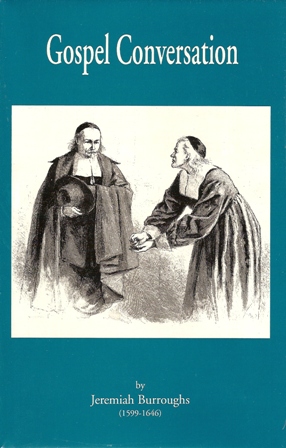
Portions of Gospel Conversation by Jeremiah Burroughs

There’s nothing in the world that God ever did that reveals the worth of man’s immortal soul as the gospel of Jesus Christ does. There God manifests to all the world what a price He puts upon Man’s soul.
p. 119

The Gospel reveals unto us the great honor that God has put upon human nature above the angels. This could never have been but by the gospel. This is as proper a thing to the gospel as any I have spoken of, and one special design that God had in the gospel was to reveal those thoughts and counsels that He had from all eternity, to put mighty and great excellencies upon our human nature in these two particulars:

One) In the personal union of man’s nature to the Second Person in the Trinity. That’s the first and great way of honor that God has crowned human nature with. Hence the Apostle, in 1 Timothy 3:16, says, “without controversy, great is the mystery of godliness.” What is it? God was manifested in the flesh. God manifested in the flesh? That’s a great mystery of godliness.

Now it could not be such a mystery if God had only taken a human shape upon Him (for so it was in the time of the Law). Jesus Christ often took human shape, as when He strove with Jacob. It was Jesus Christ, as might easily appear, but great is the mystery of godliness. Without controversy it’s great; God manifested in the human flesh. That is, God taking the flesh of a man into a personal union, which is more fully expressed in John 1:14, “The Word was made flesh.” This was a strange speech, but proper to the gospel.

A heathen would have thought this was a strange speech, especially if he knew that by the Word was meant He who was the true and eternal God. And then in Hebrews 2:16 it is said that Christ did not take the nature of angels upon Him, but the seed of Abraham. So it appears that, by the personal union of our natures to the Son of God, God has advanced human nature above angels, above all creatures. Truly, my brethren, in Christ’s taking our nature upon Him, which the gospel holds forth to us, we may see God, as it were, resolving to do a work from Himself to the uttermost, to manifest the uttermost of His glory in a work out of Himself, the work of God within Himself.

It is His eternal generation, and the possession of the Holy Ghost, but now God would work out of Himself, and work out of Himself to the uttermost extent. “I’ll make a world,” said God, “heavens and earth by My Word. Aye, but this is not such a glorious work as I am able to do. I could make ten thousand worlds and, when I have made them, I could make as many more and more glorious. But I would do some work wherein I might manifest even the uttermost of My glory.”

What work is that? The work God pitched upon. He would do no work from without to manifest the uttermost extent of His glory, and the Lord pitches upon this: to take the nature of a man into personal union with His Son. That’s the uttermost; and it is impossible that men or angels, if they were left to all eternity to imagine, could think of a work in which it would be possible for God to express more of His power, wisdom, and glory. We know but little of it now, but we shall know more in heaven.

Now, oh, how God has honored human nature in this: that when He would do a work to the utmost of His excellencies. He would pitch upon man’s nature to take it into personal union with Himself! Here’s the mystery of the gospel.

Now this is, indeed, the marrow of the mystery of the gospel: the Word made Flesh, the Second Person in the Trinity taking man’s nature upon Him. This is the mystery of the gospel that angels and saints admire, and shall be taken up to all eternity in admiring and praising and magnifying God for. That’s the first way of God honoring man’s nature.

Two) The second thing that the gospel reveals is this: God has put honor not only upon the nature of man as having soul and body, but He has put a mighty honor upon the very body of man; the meanest and the very lowest part of a man, the very shell, outside, rind, and the case of man. You have this in 1 Corinthians 6:19, “What, know ye not that your body is the temple of the Holy Ghost. You have no such thing revealed in the Old Testament, this comes by the light of the gospel that the Lord has made the bodies of the saints to be the temples to the Holy Ghost; that the Holy Ghost dwells in their bodies as in a temple. Like the King in his palace, so the Holy Ghost is in His temple. Now these two are great things revealed in the gospel, and did we have a clear understanding of these two things, oh, it would mightily elevate our spirits!

Conversations suitable to these two particulars surely must be a high-raised conversation. For instance, consider the personal union of our natures with the Second Person of the Trinity. Oh, how should this raise our hearts, and we should manifest the elevation of our spirits in our conversation so as it becomes those who may expect great things from God! Surely the fact that God has honored our natures so as to be personally united to His Son shows that He intends great things to some of the children of men.

pp. 124-127
Gospel Conversation
Jeremiah Burroughs

Saturday Morning’s Dream

Image

When one awakes the hero life is good

To hug the down and out and not play a fool

Reaching and holding those who because of hurt repel

Just trying to eliminate and dispel

The disease and fodder from war of the soul

On which the dark one seems to have a hold

But there is the light that is more powerful

And it is more wonderful and dismisses the sorrowful

Its power is as the light overcoming darkness

Chasing away the putrid heartlessness

As the sun comes over the horizon

It kills all of that horrid poison

Giving a Loving Hug is a wonderful Thing

Getting a Loving Hug …. Well,… is healing in His Wings


Malachi 4:2 But for you who fear my name, the sun of righteousness shall rise with healing in its wings. You shall go out leaping like calves from the stall.  English Standard Version

The Teachings of Mormonism by John Gerstner

Image

From retired Pastor Joe Gwynn,

A project of mine this summer has been to type four out-of-print works by the late Dr. John H. Gerstner. They are critiques of four prominent cults that ensnare thousands of unwary people. They (the booklets) are carefully footnoted and therefore can be defended with confidence. In them you will learn things (especially about their founders and history) that many of their proponents who come knocking at your door either do not know or will not admit. My purpose was to make these booklets (25-30 pages each) available for free downloading and distribution.

They are:
· The Teachings of Mormonism
· The Teachings of Seventh-day Adventism
· The Teachings of Christian Science
· The Teachings of Jehovah’s Witnesses

John H. Gerstner (1914–1996), M.Div. and M.Th. from Westminster Theological Seminary, and Ph.D. from Harvard University. Dr. Gerstner was Professor of Church History at Pittsburgh Theological Seminary for thirty years. After retiring, Dr. Gerstner, the favorite teacher of Dr. R.C. Sproul, was a frequent speaker at Ligonier Conferences before his death in 1996. An excellent historian and Reformed theologian, Dr. Gerstner also wrote several excellent books, including my favorite “Wrongly Dividing the Word of Truth”, an excellent critique of Dispensationalism.

In the one true God and his Son, Jesus Christ,
Joe Gwynn 

If you want this in Word format email me.
RMS

The teachings of

MORMONISM

John H. Gerstner

John H. Gerstner (1914–1996), M.Div. and M.Th. from Westminster Theological Seminary, and Ph.D. from Harvard University. Dr. Gerstner was Professor of Church History at Pittsburgh Theological Seminary for thirty years. After retiring, Dr. Gerstner, a favorite teacher of Dr. R. C. Sproul, was a frequent speaker at Ligonier Conferences before his death in 1996. Dr. Gerstner was a Reformed theologian, historian, and author.

CONTENTS

Introduction ……………………………………………….…2

1. A Description and History of Mormonism ……3

2. Doctrines of The Mormons …………………………12

3. Terms used by Mormons ……………………………16

4. For Further Reading ……………………………………19

5. Summary of Traditional Christian Beliefs ……21

6. Brief Definitions of the Sects ………………………24

Introduction

The abundance of literature on various “sects” shows that there is great interest in the subject. But what is a sect? We must make our definition clear, for there is wide difference of opinion on its meaning.

Evangelicals generally use sect when referring to those denominations which do not hold to fundamental biblical principles … especially the deity of Christ and His atonement. This booklet is written from the evangelical perspective.

The Teachings of Mormonism is designed as a ready reference booklet. It is meant to be a quick guide to the wealth of literature on this subject, and it includes a valuable table and glossary.

The general exposition in the first chapter gives an easily-grasped overview of the sect. The following chapter, “Doctrines of Mormonism” provides the reference material which summarizes the first chapter and adds some more technical data. Chapter two contains the basic theological structure of Mormonism, stated objectively and concisely. The text itself gives a fuller exposition of some of the cardinal points outlined in the first chapter.

Chapter three, “Terms Frequently Used by Mormons,” gives some of the most common terms in the vocabulary of this sect. Sects often have their own precise definitions for common religious words, and the glossary makes this immediately evident.

Chapter four, “For Further Reading,” lists both primary and secondary sources for further study of the theology and practice of the sect.

A summary of the essential teachings of traditional Christianity appears in chapter five. This summary is included to provide a basis for comparison with the doctrines of Mormonism. This chapter is designed to be used as a frame of reference.

To make the theologies of different sects clearer, their teachings have been summarized in the “Chart of Comparative Doctrines” at the end of chapter six. This tabular outline classifies the doctrines of Mormons, and continuing with the teachings of Seventh-Day Adventists, Jehovah’s Witnesses, and Christian Scientists, this chart allows the reader to see at a glance the position of each group on various Christian doctrines.

1. A Description and History of Mormonism

The Mormons were driven from Ohio, Mississippi, and Illinois, and finally found rest in unoccupied Mexican territory. (This later became American land, in spite of the Mormons’ vigorous opposition to the “Gentiles.”) While Mormonism has never quite come to terms with America, it is still unquestionably the most native of all religious groups.

Its Bible came into being at Palmyra, New York, it proclaimed Zion first in Illinois and later in Utah, its prophet’s name was Smith, its sacred history deals with North and South America, with landmarks familiar to us all, and not with events in far off Judea. Its exodus took place across the plains of our continent, its Red Sea was the Mississippi, and when the last trump sounds Jesus is coming to American soil, with headquarters in Salt Lake City.[1]

Joseph Smith

It all began in Sharon, Vermont. Today, a thirty-eight-and-a-half foot monument stands to Joseph Smith, who was “martyred” thirty-eight-and-half years after being born in this small town. The inscription reads, “Sacred to the memory of Joseph Smith, the Prophet, born here 23rd December, 1805, martyred at Carthage, Illinois, 27th June, 1844.” If Sharon today is proud to have cradled the Mormon idol, it was not always so, judging from an old New England gazetteer which confessed: “This is the birthplace of that infamous imposter, the Mormon prophet Joseph Smith, s dubious honor Sharon would relinquish willingly to another town.” [2]

Joseph Smith cannot be called a “root out of a dry ground.” His resemblance to his father brings to mind the remark William Pitt (the younger) made in his maiden speech to Parliament: “This is not a chip off the old block; it is the old block himself.” Joseph Smith, Sr. was a prophet in his own right – as his son seems to have appreciated, judging from the striking similarity between two of their alleged visions. And Lucy Mack Smith likewise was a worthy mother of the prophet, for she was the daughter of Solomon Mack, who displayed some knack for the occult. She was what we would today call “psychic,” judging from her reputation among some neighbors. With such parents it is not surprising that Smith’s youth could be summed up by his principal biographer as that of a “likable ne’er-do-well who was notorious for tall tales and necromantic arts and who spent his leisure leading a band of idlers in digging for buried treasure.”[3] He had a highly imaginative disposition of his own, which was fanned by religious fanaticism rampant around Palmyra, New York, (where his family now lived). With such a background it was not surprising that Joseph Smith would, in 1820, have his first vision.

Three more years passed, however, before there came the dream to end all dreams. Not far from Palmyra, according to Smith, appeared a resurrected saint, the angel Moroni, who had died about A.D. 400. He gave Joseph Smith an important message. It seems that Moroni had been the son of Mormon and he last of the Nephites, which were crushed out by the rival Lamanites. The whole story was recorded on certain golden plates which Moroni had hidden under the hill Cumorah until the appointed time for their disclosure to the prophet of the Latter-day Church. Joseph greatly desired the valuable plates, but was rebuked and told he could not have them for four more years. During the interval he was to visit Cumorah every year.

In 1827 Smith was permitted to take the plates home, and another three years passed before these, inscribed in “Reformed Egyptian hieroglyphics,” were translated by Smith (using his personal Rosetta stone, called Urim and Thummim). Behind a sheet which was suspended by a rope, he looked into his peepstone and translated the inspired words to his secretary, Martin Harris, who was on the other side of the curtain. Harris’ profane eyes were forbidden to behold the celestial plates on pain of immediate death at the hands of the enraged deity. Oliver Cowdery, being more literate, later replaced Harris. Finally, in 1830, the new revelation was published at Palmyra, and the existence of the plates certified by the three witnesses who, probably under the influence of the prophet, saw them with the “eyes of faith.” In August, the Church of Christ (later, of the Latter-day Saints) was formed by six people meeting in Fayette, New York. The first 100 percent American church was born.

From this time on, the prophet was largely without honor in his own country. In 1831, he found it advisable to leave New York for Kirkland, Ohio. From here, because of various offenses culminating in a huge bank fraud, he and the saints found it expedient to move to the American Zion in Missouri. There the Gentiles fought him, imprisoned him, and finally drove him out to take his refuge on the banks of the Mississippi, Nauvoo, Illinois. From this place he was driven off the planet altogether, killed by some lawless militia at a nearby prison in 1844.

Brigham Young

In 1847 Brigham Young, substituting hard-headed business efficiency for revelations and visions, removed the harassed saints out of civilized America to distant Utah. There they were destined to make the desert blossom as the rose and become a part of the United States, from which they thought they had fled. Now a million strong and reconciled to the Gentiles (and the Gentiles to them), both are living together more or less happily.

The Theology of Mormonism

What beliefs motivated the Mormon movement and helped make it what it has become? Fortunately, for our purposes, there is a brief innocuous summary of Mormon doctrine by the prophet himself. Joseph Smith received the revelation of the “Articles of Faith of the Church of Jesus Christ of Latter-day Saints.” It consists of thirteen brief statements of the main points of Mormon belief. Although it is in itself not very instructive, when the outline is filled out with other statements of Smith and other authorities it can provide a fairly clear understanding of the theology of the Latter-day Saints.

Article 1. “We believe in God, the Eternal Father, and in His Son, Jesus Christ, and in the Holy Ghost.”

The Mormon doctrine of God embraces the following points: (a) There are many gods: ‘Are there more Gods than one? Yes, many’ (Cat., 13). (b) These gods are polygamous or ‘sealed’ human beings grown divine: ‘God himself was once as we now are, and is an exalted Man’ (Brigham Young, J. of D. VI:4); ‘And you have got to learn how to be Gods yourself, the same as all Gods have done before you’ (Ibid.); ‘Then shall they (that have been ‘sealed’ in marriage) be Gods, because they have all power, and the angels are subject unto them’ (D. and C. 467). (c) Adam is the God of this world: ‘He (Adam) is our Father and our God, and the only God with whom we have to do’ (Brigham Young, J. of D., 1:50). (d) These Gods have fleshly bodies: ‘There is no other God in heaven but that God who has flesh and bones’ (Smith, Comp., 287). (e) They are polygamous: ‘When our Father Adam came into the garden of Eden, he came with a celestial body, and brought Eve, one of his wives, with him’ (Young, J. of D., 1:50). (f) They have children forever: ‘Each God, through his wife, or wives, raises up a numerous family of sons and daughters … for each father and mother will be in a condition to multiply forever and ever’ (The Seer, I:37).[4]

D. M. McAllister also makes perfectly clear that God is a literal Father:

Neither can that most filial word, Father, as so often lovingly uttered by our Elder Brother (Christ), be regarded as a merely figurative expression; it was always clearly evident that he meant it for an actual, not figurative, declaration. He was in very deed a Son of the Most High, in his spirit, just as he was also a Son when his spirit body was combined with his earthly tabernacle, when born of his divinely selected mother in the flesh.[5]

It is already manifest that Joseph Smith’s confession, “We believe in God, the Eternal Father” is a horrid travesty of what those words usually signify in the creeds of Christendom.[6]

The following phrase, “and in His Son, Jesus Christ,” is just as misleading. Jesus pre-existed. But this is true of all human beings: they pre-exist as the spirit children of the Gods, waiting for incarnate men to provide them bodies by procreation. These bodies they then inhabit.[7] So pre-existence itself is nothing unique. Jesus was, however, in His pre-existent state, Jehovah, the agent of the Father God, Elohim. But Christ was unique in His birth, for the Mormons have a doctrine of the virgin birth. Brigham Young states: “When the virgin Mary conceived the child Jesus, the Father had begotten him in his own likeness. He was NOT begotten of the Holy Ghost. And who was the Father? He was the first of the human family … Jesus, our elder brother, was begotten in the flesh by the same character that was in the garden of Eden, and who is our Father in Heaven.”[8]

Mormonism also has a doctrine of the exaltation of Jesus Christ. He is exalted to become equal with God the Father, another travesty of the Biblical doctrine, which maintains that He always was an equal member of the Godhead and that His exaltation consisted only in the elevation of His humanity (His deity was incapable of further elevation). McAllister is aglow with the thrill of this “exaltation” of Christ, which is really a base humiliation. “What! Our Elder Brother, Jesus Christ, to be ‘equal with God,’ the Father! Yes, that was his glorious destiny; he is one with God the Father!” Having thus humiliated Christ far below what He actually is, McAllister then elevates man, saying, “and ‘we are heirs of God, and joint heirs with Christ’ (Romans 8:17), if we follow in his footsteps.”[9]

The Holy Ghost is the only traditional member of the Godhead who in Mormonism retains His spirituality or rather, refined materiality. For, as Joseph Smith said, “’There is no such thing as immaterial matter. All spirit is matter, but is more fine or pure, and can only be discerned by purer eyes.’”[10]

Article 2. “We believe that men will be punished for their own sins, and not for Adam’s transgression.”

Denying the responsibility of men for the sin of their great representative Adam, in whom the Bible says all sinned, by implication does away with original sin. The Mormons also deny the inherited contamination of children: “Wherefore little children are whole, for they are not capable of committing sin; wherefore the curse of Adam is taken from them in me (Christ), that it hath no power over them; and the law of circumcision is done away in me … And their little children need no repentance, neither baptism … Behold, I say unto you, that he that supposeth little children need baptism, is in the gall of bitterness, and in the bonds of iniquity; … wherefore should he be cut off in the thought, he must go down to hell.”[11]

Not only do the Mormons believe that other persons cannot be responsible for Adam’s sin, strictly speaking, they hold that even Adam cannot be, for his sin was not a sin and his fall was a fall upward. Mormonism clearly makes Adam’s “sin” a necessary and inevitable thing that effected a great advantage for mankind. Thus Talmadge states:

Adam found himself in a position that impelled him to disobey one of the requirements of God. He and his wife had been commanded to multiply and replenish the earth. Adam was still immortal; Eve had come under the penalty of immortality; and in such dissimilar conditions the two could not remain together, and therefore could not fulfill the divine requirement. On the other hand, Adam would be disobeying another command by yielding to his wife’s request. He deliberately and wisely decided to stand by the first and greater commandment; and, therefore, with a full comprehension of the nature of his act, he also partook of the fruit on the tree of knowledge. The fact that Adam acted understandingly in this matter is affirmed by the scriptures … [12]

The Mormon Catechism puts the whole matter more briefly and bluntly:

“Was it necessary that Adam should partake of the forbidden fruit? Answer: Yes, unless he had done so he would not have known good and evil here, neither could he have had moral posterity… Did Adam and Eve lament or rejoice because they had transgressed the commandment? Answer: They rejoiced and praised God.”

Elder McAllister also makes necessity out of free choice and a virtue out of necessity. “The earthly bodies of Adam and Eve,” he writes, “were no doubt, intended by the Heavenly Father to be immortal tabernacles for their spirits, but it was necessary for them to pass through mortality and be redeemed through the sacrifice made by Jesus Christ that the fullness of life might come. Therefore they disobeyed God’s command …”[13]

This type of thinking makes God appear foolish, since it seems that the only way man can carry out God’s purpose is to disobey his commandments; or, to carry out one commandment he much disobey another. In order to preserve God’s best interests, man must devise his own best strategy; very much the way a wise and experienced elder counselor of state would advise a young and inexperienced monarch. To make the matter worse, the real thinker and wise counselor in this whole affair is the devil himself. So, instead of tempting Adam and Eve to evil, he was giving counsel of perfection; and instead of frustrating God, he was advising what was necessary for God to accomplish His purposes. One is reminded of the Ophites, or serpent worshipers, in the ancient church, who consistently adored the serpent because his temptation was regarded as an invitation to progress.

Article 3. “We believe that through the atonement of Christ, all mankind may be saved, by obedience to the laws and ordinances of the Gospel.”

What kind of atonement can there be in a system in which sin is a work of necessity and virtue? Atonement has a place, but an utterly adventitious one. John Taylor states: “ ‘In the first place, according to justice, men could not have been redeemed from spiritual death, only through obedience to His law …’ ”[14] This statement, like Smith’s, is mere statement without explanation. One looks in vain for a real conception of atonement or expiation in the Mormon scheme of salvation. The word is used because of traditional Christianity rather than because of any inherent place in this system.

The companion statement (“may be saved, by obedience to the laws and ordinances of the Gospel”), following a reference to an atonement which lacks any real meaning, surely suggests a legalistic doctrine of salvation. Furthermore, the explicit rejection of justification by faith, which is said to have “exercised an influence for evil since the early days of Christianity,” confirms this deduction.[15]

It is at this point that polygamy comes into the Mormon system. (Polygamy is clearly a part of the Mormon scheme of salvation.) Here are what seem to be the steps by which the Latter-day Saints arrive at their belief in polygamy:

(1) The Gods have begotten a host of spirit children.
(2) These are restless spirits until they are clothed with a body.
(3) Bodies for the spirit-children are provided by human procreation. Therefore, man’s chief end is to glorify the Gods and have babies.
(4) Hence, procreation becomes man’s primary duty.
(5) The more children a person has, the more virtuous he is.

This line of reasoning would appear to lead to polygamy. But monogamy was so clearly taught in the Bible, especially in the words of Christ, and so universally accepted by the Christian churches, that early Mormonism in the Book of Mormon advocated it.

Joseph Smith’s actual practice preceded his pretended revelation in the subject of setting aside the teaching of the Bible and Book of Mormon. His pretended “Revelation on the Eternity of the Marriage Covenant, including Plurality of Wives, Given through Joseph, the Seer, in Nauvoo, Hancock County, Illinois, July 12th, 1843” is as follows:

And again as pertaining to the law of the Priesthood: If any man espouse a virgin, and desire to espouse another, and the first give her consent; and if he espouse the second, and they are virgins, and have vowed to no other man, then he is justified; he cannot commit adultery with that that belongeth to him and no one else. And if a man have ten virgins given unto him by this law, he cannot commit adultery for they belong to him, and they are given unto him. Therefore he is justified.

Polygamy would presumably not require any other inducements to make it agreeable to certain men; but the women would not, naturally, find it so attractive. Hence the Mormons developed a doctrine that a woman cannot be saved without being “sealed” to a man. Sealing may be effected without natural cohabitation; this has frequently been done, even in the case of the prophet himself.

Polygamy has now been categorically repudiated by Utah officials and probably is very rarely practiced, though twenty fundamentalists went to prison for it in 1946. The principle remains a blemish on the religion of Joseph Smith. An unfortunate footnote to all this is the oft-quoted remark of Brigham Young: “Jesus Christ was a polygamist; Mary and Martha, the sisters of Lazarus, were his plural wives, and Mary Magdalene was another. Also, the bridal feast of Cana of Galilee, where Jesus turned the water into wine, was on the occasion of one of his own marriages.”[16]

Article 4. “We believe that the first principles and ordinances of the Gospel are: (1) Faith in the Lord Jesus Christ; (2) Repentance; (3) Baptism by immersion for the remission of sins; (4) laying on of hands for the gift of the Holy Ghost.”

Article 5. “We believe that a man must be called of God, by prophecy, and by the laying on of hands, by those who are in authority to preach the gospel and administer in the ordinances thereof.”

Article 6. “We believe in the same organization that existed in the Primitive Church, viz., apostles, prophets, pastors, teachers, evangelists, etc.”

In these sections we find the doctrine of a group that considers itself the exclusively true church. All other denominations are outside the pale. This notion harks back to Smith’s first revelation, which he was hoping would show him which denomination to join. It instead showed him the way out of them all. From then on it was a duty for all followers of the prophet to follow him out of their churches. Later Smith said, “Any person who shall be so wicked as to receive a holy ordinance of the gospel from the minister of these apostate churches will be sent down to hell with them, unless he repents of the unholy and impious act.”[17] The Elders’ Journal took up the same refrain: “We shall see all the priests who adhere to the sectarian religions of the day, with all their followers without one exception, receive their portion with the Devil and his angels.”[18] Frightening the sheep out of other folds, Mormonism corralled them in its own by the famous gathering act of 1830.

Church Organization

The actual organization of the Church of Latter-day Saints is almost as complicated, efficient, and autocratic as the Roman Catholic Church. The autocratic character of the Mormon system is well stated by Fawn Brodie:

Basically, therefore, the church organization remained autocratic; only the trappings were democratic. The membership voted on the church officers twice a year. But there was only one slate of candidates, and it was selected by the first presidency, comprised of Joseph Smith himself and his two counselors. Approval or disapproval was indicated by a standing vote to the general conference. Dissenting votes became so rare that the elections came to be called – and the irony was unconscious – the ‘sustaining of the authorities.’[19]

This was in Joseph Smith’s day; Brigham Young was more autocratic still. It is doubtful that the basic character of the hierarchy has changed much today.

Probably the most novel of the Mormon rites is that of baptism for the dead. This is an instance of extreme literalism, mistaking Paul’s mysterious words in 1 Corinthians 15:29, Mormons baptize the dead, believing that they cannot be saved without the rite. Penrose tells how Mormons feel on the subject:

Millions of earth’s sons and daughters passed out of the body without obeying the law of baptism. Many of them will gladly accept the word and law of the Lord when it is proclaimed to them in the spirit world. But they cannot there attend to ordinances that belong to the sphere which they have left. Can nothing be done in their case? Must they be forever shut out of the kingdom of heaven? Both justice and mercy join in answering ‘yes’ to the first and ‘no’ to the last question. What, then, is the way of their deliverance? The living may be baptized for the dead. Other essential ordinances may be attended to vicariously. The glorious truth, hidden from human knowledge for centuries, has been made known in this greatest of all dispensations … it gives men and women the power to become ‘Saviours on Mount Zion,’ Jesus being the great Captain in the army of redeemers.[20]

Marcus Bach in his Youth and My Friends tells of an interesting encounter with a Mormon to whom he put the question, “How far does the church intend to go in this ritual? Does it expect to baptize someone for each of the early Americans and the early Protestants and even further back than that?” To which he received this answer from his Mormon missionary friend: “As far back as Adam! That is part of the great Mormon commission. I intend to have baptism made for my ancestors as far back as I can. So does every active Mormon. The church has the most complete genealogical system in the world. It has on file nearly ten million names already. Missionaries work on these genealogies wherever they go. Everyone helps. Everyone should help to bring together into one family all who have ever lived, and all who are yet to be born for the number of those who are to be born is predetermined. Their souls already exist in the realms of God. Isn’t it a wonderful thought? We come from God and we return to God to be like Him. I expect someday to sit down with those I have known in a pre-existence and in this existence. I expect to talk with Joseph Smith and Brigham Young and all the other prophets. And I fully expect to talk with God.”[21]

Article 7. “We believe in the gift of tongues, prophecy, revelation, visions, healing, interpretation of tongues, etc.,”

Article 8. “We believe the Bible to be the word of God as far as it is translated correctly; we also believe the Book of Mormon to be the word of God.”

Article 9. “We believe all that God has revealed, all that He does now reveal, and we believe that He will yet reveal many great and important things pertaining to the Kingdom of God.”

Article 10. “We believe in the literal gathering of Israel and in the restoration of the Ten Tribes; that Zion will be built upon this (the American) continent; that Christ will reign personally upon the earth; and, that the earth will be renewed and receive it paradisiacal glory.”

This is a fairly conventional sort of millennialism – except for the American locale. But this article gives us very little of the full eschatology of the Mormons. For one thing, Mormons believe that the righteous go immediately to be in paradise and await the resurrection. After the resurrection, it appears that there will be the final disposition of all men. Some go to hell. Joseph Smith said that the number who went to hell could be counted on the fingers of one hand. From this remark it can be concluded that Mormonism is a form of universalism. It is difficult to reconcile this report, however, with the afore-quoted remark of Smith that all who impenitently receive rites from Christian clergymen will perish in hell.

There are three grades in the Mormon heaven: celestial, terrestrial, and telestial. The last, being of inferior glory, seems to be located on other planets; the first is the full heaven reserved for this who have died in the Mormon faith. There are apparently two kinds of beings in heaven. One is the angel, or resurrected being; the other is the unembodied spirit of the just men made perfect.[22]

Article 11. “We claim the privilege of worshiping Almighty God according to the dictates of our own conscience, and allow all men the same privilege, let them worship how, where, or what they may.”

This sounds quite American, but as James Snowden says, it is not easy to reconcile such statement with the following from the prophet: “I say, rather than apostates should flourish here, I will unsheathe my bowie knife, and conquer or die. Now, you nasty apostates, clear out, or judgment will be put to the line … I want you to hear, bishops, what I am to tell you: Kick these men out of your wards.”[23]

Article 12. “We believe in being subject to kings, presidents, rulers, and magistrates, in obeying, honouring, and sustaining the law.”

This statement would truly reflect Mormon history and principles if the following words were added: “that is, whenever we find it to be consistent with our doctrine or absolutely necessary.” Otherwise, it sounds too much like another official deliverance given out to “fool the Gentiles.” Utah was finally subjected to the authority of the United States government only after the most determined opposition of the Saints. Then and then only did Utah become obedient to the laws of the land. Only when the very property of the whole Mormon church was threatened by the government did Mormonism yield to the authority of government and officially forbid polygamy. It is all right to be bygones be bygones and forget the past if Mormonism is as patriotic and loyal as it appears today. But we must not forget the principles that are still on the books, such as this statement of Apostle John Taylor:

The priesthood holds “the power and right to give laws and commandments to individuals, churches, rulers, nations and the world: to appoint, ordain, and establish constitutions and kingdoms; to appoint kings, presidents, governors, or judges” (Key, p. 70). The priesthood “is the legitimate rule of God, whether in the heavens or on the earth, and it is the only legitimate power that has a right to rule on the earth; and when the will of God is done on the earth as it is in heaven, no other power will be or rule.”[24]

Article 13. “We believe in being honest, true, chaste, benevolent, virtuous, and in doing good to all men; indeed, we may say that we follow the admonition of Paul – We believe all things, and hope to be able to endure all things. If there is anything virtuous, lovely, or of good report or praiseworthy, we seek after these things.”

We do not intend to probe the motives of the Mormons nor do we find any relish in questioning their good intentions, nor in denying their achievement of certain worthy goals. But insofar as they have anything of which to be proud, it may be traced to their residium of Bible faith.

2. Doctrines of The Mormons

Doctrine of the Bible

“We believe the Bible to be the word of God, as far as it is translated correctly; we also believe the Book of Mormon to be the word of God” (Joseph Smith, Articles of Faith, Article 8). In addition to these books, the church adopted Joseph Smith’s Doctrine and Covenants and The Pearl of Great Price as authoritative (Talmadge, Articles of Faith, p. 5), but the Bible and Book of Mormon are far more influential. Furthermore, “The Book of Mormon ‘in no sense supplants the Bible, but supports it’ ” (Paul Hanson, Jesus Christ among the Ancient Americans, p. 143; cited by Braden, These Also Believe, p. 438; cf. Talmadge, AF, p. 236). “About one-eighteenth of the book (of Mormon) is taken from the Bible, no credit being given for this in the earliest editions, but in the present edition proper credit is given. The following chapters are taken bodily: Isaiah 2 to 14, 18, 19, 21, 48, 49, 50, 51, 52, 54; Matthew 5, 6, 7; 1 Corinthians 13. Besides these chapters, from page 2 to page 428 contain 298 direct quotations from the New Testament …” (Snowden, Truth about Mormonism, p. 101). Concerning the Book of Mormon, “more has been written about (its) divine authenticity … more than about any other moot matter on the human record, unless it be the Genesis account of creation” (Ferguson, The Confusion of Tongues, p. 368). Joseph Smith claimed to find plates written by the angel Moroni which he translated as the Book of Mormon. Most non-Mormon students are convinced that the Book of Mormon was actually drawn from the unpublished Manuscript Found (not Manuscript Story) by Spaulding (Brodie, NMK, Appendix B). Constant revisions have been made – more than three thousand changes since the first edition. The principal content of the Book of Mormon is the narrative of the dispersal of the Jews, after their captivity, and their settlement and struggle in America.

Doctrine of God

“We believe in God, the Eternal Father, and in His Son, Jesus Christ, and in the Holy Ghost” (Smith, AF, Article I; cf. Cowles, “Church of Jesus Christ of Latter-day Saints” in Ferm (ed.), Religion in the Twentieth Century, p. 288). This is not a Trinity of three persons in one God, for the Mormon Catechism teaches many gods (answer to question 13). These many gods are human beings grown divine: “God himself was once as we now are, and is an exalted man” (Brigham Young, Journal of Discourses, VI, p. 4). “The Father has a body of flesh and bones as tangible as man’s” (Joseph Smith, Doctrine and Covenants, CXXX, 22; CXXXI, 7). This is the teaching of Joseph Smith, Brigham Young, Orson Pratt, Parley Pratt, James E. Talmadge. Roberts argues from the physicality of the son, Christ, that the Father must also be physical (The Lord Hath Spoken, p. 134). The Gods not only have bodies and wives, but are polygamous, with an endless progeny of children. A favorite Mormon hymn contains this prayer: “When I leave this frail existence, When I lay this mortal by, Father, Mother, may I meet You, in your royal courts on high.”

The only difference between the Holy Spirit and other gods is that the Holy Spirit has a more refined materiality (Smith, Compendium of Doctrine, p. 259). All spirit is material, and all matter is eternal. God “certainly did not create in the sense of bringing into primal existence the ultimate elements of the materials of which the earth consists, for the ‘elements are eternal’ ” (Talmadge, AF, p. 466, cited by Braden, TAB, p. 441; cf. Smith, DC, XCII: 33).

Doctrine of Man

“As man is, God once was; as God is, men may be” (Talmadge). All Gods were originally men, and all men are destined to become Gods. Therefore, Brigham Young could say, “You have got to learn to be gods yourselves, and to be kings and priests to God, the same as all gods have done before you” (JD, VI, 4). That quotation seems to suggest a God above the gods, but these appear to be nothing but a difference of degree between God and gods. Mormonism appears to be henotheistic, having one god supreme in a pantheon. Men, who are destined to become gods, were pre-existent. Only their present bodily organization is acquired by being born into this world. Morgan argues that God promised eternal life “before the world began” (Titus 1:2); so Paul must have been there to hear this promise made before the world began (The Plan of Salvation, p. 6). “We were numbered among ‘the sons of God (who) shouted for joy’ when the foundation of this earth was laid (Job 38:4-7) and we saw the rebellious Lucifer and his followers cast out of heaven” (McAllister, Life’s Greatest Questions, p. 9). The Mormons show concern for the body’s welfare by their strict dietary and health laws, but more that this “the Mormons exalt intelligence and learning.”

Doctrine of Sin

As observed above, the gods are constantly begetting children, but these are “spirit” children, without bodies. It is not quite clear how the first humans to live on the earth, Adam and Eve, received bodies, but somehow they did and began the process of human procreation – whereby bodies are produced for the spirit children. But at the very beginning of the process of human generation, sin entered (necessarily). “The earthly bodies of Adam and Eve, no doubt, were intended by the Heavenly Father to be immortal tabernacles for their spirits, but it was necessary for them to pass through mortality and be redeemed through the sacrifice made by Jesus Christ that the fullness of life might come. Therefore they disobeyed God’s commands …” (McAllister, LGO, p. 11). Thus the fall of man was necessary – it became necessary for men to disobey God in order to do His will (Talmadge, Articles of Faith, p. 68; Book of Mormon, 2 Nephi i. 8).

Concerning the transmission of sin to Adam’s posterity, Mormons take a negative position: “We believe that men will be punished for their own sins, and not for Adam’s transgression” (Talmadge, AF, p. 1). Having rejected the doctrine of imputation of the guilt of sin, Latter-day Saints likewise repudiate the transmission of inherent corruption, or original sin (Joseph Smith, Doctrine and Covenants, 18, 19).

Doctrine of Christ

The Christology of the Mormons is rather complicated. (1) Jesus, the pre-existent spirit, is the Son of the Father-God. (2) As such, He is called Jehovah in this prenatal state. (3) As Jehovah, He is the Creator of the world, (4) Being the Creator, He is called the Father. (5) Thus, in a sense, He is the Father and the Son. (6) The birth of Jesus is often spoken of, but the reference apparently applies only to the body which the pre-existent spirit took when He was born in this world. (7) The body of Jesus was the product of the union of Father-God and the virgin Mary, Brigham Young very plainly teaches that the body of Jesus was physical. (8) The pre-existent Jehovah now in the flesh as Jesus Christ becomes “equal with God” and “one with God.” (9) Those who follow Jesus will become His heirs and, like Him, equal with and one with God (Book of Mormon, Ether 3:14; Young, Journal of Discourses, I:50; McAllister, Life’s Greatest Questions, p. ii; Talmadge, AF, pp. 465 f.; Van Baalen, The Chaos of Cults, p. 163; Braden, TAB, p. 441).

Doctrine of Redemption

It seems that the death of Christ canceled the necessity of man’s dying. And with this penalty of sin removed by the atonement, man is apparently then in a position to earn his own salvation by his obedience to the law and gospel (John Taylor, The Mediation and Atonement, p. 170, cited by Van Baalen, CC, p. 158). That the works of Mormonism are considered meritorious and deserving is clear. Consistently, justification by faith is rejected (Talmadge, AF, p. 120).

The Mormon record for outwardly good works is contradictory. A reputation for temperance, honesty, patriotic zeal (once they were subjugated), large, stable families, and care for their health is to the credit of the Latter-day Saints. On the other hand, Brigham Young himself accused them of great profanity, and some pirating (JD, I, 211, etc.); and eye-witness has described very immoral conditions at times (cited by Stenhouse, Rocky Mountain Saints, p. 188), and their official journals showed them against abolition (Elders’ Journal, July, 1858; Millennial Star, vol. 15, pp. 739 ff.; William Earle La Rue, The Foundations of Mormonism, p. 27). Their greatest moral defect, however, is polygamy.

Doctrine of the Church

“A revelation in the summer of 1830 was the basis of … the ‘doctrine of the gathering of the Saints.’ The Saints, having been chosen out of the world, were to gather together in one place ‘upon the face of this land to prepare their hearts and be prepared in all things against the day when tribulation and desolation are sent forth upon the wicked’ ” (Braden, TAB, pp. 432 f.,; cf. DC, sect. 29, vss. 7-8). This separation of Mormon from non-Mormon churches is maintained in much literature, as in The Seer’s statement that apostate churches, if impenitent, will be cast down to hell (II, 255, quoted by Snowden, The Truth about Mormonism, pp. 134; cf. to the same effect, Orson Pratt, Orson Spencer, Brigham Young, Penrose, and others; Van Baalen, CC, p. 159; H. Davies, Christian Deviations, p. 78; H.C. Sheldon, A Fourfold Test of Mormonism, pp. 99 f.). La Rue cites the Elder’s Journal of 1838, (pp. 59f.), to the same effect.

The Mormons compare with the Jehovah’s Witnesses in their high and efficient degree of ecclesiastical organization. The two priesthoods form the basic hierarchical structure. Of these the Melchizedek Priesthood is supreme in spiritual things and consists of the following: (1) The presidency – made up of three men, although the first president really has absolute power; (2) Twelve apostles who appoint the other officials, administer sacraments, and govern between presidents; (3) Patriarch who blesses the members with the blessing of prophecy; (4) High priesthood, which consists of the presidents of the stakes of Zion; (5) The Seventies, or missionaries in groups of seventy; (6) Elders who preach, baptize, and impart the Holy Spirit by imposition of hands.

The second priesthood is the Aaronic, which consists of the following: (1) Presiding bishopric of three bishops in presiding council who collect tithes, care for the poor; (2) Priests who expound the Bible, baptize, administer the Lord’s Supper; (3) Teachers who assist the priests and watch that no iniquity occurs; (4) Deacons who assist the teachers and expound the Bible (Julius Bodensieck, Isms New and Old, p. 86).

With respect to the state, Smith wrote, “We believe in being subject to kings.” On the other hand, some Mormon theologians, such as Apostle John Taylor, taught that the priesthood was superior in authority to the secular power (Key to Theology, p. 77; cf. Snowden, TM, p. 138).
Mormon history seems to suggest that the reconciliation of these two ideas is that authority resides essentially in the hierarchy, but since force is the prerogative of secular governments, subservience is a duty. This interpretation appears evident in the relinquishing of the practice of polygamy because of the law of the land.

Mormonism has some ordinances common to Christendom and some peculiar to itself. Mormons believe in “baptism by immersion for the remission of sins” (AF, p. 4). Since none can enter heaven without baptism, Mormons are busily baptizing many dead persons by proxy. Smith also taught in the Articles of Faith the “Laying on of hands for the gift of the holy Ghost” (AF, p. 1, article 4). In addition to the conventional marriage ceremony, the Saints have a unique “sealing” ceremony. A man who died childless may have children raised to him by wives “sealed” to him. In this case, a man on earth is appointed to serve in the place of the dead man, in begetting children for him (cf. Blunt, Dictionary of Sects and Heresies, p. 352; Louis Binder, Modern Religious Cults and Societies, p. 151). Another unique rite is the shedding of the blood of certain grievous sinners in a secret way called “blood atonement” (cf. Journal of Discourses, iv. 219; William Alexander Linn, The Story of the Mormons, pp. 454 f.; Cannon and Knapp, pp. pp. 266 f.; Sheldon, FTM, pp. 123 f.; Stenhouse, RMS, pp. 292 f., Hyde, M. pp. 179 f., Snowden, TM, p. 132). A woman’s hope of salvation is being sealed to a man who will call her forth on the day of resurrection (Smith, DC, sect. cxxxii, vss, 15-20; Mayer, RBA, p. 454, footnote 30; Braden, TAB, p. 446).

Doctrine of the Future

The Mormons teach a rather common variety of the premillennial reign of Christ, with the exception that Christ will have His headquarters in Independence, Missouri. At the end of this righteous period, a rebellious Satan will be crushed and the world will be transformed (Mayer, RBA, p. 455). The Mormons apparently believe in hell and that some non-Mormons will go there. However, there is very little explicit teaching on retribution. Smith’s Articles of Faith, for example, have nothing on the future. Many think, as Mayer (RBA, p. 452), that “Mormons believe in universal salvation.” Mormon doctrine concerning heaven is more detailed. There are three grades of heaven; telestial (lowest grade where unbelievers seem to go); terrestrial (for ignorant but honorable persons); celestial (for the good Mormons).

3. Terms Frequently Used by the Mormons

Aaronic Priesthood: One of the two priesthoods into which the Mormon hierarchy is divided, which includes the presiding bishopric, priests, teachers, and deacons.

Adam God: Doctrine that Adam was the Father God, based on the following statement of Brigham Young in the Journal of Discourses: “When the Virgin Mary conceived the child Jesus, the Father had begotten him in his own likeness. He was not begotten by the Holy Ghost. And who was the Father? He was the first of the human family … Jesus, our elder brother, was begotten in the flesh by the same character that was in the garden of Eden, and who is our Father in Heaven” (I:50).

Apostles: The twelve men that are second in the Melchizedek Priesthood (subordinate only to the power of the presidency), who appoint the other officers and rule between presidential periods.

Baptism for the Dead: The practice of baptizing the dead by proxy, based on the Mormon interpretation of 1 Corinthians 15:29 that no dead person may go to heaven until baptized.

Blood Atonement: Apparently not officially recognized practice of shedding the blood of certain grievous sinners to atone for past sins and prevent still others in the future (cf. Brigham Young, Journal of Discourses, iv., 219; Stenhouse, Rocky Mountain Saints, p. 292 f.).

Book of Mormon: The record of extra-biblical, as well as much unbiblical history. The source of this information was allegedly golden plates, the location of which was revealed to Joseph Smith, who with the aid of Urim and Thummim was able to translate them from the Reformed Egyptian hieroglyphics in which they were written.

Celestial Heaven: The highest heaven, reserved for faithful Mormons only.

Cumorah: Hill near Palmyra, New York. An impressive shrine today marks the spot where Joseph Smith is said to have found the golden plates from which he translated the Book of Mormon. 

Deacons: The fourth order of the Aaronic priesthood, who assist the third level of officer, the teachers.

Doctrine and Covenants: Record of revelations subservient to the Book of Mormon.

Elders: Sixth level of officer in the Melchizedek priesthood. Elders preach, baptize, and perform certain other ministerial functions.

High Priests: The fourth level of the Melchizedek priesthood, composed of the various
Presidents of the different stakes into which the community is divided.

Immortality: The Mormons teach a graded heavenly mortality which involves continued procreation.

Josephites: A minority of the followers of Joseph Smith claiming to be true to his principles (which are said not to have included polygamy) and his succession.

Lamanites: According to the Book of Mormon there were three migrations from the Bible lands. The last two (about 600 and 588 B.C.) combined in this country, forming the Nephites and the Lamanites. The Lamanites survived wars, living on as American Indians.

Latter Days: Biblical prophecy of coming time of special outpouring of the Spirit.

The Manuscript Found: A romance by Solomon Spaulding, which most critics of Mormonism believe to contain the materials from which the Book of Mormon was actually constructed.

The Manuscript Story: The romance to which Mormon apologists usually refer when refuting the charge that the Book of Mormon was plagiarized from The Manuscript Found.

Melchizedek Priesthood: The first, and more important, of the two priesthoods, consisting of six offices: president, apostles, patriarch, high priests, seventies, and elders.

Moroni: An “Angel,” who revealed to Joseph Smith the location of the golden plates which recorded the story of the earlier history.

Nephites: According to the Book of Mormon there were three migrations from the Bible lands. The last two (about 600 and 588 B.C.) combined in this country forming the Nephite and Lamanites. The Nephites were later destroyed by war.

Patriarch: The nominal head of the Mormon hierarchy; an honorific title first given to the father of the Prophet.

Presiding Bishopric: The first division of the Aaronic Priesthood, charged with the collecting of tithes and care of the wards.

Priests: These do a work similar to the elders but belong to the second order of priesthood, the Aaronic.
Revelation on Celestial Marriage: “Revelation on the Eternity of the Marriage Covenant, including the Plurality of Wives. Given through Joseph, the Seer, in Nauvoo, Illinois, July 2th, 1843, served as the basis for the practice of polygamy. (Text in Stenhouse, Rocky Moutain Saints, pp. 176 ff.).

Seventies: These who go out as missionaries of the Mormon faith constitute the fifth division of the Melchizedek Priesthood.

Spiritual Wifery: A temple-performed marriage in which a spiritual affinity occurs between the partners and makes the marriage eternal.

Teachers: The third division of the Aaronic Priesthood that assists the priests and administers discipline.

Telestial Heaven: The lowest of the three Mormon grades of future existence where the wicked apparently dwell.

Terrestrial Heaven: An earthly paradise reserved for non-Mormons who are ignorant of the truth but are nonetheless honorable persons.

Urim and Thummim: The device which Joseph Smith used to translate the Reformed Egyptian hieroglyphics of the golden tablets into the Book of Mormon.

4. For Further Reading

Allen, Edward J. The Second United Order Among Mormons. 1936. Reprint. New York: AMS Press, n.d.

Anderson, Einar. I Was a Mormon. Grand Rapids: Zondervan, 1964.

Anderson, Rodger I. The Bible and Mormonism. Grand Rapids: Faith, Prayer, and Tract League, n.d.

Arbaugh, George B. Gods, Sex, and Saints: The Mormon Story. Rock Island: Augustana Press, 1957.
_____. Revelation in Mormonism. Chicago: University of Chicago Press, 1932.

Bennett, Wallace F. Why I Am a Mormon. New York: T. Nelson, 1958.

Berrett, William Edwin, ed. Readings in L.D.S. Church History from Original Manuscripts. Salt Lake City: Deseret Book Co., 1953.

Birrell, Verla L. The Book of Mormon Guide Book. Salt Lake City: Stevens and Wallis, Inc., 1948.

Brodie, Fawn M. No Man Knows My History: The Life of Joseph Smith the Mormon Prophet. Reprint. New York: A. A. Knopf, 1971.

Budvarson, Arthur. The Book of Mormon: True or False? (former title: The Book of Mormon Examined). Grand Rapids: Zondervan Publishing House, 1959.

Codman, J., The Mormon Country, 1874. Reprint. New York: AMS Press, 1972.

Cowan, Marvin W. Mormon Claims Answered. Salt Lake City: author, 1975.

Erickson, Ephraim E. The Psychological and Ethical Aspects of Mormon Group Life. 1922. Reprint. Salt Lake City: University of Utah Press, 1974.

Fraser, Gordon HIs Mormonism Christian? Chicago: Moody Press, 1957.

Gunnison, J. W. The Mormons or Latterday Saints, in the Valley of the Great Salt Lake … 1853. Reprint. Plainview, N.Y.; Books for Libraries, n.d.

Hoekema, Anthony A. Mormonism. Grand Rapids: Wm. B. Eerdmans Publishing Co., 1963.

Hunter, Milton R. Brigham Young, the Colonizer. 1940. Reprint. Layton, Utah: Peregrine Smith, Inc., 1973.
_____. Archaeology and the Book of Mormon. Salt Lake City: Deseret Book Co., 1956.

Kirkham, Francis W. A New Witness for Christ in America. Independence: Zion Press, 1951.

Lewis, Gordon. The Bible, the Christian and Latter-day Saints. Nutley, N.J., Presbyterian and Reformed Publishing Co, 1966.

Linn, W. A. The Story of the Mormons. New York: Macmillan Publishing Co., 1923.

Martin, Walter R. The Kingdom of the Cults. Minneapolis: Bethany Fellowship, 1968.
______. The Maze of Mormonism. Grand Rapids: Zondervan Publishing House, 1962.

Mulder, Wm. Homeward to Zion: Mormon Migration from Scandinavia. Minneapolis: University of Minnesota Press, 1957.

Mulder, Wm. and Mortensen, A. Russell, eds. Among the Mormons: Historical Accounts by Contemporary Observers. 1958. Reprint. Lincoln: University of Nebraska Press, 1973.

O’Dea, Thomas F. The Mormons. Chicago: University of Chicago Press, 1957.

Smith, Joseph. The Book of Mormon. Salt Lake City: Church of Jesus Christ of Latter-day Saints, n.d.
_____. Doctrine and Covenants. Salt Lake City: Church of Jesus Christ of Latter-day Saints, n.d.
_____. The Pearl of Great Price. Salt Lake City: Church of Jesus Christ of Latter-day Saints, n.d.

Smith, Joseph, Jr. Inspired Version of the Holy Scriptures. Independence: Reorganized Church of Jesus Christ of Latter-day Saints, n.d.

Smith, Joseph Fielding, comp. Teachings of the Prophet Joseph Smith. Salt Lake City: Deseret News Press, 1958.

Talmadge, James E. A Study of the Articles of Faith. 36th ed. Salt Lake City: Church of Jesus Christ of Latter-day Saints, 1957.
_____. The Vitality of Mormonism. Boston: R.G. Badger, 1919.

Tanner, Jerald and Sandra. Archaeology and the Book of Mormon. Salt Lake City: Modern Microfilm Co., n.d.
_____. The Case Against Mormonism. 3 vols. Salt Lake City: Modern Microfilm Co., 1967-71.
_____. Mormon Kingdom. 2 vols. Salt Lake City: Modern Microfilm Co., 1969-71.
_____. Mormonism – Shadow or Reality. Salt Lake City: Modern Microfilm Co., 1972.

Turner, Wallace. The Mormon Establishment. Boston: Houghton Mifflin, 1966.

Wood, Wilford C. Joseph Smith Begins His Work. Salt Lake City: Deseret News Press, 1958.
5. Summary of Traditional Christian Doctrines

In the following chapter we present views which are held by the church without exception (unless so indicated). There are three main branches of the catholic (universal) church: Protestant, Eastern Orthodox, and Roman Catholic. These have differences among them, but there is a remarkable consensus of viewpoint on the basic structure of Christian doctrine. This fact is justification for use of the term “the catholic church.” We have chosen quotations from official creeds of these branches to illustrate the various doctrines.

Doctrine of the Bible

The catholic church believes the sixty-six books of the Old Testament and New Testament to be the plenarily inspired Word of God. The Roman Church adds to this number some of the apocrypha. The Roman and Eastern Orthodox churches seem to give ecclesiastical tradition virtually equal authority with Scripture. The Protestant churches, however, hold tosola scriptura. Thus, the Lutheran Formula of Concord affirms: “We believe, confess, and teach that the only rule and norm, according to which all dogmas and all doctors ought to be esteemed and judged, is no other whatever than the prophetic and apostolic writings both of the Old and of the New Testament.” The French Confession of Faith says of the Bible that “inasmuch as it is the rule of all truth, containing all that necessary for the service of God and for our salvation, it is not lawful for men, nor even for angels, to add to it, to take away from it, or to change it.” The American Revision of the Thirty-nine Articles of the Church of England states: “Holy Scripture containeth all things necessary to salvation: so that whatsoever is not read therein, nor may be proved thereby, is not to be required of any man, that it should be believed as an article of the Faith, or be thought requisite or necessary to salvation.”

Doctrine of God

The Athanasian Creed, accepted as an ecumenical creed by all branches of the church, reads: “ … we worship one God in Trinity, and Trinity in Unity, Neither confounding the Persons, nor dividing the Substance (essence). For there is one Person of the Father, another of the Son, and another of the Holy Ghost is all one, the Glory equal, the Majesty co-eternal. Such as the Father, such is the Son, and such is the Holy Ghost. The Father uncreated, the Son uncreated, and the Holy Ghost uncreated. The Father incomprehensible (unlimited or infinite), the Son incomprehensible, and the Holy Ghost incomprehensible. The Father eternal, the Son eternal, and the Holy Ghost eternal. And yet they are not three eternals, but one eternal … so the Father is God, the Son is God, and the Holy Ghost is God. And yet they are not three Gods, but one God … the Unity in Trinity and the Trinity in Unity is to be worshiped.” The Westminster Shorter Catechism teaches: “There are three persons in the Godhead: the Father, the Son, and the Holy Ghost; and these three are one God, the same in substance, equal in power and glory.”

Doctrine of Man

Again we may use the Westminster Shorter Catechism, for it expresses what all catholic churches believe about man. “God created man, male and female, after his own image, in knowledge, righteousness, and holiness, with dominion over the creatures.”

Doctrine of Sin

The Roman Catholic statement made at the Council of Trent contains a catholic affirmation: “ … Adam, when he had transgressed the commandment of God in Paradise, immediately lost the holiness and justice wherein he had been constituted; and … he incurred, through the offense of that prevarication, the wrath and indignation of God, and consequently death, with which God had previously threatened him, and, together with death, captivity under his power who thenceforth had the empire of death, that is to say, the devil, and that the entire Adam, through the offense of prevarication, was changed , in body, and soul, for the worse … this sin of Adam … [is] transfused into all by propagation, not by imitation … “ All catholic churches say at least this much; some, such as the Reformed, make more of the consequences of the Fall.

Doctrine of Christ

We may use the historic confession of the Council of Chalcedon (A. D. 451), for this has been recognized through the ages by all branches of orthodox Christendom as a true statement concerning the person of Jesus Christ. “ … our Lord Jesus Christ, the same perfect in Godhead and also perfect in manhood; truly God and truly man, of a reasonable [rational] soul and body; consubstantial [coessential] with the Father according to the Godhead, and consubstantial with us according to Manhood; in all things like unto us, without sin; begotten before all ages of the Father according to the Godhead, and in these latter days, for us and for our salvation, born of the Virgin Mary, the Mother of God, according to the Manhood; one and the same Christ, Son, Lord, Only-begotten, to be acknowledged in two natures, inconfusedly, unchangeably, indivisibly, inseparably; the distinction of natures by no means taken away by the union, but rather the property of each nature being preserved, and concurring in one. Person and Substance, not parted or divided into two persons, but one and the same Son, and only begotten, God the Word, the Lord Jesus Christ …”

We note that the expression, “Mary, the Mother of God,” is a genuinely catholic expression. It does not mean that Mary was the genetrix of God, but that the human nature which was begotten in her womb was united with the eternal Son of God. So Mary was the mother of the child who was God; i.e., the mother of God.

Doctrine of Redemption

The satisfaction view of the atonement is the truly classic view of the catholic church. This could be shown from Protestant, Roman, or Eastern Orthodox creeds. We will show it by a citation from “The Longer Catechism” of the Eastern Orthodox Church: “Therefore as in Adam we had all fallen under sin, the curse, and death, so we are delivered from sin, the curse, and death in Jesus Christ. His voluntary suffering and death on the cross for us, being of infinite value and merit, as the death of one sinless, God and man in one person, is both a perfect satisfaction to the justice of God, which had condemned us for sin to death, and a fund of infinite merit, which has obtained him the right, without prejudice to justice, to give us sinners pardon of our sins, and grace to have the victory over sin and death.”

There is a great difference among the three divisions of Christendom concerning the appropriation of this redemption achieved by Christ. The Protestant churches teach that it is by faith alone; the other branches incline to the view that it is by faith and works, or by faith considered as the beginning of works.

All branches of the church teach that the Christian has an obligation to endeavor to keep the moral law of God and that a person who does not do so is a reprobate. There is a doctrine in the Roman Church which is inconsistent with this, but nevertheless she teaches the above explicitly.

Doctrine of the Church

The Westminster Confession of Faith contains a definition of the church shared by all bodies of Christendom which accept the notion of the invisibility of the church. “The catholic or universal church, which is invisible, consists of the whole number of the elect, that have been, are, or shall be gathered into one, under Christ the head thereof; and is the spouse, the body, the fullness of Him that filleth all in all. The visible Church, which is also catholic or universal under the gospel (not confined to one nation, as before under the law), consists of all those, throughout the world, that profess the true religion, and of their children, and is the kingdom of the Lord Jesus Christ, the house and family of God, out of which there is no ordinary possibility of salvation.”
Doctrine of the Future

While there has been less defining of the doctrine of the future by the catholic church than has been true of other doctrines, what has been stated is unanimously affirmed. All branches of Christendom are agreed that there is a place of eternal felicity, called heaven, where redeemed men and unfallen angels dwell in the gracious presence of God. It is also taught that there is a place of eternal misery, called hell, where all unredeemed men and fallen angels dwell in the wrathful presence of God. The Roman Catholic Church maintains, in addition, the existence of purgatory, the limbus patrum, and the limbus infantum. Universal salvation has been taught by various individuals, but no church recognized by catholic Christianity has affirmed it.

6. Brief Definitions of the Sects

Seventh-day Adventism teaches that salvation is attained by faith in the atonement made by Christ in 1844. This faith must be expressed in obedience to the ethical teachings of the Bible (including the Saturday Sabbath) and in acceptance of the doctrinal teachings of the Bible (including the imminent premillennial return of Christ).

Jehovah’s Witnesses claim to be the only consistent Bible students. They find the vindication of Jehovah to be the fundamental aim of history. This vindication of Jehovah is accomplished by the atonement of the first-born creature, Jesus, and expressed by the witnessing to an impending Armageddon. At this battle Jehovah and His witnesses will be vindicated and the final consummation of things will begin.

Mormonism is built on a revelation subsequent to the Bible, called the Book of Mormon. According to this book, the church is to be recognized on the basis of a creed which teaches a plurality of created gods, repudiates justification by faith, and teaches a salvation achieved by the merit of obeying divine laws.

Christian Science is a formula for health and wealth by right thinking, but its thinking denies the reality of poverty and sickness.

Doctrines Traditional Christian Mormonism Seventh-day Adventism Jehovah’s Witnesses Christian Science
Bible Verbally inspired Inspired Bible and Book of Mormon Reluctant to affirm verbal inspiration; vague about status of Mrs. White Verbally inspired Bible inspired andScience and Health is its inspired interpretation
God Three Persons in one essence Polytheism Approximately traditional Christian view Uni-personal Impersonal and pantheistic
Man Body & soul created good Pre-existent soul takes body at birth in this world Body-soul creature; created neutral or with inclination to evil Body; soul not distinguishable from body Soul only; body is an illusion
Sin Result of Adam’s disobedience; corruption of nature and action It was necessary for Adam to sin. This brought mortality without guilt No clear doctrine of imputation of Adam’s sin; man now polluted Adam’s sin brought liability to temporal death “There is no sin” – it is an illusion
Christ One divine person in two distinct natures (divine-human) Called creator but only pre-existent spirit who took body at incarnation Like traditional view but represents human nature as having tendency to sin First born creature; changed into man at birth in this world Christ is a divine idea; Jesus is mere human
Redemption Faith in atonement as expressed by holy life Atonement gives man chance to earn salvation Believing in atonement made in heaven plus holy living including observance of the Saturday Sabbath Christ’s ransom gives man chance to earn salvation Salvation is casting out idea of sin
Church Mystical union of all true believers; visible union of all professed believers Other churches apostate; efficient hierarchical organization Seems to regard itself as true remnant church Traditional church rejected; 144,000 witnesses make up Church A denomination like Protestant, Roman Catholic, and Jewish
Future Eternal heaven, eternal hell, temporary purgatory (R.C.) Pre-millennial reign at Independence, MO; tends toward universal salvation Annihilation of the wicked; millennium in heaven and eternity on new earth Earthly millennium during which final probation leading to annihilation or eternal life Universal salvation in future when idea of sin gradually dies

[1] Charles W. Ferguson, The Confusion of Tongues, p. 366.

[2] Fawn M. Brodie, No Man Knows My History. The Life of Joseph Smith the Mormon Prophet, p. 1.

[3] Ibid., p. 16.

[4] James Henry Snowden, The Truth about Mormonism, N. Y., 1926, pp. 1281, Cf. also Pratt, Key to the Science of Theology, p. 42.

[5] McAllister, Life’s Greatest Questions – Who Am I?, p. 5.

[6] Cf. B.H. Roberts, The Lord Hath Spoken, pp. 3f.

[7] James E. Talmadge, Articles of Faith, 12th ed., Salt Lake City, 1924, pp. 465ff.

[8] Young, Journal of Discourses, 1:50.

[9] Life’s Greatest Questions, p. 11.

[10] Compendium of Mormon Doctrine, p. 259, cited in Snowden, Truth about Mormonism, p. 130

[11] Book of Mormon; Doctrine and Covenants, pp. 181., cited in Van Baalen, The Chaos of Cults, 1956 edition, p. 179.

[12] Talmage, Articles of Faith, p. 68.

[13] Life’s Greatest Questions, p. 11.

[14] The Mediation and Atonement, p. 170, cited by Van Baalen, Chaos of Cults, 2nd revised and enlarged edition, 1956, p. 180.

[15] Talmadge, Articles of Faith, p. 120.

[16] Journal of Discourses, 1:50.

[17] The Seer, Vols. I & II, p. 255, cited by Snowden, Truth about Mormonism, p. 134.

[18] August, 1838, pp. 591., cited in La Rue, p. 45.

[19] Brodie, No Man Knows, p. 162.

[20] Penrose, Mormon Doctrine, p. 48, cited by Van Baalen, Chaos of Cults, 1956 edition, p. 180.

[21] Faith and Friends, p. 277.

[22] Cf. Joseph Smith, Doctrine and Covenants, p. 132.

[23] Journal of Discourses, 1:80, cited by Snowden, Truth about Mormonism, p.134.

[24] Snowden, ibid., p. 138. Charles W. Ferguson, The Confusion of Tongues, p. 366.

Christ The King of All

Image

I appreciate Pastor Pockras’ concise way of putting things. May you be encouraged in seeing Christ’s Mediatorial Dominion. Thanks for allowing me to post this Pastor Pockras.
RMS


Christ the King of All
By Philip H. Pockras, minister
Belle Center Reformed Presbyterian Church
Belle Center, Ohio
http://www.bcrpchurch.org/
406268_10151140297690505_687935995_n

STATEMENT OF THE DOCTRINE

God the Son, as the second Person of the Holy Trinity, is King over all things. This exalted position He holds in common with the other Persons of the Trinity. Jehovah God is King in His essential Deity. This no orthodox believer denies, at least in theory. As well, the Lord Jesus Christ, the God-man Mediator, reigns as Mediatorial King over all things, for the benefit of His Church to the glory of the Father.

“1. Jesus Christ, as mediator, governs all creatures and all their actions for his own glory. Submission is due to Him from all men and angels. All men, in every possible relation and condition, are under obligation to promote His gracious purposes according to His Law. The holy angels minister, under His direction, to the heirs of salvation. Eph. 1:20-22; Heb.2:8; Phil. 2:9-11; Ps. 2; Heb. 1:4.

“2. Jesus Christ, as Head over all things for the sake of the Church, rules in perfect wisdom and justice over all parts of His creation including wicked men and devils. He makes them, and all their counsels and efforts, serve God’s glory in the plan of redemption. Rom. 8:28; Eph. 1:22-23; John 17:1-5; Luke 9:26” The Testimony of the Reformed Presbyterian Church of North America, Chapter 8: “Of Christ the Mediator” (1980).

This teaching, unknown or poorly understood within much of the evangelical church, is one of the doctrinal linchpins of the Reformed Presbyterian Church throughout the world. Historically, Christ’s Mediatorial Kingship has been asserted, during the whole of the RP Church’s existence, against several errors: Popery and Erastianism in Britain, and secularism in other nations in which she has been planted. As we look to Scripture, we see this doctrine taught in both Testaments.

“1 Why do the heathen rage, and the people imagine a vain thing? 2 The kings of the earth set themselves, and the rulers take counsel together, against the LORD, and against his anointed, [saying], 3 Let us break their bands asunder, and cast away their cords from us. 4 He that sitteth in the heavens shall laugh: the Lord shall have them in derision. 5 Then shall he speak unto them in his wrath, and vex them in his sore displeasure. 6 Yet have I set my king upon my holy hill of Zion. 7 I will declare the decree: the LORD hath said unto me, Thou [art] my Son; this day have I begotten thee. 8 Ask of me, and I shall give [thee] the heathen [for] thine inheritance, and the uttermost parts of the earth [for] thy possession. 9 Thou shalt break them with a rod of iron; thou shalt dash them in pieces like a potter’s vessel. 10 Be wise now therefore, O ye kings: be instructed, ye judges of the earth. 11 Serve the LORD with fear, and rejoice with trembling. 12 Kiss the Son, lest he be angry, and ye perish [from] the way, when his wrath is kindled but a little. Blessed [are] all they that put their trust in him.” (Ps 2)

“13 I saw in the night visions, and, behold, [one] like the Son of man came with the clouds of heaven, and came to the Ancient of days, and they brought him near before him. 14 And there was given him dominion, and glory, and a kingdom, that all people, nations, and languages, should serve him: his dominion [is] an everlasting dominion, which shall not pass away, and his kingdom [that] which shall not be destroyed.” (Dan 7:13-14)

“18 And Jesus came and spake unto them, saying, All power is given unto me in heaven and in earth. 19 Go ye therefore, and teach all nations, baptizing them in the name of the Father, and of the Son, and of the Holy Ghost: 20 Teaching them to observe all things whatsoever I have commanded you: and, lo, I am with you alway, [even] unto the end of the world. Amen.” Mat 28:18-20)

“20 Which he wrought in Christ, when he raised him from the dead, and set [him] at his own right hand in the heavenly [places], 21 Far above all principality, and power, and might, and dominion, and every name that is named, not only in this world, but also in that which is to come: 22 And hath put all [things] under his feet, and gave him [to be] the head over all [things] to the church, 23 Which is his body, the fulness of him that filleth all in all.” (Eph. 1:20-23)

“5 Let this mind be in you, which was also in Christ Jesus: 6 Who, being in the form of God, thought it not robbery to be equal with God: 7 But made himself of no reputation, and took upon him the form of a servant, and was made in the likeness of men: 8 And being found in fashion as a man, he humbled himself, and became obedient unto death, even the death of the cross. 9 Wherefore God also hath highly exalted him, and given him a name which is above every name: 10 That at the name of Jesus every knee should bow, of [things] in heaven, and [things] in earth, and [things] under the earth; 11 And [that] every tongue should confess that Jesus Christ [is] Lord, to the glory of God the Father.” (Philippians 2:5-11)

Certainly, more references could be multiplied. Enough have been cited to show, however, that there is a distinct Dominion given to Messiah. This Mediatorial Dominion is distinct from, additional to, and coterminous with that Dominion which He retains essentially as the Second Person of the Godhead. Note that this additional Dominion is given to Him. It is bestowed upon Him. The reasons for this bestowal by the Father are given, too. This bestowal is a reward for Christ’s “doing and dying.” The Mediatorial Dominion is by purchase. Further, we see that this economy is bestowed in order to bless Christ’s body, the Church.

The extent of this Mediatorial Dominion is universal. This is absolutely necessary for Messiah, as He must rule over all things in order to make them work together for good for those who love Him, and who are the called according to His purpose (Rom. 8:28). It may be objected that the reprobate cannot be under His Mediatorial Reign, for how could He be a Mediatorial King to those who do not benefit from His work of redemption? Let us remember that, in our common experience, we see many who live lives of continual criminality, yet we do not deny that they are under the jurisdiction of the civil magistrate. So it is with the reprobate. Indeed, they get no benefit from the King; only judgment and condemnation (Mat. 25:31ff). Nonetheless, the King sovereignly directs them and all their ways, that His church may be benefitted and the Father made glorious.

Again, it may be objected that the doctrine of a universal Mediatorial King derogates from the dignity, glory, activity, and even the immanence of the Father and the Holy Spirit. Further, Christ’s high dignity as the only-begotten Son is lost sight of. In reply, it should be noted that the orthodox church concurs that the Lord Jesus Christ is Zion’s only King and Head. Does anyone seriously believe that, in the church, the dignity, glory, and activity of the other Persons of the Godhead are in any way impaired? Is there a soul who maintains that teaching that Messiah alone is King of Saints removes the presence of the Father and the Spirit from the Church? And who will say that such teaching leads to the eclipse of His Deity? Who? Such a man, in any orthodox Protestant denomination, would be condemned in the courts of his church for maintaining such positions. If Christ’s Mediatorial Kingship in the church be so obviously acceptable, then there should be no objection of this sort to teaching that He holds sway over all the creation.

One further objection comes to mind. It is that someone else exercises sovereign rule over all things extraneous to the Church. An objector may say that this someone is the Son in His essential Deity. It must be remembered that, although Christ has two distinct natures, He is one Person, one Savior. “Is Christ divided?” (1 Cor. 1:13a) remains a relevant question just at this point. Such an assertion goes against clear Scripture teaching already cited, declaring Christ’s universal dominion as the Mediator. Some bizarre attempts at “exegesis” have been tried in order to elude this conclusion, but such attempts would have been laughable had the subject not been so solemn and majestic.

If not the Son Himself, then perhaps another Person of the Godhead, or the undifferentiated Deity rules in all things extraneous to the Church, it may be said. A problem arises in connection with this proposal. God has determined all blessing, all redemption, all things necessary to the accomplishment of His gracious purposes, to come through the Covenant of Grace. The Covenant, of course, cannot be separated from Him who is its Head. To attempt to approach God apart from a Mediator in these post-Fall times is fatal. To seek any blessing from the Holy and Righteous Judge, deeply offended at sin, is absurdity. To expect anything but God’s wrath and curse, apart from a Mediatorial administration, is folly. If all things extraneous to the Church are in the hands of God essentially, then the Church cannot repose in confidence and trust that all will work for her good. Might they not work for wrath upon her who is still stained, wrinkled, blemished, impure and unrighteous in her current experience? Should she not cower at the approach of the Holy One, strong to smite? Of course she does not, because all things are now ordered through the Covenant of Grace for her benefit. All things, internally and externally, are under the feet of her glorious and loving Husband, the King. His Father becomes Her Father in heaven, strong to save, not the offended Judge mentioned. Her Beloved’s Spirit is sent abroad to be at work as the King’s agent. All Providence, at the King’s command, is ordered for her ultimate good, ultimate purification, ultimate salvation. In the Universal Mediatorial Dominion, and only in it, blessing is certain.

APPLICATIONS

I. For the Church

As noted above, there is a general concensus among Reformed churches that Christ is Mediatorial King of Saints. The Church is His Kingdom of Grace, His “special Kingdom”. As we look at this particular aspect of Christ’s Mediatorial Kingship, we should assume that there would be implications for doctrine, discipline, government, and worship. In these four areas, it must be asserted that the Word of Christ alone determines matters, either as it is “expressly set down in Scripture, or by good and necessary consequence…deduced from Scripture” (WCF 1:6). Therefore, the Church of Christ, and every branch of it, must see that it holds and practices the directions of Him Who is Head and King of Zion. Everything that is truly attained from Scripture must be held tenaciously and perseveringly. Anything that is added must be excised. That which has been dropped must again be carried aloft. This is the reason that the RP Church has retained what she believes to be Scriptural doctrine, although it keeps her apart from other brethren whom she holds dear. This is why the RP Church has tried, though grieving over much of her own inconsistency and negligence, to maintain Scriptural church discipline, especially in the matters of common confession, testimony bearing, and the Sacraments. This is why the RP Church still professes to believe in jure divino Presbyterianism. This is why the RP Church, despite unpopularity and ridicule, retains what she believes to be Scriptural worship principles and practices. These things she believes to be binding upon all the Church of Christ, not mere quirks of her own little circle. Any change on her part must occur as she is convinced that she has erred in her understanding of the Word of God, as has happened in the past. Of course, this is the required basis for change in any part of the Apostolic Church.

This leads to a consideration of church union. That this is a desirable goal, and commanded by Christ no one can deny. Can it come legitimately by the scuttling of the truth of the Bible? Our Savior has commanded His disciples to disciple the nations, teaching them to observe everything that He has commanded (Matt 28:18-20). Putting aside one part of Christ’s commandments in order to effect another is wrong. The one is sinfully ignored and the other is not truly brought about. Both end up lost. Union must be a union in truth. Any true union within the Church of Christ must be a union in the truth, where the formerly divided brethren come to a concensus in their understanding of the King’s gracious decrees. Further, there should then be a corporate pledging of allegiance to the King. In the past, this has been called “public social covenanting”.

2. For the State

Christ is King of nations as well as saints. Nations are distinctly part of His universal Mediatorial Dominion. They are part of His Kingdom of Power, His “subordinate Kingdom”. A very obvious a fortiori argument to this point could be inserted here, but there is no need. Suffice it to say, that since a universal Dominion is demonstrated, there can be nothing remaining outside it, but what is specifically excluded. We have such an exclusion from Messiah’s sway mentioned, but it is not the Civil Magistrate/Civil Government/Nation. “For he hath put all things under his feet. But when he saith all things are put under [him, it is] manifest that he is excepted, which did put all things under him.” (1 Cor 15:27).

That Christ, as the Mediatorial King, claims the allegiance of earth’s nations is quite explicit in Scripture passages already cited. To these testimonies we could add more: “1 O clap your hands, all ye people; shout unto God with the voice of triumph. 2 For the LORD most high [is] terrible; [he is] a great King over all the earth. 3 He shall subdue the people under us, and the nations under our feet. 4 He shall choose our inheritance for us, the excellency of Jacob whom he loved. Selah. 5 God is gone up with a shout, the LORD with the sound of a trumpet. 6 Sing praises to God, sing praises: sing praises unto our King, sing praises. 7 For God [is] the King of all the earth: sing ye praises with understanding. 8 God reigneth over the heathen: God sitteth upon the throne of his holiness. 9 The princes of the people are gathered together, [even] the people of the God of Abraham: for the shields of the earth [belong] unto God: he is greatly exalted.” (Psalm 47) In connection with this citation, it ought to be remembered just who it is that has ascended. It is not God considered in His unity, nor the Heavenly Father, nor the Holy Spirit, nor yet the Son essentially considered, but Messiah. He is the One addressed as God in Psalm 47. The fulness of revelation that we now have in these last days shows us that it is God-man Who is ascended, Who is King, Who reigns over nations, before whom officials, as officials, assemble to learn and to do His will.

Further witness to Christ’s Mediatorial Kingship over the nations can be found in Revelation:

“And the seventh angel sounded; and there were great voices in heaven, saying, The kingdoms of this world are become [the kingdoms] of our Lord, and of his Christ; and he shall reign for ever and ever.” (11:15)

Of Him Who rides forward to conquer the nations with the sword of His Word we read, “And he hath on [his] vesture and on his thigh a name written, KING OF KINGS, AND LORD OF LORDS.” (19:16)

Further official statements on this doctrine as currently confessed by the Reformed Presbyterian Church of North America are in its Testimony, chapter 23, “Of the Civil Magistrate”, pp. A69 – A78 in its Constitution.

From time to time different objections to this teaching come forth. One of the most common comes from misunderstanding the words of our Savior when, before the judgment seat of Pilate, He said, “My kingdom is not of this world.” (John 18:36) Some say that these words are in conflict with a notion of nations formally pledging allegiance to Christ as King. The apparent tension relaxes when we remember what Jesus means when He says that His Kingdom is not of this world. He surely does not mean that it is a purely privatized affair, or something irrelevant to matters of this earth, something of grace as opposed to nature, or something noumenal as opposed to the phenomenal. He does mean that His Kingdom is of a different order, not merely one more kingdom in the midst of many others. He does mean that it is one that acknowledges Him as its immediate supreme overlord, instead of others claiming that role. He does mean that the weapons of conquest are the preaching and teaching of His Word, which bring sinners and societies under Him. He does mean that it is established by the power of the Spirit, rather than that of man. He does mean that it is established in the righteousness and holiness of heaven, not the pride and cruelty of man. This Kingdom is in the world, although not of the world. The nations of this world, along with all else, can, should, and shall be explicitly under the aegis of Christ the King.

Another objection commonly mentioned is that this doctrine seems to force a union of Church and State, with one or the other in ascendancy. While some have perverted this teaching to such an end, proper practical application militates against either an Erastian or Romanist conception of church-state relations. It remains true that Christ alone is Head of the Church, not a pope nor yet a civil magistrate. The proper civil powers remain in their place, too. Scripturally, both Church and State have distinguishable subjects, different ends, different officers, and different sanctions, among other things. Both, nonetheless, are under the same Mediatorial King, the King of Zion and the King of kings. Both Church and State are under the same obligation to covenant with Him in their own appropriate ways, yielding loyalty to their Lord. Both are obliged to support each other in appropriate ways, that the King may be glorified by men in their public lives. Both are obliged to conform to God’s Law, in ways proper to each institution. The State is under constraint in these areas just as much as the Church, in order that it may fulfill its role as God’s ordinance, His ministry for good (Romans 13:2,4). Especially in those nations where the Gospel has been preached, to “Kiss the Son” is an absolute necessity for the national well-being. To resist or refuse such submission is to invite total national annihilation from the offended “King on Zion’s hill.”

In this matter of national submission to Messiah, the Church of Christ has a prominent responsibility. Part of her duty in supporting the State is declaring what is true and false, what is right and wrong, as defined by the Old and New Testament Scriptures. The Church catholic must declare that the State is morally compelled to own Messiah as King and His Law as the law of the land. She must declare the State immoral at these extremely critical points, if it does not repent. Christians, in such a case, in such as we live now, cannot participate in any action that would entrap them in such immorality themselves. There can be no unqualified allegiance sworn to immoral constitutions of government that do not themselves swear allegiance to Christ.

In connection with this national submission, often called “national reform”, the Church has the duty of calling the nation to formal public social covenanting with the King. This follows approved Scriptural example in the times of Joash, Hezekiah, Josiah, Nehemiah, and others. Some may say that the situation of OT Israel was unique. It is true that, in OT times, Israel was unique among the nations of the world in containing the visible Church, and that no nation in these last days can ever make a legitimate claim to be the sole Christian nation. This precludes no land, however, from covenanting to be a Christian nation.

In the matter of putting men into civil office, the Christian citizen must recall, first, that only personally godly men who espouse Scriptural righteousness and justice are worthy of office (Deuteronomy 17:14-20, 2 Samuel 23:3), not those who are of a certain political party or those considered the “lesser of two evils”. Further, these candidates must, themselves, hold to the Christian view of civil government that has just been explained. To elect a man to office who has no conscience qualms about swearing to uphold and defend, without proper qualification, a Christless constitution of government involves both him and the elector in treason to Jesus.

Many, when receiving these teachings for the first time, react negatively. They call them quixotic, out of touch with the rampant ungodliness within our nation. Such principles are unrealistic, they declare. In initial reply, a simple question is appropriate: “But aren’t they Biblical?” If so, then no matter how contrary to common sense they may initially seem to be, we must embrace the doctrines and emplace their practical applications. Many are the times that God has blessed faithful obedience to His Word despite what appear to be pretty long odds, as man perceives. Who knows but that, as we follow the command of Christ to call the nations to repentance in this matter, we shall see them turning contritely to their King by the power of His Spirit? So it happened with Nineveh in the days of Jonah. Our preaching and teaching Christ’s Mediatorial Kingship over the nations will pull people from their pietism and privitization of Christianity. It will prepare the people of God, the Body of Christ, for proper action when the time comes to enact changes in the constitution of civil government, changes that will reflect proper, godly national submission to Messiah.

Another word that may spring up in the mind of some is “triumphalism”. It must be admitted that, historically, the Reformed Presbyterian Church has been postmillenial. Even now, whether they call themselves postmillenial or amillenial, most members of the Synod of the Reformed Presbyterian Church would consider themselves to be optimistic in their eschatology. This optimism, however, is not absolutely necessary in order to hold to the doctrine of Christ’s Mediatorial Reign over the nations, as is known from personal acquaintance. Is it “triumphalist” to teach and act on plain teachings of the Bible? If so, let us triumph in being “triumphalist”! In hoc Christo vinces! (In this Christ conquer!) Really, though, this name-calling is no more profitable in this discussion than that of my fellow theological/eschatological optimists who castigate “pessimillenialists”.

CONCLUSION

This, then, is a very condensed presentation of the doctrine of Christ’s Mediatorial Kingship, with some practical application. The Reformed Presbyterian Church believes it to be Biblical and binding on all the One, Holy, Catholic, and Apostolic Church of Christ. Much of this material may be new to brethren in other branches of the Church, even those branches very near in most points of doctrine, discipline, government, and worship.

The Interchurch Committee of the Reformed Presbyterian Church of North America originally assigned this essay in the spirit of obedience to the church’s Covenant of 1871. In the actual engagement, paragraph 4, we read, “That, believing the Church to be one, and that all the saints have communion with God and with one another in the same Covenant; believing, moreover, that schism and sectarianism are sinful in themselves; and inimical to true religion, and trusting that divisions shall cease, and the people of God become one Catholic church over all the earth, we will pray and labor for the visible oneness of the Church of God in our own land and throughout the world, on the basis of truth and of Scriptural order. Considering it a principal duty of our profession to cultivate a holy brotherhood, we will strive to maintain Christian friendship with pious men of every name, and to feel and act as one with all in every land who pursue this grand end. And, as a means of securing this great result, we will by dissemination and application of the principles of truth herein professed, and by cultivating and exercising Christian charity, labor to remove stumbling-blocks, and to gather into one the scattered and divided friends of truth and righteousness.”

It is hoped that this essay will lead to a better understanding of this vital, yet much overlooked, doctrine; a greater unity in the Church of Jesus Christ; and a determination to work for the recognition of Christ’s crown rights in the nation. May He Who is Head and King of the Church, Zion’s only Potentate; He Who is King of kings and Lord of lords bring it to pass, to the praise of His Name and the glory of His and our Father!

By Philip H. Pockras, minister
Belle Center Reformed Presbyterian Church
Belle Center, Ohio


SELECT BIBLIOGRAPHY

Boyle, Samuel E. The Christian Nation. Pittsburgh: The Christian Government Movement, n. d. [1971].
Edgar, William. “The National Confession Position.” In God and Politics, pp 176-99. Edited by Gary Scott Smith. Foreword by John H. White. Phillipsburg, NJ: Presbyterian and Reformed Publishing Company, 1989.
Hodge, Archibald Alexander. Evangelical Theology. 1890; Reprint ed., Edinburgh: The Banner of Truth Trust, 1976.
McAllister, David. Christian Civil Government in America. 6th ed. Revised by T. H. Acheson and Wm. Parsons. Pittsburgh: National Reform Association, 1927.
Oburn, William. The Dominion of Our Savior Jesus Christ as Mediator. Galion, OH: By the Author, 1878.
Palmer, Benjamin Morgan. “Christ’s Universal Dominion.” The Southern Pulpit I:9 (September, 1881): 526-36.
_____________________. “Sermon, Preached in the First Presbyterian Church, Augusta, Ga., December 4th, 1861, at the Opening of the First General Assembly of the Presbyterian Church of the Confederate States of America.” Minutes of the General Assembly of the Presbyterian Church in the Confederate States of America, 1861.
Reformed Dissenting Presbytery. An Act, Declaration, and Testimony of the Reformed Dissenting Presbyterian Church, in North-America. West-Union, Ohio: Reformed Dissenting Presbytery, 1839.
Reformed Presbyterian Church of North America. The Constitution of the Reformed Presbyterian Church of North America. Pittsburgh: Reformed Presbyterian Church of North America Board of Education and Publication, 1989.
Reformed Presbytery. Act, Declaration, and Testimony. Ploughlandhead, Scotland: 1761; reprint ed. with added historical and declaratory supplement, Philadelphia: Reformed Presbytery [“Steelite”], 1876.
Symington, William. Messiah the Prince, 2nd ed. Edinburgh: John Johnston, 1840.
Thornwell, James Henley. “Relation of the State to Christ. (A Memorial).” The Collected Works of James Henley Thornwell. Vol IV: Ecclesiastical, pp. 549-56. Edited by B. M. Palmer, 1875; reprint ed., Edinburgh: The Banner of Truth Trust, 1986.
United Presbyterian Church of North America. “The Testimony of the United Presbyterian Church of North America,” The Subordinate Standards of the United Presbyterian Church of North America, pp 535-92. Pittsburgh: United Presbyterian Board of Publication, 1903.
Note: William Symington’s tremendously important Messiah the Prince and the Act, Declaration, and Testimonyfrom 1761 are currently in print and obtainable from Still Waters Revival Books Edmonton, AB.

The 5th Commandment and the Affections of Our Children.

Image

https://www.dropbox.com/scl/fi/hfqtgi5qpjyqzrbp8d0on/2009.06.21.A-Honor-your-Father-Pastor-Joe-Gwynn-621091614512.mp3?rlkey=1c7dappxai7mtzkk9nqxf7vs5&st=rwpzr8p6&dl=0

I moderate a Theological discussion forum and I made a comment concerning the subject of our Children and their affections being stolen away from their parents recently. I believe this is a very important issue concerning family today. I must admit that I am learning more about this issue actually late in life. I have failed miserably at it.

RPCNA Covenanter
There is a problem in some of the scenarios between Pastors and Youth Leaders that need to be addressed. Sometimes these people steal away the affections and respect of the kids from the place the children ought to have them. The children’s affections and respect are turned toward their Church leaders instead of directed toward their parents. The goal of the Church should be to direct the affections and admiration of children back toward the Parents. After all that is God’s plan.
(Mal 4:6) And he shall turn the heart of the fathers to the children, and the heart of the children to their fathers, lest I come and smite the earth with a curse.

After I made the above comment a Youth Minister responded with this.

Youth Minister
Since this is the case, I guess we should keep our children from studying John Calvin, or Martin Luther, and we should keep them from listening to great preachers like Al Mohler, Ligon Duncan, etc. After all, we would not want the affection of the children turned to these men….

What you present is an either/or scenario, but this is facetious. I love my wife. But I also love my children, and I have some very dear, special friends in the ministry as well. Robbing the children from their scripturally mandated mentors (the scriptures command the older men to train the younger, in the church, NOT just the parents…), is not the answer. If the Youth Pastor is a godly man, and brother in Christ, the youth SHOULD love him…and love their parents as well. The two do not oppose one another.

I then replied….

RPCNA Covenanter
I never implied that we shouldn’t have our children love to read and appreciate God ordained means. I am just suggesting that the teen’s sometime start to become more enamored by their teachers and youth ministers because they are cool in their eyes and that their parents become secondary. The commandment is to first honour one’s parents and with that there is promise. I noted that sometimes these people steal the affections of the teens away from the parent when that shouldn’t be. These offices are suppose to be supporting roles in developing the affections of Children toward their parents. That is all I was getting at. I know what I am talking about by experience. I have seen it happen way too many times. And with many bad consequences.

A great example of a family that generationally honoured parents and received a great promise of blessing because of it is Jeremiah 35. The prophet could have told them they were being legalistic but he didn’t. He was told to commend them and said because they honoured and valued the wishes of their Great Grandfather they would always have someone standing before God.

Here is the passage of Scripture where I found this great blessing.

(Jer 35:1) THE word which came unto Jeremiah from the LORD in the days of Jehoiakim the son of Josiah king of Judah, saying,
(Jer 35:2) Go unto the house of the Rechabites, and speak unto them, and bring them into the house of the LORD , into one of the chambers, and give them wine to drink.
(Jer 35:3) Then I took Jaazaniah the son of Jeremiah, the son of Habaziniah, and his brethren, and all his sons, and the whole house of the Rechabites;
(Jer 35:4) And I brought them into the house of the LORD , into the chamber of the sons of Hanan, the son of Igdaliah, a man of God, which was by the chamber of the princes, which was above the chamber of Maaseiah the son of Shallum, the keeper of the door:
(Jer 35:5) And I set before the sons of the house of the Rechabites pots full of wine, and cups, and I said unto them, Drink ye wine.
(Jer 35:6) But they said, We will drink no wine: for Jonadab the son of Rechab our father commanded us, saying, Ye shall drink no wine, neither ye, nor your sons for ever:
(Jer 35:7) Neither shall ye build house, nor sow seed, nor plant vineyard, nor have any: but all your days ye shall dwell in tents; that ye may live many days in the land where ye be strangers.
(Jer 35:8) Thus have we obeyed the voice of Jonadab the son of Rechab our father in all that he hath charged us, to drink no wine all our days, we, our wives, our sons, nor our daughters;
(Jer 35:9) Nor to build houses for us to dwell in: neither have we vineyard, nor field, nor seed:
(Jer 35:10) But we have dwelt in tents, and have obeyed, and done according to all that Jonadab our father commanded us.
(Jer 35:11) But it came to pass, when Nebuchadrezzar king of Babylon came up into the land, that we said, Come, and let us go to Jerusalem for fear of the army of the Chaldeans, and for fear of the army of the Syrians: so we dwell at Jerusalem.
(Jer 35:12) Then came the word of the LORD unto Jeremiah, saying,
(Jer 35:13) Thus saith the LORD of hosts, the God of Israel; Go and tell the men of Judah and the inhabitants of Jerusalem, Will ye not receive instruction to hearken to my words? saith the LORD .
(Jer 35:14) The words of Jonadab the son of Rechab, that he commanded his sons not to drink wine, are performed; for unto this day they drink none, but obey their father’s commandment: notwithstanding I have spoken unto you, rising early and speaking; but ye hearkened not unto me.
(Jer 35:15) I have sent also unto you all my servants the prophets, rising up early and sending them, saying, Return ye now every man from his evil way, and amend your doings, and go not after other gods to serve them, and ye shall dwell in the land which I have given to you and to your fathers: but ye have not inclined your ear, nor hearkened unto me.
(Jer 35:16) Because the sons of Jonadab the son of Rechab have performed the commandment of their father, which he commanded them; but this people hath not hearkened unto me:
(Jer 35:17) Therefore thus saith the LORD God of hosts, the God of Israel; Behold, I will bring upon Judah and upon all the inhabitants of Jerusalem all the evil that I have pronounced against them: because I have spoken unto them, but they have not heard; and I have called unto them, but they have not answered.
(Jer 35:18) And Jeremiah said unto the house of the Rechabites, Thus saith the LORD of hosts, the God of Israel; Because ye have obeyed the commandment of Jonadab your father, and kept all his precepts, and done according unto all that he hath commanded you:
(Jer 35:19) Therefore thus saith the LORD of hosts, the God of Israel; Jonadab the son of Rechab shall not want a man to stand before me for ever.

This family kept the affections of their children. This affection passed on from one generation to the next for probably a few centuries before the Prophet Jeremiah penned this and then beyond. And God’s promise to them for this was that the Lord said Jonadab the son of Rechab would always have a man to stand before him forever! Wow!

Jonadab put some pretty heavy requirements upon his family. You might even say he went beyond scripture in his requirements concerning his children in the following generations. Jonadab obviously had their love, affections, and respect though.

One thing I noticed in this was that the Lord didn’t reprove the family for what some might call legalistic ways. In fact the Lord blesses the family for honoring their parents and doing what their parents wanted. It is a wonderful picture of fulfilling the 5th commandment.

(Exo 20:12) Honour thy father and thy mother: that thy days may be long upon the land which the LORD thy God giveth thee.

Exposition from St. Paul…..

(Eph 6:1) Children, obey your parents in the Lord: for this is right.

(Eph 6:2) Honour thy father and mother; (which is the first commandment with promise)…

(Eph 6:3) That it may be well with thee, and thou mayest live long on the earth.

Another thing I want to bring notice to is where Noah’s son was irreverent to his father and mother by uncovering his nakedness to make his Dad look stupid. It brought a curse {a curse} upon him. Noah, wasn’t an idiot. He may not have done everything correct but… We should be careful not to help promote this defaming of our parents and that we should perform in honor as the two wise sons of Noah did. They recognized sin and honored their Parents still. Am I saying a son shouldn’t reprove his father? By no means. Mine reprove me. I am grateful. I can be an idiot.

(Gen 9:20) And Noah began to be an husbandman, and he planted a vineyard:

(Gen 9:21) And he drank of the wine, and was drunken; and he was uncovered within his tent.(Gen 9:22) And Ham, the father of Canaan, saw the nakedness of his father, and told his two brethren without.
(Gen 9:23) And Shem and Japheth took a garment, and laid it upon both their shoulders, and went backward, and covered the nakedness of their father; and their faces were backward, and they saw not their father’s nakedness.
(Gen 9:24) And Noah awoke from his wine, and knew what his younger son had done unto him.
(Gen 9:25) And he said, Cursed be Canaan; a servant of servants shall he be unto his brethren.
(Gen 9:26) And he said, Blessed be the LORD God of Shem; and Canaan shall be his servant.

My prayer and heart felt wish is that we might learn this and be able to perform this way. Not in a legalistic sense or in a way were we bind our children’s consciences to things the Holy Bible does not bind them to. But that we bind the hearts of our Children to their parents and God. May we as the body of Christ endear our Children and turn their hearts toward their parents and Christ for such generational blessings.

I wish I had learned this when I was young. I wish I had learned to keep my affections for my parents this way. I wish I would have of endeared my children and their friends this way. I have miserably failed. May God grant me repentance.

The following link is the Sermon that started getting me thinking about this. My Pa pa in the faith Joe Gwynn preached it. It is more than worth your time to listen to it. It has taken me some time to soak it up though. I listened to it a few years ago and it has been slowly simmering in my soul. I am slow to hear.

http://www.sermonaudio.com/sermoninf…D=621091614512

The Mediatorial Kingdom of Christ

The Mediatorial Kingdom of Christ by Dr. Roy Blackwood