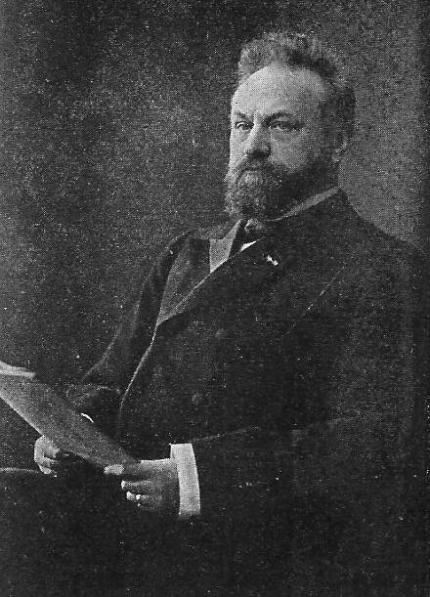
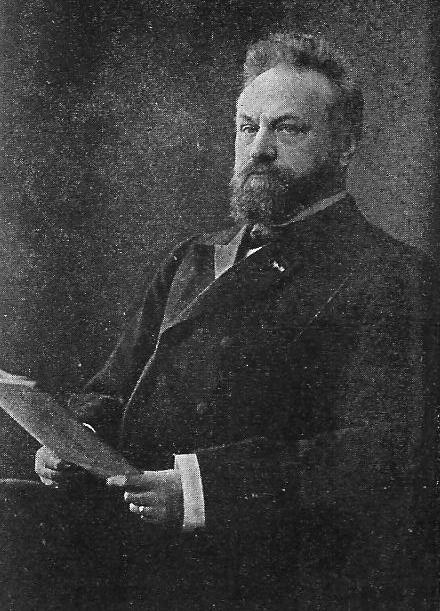
I am still moving my other blog posts over to this page. This is one of my favorite portions by Bavinck that historically sets up the differences between Lutheran and Reformed Theology concerning Law and Gospel. As I have noted before this is not a new discussion as some have thought. Even the Westminster Divine Anthony Burgess acknowledged the differences between Lutheran and Reformed thought concerning Law and Gospel.
Anyways, Enjoy this translation by Dr. Nelson Kloosterman of Bavinck on this topic.
The Law-Gospel Distinction and Preaching
Herman Bavinck
Translated by Nelson D. Kloosterman
Herman Bavinck was born in 1854, and raised in the experimental Calvinism of the Dutch Second Reformation (the Nadere Reformatie). He studied theology at the University of Leiden, and began teaching theology at the Theological School of the Christian Reformed Churches (Christelijke Gereformeerde Kerken) at Kampen in 1882. In 1902 Bavinck joined the faculty of the Free University of Amsterdam as Professor of Systematic Theology, where he served until his death in 1921.
The following material is a translation of paragraphs 520-521 of Herman Bavinck’s Gereformeerde Dogmatiek, 3rd unaltered edition, vol. 4 (Kampen, J. H. Kok, 1918), pages 489-498. Punctuation, sentence length, and paragraph divisions reflect editorial decisions made for ease of reading. Bavinck’s footnotes are included in the text between brackets in the form of paraphrased summary.
These two sections form part of Chapter X, “Concerning the Means of Grace.” Bavinck opens the chapter with, “The Word as Means of Grace.” He has some beautiful things to say about the power of the Word in regeneration and about the church as the “nursery” of that working. Within this subsection we find his discussion of the Word of God as law and as gospel.
520. The first and primary means of grace is the Word of God. Lutheran and Reformed agree with each other here. Nevertheless, the latter do not discuss the Word of God under the heading of the means of grace, since in their dogmatics they have usually treated it by this time in a separate chapter [reference to Calvin, Institutes 2.7-9, and others], or also concerning the law in connection with the covenant of works, and concerning the Gospel in connection with the covenant of grace [reference to Marck,Med. Theol. and ‘many others’].
This peculiar method of treatment does not warrant the claim that the Reformed did not acknowledge the Word of God as means of grace, for they repeatedly declare the very opposite [reference to BC 24, HC qu. 65). But one may indeed conclude from this fact that for the Reformed, the Word of God possessed a far richer meaning than that it served as means of grace only in the narrower sense of the word. The Word of God is to be distinguished from the sacrament in part by the fact that the latter serves to strengthen faith and thus has a role only within the church. But the Word of God, both as law and as Gospel, is revelation of the will of God, is the promulgation of the covenant of works and the covenant of grace, addresses all people and every creature, and has a universal meaning. The sacrament can be administered only by a lawfully called minister in the gathering of believers, but the Word of God has an existence and a place beyond that gathering, and performs there too its manifold functions. As means of grace in the proper sense alongside the sacrament, the Word of God is discussed insofar as it is preached openly by the teacher; all the emphasis falls on the Word preached in God’s name and by virtue of His commission. But as a rule, people will likely have been in contact with that Word in the home, at school, by means of conversation and reading material, long before they hear it openly proclaimed in the church. So the public administration of the Word hardly contains all the power proceeding from the Word; it serves also to bring about faith in those who do not yet have it, but still more to strengthen faith among believers in their gathering. In a Christian society the Word of God reaches people in various ways, from various quarters, and it reaches a person from the time of infancy. Yes, God brings that Word often to the hearts of children in the internal calling already before consciousness is awakened, in order to regenerate and to sanctify them, even as God writes the work of the law in the heart of each person from the very beginning of his existence. Therefore we must distinguish between the Word of God and Scripture. Not in the sense that the Word of God is merely to be found in Scripture and Scripture itself is not the Word of God; but in this other sense, that the Word of God most frequently, even in most instances, does not reach us as Scripture, in the form of the Scripture, but in such a way that it is taken up from the Scripture into the consciousness of the church, from there in turn radiating outward to the various people, to accomplish its working, in the form of admonition and address, nurture and instruction, book and writing, tract and summons. And God always stands behind that Word; He is the one who makes it move in those various forms to people and thus calls them to conversion and life. In Scripture, then, the expression “word of God” is never identical to Scripture, even though Scripture may without a doubt be called God’s Word. A few passages come to mind where the expression “word of God” is applied to a part of Holy Scripture, for example, to the written law. But for the rest, the phrase “word of God” when used in Scripture is never the same as the Scripture, something that is impossible, after all, since at that point Scripture was not yet finished. The phrase “word of God” has various meanings in Scripture, and can refer to the power of God whereby He creates and upholds, or His revelation to the prophets, or the content of revelation, or the Gospel proclaimed by the apostles. Nevertheless, it is always a word of God, which means: never simply a sound, but a power, no mere information but also an accomplishment of His will, Isa. 55:11. By the word God creates and upholds the world, Gen. 1:3, Ps. 33:6, 148:5, Isa. 48:13, Rom. 4:17, 2 Cor. 4:6, Heb. 1:3, 11:3, Jesus quiets the sea, Mk. 4:38, heals the sick, Mt. 8:16, casts out demons, 9:6, raised the dead, Luke 7:14, 8:54, John 5:25,28; 11:43, etc. By the word He also works in the moral and spiritual arenas.
The word which God employs to make known and to fulfill His will in moral and spiritual areas is to be distinguished as law and Gospel. When Jesus appeared on earth to proclaim the coming of the kingdom promised in the OT (Mk.1:15), to bring the Gospel of forgiveness and salvation to tax collectors and sinners, to poor and imprisoned (Mt.5:1f.; 11:5,28-30; Lk.4:18-19; 19:10; etc.), He came into conflict as a matter of course with the pharisaical, nomistic view of religion that dominated His time.
Yet, though He rejected the human inventions of the ancients (Mt.5:21f.; 15:9), and though He had another conception [opvatting] of murder (Mt.5:16), adultery (5:27), oaths (5:33), fasting (6:16), divorce (Mt.19:9), sabbath (Mk.2:27), He maintains the entire law, also in its ceremonial particulars (Mt.5:23,24; 17:24-27; 23:2,3,23; Mk.1:44; 11:16); He explains it in its spiritual meaning (Mt.5-7), emphasizes its ethical content, defines love toward God and neighbor as its core (Mt.7:12; 9:13; 12:7; Mk.7:15; 12:28-34), and desires an other, overflowing righteousness than that of the Pharisees (Mt.5.20). Though greater than the temple (Mt.12:6), He even placed Himself under the law (Mt.3:15), and came to fulfill the law and the prophets (Mt.5:17). And though He never sought to annul the law, He knew that His disciples are inwardly free from the law (Mt.17:26); that His church is based not on the law but on the confession of His Messiahship (Mt.16:18); that in His blood a new covenant is established (Mt.26:28); in a word, that the new wine demands new wineskins (Mt.9:17), and that the days of the temple, the nation and the law were numbered (Mk.13:2). Jesus desired no revolutionary overthrow of the legislative dispensation of the old covenant, but a reformation and renewal that would be born out of its complete fulfillment.
And so, in fact, it went. The church in Jerusalem at first still held to the temple and law (Acts 2: 46; 3:1; 10:14; 21:20; 22:12). But a new conception surfaced. With the conversion of the Gentiles the question arose as to the significance of the Mosaic law. And Paul was the first to fully understand that in the death of Christ the handwriting of ordinances was blotted out (Col.2:14).
Paul always understood by nomos (except where further qualification pointed elsewhere, e.g., Rom.3:27; Gal.6:2) the Mosaic law, the entire Torah, including the ceremonial commandments (Rom.9:4; Gal.2:12; 4:10; 5:3; Phil.3:5-6). And he described this law not as the letter to the Hebrews does — as imperfect, preparatory, Old Testamental dispensation of the covenant of grace, which then disappeared when the high priest and surety of the better covenant arrived — but as the revelation of God’s will, as a religious-ethical demand and obligation, as a God-willed regulation of the relationship between Himself and man. And concerning this law, so understood, Paul taught that it is holy and good, and bestowed by God (Rom.2:18; 7:22,25; 9:4; 2 Cor.3:3,7); but instead of being able, as the Pharisees argued, to grant righteousness, the law is powerless through the flesh (Rom.8:3); stimulates desire (Rom.7:7-8); increases the trespass (Rom.5:20; Gal.3:19); arouses wrath, curse and death (Rom.4:15; 2 Cor.3:6; Gal.3:10); and was merely a temporary insertion, for pedagogical reasons (Rom.5:20; Gal.3:19,24; 4:2-3).
Therefore, that law has reached its end in Christ, the seed of promise (Rom.10:4); the believer is free from the law (Gal.4:26f.; 5:1), since he is redeemed through Christ from the curse of the law (Gal.3:13; 4:5), and shares in the Spirit of adoption, the Spirit of freedom (Rom.8:15; 2 Cor.3:16-17; Gal.5:18).
This freedom of faith, however, does not invalidate the law, but establishes it (Rom.3:31), since its legal requirement is fulfilled precisely in those who walk according to the Spirit (Rom.8:4). After all, that Spirit renews believers so that they delight in God’s law according to the inner man and inquire as to what God’s holy will is (Rom.7:22; 12:2; Eph.5:10; Phil.1:10), while they are spurred on through various impulses — the great mercy of God, the example of Christ, the costly price with which they have been purchased, the fellowship of the Holy Spirit, etc. — to the doing of God’s will.
521. This antithesis between law and Gospel was further intensified and brought into irreconcilable conflict in the Christian church, on the one hand, by antinomianism in its various forms of Gnosticism, Manichaeism, Paulicianism, Anabaptism, Hattemism, etc. The entire OT derived from a lower God, from an angry, jealous, vengeful God, and was replaced with an entirely different revelation from the God of love, from the Father of Christ.
On the other hand, the antithesis between law and Gospel was weakened and obliterated by nomism in its various forms of Pelagianism, Semi-pelagianism, Romanism, Socinianism, Rationalism, etc. Already by the church fathers, and later by scholastic and Roman Catholic theologians, law and Gospel were identified with Old and New Testaments, and then not placed antithetically against one another, but viewed as a lower and higher revelation of God’s will. Law and Gospel differed not in that the former only demands and the latter only promises, for both contained commands, threats and promises; musteria, promissiones, praecepta; res credendae, sperandae et faciendae; not only Moses, but also Christ was legislator. But in all of this the Gospel of the NT, or the lex nova, significantly transcended the law of the OT or the lex vetus; the mysteries (trinity, incarnation, atonement, etc.) are revealed much more clearly in the NT, the promises are much richer in content and embrace especially spiritual and eternal goods, the laws are much more glorious and bearable, since ceremonial and civil laws were annulled and replaced with just a few rites. Furthermore, the law was given by Moses, grace and truth came in Jesus Christ. The law was temporary and designed for one nation; the Gospel is eternal and must be brought to every nation. The law was imperfect, a shadow and figure; the Gospel is perfect and the substance of the [promised] goods themselves. The law aroused fear and slavery, the Gospel arouses love and freedom. The law could not justify in the full sense of the word; it provided no richness of grace; it bestowed no eternal salvation; but the Gospel bestows in the sacrament the power of grace, which enables one to fulfill God’s commands and obtain eternal life. In one word: the law is the incomplete Gospel, the Gospel is the completed law; the Gospel was contained in the law as the tree is in the seed, as the full head of grain is in the seed [at this point Bavinck refers to vol. 3, 213f., and to a number of theologians, such as Augustine, Lombard, Aquinas, the Council of Trent, and Bellarmine].
Now, to the degree that the Old and New Testament dispensations of the covenant of grace could be described according to their form which came into view with the progress of Holy Scripture, by the terms law and Gospel, to that degree the distinction between both of them that was made by Rome (indeed not in every respect, yet in the main) is to be approved. Still, Rome identified Old and New covenant entirely with law and Gospel. She misperceived the Gospel in the Old Testament and the law in the New Testament. Rome summarized the entire doctrine proclaimed by Christ and the apostles as Gospel, in which they included not only promises but also laws and threats. In this way, Rome made the Gospel into a second law. The Pauline antithesis between law and Gospel was eliminated.
For though it is true that Paul understood by the law the entire OT dispensation, he viewed it then precisely in its legislative [wettischen, “lawish”; italics original] form and in this way places it in direct contrast it to the Gospel. And when he did that, he acknowledged that the legislative dispensation in no way invalidated the promise that had already been given to Abraham (Gal.3:17,21). Moreover, Paul acknowledged that in the days of the old covenant too the Gospel was proclaimed (Gal.3:8), and that then, too, righteousness was obtained from and through faith (Rom.4:11,12; 11:32; Gal.3:6-7).
Concerning the law as law, apart from the promise to which it was made serviceable in the OT, Paul argued that it could not justify; that it increased sin; that it was an administration of condemnation which precisely in that way prepared for the fulfillment of the promise and necessitated an other righteousness, namely, the righteousness of God in Christ through faith.
And this antithesis of law and Gospel was again understood by the Reformation. Indeed, the church fathers did make statements that testified to clearer insight. But no clarity resulted, because they always confused the distinction between law and Gospel with that between Old and New Testaments.
But the Reformers, while on the one hand maintaining against the Anabaptists the unity of the covenant of grace in both of its administrations, on the other hand kept in view the sharp contrast between law and Gospel, and thereby restored the unique character of the Christian religion as a religion of grace.
Although law and Gospel can still be employed in a broader sense for the old and new dispensations of the covenant of grace, in their proper meaning they refer nonetheless to two revelations of God’s will that differ essentially from one another.
The law, too, is God’s will (Rom.2:18,20), holy and wise and good, spiritual (Rom.7:12,14; 12:10), giving life to whomever keeps it (Rom.2:13; 3:12). But through sin it has become impotent, and does not justify, but through sin the law stimulates desire, increases the trespass, effects wrath, kills, curses and damns (Rom.3:20; 4:15; 5:20; 7:5,8-9,13; 2 Cor.3:6f.; Gal.3:10,13,19).
And over against the law stands the Gospel of Christ, the euangelion, containing nothing less than the fulfillment of the OT epangelia (Mk.1:15; Acts 13:32; Eph.3:6), coming to us from God (Rom.1:1-2; 2 Cor.11:7), having Christ as its content (Rom.1:3; Eph.3:6), and bringing nothing else than grace (Acts 20:24), reconciliation (2 Cor.5:18), forgiveness (Rom.4:3-8), righteousness (Rom.3:21-22), peace (Eph.6:15), freedom (Gal.5:13), life (Rom.1:17; Phil.2:16; etc.). Like demand and gift, like command and promise, like sin and grace, like sickness and healing, like death and life, so here, too, law and Gospel stand over against one another. [Here Bavinck has a footnote: From the Protestant side as well the distinction between law and Gospel is often weakened or obliterated, e.g., by Stange, Die Heilsbedeutung des Gesetzes, Leipzig 1904; Bruining, already cited in vol. 3, p. 631. Earlier already by Zwingli,, according to Loofs, Dogmengeschichte, 4th ed., 799.] Although they overlap to the extent that they both have God as author, both speak of one and the same perfect righteousness, both are directed to man, to bring him to eternal life, yet they differ in that the law proceeds from God’s holiness, the Gospel from His grace; the [works of the] law [are] known from nature, the Gospel only by special revelation; the law demands perfect righteousness, the Gospel bestows it; the law leads to eternal life through works, the Gospel makes works proceed from eternal life bestowed through faith; the law currently condemns man, the Gospel acquits him; the law is directed to all men, the Gospel only to those who live under it; etc.
It was in terms of this distinction that differences arose as to whether preaching for faith and conversion which presented a condition and demand really should be considered as belonging to the Gospel, or rather (according to Flacius, Gerhard, Quenstedt, Voetius, Witsius, Coccejus, De Moor, et al.) to the law. And indeed, in the strictest sense there are in the Gospel no demands and conditions, but only promises and gifts; faith and conversion are, just as justification, etc., benefits of the covenant of grace. Still, the Gospel never appears concretely this way; in practice it is always joined to the law and in Scripture it was then always woven together with the law. The Gospel always presupposes the law, and needs it also in its administration. For it is brought to rational and moral people who before God are responsible for themselves and therefore must be called to faith and conversion. The demanding, summoning shape in which the Gospel appears is borrowed from the law; every person is obliged to take God at His word not first by the Gospel, but by nature through the law, and thus also to accept the Gospel in which He speaks to the person. Therefore the Gospel from the very beginning lays claim to all people, binds them in their consciences, since that God who speaks in the Gospel is none other than He who in His law has made Himself known to them. Faith and conversion are therefore demanded of the person in the name of God’s law, by virtue of the relationship in which the person as a rational creature stands with respect to God; and that demand is directed not only to the elect and regenerate, but to all men without distinction.
But faith and conversion are themselves still the content of the Gospel, not effects or fruits of the law. For the law does demand faith in God in general, but not that special faith directed to Christ, and the law can effectmetameleia, poenitentia, but not metanoia, resipiscentia, which is rather a fruit of faith. And though by nature a person is obliged to faith and conversion through the law, precisely because they are the content of the Gospel one can speak of a law, a command, an obedience of faith (Rom.1:5; 3:27; 1 Jn.3:23), of a being obedient to and judged by the Gospel (Rom.2:16; 10:16), etc.
Viewed concretely, law and Gospel differ not so much in that the law always meets us in the form of command and the Gospel in the form of promise, for the law too has promises and the Gospel too has warnings and obligations. But they differ especially in content: the law demands that man work out his own righteousness, while the Gospel invites him to renounce all self-righteousness and to receive the righteousness of Christ, to which end it even bestows the gift of faith.
Law and Gospel stand in that relationship not just before and at the point of conversion; but they continue standing in that relationship throughout the whole of the Christian life, all the way to the grave. The Lutherans have an eye almost exclusively for the accusing, condemning work of the law and therefore know of no greater salvation than liberation from the law. The law is necessary only on account of sin. According to Lutheran theology, in the state of perfection there is no law. God is free from the law; Christ was not subject to the law for Himself at all; the believer no longer stands under the law. Naturally, the Lutherans speak of a threefold use of the law, not only of a usus politicus (civilis), to restrain sin, and a usus paedagogicus, to arouse the knowledge of sin, but also of a usus didacticus, to function for the believer as a rule of living. But this last usus is nonetheless necessary simply and only because and insofar as believers are still sinners, and must still be tamed by the law, and must still be led to a continuing knowledge of sin. In itself the law ceases with the coming of faith and grace, and loses all its significance.
The Reformed, however, have thought about this in an entirely different way. The usus politicus and the usus paedagogicus of the law became necessary only accidentally because of sin; even with these uses aside, the most important usus remains, the usus didacticus or normativus. After all, the law is an expression of God’s being. As a human being Christ was subject to the law for Himself. Before the fall Adam had the law written upon his heart. With the believer it is again written upon the tablets of his heart by the Holy Spirit. And all those in heaven will walk according to the law of the Lord.
The Gospel is temporary, but the law is eternal and is restored precisely through the Gospel. Freedom from the law consists, then, not in the fact that the Christian has nothing more to do with the law, but lies in the fact that the law demands nothing more from the Christian as a condition of salvation. The law can no longer judge and condemn him. Instead he delights in the law of God according to the inner man and yearns for it day and night.
Therefore, that law must always be preached to the congregation in connection with the Gospel. Law and Gospel, the whole Word, the full counsel of God, is the content of preaching. Among Reformed people, therefore, the law occupies a much larger place than in the teaching of sin, since it is also part of the teaching of gratitude.
[Here Bavinck has a footnote providing bibliographical references relating to the views of Luther, Zwingli, Calvin, Zanchius, Witsius, De Moor, Vitringa, Schneckenburger, Frank, and Gottschick.]
(from paragraph 521 of Herman Bavinck’s Gereformeerde Dogmatiek, 3rd unaltered edition, vol. 4 (Kampen, J. H. Kok, 1918), emphases in bold added, and taken from this translation from the Dutch)





 Puritan Covenanter
You must be logged in to post a comment.