Herman Bavinck – The Covenant of Grace – Mosaic- (Read Bavinck!)

image

Reading Bavinck on the Covenant of Grace and the Mosaic Covenant is well worth anyone’s time. Put the modern books down and read the good stuff. The difference between Modern Reformed Thought and reading Reformed thought is like going to eat at McDonald’s or Ruth’s Chris Steak House. Read Bavinck!

Enjoy!!

The universal reality of misery evokes in all people a need for deliverance, a deliverance from above. Pagans who construe misery as basically physical know neither the essential character of sin nor the deliverance of grace. Scripture, however, sees our misery as sin, as an ethical violation of communion with God, who alone can restore it. This requires grace, which in biblical revelation assumes the form of a covenant.

This covenant begins immediately after the fall as evidenced by Adam and Eve’s shame in their nakedness, a sign of lost innocence. Guilt and shame reveal both God’s wrath and his grace, but the latter is shown especially when God seeks out Adam and Eve and interrogates them. In his punishment on the serpent and on humanity, God’s mercy triumphs over judgment as he annuls the covenant made with evil and puts enmity between the seed of the serpent and the seed of the woman. Now the path of glory must pass through suffering for man and woman. In the promise of Genesis 3, we find the gospel in a nutshell and, in principle, the entire history of the human race.

The word “covenant” is not found in Genesis 3, but the reality is. Modern critics judge that covenant ideas arose late in Israel’s history but need circular arguments for their case. A history of Israel is constructed by alleging that certain biblical sources are inauthentic, which history is then used to demonstrate the inauthenticity of documents that witness against it. It is better scholarship to see the latter prophets as standing on the foundation of a real covenant made with the patriarchs.

Covenant (ברית) is characterized by three factors: an oath or promise including stipulations, a curse for violation, and a cultic ceremony that represents the curse symbolically. Covenant making is a religious and social act. The covenant of grace is unilateral, indissolubly grounded in the merciful promises of the sovereign God. God cannot break his promise; he has sworn himself to uphold it. The unilateral divine origin and character attributed to the covenant in Hebrew is likely the reason why the Septuagint translates ברית by διαθηκη, or “testament,” rather than συνθηκη.

The doctrine of the covenant achieved dogmatic significance in the Christian church because the Christian religion had to understand its relation to and distinction from Judaism. Over against Gnosticism and Marcion, the church had to maintain the unity of and, over against Judaism, the distinction between the two covenants. Law and gospel, Old Testament and New Testament, are to be distinguished but never separated. During the Reformation this issue became crucial as Anabaptists and others (Arminians, Socinians) devalued the Old Testament. Key differences also arose between the Lutheran and Reformed traditions. It is in the latter, beginning with Zwingli and Calvin, that the doctrine of the covenant is most fully developed, notably in the German Reformed theology of Olevianus and Ursinus, English Puritanism, and the Westminster Confession.

Among the Dutch Reformed, Cloppenburg and Cocceius made the covenant the fundamental premise and controlling principle of dogmatics as a whole. Cocceius had an eccentric view of the covenant, notably the notion of successive covenantal abrogations, which in fact undermined the key element of grace, making it uncertain. After Cocceius, a more general disparagement of the Old Testament took place among modern thinkers such as Spinoza, Kant, Hegel, and Schleiermacher. Judaism was then seen as no better than paganism as preparation for Christianity.

In the Reformed church and theology, covenant became a very important practical encouragement for Christian living. Here the basis of all covenants was found in the eternal counsel of God, in a covenant between the very persons of the Trinity, the pactum salutis (counsel of peace). The work of salvation is an undertaking of the one God in three persons in which all cooperate and each one performs a special task. It is the triune God—Father, Son, and Spirit—who together conceive, determine, carry out, and complete the entire work of salvation. The benefit to the believer is in knowing that the covenant of grace executed and revealed in time and history nevertheless rests on an eternal, unchanging foundation, the counsel of the triune God. The Father is the eternal Father, the Son the eternal Mediator, the Holy Spirit the eternal Paraclete.

Care must be taken in considering the execution of the pact of salvation in time and history. Though God elects Abraham and Israel as his chosen people, his salvific purpose is universal, with all peoples. In the fullness of time, humanity as a whole, Jew and Gentile, is reconciled in the one man, Jesus Christ, at the cross. After the fall, grace and judgment alike are extended to the whole human race. In the beginnings of human history, we see great blessing in remarkable longevity and the great judgment of the flood. After the flood, God makes a covenant with nature not to destroy the world with water again, reduces human life span, and spreads humanity across the world, preventing humans from reaching heaven itself with their ambition. Despite letting the Gentiles walk in their own ways, God providentially grants them significant cultural and social development. He did not leave them without witnesses to himself through the works of his hands. In this way God is present to all people, and they are in some sense “prepared” for the message of salvation.

The universal scope of God’s intention for all peoples—Jew and Gentile—must never obscure the special favor of God to Israel. While Israel is drawn from the nations and there are analogies between Israel’s religious practices and those of the nations, the essential difference is that special grace is reserved for Israel and is not known among the pagans. Pagan religion is self-willed and legalistic. The covenant made with Abraham is new and comes from God alone. Through his covenant with Abraham and Israel, the Creator proves himself to also be the Re-creator and Savior. Elohim, Creator of heaven and earth, is Yahweh, the God of the covenant.

The old covenant with Israel is the necessary preparation for the new covenant in Christ. Though the covenant is one, there are two dispensations. In God’s own time, the promise of the old covenant was fulfilled in the new. The shadow and particularity of the letter became the substance, universality, and freedom of the Spirit. Nothing of the Old Testament is lost in the New, but everything is fulfilled, matured, has reached its full growth, and now, out of the temporary husk, produces the eternal core.

The covenant of grace, fulfilled in the New Testament, was and is surrounded and sustained by God’s covenant with nature, with all creatures. Unlike what Cocceius taught, the covenant of grace is not the successive abolition of the covenant of works but its fulfillment and restoration. “Grace repairs and perfects nature.” God’s demand of obedience remains as the only way to eternal life. The difference between the covenant of works and grace is that God now approaches us not in Adam but in Christ, who fulfilled all the obedience required of Adam. Christ is the second and last Adam who restores what the first Adam had corrupted; he is the head of a new humanity.

The covenant of grace is also integrally united with the counsel of peace, though it should be distinguished from it. In the counsel of peace, Christ is the guarantor and head; in the covenant of grace, he is the mediator. In this way the doctrine of the covenant maintains God’s sovereignty in the entire work of salvation. It is the Father who conceives, plans, and wills the work of salvation; it is the Son who guarantees it and effectively acquires it; it is the Spirit who implements and applies it.

At the same time, the covenant of grace also allows the rational and moral nature of human beings to come into their own. Here it differs from election, in which humans are strictly passive. The covenant of grace describes the road by which elect people attain their destiny; it is the channel by which the stream of election flows toward eternity. Christ sends his Spirit to instruct and enable his own so that they consciously and voluntarily consent to this covenant. The covenant of grace comes with the demand of faith and repentance, which may in some sense be said to be its “conditions.” Yet, this must not be misunderstood. God himself supplies what he demands; the covenant of grace is thus truly unilateral—it comes from God, who designed, defines, maintains, and implements it. It is, however, designed to become bilateral, to be consciously and voluntarily accepted by believers in the power of God. In the covenant of grace, God’s honor is not at the expense of but for the benefit of human persons by renewing the whole person and restoring personal freedom and dignity.

The covenant of grace, with Christ as the new head of humanity, reminds us of the organic unity of the church. The covenant of grace reminds us that election is about not only individual persons but also organic wholes, including families and generations. Therefore, some who remain inwardly unbelieving will for a time, in the earthly administration and dispensation of the covenant of grace, be part of the covenant people. The final judgment belongs to God alone, and in this life the church must regard such with the judgment of charity.(a)

This (Abrahamic) covenant with the ancestors continues, even when later at Sinai it assumes another form. It is the foundation and core also of the Sinaitic covenant (Exod. 2:24; Deut. 7:8). The promise was not nullified by the law that came later (Gal. 3:17). The covenant with Israel was essentially no other than that with Abraham. Just as God first freely and graciously gave himself as shield and reward to Abraham, apart from merits of his, to be a God to him and his descendants after him, and on that basis called Abraham to a blameless walk before his face, so also it is God who chose the people of Israel, saved it out of Egypt, united himself with that people, and obligated it to be holy and his own people. The covenant on Mount sinai is and remains a covenant of grace. “I am The Lord your God, who brought you out of the land of Egypt, out of the ouse of slavery” (Exod. 20:2) is the opening statement and foundation of the law, the essence of the covenant of grace. Yahweh is and perpetually remains Israel’s God before and aside from any dignity or worth that Israel may have. It is an everlasting covenant that cannot be broken even by any sins and iniquities on the part of Israel (Deut. 4:31; 32:26f; Judg. 2:1; Pss. 89:1-5; 105:8; 111:5; Isa. 54:10; Rom. 11:1-2; 2 Cor. 1:20).

The benefits granted to Israel by God in this covenant are the same as those granted to Abraham, but more detailed and specialized. Genesis 3:15 already contains the entire covenant in a nutshell and all the benefits of grace. God breaks the covenant made by the first humans with Satan, puts enmity between them, brings the first humans over to his side, and promises them victory over the power of the enemy. The one great promise to Abraham is “I will be your God, and you and your descendants will be my people” (Genesis 17:1 paraphrase). And this is the principle content of God’s covenant with Israel as well. God is Israel’s God, and Israel is his people (Exod. 19:6; 29:46; etc.) Israel, accordingly, receives a wide assortment of blessings, not only temporal blessings, such as the land of Canaan, fruitfulness in marriage, a long life, prosperity, plus victory over its enemies, but also spiritual and eternal blessings, such as God’s dwelling among them (Exod. 29:45; Lev. 26:12), the forgiveness of sins (Exod. 20:6; 34:7; Num. 14:18; Deut. 4:31; Pss. 32; 103; etc.), sonship (Exod. 4:22; 19:5-6; 20:2; Deut. 14:1; Isa. 63:16; Amos 3:1-2; etc.), sanctification (Exod. 19:6; Lev. 11:44; 19:2), and so on… (b)

Just as Abraham, when God allied himself with him, was obligated to “Walk before his face,” so Israel as a people was similarly admonished by God’s covenant to a new obedience. The entire law, which the covenant of grace at Mount Sinai took into its service, is intended to prompt Israel as a people to “walk” in the way of the covenant. It is but an explication of the one statement to Abraham: “Walk before me, and be blameless” [Gen. 17:1], and therefore nor more a cancelation of the covenant of grace and the foundation of a covenant of works than this word spoken to Abraham. The law of Moses, accordingly, is not antithetical to grace but subservient to it and was also thus understood and praised in every age by Israel’s pious men and women. But detached from the covenant of grace, it indeed became a letter that kills, a ministry of condemnation. Another reason why in the time of the Old Testament the covenant of grace took the law into its service was that it might arouse the consciousness of sin, increase the felt need for salvation, and reinforce the expectation of an even richer revelation of God’s grace. He writes that Israel as a minor, placed under the care of the law, had to be led to Christ (Rom. 10:4; Gal. 3:23f. 4:1f.) and that in that connection sin would be increased and the uselessness of works for justification and the necessity of faith would be understood (Rom. 4:15; 5:20; 7:7f; 8:3; Gal. 3:19). On the one hand, therefore, the law was subservient to the covenant of grace; it was not a covenant of works in disguise and did not intend that humans would obtain justification by their own works. On the other hand, its purpose was to lay the ground work for a higher and better dispensation of that same covenant of grace to come in the fullness of time. The impossibility of keeping the Sinaitic covenant of the meeting of demands of the law made another and better dispensation of the covenant of grace necessary. The eternal covenant of grace was provoked to a higher revelation off itself by the imperfection of the temporary form it has assumed in Israel. Sin increased that grace might abound. Christ could not immediately become human after the fall, and grace could not immediately reveal itself in all its riches. There was a needed for preparation and nurture. “It was not fitting for God to become incarnate at the beginning of the human race before sin. For medicine is given only to the sick. Nor was it fitting that God should become incarnate immediately after sin that man, having been humbled by sin, might see his own need of a deliverer. But what has been decreed from eternity occurred in the fullness of time. (c)

Bavinck, H., Bolt, J., & Vriend, J. (2006). Reformed Dogmatics, Volume 3: Sin and Salvation in Christ ((a) 193–196, (b) 220-221, (c) 222). Grand Rapids, MI: Baker Academic.
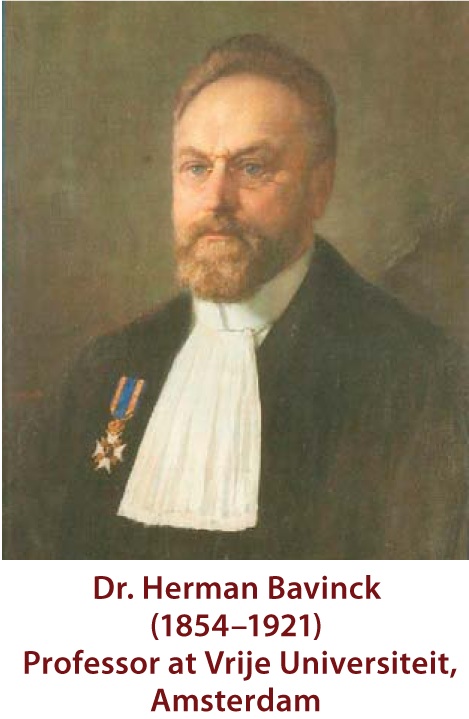
I guess what I am trying to say is read Bavinck!
Antinomianism: Past and Present

Soon and Very Soon we are going to have our eyes opened historically. Thanks to Mark Jones for going back and researching Antinomianism during the time of the Westminster Divines. I suspect some Modern Reformed Thought people will not like this book while many others will

OPC-PNW Republication Session 2

Sep 26, 2013 – OPC Presbytery of the Northwest Conference on Republication, Session 2

Presentation 2 Randy Bergquist and Rob Van Kooten take the view that the Klinean formulation of the Mosaic covenant as a covenant of works in some sense is specifically a recent formulation that appears to be out of harmony with the Westminster Standards.

Study of the Mosaic Covenant home page: https://sites.google.com/site/mosaiccovenant/

Presbytery of the Northwest conference page: http://pnwopc.org/conference

In What Sense? Republication and Merit discussion in the Pacific Northwest OPC

20131103-162112.jpg

I would like to pass along more information as a follow up concerning the Pacific Northwest Session meeting I brought attention to here. Confusion in the Camp / Merit and Reformed Theology

On September 26, 2013, a pre-presbytery conference (Presbytery of the Northwest, OPC) on the doctrine of republication was held at First OPC in Portland, Oregon. The presbytery’s information page with links to the entire audio and handouts may be found here: PNW Republication Conference.

Session One is a presentation by Brett McNeill and Mark Collingridge. They set forth the case for viewing the Mosaic covenant as a republication of the covenant of works in some sense. Their handout which was made available at the beginning of the conference can be found here. Republication: A Biblical, Confessional and Historical Defense

Their presentation can be found here.
First sessions mp3.

Session Two was done by Randy Bergquist and Rob Van Kooten. They understand that the views of the authors of ‘The Law is Not of Faith’ and Meredith G. Kline concerning the Mosaic Covenant and the Republication of the Covenant of Works is specifically a recent formulation that appears to be out of harmony with the Westminster Standards.  A copy of the audio of this presentation is embed with the PowerPoint presentation that was presented at the conference.  You can view it on Youtube at the link provided after this paragraph.  In the text of the presentation, a communication to the PNW from Rev. Marc Renkema is referenced. “The Works-Paradigm of Meredith G. Kline.”  You can view it as it is posted as the last item on this blog.  Prior to this recent conference Messrs. Bergquist and Van Kooten, along with Andy Elam, wrote what ended up being a small booklet on this topic.  It can be accessed as it was made available.   “A Booklet on Merit in the Doctrine of Republication”.  I personally believe this assessment to be better theologically and confessionally.

You Tube Video / Powerpoint presentation.

The Division of The Mosaic Covenant into Upper and Lower levels. / OPC-PNW Republication Session 2

Overture – The Presbytery of the Northwest

At the stated meeting of PNW, the following overture was adopted by the presbytery: Overture to the 81st General Assembly of the OPC.

The Presbytery of the Northwest respectfully overtures the 81st General Assembly of the Orthodox Presbyterian Church to establish a study committee to examine and give its advice as to whether and in which particular senses the concept of the Mosaic Covenant as a republication of the Adamic Covenant is consistent with the doctrinal system taught in the confessional standards of the Orthodox Presbyterian Church.

Grounds:

[1] There is conflict over this issue among the teaching and ruling elders of the church, sufficiently serious and pervasive to injure the unity and peace of the whole body.

[2] A resolution over this doctrinal question, rendered in accord with the General Assembly’s constitutional power as defined in the Form of Government XV.6, will help to negotiate disagreements, maintain unity, and advance the gospel testimony of the whole church.

Rev. Marc Renkema’s references

The Works-Merit Paradigm of Meredith G. Kline

(emphasis and underscoring added)

The following are quotes from Meredith G. Kline, Kingdom Prologue (Two Age Press, 2000).

“. . . we must keep in mind the typological level of the kingdom that was secured by Noah’s righteousness if we are to perceive the consistency of the works-grant with the grace principle that was operating at the permanent, fundamental stratum of the Covenant of Grace. The flood judgment was but a type of the messianic judgment and the kingdom in the ark that was granted to Noah as the reward for his good works was only typological of the messianic kingdom. Therefore, the covenant of grant to Noah was not in conflict with or an abrogation of the grace of the redemptive covenant that had been revealed to the Sethite community of faith and, of course, continued to be operative in the sphere of eternal realities in the days of Noah and his covenant grant” (pp. 238-39).

“Because of Abraham’s obedience redemptive history would take the shape of an Abrahamic kingdom of God from which salvation’s blessings would rise up and flow out to the nations. God was pleased to constitute Abraham’s exemplary works as the meritorious ground for granting to Israel after the flesh the distinctive role of being formed as the typological kingdom, the matrix from which Christ should come. Within this typological structure Abraham emerges as an appointed sign of his promised messianic seed, the Servant of the Lord, whose fulfillment of his covenantal mission was the meritorious ground of the inheritance of the antitypical, eschatological kingdom by the true, elect Israel of all nations. Certainly, Abraham’s works did not have that status.

They were, however, accorded by God an analogous kind of value with respect to the typological stage represented by the old covenant. Though not the ground of the inheritance of heaven, Abraham’s obedience was the ground for Israel’s inheritance of Canaan. Salvation would not come because of Abraham’s obedience, but because of Abraham’s obedience salvation would come to the Abrahamites, the Jews (John 4:22)” (p. 325).

The following quotes are from Meredith G. Kline, God, Heaven and Har Magedon (Wipf & Stock, 2006).

“. . . in the case of some of these grantees, including Noah, their righteous acts were the grounds for bestowing kingdom benefits on others closely related to them . . ., just as in the case of Christ . . .” (p. 79).

Abraham’s obedience had typological import. The Lord constituted it a prophetic sign of that obedience of Christ, which merits the heavenly kingdom for his people. That Abraham’s obedience functioned not only as the authentication of his faith for his personal justification but as a meritorious performance that earned a reward for others . . . is confirmed in the Lord’s later revelation of the covenant promise to Isaac . . .” (pp. 102-3).

“ . . . Abraham, the grantee of the covenant promise. His exemplary obedience was invested by the Lord with typological significance as the meritorious ground for his descendants’ inheritance of the promised land . . .” (pp. 127-28).

From Kline’s “Covenant Theology Under Attack” (Unmodified version).

“But this [Luke 17:10] does not mean that human works of obedience are of no merit. Though we cannot add to God’s glory, Scripture instructs us that God has created us for the very purpose of glorifying him. We do so when we reflect back to him his glory, when our godlike righteousness mirrors back his likeness. Such righteousness God esteems as worthy of his approbation. And that which earns the favor of God earns the blessing in which that favor expresses itself. It is meritorious. It deserves the reward God grants according to his good pleasure.”

From Kline’s, “Gospel until the Law: Rom 5:13-14 and the Old Covenant.” Journal of the Evangelical Theological Society 34/4 (December 1991): 433-46.

“Classic covenantalism recognizes that the old Mosaic order (at its foundation level—that is, as a program of individual salvation in Christ) was in continuity with previous and subsequent administrations of the overarching covenant of grace. But it also sees and takes at face value the massive Biblical evidence for a peculiar discontinuity present in the old covenant in the form of a principle of meritorious works, operating not as a way of eternal salvation but as the principle governing Israel’s retention of its provisional, typological inheritance” (p. 434).

For more, you may access http://sites.google.com/site/themosaiccovenant/Home.

Additional reminder.
Just as a side note, I discovered a few years ago that the Kline of ‘By Oath Consigned’ was not the Kline of ‘Kingdom Prologue’.  His views concerning the Mosaic Covenant had changed and he became unconfessional in between the two books.

http://www.puritanboard.com/f30/kline-karlburg-not-confessional-concerning-mosaic-69258/#post887978

No one is exempt from temptation guys. Vision Forum / Doug Phillips

image

Just saw this and can only hear the brokenness of man crying.

Doug Phillips has issued a resignation letter to Vision Forum Ministries. May this not hurt the body of Christ any worse than it possibly can. May God restore and exhibit his glory and grace during this trying time. Thanks to The Lord for giving us Psalm 51.

Vision Forum Issues Statement of Resignation

May God be glorified in this, and may he grant Mr. Phillips sanctification and a greater sense of what Christ has done. VB

Psa 51:9    Hide your face from my sins, and blot out all my iniquities.
Psa 51:10    Create in me a clean heart, O God, and renew a right spirit within me.
Psa 51:11    Cast me not away from your presence, and take not your Holy Spirit from me.
Psa 51:12    Restore to me the joy of your salvation, and uphold me with a willing spirit.
Psa 51:13    Then I will teach transgressors your ways, and sinners will return to you.

Now may we the Church help in this process by prayer and encouragement instead of picking up stones to condemn him.

I thank God for our Elders and friends who can do this….

Gal 6:1    Brothers, if anyone is caught in any transgression, you who are spiritual should restore him in a spirit of gentleness. Keep watch on yourself, lest you too be tempted.
Gal 6:2    Bear one another’s burdens, and so fulfill the law of Christ.
Gal 6:3    For if anyone thinks he is something, when he is nothing, he deceives himself.

…and remember such things as this.

1Co 10:11    Now these things happened to them as an example, but they were written down for our instruction, on whom the end of the ages has come.
1Co 10:12    Therefore let anyone who thinks that he stands take heed lest he fall.

Dr. David Murray also does a good job responding to this.
One Vital Lesson From Doug Phillips Resignation

Covenant Perspectives Between Particular Baptists and Our Reformed Heritage

Image

This was a short response I made concerning the differences between what Particular (Reformed) Baptists believe and what our Reformed heritage teaches.   I just thought I would repost it here.

From my point of view things depended upon the substantial differences between the Old and New Covenants. As a Reformed Baptist I understood them to be different substantially. It took me years to understand what my Reformed brothers were meaning when they were telling me that the Old and New Covenants were the same in substance concerning the Administration of the Covenant of Grace. I always viewed the Old Covenant as some covenant that was a mixture of both the Covenant of Grace and the Covenant of Works. I saw the Old Covenant as something that was totally different than the New Covenant even by its very nature. That skewed my understanding concerning who was considered a Covenant Member in the Church. When I started to understand that the Mosaic Covenant was not a Covenant of Works in any way shape or form, but that it was purely an administration of the Covenant of Grace, things became much clearer. Covenant membership in the Church had not changed and the Old Covenant was just as much an administration of the Covenant of Grace as much as the New Covenant was. That isn’t necessarily based upon good and necessary consequences. It is based upon good hermeneutics. Thus the sign and seal of the Old and New Covenants are also basically the same in substance and signify the same thing even though they differ in what was performed. Both point to being regenerate and Born Again.    Both are signs and seals of our Union with Christ which proceeds regeneration.

Here is where I start discussing this.
http://www.puritanboard.com/f24/differences-between-reformed-baptists-presbyterians-80911/index3.html#post1019739

Additional note…
There was a follow up comment to which I replied.

JM stated, “Plenty of Baptists understand the paedobaptist view of the Sinaitic Covenant…we just reject that understanding.”

I want to ask and mention a few things JM. Which view of the paedo baptists concerning the Old Covenant are you referring to? Part of my problem lay in misreading some of them as I was looking through the eyes of John Owen who held to a minority view during the time of the Divines at Westminster and that of Meredith Kline. I also read all I could and saw through the eyes of Fred Malone and other well known authors who departed from the Presbyterian and Majority Reformed understanding. Just to be clear, I am not so sure they truly understood it. I have been quite surprised by the number of gentlemen, even Seminary trained Presbyterian and Reformed men, who didn’t understand this position. I can even name some of our most noted Professors who either don’t or just reject it also. I have even been quite surprised about the whole Union with Christ discussion in the past few years. RMS

In a recent discussion on the PB we discussed a blog that stated this.

In debates concerning the republication of the covenant of works within the Mosaic covenant, anyone who holds to the Westminster Confession or the London Baptist Confession confesses that the same law that was given to Adam was delivered to Moses. At the very least, then, the confessions teach a republication of the covenant of works.

Formal and Material Republication in the Confessions of Faith

The last sentence is part of the problem. And the blogger is no slouch. The blog is actually pretty good. It just simply is not true concerning the last sentence bolded above. As Ruben noted concerning the quote, “The rest of the post and the nature of the case, show that it should have read “the confessions teach a republication of the law.

It might have been a misstatement on Sam’s part. I make them all the time. But the sympathy to what he noted stands true for many guys. And therein lays the problem. A lot of guys don’t realize what is being said and taught with the distinctions needed. I for one am working on it.

http://www.puritanboard.com/f24/differences-between-reformed-baptists-presbyterians-80911/index3.html#post1019837

WCF chapter 19.

Westminster Confession of Faith Chapter 19. The Law and the Covenant of Works.

Natural Theology (Revelation) Bavinck.

662a7aecb7

Admittedly, article 2 of the Belgic Confession states that God is known by two means—nature and Scripture—and natural theology is upheld in its truth and value by all Reformed theologians.  But in that first period, before rationalism infected Reformed Theology, it was clearly seen that nature and Scripture are not detached and independent entities, any more than natural and revealed theology are.  Calvin incorporated natural theology into the body of Christian dogmatics, saying that Scripture was the spectacles by which believers see God more distinctly also in the works of nature.  Originally natural theology was by no means intended to pave the way, step by laborious step, for revealed theology.  In adopting it, one was not assuming the provisional stance of reason in order next, by reasoning and proof, to mount to the higher level of faith.  But from the very outset the dogmatician took a stand on the ground of faith and, as a Christian and believer, now also looked at nature.  Then, with his Christian eyes, armed by the Holy Scripture, he also discovered in nature the footprints of the God whom he had come to know—in Christ and by Scripture—as Father.  From a subjective point of view, in dogmatics it was not therefore natural reason that first took the floor, after which faith in the Word had its say.  On the contrary, it was always the believing Christian who, in catechism, confession, and in dogmatics, gave voice to his faith.  And in the same way, speaking objectively, nature did not stand on its own as an independent principle alongside of Holy Scripture, each of the supplying a set of truths of their own.  Rather, nature was viewed in the light of Scripture, and Scripture not only contained revealed truth (in the strict sense) but also the truths that a believer can discover in nature.  Thus Alsted did indeed acknowledge the existence of a natural theology in the unregenerate, but a confused and obscure natural theology.  By contrast, for the believer the principles and conclusions of natural theology are replicated clearly and distinctly in Scripture.

So, though one can speak of a knowledge of God derived from nature, dogmatics still has but one external foundation (principium externum), i.e., Holy Scripture, and similarly only one internal foundation (principium internum), i.e., believing reason.  And it is not simply the case that Holy Scripture is only the norm and not he source of dogmatics, but it is specifically the foundation (principium) of theology.  Between earlier theologians and those of today there is a major difference.  Herman Bavinck, Reformed Dogmatics Prolegomena Vl. I pp. 87,89

There is no such thing as a separate natural theology that could be obtained apart from any revelation solely on the basis of reflective considerations of the universe. The knowledge of God that is gathered up in so-called natural theology is not the product of human reason.

Rather, natural theology presupposes, first of all, that God reveals himself in his handiwork. It is not humans who seek God but God who seeks humans, also by means of his works in nature. That being the case, it further presupposes that it is not humans who, by the natural light of reason, understand and know this revelation of God. Although all pagan religions are positive [concrete], what is needed on the human side is a mind that has been sanctified and eyes that have been opened in order to be able to see God, the true and living God, in his creatures. And even this is not enough. Even Christian believers would not be able to understand God’s revelation in nature and reproduce it accurately had not God himself described in his Word how he revealed himself and what he revealed of himself in the universe as a whole. The natural knowledge of God is incorporated and set forth at length in Scripture itself. Accordingly, Christians follow a completely mistaken method when, in treating natural theology, they, as it were, divest themselves of God’s special revelation in Scripture and the illumination of the Holy Spirit, discuss it apart from any Christian presuppositions, and then move on to special revelation.

Even when Christians do theology, from the very beginning they stand with both feet on the foundation of special revelation. They are Christ-believers not only in the doctrine of Christ but equally in the doctrine of God. Standing on this foundation, they look around themselves, and armed with the spectacles of Holy Scripture, they see in all the world a revelation of the same God they know and confess in Christ as their Father in heaven.

Reformed Dogmatics Vl. 2 pp 74,75

Still missing a point.

image

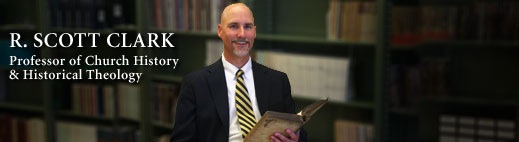
http://rscottclark.org/2013/10/how-should-we-view-the-warning-passages/

The next move we are likely to make is to offer some concession: “Well, of course God doesn’t expect your holiness to be perfect actually. He’s prepared to accept your best efforts.”

Now we have regressed entirely to the medieval doctrine of congruent merit, from which the Reformation delivered us. The problem, of course, is that all the evidence in Scripture tells us that God does expect perfect holiness. No one who has read the book of Leviticus could come away thinking that God is satisfied with less than perfection.

The solution for this problem is to recognize the difference between “if…then” and “do…because.” The medieval and Romanist schemes set up deadly conditionals: obey in order to gain (or keep) favor. The Protestants set up grace-wrought consequences. We Protestants seek to obey, in the grace of Christ, in union with Christ, because we’ve been redeemed and because we’ve been given new life. RSC

Dr. Clark makes some good observations but he seems to be neglecting the full teaching of the Divines and Chapter 16 of the WCF.

Thomas Manton, with an obvious dig at the antinomians, goes so far as to say, “They err certainly, that tell us the gospel is no law; for if there were no law, there would be no governor . . . no duty, no sin, no judgment, no punishment, nor reward.”146 With this principle in mind, he states in his comments on Psalm 119:34,147 in the same way as Shepard does above, that keeping the law with the whole heart may be understood legally or evangelically. Taken legally, the rigor of the law “requires exact conformity, without the least motion to the contrary, either in thought or desire, a full obedience to the law with all the powers of the whole man.”148  Man is unable to fulfill the terms of the law in this manner, which is why Christ’s perfect law keeping on behalf of his people was necessary. However, in an evangelical sense, “according to the moderation of the second covenant,” God, “out of his love and mercy in Christ Jesus, accepts of such a measure of love and obedience as answers to the measure of sanctification received.”149 Likewise, Ezekiel Hopkins comments: “That God accepts of our obedience, if it be sinceré voto et conamine, ‘in earnest desires and endeavours.’ Although we cannot attain that perfect exactness and spotless purity, which the Law requires: yet we are accepted through Christ, according to what we have, and not according to what we have not.”150 By showing that God accepts imperfect, but sincere, obedience from his saints, Manton and Hopkins highlight the graciousness of the covenant of grace. Instead of explaining away Psalm 119:34 as impossible, Manton proves that because of our union with Christ, and all that that means, Christians can actually pray this prayer in hopeful expectation that God, to quote Augustine (354–430) (and Sibbes above), gives what he demands and demands whatever he pleases (Heb. 13:21). In other words, Christians can answer to the legal demands of the law in their justification in and through Christ and also the gospel demands of the law WCF 16 VI.
Mark Jones, Antinomianism: Reformed Theology’s Unwelcome Guest?

Yet notwithstanding, the persons of believers being accepted through Christ, their good works also are accepted in him, not as though they were in this life wholly unblamable and unreprovable in God’s sight; but that he, looking upon them in his Son, is pleased to accept and reward that which is sincere, although accompanied with many weaknesses and imperfections.

Is there any application we can take away from Chapter 16 of the WCF that Clark has missed? Maybe not.  The whole Chapter is most wonderful and it would have been beneficial to include its light on the topic.

Pastor Patrick Ramsey also thinks there is some clarification needed between Horton and Clark as he speaks on the apparent approaches to things they have written concerning this topic. http://patrickspensees.wordpress.com/2013/10/10/clark-and-horton/

As I read through Dr. Clark’s Blog it just seemed to be skewed again not taking into account the full teaching of the Westminister Divines. I could be wrong but his emphasis just doesn’t hit the nail on the head squarely as I consider the whole teaching of the Westminster Confession of Faith.

Skirting the issue?

image

Dr. Clark wrote a recent blog on the Heidelblog here.

Is Republication Really That Confusing?

In Dr. Clark’s understanding the Republication issue shouldn’t be all that confusing. Well his understanding of it is for some of us who see things through the eyes of the Divine’s. Especially when we look at his Covenant Theology Thesis on his Westminster California Website. He seems to view the Mosaic Covenant more along the lines of the Lutherans than through the eyes of the Majority of the Divines during the time that the Westminster Confession of Faith was written. I have yet to see him discuss his differences with Anthony Burgess, Samuel Rutherford, or John Ball on this issue. He may have but I haven’t seen it.

I responded to his blog post but don’t expect an answer. I even expect my response to be deleted as usual.

Here is his understanding of the Mosaic in relationship to the Abrahamic and New Covenant.

http://clark.wscal.edu/covtheses.php
Biblical / Exegetical section…
13. The Mosaic covenant was not renewed under Christ, but the Abrahamic covenant was.
16. With regard to the land promise, the Mosaic covenant was, mutandis, for pedagogical reasons (Galatians 3:23-4:7), a republication of the Adamic covenant of works.
17. With regard to justification and salvation, the Mosaic covenant was an administration of the covenant of grace.
18. The Israelites were given the land and kept it by grace (2 Kings 13:23) but were expelled for failure to keep a temporary, typical, pedagogical, covenant of works (Genesis 12:7; Exodus 6:4; Deuteronomy 29:19-29; 2 Kings 17:6-7; Ezekiel 17).
19. The covenant of grace, initiated in history after the fall, was in its antepenultimate state under Adam, Noah, and Abraham, its penultimate state under the New Covenant administration and shall reach its ultimate (eschatological) state in the consummation.
20. The term “Old Covenant” as used in Scripture refers to the Mosaic epoch not every epoch before the incarnation nor to all of the Hebrew and Aramaic Scriptures indiscriminately.
21. The New Covenant is new relative to Moses, not Abraham.

The blog post he wrote seems to signify something different than what he seems to be noting in his Covenant Theses. At least it appears to. I also guess we might need to define what New Covenant means in relation to the Old Covenant. Concerning the Covenant of Grace, many take the terminology to mean Renewed as Richard Sibbes states.

There are four periods of time of renewing this covenant: first, from Adam to Abraham;… Secondly, From Abraham to Moses;… The third period of renewing the covenant of grace was from Moses to Christ; and then it was more clear, whenas to the covenant made with Abraham, who was sealed with the sacrament of circumcision, the sacrament of the paschal lamb was added, and all the sacrifices Levitical; and then it was called a testament. That differeth a little from a covenant; for a testament is established by blood, it is established by death. So was that; but it was only with the blood and death of cattle sacrificed as a type.

But now, to Christ’s time to the end of the world, the covenant of grace is most clear of all; and it is now usually called the New Testament, being established by the death of Christ himself; …

Covenant, Testament, Works, Grace, Love, and Communion.

Many take the term to mean renewed. Dr. David Murray makes this point in his podcast here. http://www.sermonaudio.com/sermoninfo.asp?SID=102913816246

Also when we speak of Republication one needs to be understanding about what the implications of republication might mean and what the Divines meant.

Either the substance of the Mosaic is the same as the New Covenant as the WCF 7.5,6 states or it isn’t. It seems from past articles and writings that Dr. Clark might mean something different. If I am understanding him correctly the Covenant of Works is Republished in some form as a Covenant within the Mosaic Covenant. The Mosaic Covenant is only an Administration of the Covenant of Grace in relationship to justification according to his Theses which I quote above. The rest of the Mosaic Covenant must pertain to a Covenant of Works (in some sense) in a pedagogical way. So it must be some kind of mixed Covenant. But is that how the Majority of the Divine’s understood it? From what I have gathered that is not the case.

Here is Joel Beeke / Mark Jones on the topic from their book ‘A Puritan Theology’. I would encourage everyone to read Chapters 16-18 of this book to see if Dr. Clark sounds like the Reformed Thought of the Puritans and Divines or if he sounds more like the Minority view which was rejected at the Westminster Assembly. I believe Meredith Kline and Dr. Clark are promoting the Minority view which was rejected.

Here is a small portion which deals with Republication…

What is Republication of the Covenant of Works?

Anthony Burgess likewise comments that the law may be understood largely, “as that whole doctrine delivered on Mount Sinai,” or strictly, “as it is an abstracted rule of righteousness, holding forth life upon no terms, but perfect obedience.”75 In the former sense, the law belongs to the covenant of grace; in the latter sense, the law was not of grace, but of works, which helps explains Paul’s polemic against the law in his New Testament writings (e.g., Galatians). These distinctions also help to explain the idea found in many Puritan authors who speak of the Mosaic covenant as republishing the moral law first given to Adam, written on his heart, engraved on tablets of stone as the Decalogue. For the most part, theologians who spoke in this way, whether dichotomists or trichotomists, made a number of careful qualifications in order to show that the moral law was republished not as a covenant but as a rule of righteousness for those in covenant with God. In other words, the moral law was not republished at Sinai to serve as a means of justification before God. For example, John Owen made clear in his work on justification by faith that the old covenant was not a revival of the covenant of works strictly (i.e., “formally”). Rather, the moral law was renewed declaratively (i.e.,“materially”) and not covenantally: “God did never formally and absolutely renew or give again this law as a covenant a second time. Nor was there any need that so he should do, unless it were declaratively only, for so it was renewed at Sinai.”76 The concept of republication of the moral law does not make Sinai co-extensive with Eden in terms of strict covenantal principles. If the moral law is abstracted “most strictly,” to use Roberts’s language, then Sinai certainly was a formal republication of the covenant of works. But, as Ball tried to argue, that certainly was not the intention of the old covenant. In the end, Ball’s position, which had been argued during the Reformation by Heinrich Bullinger, Peter Martyr, and John Calvin, clearly influenced the Westminster divines.

Accordingly, chapter 19 of the Westminster Confession, “Of the Law of God,” begins by asserting that the moral law was first given to Adam, and goes on to say, “This law, after his fall, continued to be a perfect rule of righteousness, and as such, was delivered by God upon Mount Sinai, in ten commandments, and written in two tables” (19.2). The Confession further asserts, “The moral law doth for ever bind all, as well justified persons as others, to the obedience thereof” (19.5), and is of great use to believers “as a rule of life informing them of the will of God, and their duty…discovering also the sinful pollutions of their nature…together with a clearer sight of the need they have of Christ, and the perfection of his obedience” (19.6). Chapter 19 concludes that for a believer to do good because the law commands it or to refrain from evil because the law forbids it, “is no evidence of his being under the law, and not under grace. Nor are the aforementioned uses of the law contrary to the grace of the gospel, but do sweetly comply with it” (19.6–7).

Likewise, the Confession declares that the covenant of grace was administered “in the time of the law…by promises, prophecies, sacrifices, circumcision, the paschal lamb, and other types and ordinances…all fore-signifying Christ to come.” Such outward forms were “for that time, sufficient and efficacious, through the operation of the Spirit, to instruct and build up the elect in faith in the promised Messiah, by whom they had full remission of sins, and eternal salvation” (7.5). Hence it follows that “the justification of believers under the Old Testament was…one and the same with the justification of believers under the New Testament” (11.6).

p. 270-1

75. Burgess, Vindiciae Legis, 223.
76. Owen, Justification by Faith, in Works, 5:244.
Beeke, Joel R.; Jones, Mark (2012-10-14). A Puritan Theology: Doctrine for Life (Kindle Locations 10634-10647). . Kindle Edition.

I also believe Samuel Rutherford dealt with this topic in his book the Covenant of Life Opened.

Samuel Rutherford was a very prominent Scottish member of the Westminster Assembly, which sat in the 1640s. He published an extensive treatise on the covenant. It appeared in 1655, as was entitled The covenant of life opened, or, A treatise of the covenant of grace. In the eleventh chapter, Rutherford deals with several abberant views on the Mosaic covenant. First he deals with the Amyraldian view (espoused first by John Cameron, and later by Bolton), which argues that the Mosaic covenant is not a covenant of works or a covenant of grace, but rather a third “subservient” covenant. This view is rejected by the Standards, as well as the Formula Consensus Helvetica. Second, he deals with those who make the Mosaic covenant a covenant of works, completely different from the covenant of grace. This is the view of all Lutherans, as well as a very small minority of Reformed theologians. It is also rejected by the Standards (WCF 19:1-2, LC 101, etc, but we will deal with that issue elsewhere). Finally, he deals with the Arminian view. It is similar to the Amyraldian view, in that it also argues for three covenants entirely distinct in substance.

https://sites.google.com/site/themosaiccovenant/samuel-rutherford

You can read Chapter 11 of Rutherford here: https://rpcnacovenanter.wordpress.com/?s=Covenant+of+Life+Opened

Here is Anthony Burgess again….

“We have confuted (proven to be incorrect) the false differences, and now come to lay down the truth, between the law and the Gospel taken in a larger sense.

And, first, you must know that the difference is not essential, or substantial, but accidental: so that the division of the Testament, or Covenant into the Old, and New, is not a division of the Genus (classification) into its opposite Species; but of the subject, according to its several accidental administrations, both on Gods part, and on mans. It is true, the Lutheran Divines, they do expressly oppose the Calvinists herein, maintaining the Covenant given by Moses, to be a Covenant of Works, and so directly contrary to the Covenant of Grace. Indeed, they acknowledge that the Fathers were justified by Christ, and had the same way of salvation with us; only they make that Covenant of Moses to be a superadded thing to the Promise, holding forth a condition of perfect righteousness unto the Jews, that they might be convinced of their own folly in their self-righteousness.” (Vindication of the Morall Law, Lecture 26 p.251)

https://rpcnacovenanter.wordpress.com/2012/09/18/lutheran-reformed-differences-back-during-the-time-of-the-westminster-divines/

I don’t believe Dr. Clark believes that the Covenant of Works is offered as a way of salvation as the Lutherans are reported to believe but it is offered as a Covenant in the Mosaic in some sense as Cameron and Bolton might have proposed which is noted to be unconfessional.  This issue is being discussed by the Pacific Northwest Presbytery of the OPC.  In fact I just learned that the Overture passed and will be taken to the OPC General Assembly.   You can read about the Overture and the booklet three Pastors have written on this topic at the following link.  Their conclusion in a sentence was this, ….the Republication Paradigm (ie., the views of Kline and The Law is not of Faithuses traditional language and concepts, but redefines them in the service of its own paradigm. Not only do these new definitions fail to harmonize with those contained in the Westminster Standards, they may lead to other systematic changes in our confessional theology.”

https://rpcnacovenanter.wordpress.com/2013/07/22/confusion-in-the-camp-merit-and-reformed-theology/

Here is another post concerning Anthony Burgess on this topic. I will post the intro to it and then the link to what he writes.
I have received permission from the author to publish is works on my blog. He writes….

Anthony Burgess

The following is taken from Anthony Burgess’s Vindication of the Law and the Covenants (1647). Burgess was a prominent member of the Westminster Assembly. These lectures were internationally hailed as a solid defense of consensus Calvinism over against the more extreme views of the Calvinistic antinomians of the period, as well as those of the Papists, Socinians, and Arminians.

Burgess argues for the consensus position articulated in the Westminster Standards, that the Mosaic Law is a covenant of grace (cf. WCF 7:5-6; 19:1-2; LC #101). Over against this, he refutes three other aberrant minority views, who maintain that the Mosaic covenant was a covenant of works, a mixed covenant, or a subservient covenant. Note especially his insightful exegesis of the Ten Commandments towards the end: even the very form of the commandments presupposes that they are given in the context of a covenant of grace.

Burgess utilizes the precision of the scholastic method by distinguishing between the “whole doctrine delivered on Mount Sinai, with the preface and promises adjoined, and all things that may be reduced to it,” and in a more strict sense, the law “as it is an abstracted rule of righteousness, holding forth life upon no terms, but perfect obedience.” In other words, if we take the substance of the commands out of the Decalogue, and consider it merely in terms of these legal imperatives, abstracting it from its administration under Moses, we have a covenant of works. This can be affirmed in an orthodox sense only because the substance of the Mosaic Law (consider simply as the commandments abstracted from the preface and the promises) is the same as the law of the covenant of works, not because God actually made a covenant of works with Israel (for either earthly or heavenly life and blessedness)

This is very important for understanding the mainstream Reformed view, especially because Burgess reflects the Calvinistic consensus represented at the Westminster Assembly.

I have again updated some of the spelling to be more pleasing to the modern eye. In a few instances I have changed the word order in the interests of readability. I have in no way knowingly changed the sense or substance of Burgess’s arguments.

You can read the portion that Anthony Burgess wrote at the following link.

https://rpcnacovenanter.wordpress.com/2012/11/11/vindication-of-the-law-and-the-covenants-1647-pp-231-237/

Now a word from our Covenant Theologian John Ball…..

Under this Covenant, the natural seed of Abraham bore the face of the Church and state, and God had promised abundance of temporals, and of spiritual a scantling; But all under the outward administration of the Covenant, were not in like manner partakers of the blessings promised in Covenant.  For some had their part in temporal blessings only, and the outward ordinances; others were partakers of the spiritual blessings promised.  But whatever good thing any of them enjoyed either temporal or spiritual, it was conferred upon them freely according to the Covenant of Grace, and not for the dignity of their works.  It is true, the promise is conditional, if they obey, they shall reap the good things of the Land: but obedience was not a causal condition, why they should inherit the Land…So that herein there appears no intexture of the Covenant of works with the Covenant of Grace, nor any moderation of the Law to the strength and power of nature for the obtaining of outward blessings.  But rather that God out of his abundant goodness is pleased freely to confer outward blessings promised in the Covenant upon some that did not cleave to him unfainedly, that he might make good his promise unto the spiritual seed, which by word and oath he had confirmed unto the Fathers.

(John Ball, A Treatise of the Covenant of Grace [1645], 142).

It seems from Clark’s writings and his Theses that he does not believe that the Mosaic Covenant is purely an Administration of the Covenant of Grace but that it is only an Administration of the Covenant of Grace in relation to justification. That doesn’t appear to be thought of the Divines as I have conferred with other Drs., Profs., and Reformed Pastors. It appears to me that he believes other things out side of the justification issue in the Mosaic Covenant contains a Covenant of Works (in some sense) pedegogically. Thus he seems to be teaching contrary to what is meant by WCF chapter 7.5,6.

Here are a collection of my blogs discussing this modern Reformed paradigm shift or what I term Modern Reformed Thought.

Old Posts on the Mosaic Covenant / the New Reformed Paradigm