Don’t forget this is going to be discussed in the Pacific Northwest OPC on September the 26th.
Don’t forget this is going to be discussed in the Pacific Northwest OPC on September the 26th.
I am lifting this from an old Puritanboard blog I did a while back.
So this might not come out good for a few days as I have to rework it into this format. I wanted to respond to a few modern Reformed Perspective guys. Specifically a Reformed Prof at Westminster West and a Pastor in Florida.
One of the ways in which the evangelicals are following the mainliners is in the redefinition of “grace.” There is no such thing as “tough grace.” There is tough love and there is tough law but in the nature of things grace cannot be “tough.” Grace is the unmerited favor, approval of God. It is free. It is undeserved. It is transformative. It is sovereign. It is unconditional. It is relentless. It is many things but it is not “tough.” Indeed, the ESV translates Charis (or some word related to it) as “grace” 124 times in the NT. In not a single usage is there an obvious case where Scripture refers to or wants us (the reader/hearer) to conceive of grace as “tough.”
….Yes, there are moral implications for those who are the recipients of grace but it does not help us to re-define grace.
For some reason this doesn’t jive with me. Especially since I see God’s grace being more than just unmerited favor. ‘Unmerited Favor’ is a recently overly narrowed definition of grace. Grace or Charis is defined differently by the scriptures in my estimation. It is unmerited but it is not just unmerited favor.
Grace is more than unmerited favor although it is always unmerited.
In the old strongs greek a partial definition is ….5485
“the divine influence upon the heart, and its reflection in the life.”
Webster’s New World Dictionary of the American Language
Grace; (10) Theol. a) the unmerited love and favor of God toward man. b) Divine influence acting in man to make him pure and morally strong. c) the condition of a person thus influenced d) Special virtue given to a person by God.
Harpers Bible Dictionary
grace; The English translation of a Greek word meaning concretely, “that wihch brings delight, joy , happiness, or good fortune.” Grace in classical Greek applied to art, persons, speech, or athletics, as well as to good fortune, kindness and power bestowed by the gods upon divine men, moving them to miraculous deeds.
Webster’s 1828
grace 3) Favorable influence of God; divine influence or the influence of the spirit, in renewing the heart and restraining from sin 6) Virtuous or religious affection or disposition, as a liberal disposition, faith, meekness, humility, patience (proceeding from divine influence).
Examining a few scriptures will also tell you more about grace.
2 Corinthians 12:9 And He said unto me, My grace is sufficient for thee: for my strength is made perfect in weakness. Most gladly therefore will I rather glory in my infirmities, that the power of Christ may rest upon me.
As Paul said, “But by the grace of God I am what I am: and his grace which was bestowed upon me was not in vain; but I laboured more abundantly than they all: yet not I, but the grace of God which was with me.”
Grace and power are synonomous here in the Corinthian passages.
(Tit 2:11-12) For the grace of God that bringeth salvation hath appeared to all men, Teaching us that, denying ungodliness and worldly lusts, we should live soberly, righteously, and godly, in this present world;
In Titus Grace teaches.
In short Grace can be monergistic or synergistic. In regard to regeneration it is monergistic. In reguard to the supernatural gifts it is probably monergistic. In relation to the Spirit influencing us to work out our salvation, endure chastisement and discipline, and endure hardship it is probably synergistic.
Also, I think it is gracious and influencing when God influences us by discipline. Discipline is a grace and a means of grace by His Spirit. It is hard when we are disciplined. It isn’t anything that we desire naturally. That is why the book of Hebrews states this….
(Heb 12:5) And ye have forgotten the exhortation which speaketh unto you as unto children, My son, despise not thou the chastening of the Lord, nor faint when thou art rebuked of him:
(Heb 12:6) For whom the Lord loveth he chasteneth, and scourgeth every son whom he receiveth.
(Heb 12:7) If ye endure chastening, God dealeth with you as with sons; for what son is he whom the father chasteneth not?
(Heb 12:8) But if ye be without chastisement, whereof all are partakers, then are ye bastards, and not sons.
(Heb 12:9) Furthermore we have had fathers of our flesh which corrected us, and we gave them reverence: shall we not much rather be in subjection unto the Father of spirits, and live?
(Heb 12:10) For they verily for a few days chastened us after their own pleasure; but he for our profit, that we might be partakers of his holiness.
(Heb 12:11) Now no chastening for the present seemeth to be joyous, but grievous: nevertheless afterward it yieldeth the peaceable fruit of righteousness unto them which are exercised thereby.
(Heb 12:12) Wherefore lift up the hands which hang down, and the feeble knees;
(Heb 12:13) And make straight paths for your feet, lest that which is lame be turned out of the way; but let it rather be healed.
(Heb 12:14) Follow peace with all men, and holiness, without which no man shall see the Lord:
(Heb 12:15) Looking diligently lest any man fail of the grace of God; lest any root of bitterness springing up trouble you, and thereby many be defiled;
Grace is much more than the watered down version of unmerited favor. In fact the reason I started studying grace was because we are saved by it through faith. The definition of unmerited favor alone was not what awakened this dead sinner from death. It is what I am kept by also. Yes, it is unmerited but it is also something much much more.
Just my humble opinion. And I aint always correct.
The grace (Charis) of God is prodding and influential. As our Lord said to St. Paul, “It is hard for thee to kick against the goads.”
I didn’t mention who wrote the quote because it jaundices the whole discussion. It becomes a personality issue. It gets sidetracked and the issues don’t get discussed. I wasn’t trying to be disrespectful or uncaring of the author’s position nor his office. If he chose to chime in that would be his decision. I wanted to discuss the issue of grace and law. Not the personalities because the personality issue scews it so bad.
I have been thinking about this Law / Grace dichotomy thing a lot. Rich (a friend from afar) was the one who actually helped me out a whole bunch concerning this topic. We had a discussion on the phone one night that jarred my whole understanding. I was thinking like a Modern Day Particular Baptist which is still a far cry from the ‘Unmerited Favor’ only guys, but still very close to what is being taught concerning the Law / Grace issue being taught today. In my understanding I was even misrepresenting Charles Hodge and his thought that a lot of guys in my camp (Reformed) are using to promote the idea of this Law / Grace dichotomy.
BTW, now I prefer to use a different terminology and understanding between Law and Grace. Instead of seeing them as a dichotomy I prefer to see distinctions between them and their connectedness in the Covenant of Grace. They use the words distinction also but mean dichotomy. I prefer the word distintion. It kind of has to do with Calvin’s understanding of twofold grace in Union with Christ.
I was seeing the Covenant of Works and the Covenant of Grace running through the Covenants side by side each other. I was so off base in my thinking I believe. Rev. Winzer tried to show me in a thread on the Puritanbord a long time ago that I was misrepresenting Hodge. Of course I couldn’t see it because I was so jaundiced in my Law / Grace dichotomy.
I am not very good at expressing myself on an intellectual nor scholarly level as some, so I make technical blunders grammatically and theologically. Some of that is because I didn’t retain the my College instruction and much of it has been forgotten after 30 years. So please bare with me.
I see something about the connection between the law and grace that I haven’t seen in the past. I use to see that the law was totally a thing that condemned. It had no redeeming qualities. Without grace that is totally true. But with Grace the law is used from the beginning of post lapsarian time to convert the soul and reveal the nature of God to those who are graced by God. Rich’s discussion with me on the Mosaic Covenant and Ruben Zwartman’s fine influence have completely changed my view of the Law of God when I take in the whole of scripture. Maybe I am not understanding them still but they have challenged my understanding. Even when a whole Nation like Nineveh only hears a strong proclamation of condemnation by God. God graced that King to seek mercy based just upon a pronouncement of condemnation. It was strong and tough for Nineveh to hear the pronouncement.
In the end Jonah was upset with God. Not because Jonah didn’t understand Grace. But precisely because he did and sin had hardened his heart against it for a people that he wanted to see judged for their wickedness.
Let’s play this out…..
(Jon 3:4) And Jonah began to enter into the city a day’s journey, and he cried, and said, Yet forty days, and Nineveh shall be overthrown.
(Jon 3:5) So the people of Nineveh believed God, and proclaimed a fast, and put on sackcloth, from the greatest of them even to the least of them.
(Jon 3:6) For word came unto the king of Nineveh, and he arose from his throne, and he laid his robe from him, and covered him with sackcloth, and sat in ashes.
(Jon 3:7) And he caused it to be proclaimed and published through Nineveh by the decree of the king and his nobles, saying, Let neither man nor beast, herd nor flock, taste any thing: let them not feed, nor drink water:
(Jon 3:8) But let man and beast be covered with sackcloth, and cry mightily unto God: yea, let them turn every one from his evil way, and from the violence that is in their hands.
(Jon 3:9) Who can tell if God will turn and repent, and turn away from his fierce anger, that we perish not?
(Jon 3:10) And God saw their works, that they turned from their evil way; and God repented of the evil, that he had said that he would do unto them; and he did it not.
(Jon 4:1) But it displeased Jonah exceedingly, and he was very angry.
(Jon 4:2) And he prayed unto the LORD, and said, I pray thee, O LORD, was not this my saying, when I was yet in my country? Therefore I fled before unto Tarshish: for I knew that thou art a gracious God, and merciful, slow to anger, and of great kindness, and repentest thee of the evil…
(Jon 4:4) Then said the LORD, Doest thou well to be angry?…
(Jon 4:9) And God said to Jonah, Doest thou well to be angry for the gourd? And he said, I do well to be angry, even unto death.
(Jon 4:10) Then said the LORD, Thou hast had pity on the gourd, for the which thou hast not laboured, neither madest it grow; which came up in a night, and perished in a night:
(Jon 4:11) And should not I spare Nineveh, that great city, wherein are more than sixscore thousand persons that cannot discern between their right hand and their left hand; and also much cattle?
In this instance God didn’t even use a pronouncement of repent and I will spare you. God by His grace just used a pronouncement of condemnation to turn a whole Nation from their wicked ways by His Grace. The Law of the Lord Converted a whole Nation. It greatly reminds me of Psalm 19.
(Psa 19:1) To the chief Musician, A Psalm of David. The heavens declare the glory of God; and the firmament sheweth his handywork.
(Psa 19:2) Day unto day uttereth speech, and night unto night sheweth knowledge.
(Psa 19:3) There is no speech nor language, where their voice is not heard.
(Psa 19:4) Their line is gone out through all the earth, and their words to the end of the world. In them hath he set a tabernacle for the sun,
(Psa 19:5) Which is as a bridegroom coming out of his chamber, and rejoiceth as a strong man to run a race.
(Psa 19:6) His going forth is from the end of the heaven, and his circuit unto the ends of it: and there is nothing hid from the heat thereof.
(Psa 19:7) The law of the LORD is perfect, converting the soul: the testimony of the LORD is sure, making wise the simple.
(Psa 19:8) The statutes of the LORD are right, rejoicing the heart: the commandment of the LORD is pure, enlightening the eyes.
(Psa 19:9) The fear of the LORD is clean, enduring for ever: the judgments of the LORD are true and righteous altogether.
(Psa 19:10) More to be desired are they than gold, yea, than much fine gold: sweeter also than honey and the honeycomb.
(Psa 19:11) Moreover by them is thy servant warned: and in keeping of them there is great reward.
(Psa 19:12) Who can understand his errors? cleanse thou me from secret faults.
(Psa 19:13) Keep back thy servant also from presumptuous sins; let them not have dominion over me: then shall I be upright, and I shall be innocent from the great transgression.
(Psa 19:14) Let the words of my mouth, and the meditation of my heart, be acceptable in thy sight, O LORD, my strength, and my redeemer.
The Mosaic and Abrahamic Covenants are purely an administration of the Covenant of Grace in my eyes now. The Grace (Charis) of God is something active and working in the heart of man. The discussion of whether it is earned or not is moot. Unmerited or demerited is not the issue but what it is is the issue for us when we think Covenantally and from a Covenantal framework. The First Covenant with Adam already settles that matter.
The Covenants proceeding after the First one with the First Adam offer hope and direction back to God. They influence the heart of those who are dead in sin to and called of God to return and have a circumcised heart. There is a constant call for repentance in them. That is totally of grace. The law (or declaration of condemnation) is a part of that influencing factor by Grace illuminating it.
Anyways, I know that I am probably not saying it as clearly nor as thought out as I should. Please bare with me in this. I just wanted to discuss this and put aside the personality factors.
BTW, there are many who do not believe Jonah is real. But Jesus said,”Mat 12:40 For as Jonas was three days and three nights in the whale’s belly; so shall the Son of man be three days and three nights in the heart of the earth.Mat 12:41 The men of Nineveh shall rise in judgment with this generation, and shall condemn it: because they repented at the preaching of Jonas; and, behold, a greater than Jonas is here.”
I believe Jesus that in the judgement they will judge.
I think Dr. William Evans said it better than I could. My main problem with Trueman was his failure comment about Kuyper. Thank You Dr. Evans.

It seems that transformationalism is taking it on the chin these days. The secular and religious media are awash with reports of how the millennial generation of evangelicals is burned out on the political activism of the religious right, and the Two-Kingdoms theology (2K) currently being trumpeted by some faculty members at Westminster Seminary in California (WSC) certainly provides a theological fig-leaf for such culture-war fatigue. In short, H. Richard Niebuhr’s Christ and Culture, with his favored model of “Christ transforming culture,” and the great Dutch Neo-Calvinist theologian and politician Abraham Kuyper are not exactly the flavor of the month.
Nevertheless, I was a bit surprised, though certainly not shocked, to see Carl Trueman jumping decisively on the anti-transformational bandwagon (here on Ref21 and here on TheAquilaReport). Dr. Trueman, as most of us know, teaches church history at Westminster Theological Seminary in Philadelphia (WTS), and is the former…
View original post 845 more words

Lutherans take surprise step in electing female presiding bishop | Religion News Service
“We can disagree on decisions as long as we agree on the cross,” she said. “My goal is to make sure we make room for the possibility that people disagree, that they are fully Lutheran, fully valued and fully part of this denomination.”
Bishop Elect Rev. Elizabeth Eaton ELCA
But what if the Cross doesn’t agree with them? What does fully Lutheran mean? When do we consider denominations non-Christian cults. The PCUSA has gone the way of the godless humanitarian over God’s wishes also. Why don’t these guys just go write a manifesto decrying that they believe the Scriptures are false and start using their own name. Luther, Knox, Calvin, St. John, Mark, Matthew, Luke…. etc… are all ashamed that their names are being used to promote such wickedness. It is a sad day when we call evil good and what is good evil.
I am going to call them non-Christian cults since they refuse to hear His Word. They deny the word of Messiah the Prince therefore I will call them what they are. Non-Christian Cults.
The Presbyterian Church USA has denied truth and become apostate. It is a Non-Christian Cult as is the apostate Evangelical Lutheran Church in America.
They both need to repent from promoting wickedness and saying sexual perversion is okay with God. It is not. They need to quit confusing the sexual bounderies and quit announcing they are pursuing peace when the are doing things that will bring the wrath of God upon us.
Romans 1:18
For the wrath of God is revealed from heaven against all ungodliness and unrighteousness of men, who hold the truth in unrighteousness;
“We don’t swim in your toilet so don’t pee in our pool.” LOL. Don’t Pee In Our Pool. I am still laughing at this.
http://www.puritanboard.com/f67/what-reformed-board-24779/#post304386
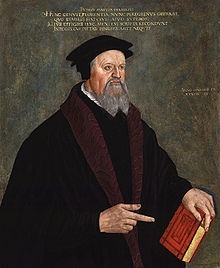
The following is taken from Peter Martyr Vermigli’s Common Places, published in English in the year 1574, and translated by Anthonie Marten. Much of the spelling has been modernized for easier reading, and the sentence structure has been slightly modified from time to time. In no place have I willingly or knowingly altered the sense of his statements. Vermigli’s locus on the covenant comes in part 2, chapter 16, and is entitled all the likeness and unlikeness of the old and new league or covenant. The work as a whole (in its original type) can be read here. Just go to page 207 in the PDF file for the section on the covenant. I have only made it part way through this transcription, and am currently trying to complete it. However, I figured that even part of it would be better than nothing. You can read the whole chapter in the link above, but this should be a little easier going for you who can’t read older English very well. Not only are the words spelled differently, the type is hard to read, too! I hope ye haue a goode tyme reeding thys updayted texte.
I did not write this or Translate it. I borrowed this from the site link below. I have done this before with the authors permission. Just trying to get the word out.
Randy Martin Snyder
The word league, in Latin foedus, is derived from the verb Ferire, “to Strike,” because the ambassadors of each party killed a pig, from which etymology perhaps the Hebrew word Berith differs very little. By which outward sign also, they wished by prayer the destruction of that part which should violate the covenant. We may gather this out of Livy, in his first book after the building of the city: and as the same author writers in his fourth book De bello Macedonico. There are three kinds of leagues [or covenants].
These things being on this wise declared, let us show what a league [covenant] is. A league [covenant] is that bond between men, whereby they testify, both by words and signs one to another, that they are bound to perform certain things, so long as they deal faithfully either towards the other.
And it be a bond, and pertain to relation, it is grounded upon human actions; and I referred to those things, which the parties confederate ought to perform one towards another. It is expressed by words, and for the most part, signs are added, When God made a covenant with mankind, after the flood, he not only set forth the form of the bond by words; but he also put the rainbow in the clouds as a witness [pg. 583] and in the covenant, which he made with Abraham, he put the sign of circumcision. Furthermore, in the same, which was made by Moses at Mount Sinai, there were twelve pillars erected, and the people were sprinkled with blood. Joshua also, when he should die, erected by a very great stone; thereby as it were to sign the league renewed between God and the people. And what the promises were, which should be kept by each party, the Scripture often times teaches. For God promised, that he would be the God of his people; namely, that he would be with them, to help them, to deliver them, and by all means (as touching all kind of good things) to bless them. The people again promised, that they would count the Lord Jehovah for their God, in believing, worshipping, and obeying him. And Christ was in the league [covenant], as the mediator between each party. This is the exposition and nature of the covenant between God and man.
The League [covenant] is divided into the new, and into the old. Which division is not of a general thing, into special things; but of the subject into accidents. Forsomuch as in either league, the thing itself, and the substance, is utterly one and the self-same: only certain qualities do vary. For the old league was made with only one nation of the Jews, and had certain things annexed; I mean the possession of the land of Canaan, the kingdom of the Jews, and the priesthood of Aaron, and also the promise of the Messiah, according to the birth of the flesh. Moreover, it had very many signs of ceremonies, and sacrifices very fit for that age. It also were mysteries of salvation, and promises of eternal life; although far more obscure than they were afterward taught to us. And on the other hand, in the new league there are properties, in a manner contrary. For it pertains not to any one certain nation, but two all nations, however far the world is extended: neither is there any peculiar civil administration joined to it.
Furthermore, there are but very few ceremonies and outward signs, and they are very plain and simple, annexed unto it. And (to conclude) all things are contained more openly, plainly, and manifestly in the new testament, than they are in the old. By these qualities both the old and new league [covenant] differ from one another: however, the thing itself, and the substance remains one and the same. For as Jehovah would then be the God of the Hebrews: so has he now decreed to be the God of the Christians. And that also, which they in those days promised; namely, that they would believe in the true God, and obey, and worship him as he hath prescribed; we also ought to perform. Christ comes between both parties as a mediator: and forgiveness of sins; yea and eternal life also is promised by him. Also, the moral laws remain the very same now, which they were then.
Paul, in the eleventh chapter to the Romans, has very well declared, that the league of the fathers in old time, and ours, is all one; when he compares the church with the tree, which hs Christ as it were the root. Then he adds that from such a tree certain branches were cut off; namely, the Hebrews, who did not believe; and we who are Gentiles, were planted in their place; that is to say, we were chosen into the same league [covenant] wherein they were comprehended. The same tree is affirms to remain, into which some are grafted in by faith; and from the which other some, because of the incredulity, he cut off. Wherefore, each league [covenant] contains both the law and the Gospel. And there be in either of the testaments, the self-same sacraments: as it is declared in the first epistle to the Corinthians, the tenth chapter: for, the fathers were all under the cloud, and were baptized into the sea, and did eat the same spiritual meat, and drank of the spiritual rock following them, and the rock was Christ. Furthermore, we grant, that as touching outward signs, there is some difference between their sacraments and ours: which nevertheless, as concerning the things signified by the sacraments, is found to be nothing at all.
Otherwise, the argument of Paul might not have persuaded the Corinthians, to be subject unto the same punishments that the Hebrews were. For they might have said, that they had far better sacraments than had the Hebrews; and that therefore they should not so much need to fear, lest they should suffer the like; forsomuch as the excellency of the sacraments might put off those misfortunes, from which the Hebrews could not be delivered by the sacraments of the law. So as the apostle took away this shift from them, and makes our sacraments and their equal and alike, as touching the things themselves. He writes also to the Romans, the first chapter, concerning the Gospel; that it was in the old time promised by the prophet in the holy Scriptures [Rom. 1:2]. And in the third chapter he speaks on this wise; But now is the righteousness of God made manifest, being testified by the law and the prophets [Rom. 3:21].
Neither may you say to me, that these things were indeed promised in the holy Scriptures of the old testaments; but not that they should be performed unto the men that lived in those days. For the apostle does very well show the meaning of this place, when he [pg. 584] says; that Every aw doth speak to those men, which live under it. And it is not to be doubted, but that the fathers were justified after the same sort that we are now at this present. For even they were no less justified by faith only in Christ, than we are. Wherefore it is written in the book of Genesis of Abraham, that he believed, and the same was counted to him for righteousness. John also testified that Christ said of Abraham, that he had seen his day, and rejoiced. The epistle to the Hebrews, chapter 13, affirms that Christ was yesterday, and today, and remains forever. Wherefore, even as we are said now to be saved, not by works, but by the meer mercy of God, through faith in Christ: so was it with the fathers at that time; for they were justified by no merits, but only by faith in Christ. Furthermore, what obedience so ever the fathers had toward the commandments of God, and also faith in the promises: those things were not derived from their own strength and power; but (even as it also happens unto us) they came unto them by the grace of God and Christ.
It is true indeed, that Jeremiah, in the 31st chapter (as it is also alleged in the eighth chapter to the Hebrews;) thatThere must be another league made in the name of God, not as it was made in the old time with the fathers. And among other things he says, God would give his laws in the hearts and inward parts of men; so that none should need any more to teach his neighbor: because all, from the least to the greatest, should have the knowledge of God. And further it is said, in the person of God; I will be merciful unto their sins, and will no more remember their iniquities, etc. As touching those words, both of Jeremiah, and also of the epistle to the Hebrews, we must understand; that they prove not that there is any difference between the testaments, as touching the substance and the thing itself; but touching the properties and qualities: as we have before said. Neither must we think, that the old fathers (who in obeying the commandments of God, and in right faith, worshipped him purely) could perform those things of their own strength or natural power. For, unless they had had the laws and promises of God written in their hearts and minds, by the Holy Ghost; and also a will, bu the grace of God, ready to obey his commandments: they had never been able to perform such things.
They wanted not therefore the light of God, which shined before their eyes, to make them believe: yea and their sins were forgiven them through Christ. So then they had also the fruition of those things, which god promised to give in the new covenant. The only difference herein was touching the largeness, and perspicuity. Far at that time, those gifts were kept within the compass of a few; but now they are everywhere communicated to the Gentiles. In that age, they were somewhat obscure, but to us they are made evident and clear, that we have no more need of the old discipline. Hereby it manifestly appears, how they err from the truth, who affirm that the old league [covenant] had promises only for possessing the land of Canaan, and for worldly felicity; and that the people of the Hebrews were bound only to an outward observation of certain rites and works, and not to show forth good and perfect motions of the mind towards God. The prophets do not interpret the matter to be in such wise; nay rather, they deny that God esteems any outward works without inward godliness: and they pronounce in every place, that the ceremonies, which be void of faith, and of the fear of God, are a most grievous burden; and so troublesome, as he cannot abide them.
Yea, and the law itself makes express mention of the circumcision of the heart; and God every where requires, that we should hear his voice: which is nothing else, but to deal with him by faith. Wherefore, the faith of the promises and commandments of God, ought to be counted as the root and foundation, which always abides: when as outward sacraments, and visible rites, should at the length be changed. So that it is very manifest, that God would not have them for their own sakes. Howbeit, they endured so long, as men were indued with a childish spirit; as Paul speaks to the Galatians, while they lived as yet under tutors, and as yet differed very little from servants. But when they received a more full spirit, then were the sacraments and childish rites (as Augustine says) taken away. It is manifest therefore, that the difference between the two covenants must not be taken of the thing or substance; but of the qualities and properties.
Let them therefore forsake their soul error, which think, that God in the old law only promised earthly things, as though at that time he only provided for the bodies, and not for the souls: as do shepherds, ploughmen, and hogheards; which only have a care of the bodies and carcasses of their sheep, swine, and oxen; neither endeavor they any thing else, but to make those beasts strong and fat. We must not so imagine of God, who in such sort made a league with the gathers, as he promised them the chief felicity, which specially appertains unto the soul. Also it is written in Ps. 144:15, Blessed are the people, which have the Lord for their God. In Deut. 30:6 also, God took upon him to bring to pass, that they should walk in [pg. 585] his commandments. But what more? Our Savior, out of the words of the old league [covenant], has most aptly taught the resurrection of the dead. For when the Lord said, that he was the God of Abraham, Isaac, and Jacob (and they were then dead;) Christ inferred, that they were not then dead, but that they still lived, and that their bodies should be resuscitated; namely, in the blessed resurrection. Hereunto pertains that which God asserted to Abraham; to wit, that he himself would be his reward (Gen. 15:1). Which words plainly teach us, that in that covenant were not promised carnal and earthly good things alone.
Undoubtedly, it were a great shame, even for kings and princes, which (being compared unto God) are but flesh and blood; if they should be counted to govern the public weales, in respect only of the bodies of subjects; seeing they profess, that they provide for the outward commodities, quietness, and peace of their citizens; because they may live happily, and according to virtue. So then, if earthly princes provide goods of the mind for their subjects, is it not fit, that God himself did provide far more excellent things for the public weale of the Israelites, whom he faithfully governed? Furthermore, I say not how foolish it is to believe, that the forefathers, by the league (covenant), bound themselves only to outward rites, and visible ceremonies, whereby they would worship God; seeing the very Ethniks (Gentiles) were not ignorant: but rather, they have most planly testified, that the worshipping of God does not consist in those things. For Plautius in Rudentewrites thus; they think that they please God with figts and sacrifices, but they loose both their labor and cost. I will not declare those which Plato writes in his Alcibiades concerning this matter. Yea, and (as I have taught before) the law itself and the prophets declare, that the things was far otherwise.
We will note also, that the fathers made a league (covenant) with God; not only for themselves, but also for their posterity: as God again, for his part, promised that he would be God not only to them, but also to their seed and posterity. Wherefore, it was lawful for them to circumcise their children who were yet infants. And in like manner it is lawful for us also to baptize our little children, when they are yet infants; inasmuch as they also are included in the league [covenant]. For they, who already have the thing itself, there is nothing that may lett, but that they should receive the sign. It is plainly written in Deuteronomy 29 that “the covenant was made, not only with them, which were present, but also with them who were absent, and not yet born.” But some doubt, whether the posterity may be bound by their forefathers. We do answer: we must look whether the things which were promised to our forefathers were just and honest; then we must consider whether these promises pertained unto civil things, or unto godliness. When they are made for civil things, the bond is firm; because it is not lawful for the posterity to infringe the contracts of their forefathers: such as are buyings, sellings, bargains, and things like these. Provided that they contain nothing that is shameful, dishonest, and unjust. But if the bonds and covenants belong to godliness, or to a right faith, then the obligation is of full strength, because we are all bound to true godliness, and to a sound faith, although there were no covenant to bind us. But if the forefathers have bound themselves and their posterity, unto dishonest and wicked things, it is no bond at all. But whereas God so humbled himself, as to enter in league [covenant] with men, that comes of his own mere mercy and good will; to stir us up thereby more and more, to do those things, which otherwise is our duty to do.
But some affirm that Paul takes something away from the Old Testament, when in 2 Corinthians he calls it “the ministry of death.” And to the Galatians he writes, “you have begun in the Spirit, take heed that you do not end in the flesh.” And in the same epistle he shows that whose who are under the law do persecute those which belong to the Gospel. But in such places as these, Paul speaks of the Old Testament as it was thrust upon them by the false apostles—without Christ and without faith. Then it is as if you should take away the very life from it, and leave nothing remaining but death and offense of the flesh. But when the apostle speaks of the law by itself, he writes far otherwise. To the Romans it is written: “The law is indeed spiritual, a holy commandment, just and good; but I am carnal, etc.” And to Timothy: “For we know that the law is good, if a man uses it lawfully.” Wherefore, when as it seems that the law is diminished or reproved by Paul, that is not said in respect of itself, but for our fault’s sake. For it meets with those who are defiled, and endeavor to resist it, then it breeds those discommodities. Or else (as I have said) he speaks thereof, so far as the false apostles severed Christ from the same [the law]. Perhaps you will affirm that the false apostles did not take away Christ, but rather preached the law together with him. But nevertheless, seeing that they taught that he was not sufficient unto salvation, no doubt they took him away. For he that has need of the law to save man is not [pg. 586] the true Christ that was promised.
But because Paul said out of the testimony of Isaiah that “this is a testament,” and that we read the same thing in Jeremiah 31, that “the new covenant herein cnsists, that the deliverer should come, and be merciful to iniquities,” there arises a doubt, whether the new testament be diverse or not. Concerning this matter I have spoken a little before, but now I intend to treat it more largely. At first sight they seem to be altogether diverse, sot that the one is altogether distinguished from the other. For in Jeremiah it is said that “there should be a new covenant, and not according to that which he made with the fathers.” And the Epistle to the Hebrews adds, “When it is said, a new, then that which is old is abolished.” But does not see, that if one thing abolishes and makes void another thing, it differs altogether from it. There is also another argument, for (as they say) in the Old Testament, there was no forgiveness of sins. For the epistle to the Hebrews, chapter 10, says that “the blood of goats, and of oxen, and of calves could not take away sins.” But in the New Testament, no man doubts that there is remission of sins: so as no man will say, but that the things, which in so great a matter differ, are diverse.
Yet this on the other side is to be considered, that that faith, in which justification consists, is all one in either testament. Moreover, the Mediator is one and the same, namely, Christ Jesus. And the promise of remission of sins, and of eternal life through him, are all one. The commandments (at least those which are moral) are all one. The signification of the sacraments is all one. The root and plant our which some Jews were cut off and into which we were grafted in their place is all one. All these things plainly declare that either testament, as touching the substance or essence (if I may so call it) is all one thing. Although there must be granted some differences, by reason of the accidents. These are that Jesus Christ was there known, as he who was to come, but with us he is known as he who has already come. Also, their signs were different from ours in form, but of like strength in signification, as Augustine says. Moreover they had certain and assured public wealth, for the preservation whereof, they had civil precepts delivered to them, which we do not have. And finally, unto the promise of remission of sins by the Messiah, there were in old time added a great many other promises, as of the incrase and preservation of their posterity, and of the possession of the land of Canaan, which promises we do not have. And besides all this, our sacraments are easier and fewer in number, and are also more manifest and extend much further, seeing that they are not shut up in a corner, as theirs were in Jewry; but are spread abroad throughout the whole world. Wherefore we may affirm, that the New Testament and the Old are indeed all one, as touching the substance; and differ only in certain accidental things, which we have now mentioned.
But whereas we are said to be baptized into the remission of sins, the meaning whereof is that by the sacrament is remission of sins is sealed and signified unto us, which we have already obtained by the blood of Christ. This same thing is also done in the Eucharist. And faith always ought to go before the receiving of the sacraments, if we receive them rightly, and the order not be inverted. For just as without faith men eat and drink unworthily, so also without faith baptism is unworthily received. Yet this must be understood concerning those who are of full age. Concerning how it is with infants, we will declare elsewhere. If faith, then, goes before [the sacraments] it is manifest that sins are forgiven, because the sacraments that follow seal and also confirm us concerning the will of God. And when they are set forth unto us, they oftentimes stir up faith; no otherwise than the word of God does, when it is heard.
So that is not possible but that faith, being [pg. 587] newly stirred up is apprehended more and more, justification is apprehended more and more, and new strength of restoring is laid hold upon. And therefore, whereas Chysostom (interpreting these words, “When I shall take up their sins”) says upon the same: When they were yet uncircumcised, when they did not yet offer, and when they did not yet other things pertaining to the law, their sins were taken away. Certainly he must no be so understood to mean that the fathers in ancient times, when they did these things and by them exercised their faith (because they saw Christ to be signified in them) had not thereby fruit as we have. But rather, he meant that these things now after Christ has suffered are unprofitable, and that in ancient times they did not give grace by the work itself, as the Jews dreamed. Wherein also in our day the sophistical Divines are deceived concerning our sacraments.
But concerning the other argument, that in the Epistle to the Hebrews it is said that “The Old Testament is abolished, and made void, the new taking its place”; and whereas Jeremiah says (31:33) that “God would make a new league, not according to the league he made witht he fathers, when he brought them out of the Land of Egypt,” we answer as follows. There the league is taken for the law, and is distinguished from the Gospel. This is clear because he said that he will write his laws in their hearts, and ingrave them in their inward parts. But that thing is not agreeable with the law, which only shows sins, condemns and accuses. Neither does it give strength; yea, it rather after a sort commands infinite things, and lays such a burden upon us that we are not able to bear. And therefore the prophet there says that “They did not abide in his covenant.” So as this word league, or testament, is not there so taken as we now take it. For as where here intreat of it, it comprehends both the Law and the Gospel. And in this respect there is no difference between the old testament and the new, but only as we have declared.
And if you will say that the prophet there also understands this word “testament,” in such a way as we now speak of it, we may then grant that by the coming of Christ, some abrogation is made, seeing that theose accidents, conditions, and qualities, which we have shown in the old testament, are now abrogated. Wherefore, therein is used the figureSynechodoche; whereby a thing is perfectly or absolutely said to be abolished or made void when it is only taken away as touching some part of it. The Jews are wonderfully troubled with this sentence of the prophet, and can scarcely tell what to say. For while they seek to defend the old law, and so to defend it, as they say nothing of it is to be changed. And they reprove us because we have changed circumcision into baptism, and the Sabbath day into the Lord’s Day, and have rejected many other things. How can they affirm that a new league shall be made, and not according to that which was made, when they were brought out of Egypt?
Here they can scarce tell which way to turn themselves. Howbeit, lest they should seem to give place, they say, that only the manner shall be different, and think that the league, as concerning the thing itself, shall be all on: but that under the Messiah it shall be more firmly and more surely established. But we may more truly say that this was done at the beginning of the church, when so great an abundance of the Holy Spirit was poured out into believers; that not only they spread abroad the Gospel throughout the whole world, but also no torments, no persecutions, were they never so horrible, nor death, though it were most sharp, could cause them to depart from the league which they had now through Christ made with God. And as many as are faithful indeed, do willingly and of their own accord cleave to this truth, and unto holiness. And forasmuch as here is made mention of the league, let this be understood; that it is for the most part of the Latins calledTestamentum; of the Grecians diatheke; of the Hebrews Berith, all which words do fitly express it.
But here again rises a doubt: because if the thing be all one as well as on the one part as well as the other, in the sacraments of both testaments, how may ours be said to be greater in power and vertue [efficacy]. Furthermore, how could it be that they did eat the flesh of the Lord, seeing that the Son of God had not yet taken the same upon him. To the latter question I say: in the Apocolypse it is written, that the Lamb was slaine fromt he beginning of the world (Rev. 13:8; cf. 1 Cor. 10:4). For to the foreknowledge of God all things are present, though they be never so far off. Wherefore, Christ, seeing he was to come, and was to be offered for us upon the cross, in this respect was comprehended of the fathers by faith, and was food for their souls unto eternal life. For those things which be furthest off from us, the same does faith make present. So that they took hold of the same Christ which we at this time do enjoy. But the difference stands in the time: for they believed that he should be born, and we that he is already born. They affirmed that he should die, and we affirm that he has died.
Wherefore Augustine, in his 16th book Against Faustus, says, that he vehemently errs, who thinks that the sacraments of the Jews ought to be retained in the Christian religion; seeing that God has now finished what he would have [pg. 588] to be done. And it was necessary that other signs should be ordained. Neither ought this to seem absurd. For when we signify anything that is done, or that is to be done, we use many different manners of speech. He writes the very same thing unto Ianuarius, to Optatus, and elsewhere. Neither is that any left, which the same father, upon the 73rd Psalm, speaks on this way: Their sacraments promised salvation, ours declare a Savior. The Papists wonderfully boast about these words, and cry out: “our sacraments give grace, which the sacraments of the Hebrews could not give.” Howbeit, what Augustine’s mind was in that place, they cannot tell. He meant nothing else, but that which he taught against Faustus, namely, that our sacraments do give and exhibit Christ. That is, they testify and bear record that he is given and exhibited. For he adds: I say not, that it has now salvation, but because Christ is now come. And if Augustine at any time says that the thing, which is now unto us, and that was in times past promised unto the Jews is not all one, undoubtedly he deals concerning other things, and not touching that which was principal in the promises of God. For in them, besides Christ, there was promised an earthly kingdom. Also the country of Canaan, which was a land flowing with milk and honey, and other such similar things were promised, which are strange and different from the promises of the Gospel. But Christ is common, both to us and to them, and is to us no otherwise than he was to them.
Now I come to the former question, in which it was asked, “How can our sacraments be of no more power, if the thing is one on both parts?” To this I answer: whe the self-same thing is set before us, of which one man takes more than another, there is difference in the thing itself, but in the instrument whereby it is taken. As if so be that a heap of money is set before any man, from whence it may be lawful for every one to take as much as he is able to hold in his hand; the larger and stronger are anyone’s hands, so much the more may he take from the money set before him: even so, seeing our faith, by which we comprehend Christ is greater and stronger than was that of the Jews, so we take more of Christ than those in the old time did. But you will say, “How can our faith be greater than the faith of the Jews?” Here it is necessary to answer warily. For there were some among the Hebrews endowed with excellent faith, namely, the prophets and patriarchs, of which many gave even their lives for the sake of religion. Neither is there any more believed by us than was by them, seeing that there Church and ours is all one, & Christ is ours alike. But the difference is in the perpecuity of the things believed. For to us in these days all things are more clear and manifest than they were to them. Unto us Christ is born, is dead, is risen out of the grave, and is taken up into heaven: all which things they also had, but more obscurely, and as it were in a shadow.
Seeing therefore that these things are more bright and manifest to us, our faith also may be called greater and more sure, because it is more stirred up by things that are clear, than by things that are obscure. For this reason in the past the faith in Christ was barely [“verie smallie”] advanced beyond the borders of Jewry, whereas at this day it is spread over all the world. And when I say that our faith is greater than the faith of the Jews, I mean that conerning their universal state, and as it happened for the most part and in most places generally. I do not mean it concerning particular persons. For I dare not affirm that the faith o fany man was more steadfast than the faith of Abraham, of David, of Isaiah, and men like them. For Christ testified of Abraham that
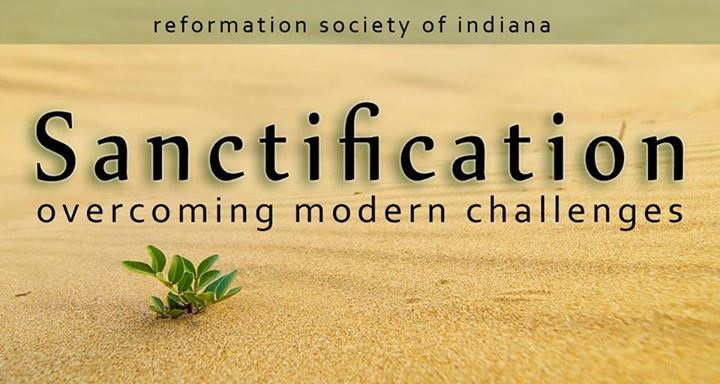
Is a believer’s sanctification simply believing more in his or her justification? What place do effort and discipline have in this process? How can we focus on growing in Christ as we live in a fast-paced and distracted society? Through this conference, Dr. David Murray and Tim Challies will address these questions, focusing on four modern challenges to our sanctification and giving practical steps to overcome them so that we daily grow more and more to be like our Lord Jesus Christ. They will address the radical and extra-ordinary kind of life strongly advocated by many Evangelicals and look at the modern version of “let go and let God.” They will call us to live lives of focused godliness and pursue positive sanctification. In all, we will be strengthened as we seek to fight the “good fight of faith” and press on in righteous and holy living.
The conference is free of charge. A freewill offering will be collected to help defray expenses.
For more information, see the conference brochure athttp://www.secondrpc.org/wp-content/uploads/2013/07/2013-brochure.pdf

I am saddened that my children are reaping the immoral decisions of their forefathers. May we be vexed in our souls as Righteous Lot. I lament that our Nation is actively hardening itself against what is good and loving. I lament the fact that freedom from sin is being eroded away. I am greatly disturbed and tormented by the evil that is approaching. I fear the harm that will come when the Law of God’s grace is thwarted for some new bondage to sin. At the same time I take great comfort that we have a God who bends his ear and hears the cries of His children. He is the rewarder of those who diligently seek Him. Hebrews 11:6. I pray that God will grant repentance and that we will have enough common grace to sense the harm this deep sin is creating and going to create. I pray for repentance. I pray for our Nation. God is able to do above and exceedingly more than I can hope for. He is still a God who loves His people and their children. He is the Covenant God of Abraham, Isaac, and Jacob who gave us a wonderful promise in Abraham that he would….. Gen 12:3 And I will bless them that bless thee, and curse him that curseth thee: and in thee shall all families of the earth be blessed.
I want all of the families of the earth to know how good God is and how good His Law is. Jesus summed up the Law in two great commandments and both of them had the word love in them. I want my world, Nation, and all families to know how good God is and how unloving and selfish sin is. I know how unloving and selfish I can be when I don’t want to know God’s will.
I am grateful for the past generations where God used his office of civil authority to recognize truth and call forth counsel from the Church to establish the way we should walk in. Those periods of grace and peace had their birthing pains that bore fruit. May it please the Father to do such a work again. May we be prepared and given the grace to function and work for such an end. God doesn’t cast away his Covenant people but for chastisement and reformation. He is faithful. He will honour those whom honour him.
1Sa 2:30 Wherefore the LORD God of Israel saith, I said indeed that thy house, and the house of thy father, should walk before me for ever: but now the LORD saith, Be it far from me; for them that honour me I will honour, and they that despise me shall be lightly esteemed.
May we, In meekness instruct those that oppose themselves; if God peradventure will give them repentance to the acknowledging of the truth; that they may recover themselves out of the snare of the devil, who are taken captive by him at his will. 2 Timothy 2:25,26
This has been a blessed opportunity that 2nd Reformed Presbyterian Church has taken on.
The Lord led one college student to organize and lead a ministry of teaching English as a second language (ESL) as a ministry of Second Reformed Presbyterian Church here in Indianapolis this summer. As pastor, I have encouraged, supported, and prayed for this ministry, and have been blessed to see other saints take up the hands-on work.
Since we began about a month ago, God has brought twenty to thirty different students from Hispanic, Chinese, and West African backgrounds one or two times each week. They range from young children to grandparents and from those who know almost no English to those who are nearly fluent and simply want to meet more Americans. The work is hard and requires commitment and diligence, but wonderful relationships are being formed, and the Lord has opened many doors in a short period of time. The teachers and students sometimes even share meals together…
View original post 988 more words
Had to reactivate since I deleted my Google Plus account. So we will republish. Be Encouraged.


 Puritan Covenanter
You must be logged in to post a comment.