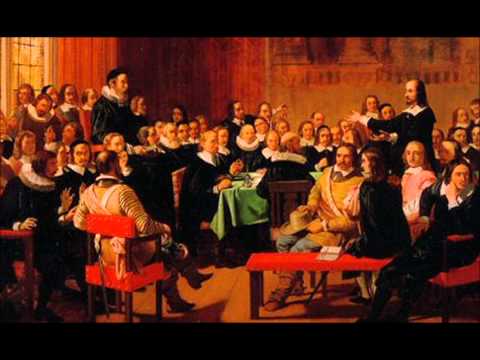
Westminster Confession of Faith Chapter 19. The Law and the Covenant of Works.

Following the book ‘The Law Is Not of Faith’ (see pp. 10-11, 43), DR. R. Scott Clark, believes that chapter 19 of the Westminster Confession of Faith “clearly suggests”that the covenant of works was republished at Mt. Sinai. The argument goes something like this: Westminster Confession of Faith 19.1 states, God gave to Adam a law, as a covenant of works. Paragraph 2 begins with “This law,” obviously referring to the law described in paragraph 1. Since the law in paragraph 1 was described as a covenant of works, the law of paragraph 2 must be as well.

This argument is nothing new as it is one that I (Pastor Patrick Ramsey) addressed in a journal article back in 2004, which you can find here. Its appearance in the book TLNF, however, may well be the first time it has appeared in print. And quite frankly I am surprised to see the editors using it because it is such a poor argument and one that is easily answered. Chapter 19 does not say that the covenant of works was delivered or republished at Mt. Sinai. It says the law was delivered at Mt. Sinai. What law? “This law” of paragraph 2 does refer to the law in paragraph 1, i.e. the one given to Adam as a covenant of works. But what the editors of the book TLNF and Clark fail to see is that “This law” is further defined in paragraphs 3, 5, and 6. In these sections we learn that “this law” is the moral law (paragraph 3), which is the perfect rule of righteousness (paragraph 2) binding on all persons in all ages (paragraph 5) and is given to true believers not as a covenant of works (paragraph 6). Therefore, WCF 19 clearly does not suggest or indicate that the covenant of works was republished at Mt. Sinai.

Now since the law that was delivered at Mt. Sinai was the moral law, it is the same law that was given to Adam in the garden. Indeed it is the same law that binds all men in every age as the Confession rightly says. Consequently, it is correct to say that part of the content of the covenant of works was republished at Mt. Sinai and for that matter in the new covenant since the moral law is restated there as well. This is what Brent Ferry calls material republication (see TLNF, 91-92). It is important to note, however, that this is republication of the law and not the covenant of works. This is why it is misleading to refer to material republication as a sense of the republication of the covenant of works. There is a difference between law and covenant or at least the Puritans thought there is. In other words, to say that the law (or content of the covenant of works) was republished is different from saying that the covenant of works was republished at Mt. Sinai.

Notice in 19.1 of the Confession that the law given to Adam is qualified by the phrase “as a covenant of works.” This qualifier is missing in paragraph 2 and it is replaced with “a perfect rule of righteousness.” In the garden the law was a perfect rule of righteousness and the condition of the covenant of works. But at Mt. Sinai the law no longer serves as the condition of a covenant of works though it does continue to be a perfect rule of righteousness. It is this Puritan and Confessional distinction that Clark and the editors of TLNF fail to incorporate in their reading of chapter 19. As a result they completely misread the Confession.

If we would follow the Confession’s teaching on the law as explained in chapter 19 it is imperative that we distinguish between the law as given to Adam from the law as given to Israel. James Durham explains:

James Durham

Then you would distinguish between this law, as given to Adam, and as given to Israel. For as given to him, it was a covenant of works; but, as given to them, it was a covenant of grace; and so from us now it calls for gospel duties, as faith in Christ (1 Tim. 1:5), repentance, hope in God, etc. And although it call for legal duties, yet in a gospel-manner; therefore we are in the first commandment commanded to have God for our God, which cannot be obeyed by sinners but in Christ Jesus; the covenant of works being broken, and the tie of friendship thereby between God and man made void. So that now men, as to that covenant, are without God in the world, and without Christ and the promises (Eph. 2:21-13). And so our having God for our God (which is pointed at in the preface to the commandments) and Christ for our Savior, and closing with his righteousness, and the promises of the covenant (which are all yea and amen in him) must go together.[1]

I might also add that I find it quite ironic that Klineans appeal to Fisher and Boston for support of the republication of the covenant of works. The position advocated by Fisher and Boston is one that is repudiated by Kline. Furthermore, their (mis)reading of chapter 19 would support the position of Fisher and Boston but there is no way it could support Kline’s republication view. Perhaps this is why they tend to argue for republication in general (“in some sense”) and not for specific views of republication. But of course it is fallacious to argue that since republication in some sense is found in the Reformed tradition that therefore a particular view of republication is Reformed. I have previously argued that the particular view espoused by Kline and Karlberg, like its closest predecessor, namely the view held by Samuel Bolton, is incompatible with the Westminster Standards.
Rev. Patrick Ramsey OPC

[1] James Durham, Practical Exposition of the Ten Commandments, 62. See Francis R. Beattie, The Presbyterian Standards (repr., Greenville, S.C.: Southern Presbyterian Press, n.d.), 249; Ball, A Treatise of the Covenant of Grace, 15, 113.

WCF and Republication

A Pastoral acquaintance of mine wrote the above. He is most correct in my estimation. I have communicated with Dr. Clark on this topic. He does believe that the law in Chapter 19 is equivalent to a Covenant of Works (in some sense). I believe he is incorrect.  As Robert Shaw states,  Adam was created under this Law in a natural form but then was  brought under it in the form of a Covenant.

Section I.–God gave to Adam a law, as a covenant of works, by which he bound him and all his posterity to personal, entire, exact, and perpetual obedience; promised life upon the fulfilling, and threatened death upon the breach of it; and endued him with power and ability to keep it.
Exposition

The law, as thus inscribed on the heart of the first man, is often styled the law of creation, because it was the will of the sovereign Creator, revealed to the reasonable creature, by impressing it upon his mind and heart at his creation. It is also called the moral law, because it was a revelation of the will of God, as his moral governor, and was the standard and rule of man’s moral actions. Adam was originally placed under this law in its natural form, as merely directing and obliging him to perfect obedience. He was brought under it in a covenant form, when an express threatening of death, and a gracious promise of life, was annexed to it; and then a positive precept was added, enjoining him not to eat of the fruit of the tree of knowledge, as the test of his obedience to the whole law.–Gen. ii. 16, 17. That this covenant was made with the first man, not as a single person, but as the federal representative of all his natural posterity, has been formerly shown. The law, as invested with a covenant form, is called, by the Apostle Paul, “The law of works” (Rom. iii. 27); that is, the law as a covenant of works. In this form, the law is to be viewed as not only prescribing duty, but as promising life as the reward of obedience, and denouncing death as the punishment of transgression. ….

Section II.–This law, after his fall, continued to be a perfect rule of righteousness; and, as such, was delivered by God upon mount Sinai in ten commandments, and written in two tables; the first four commandments containing our duty toward God, and the other six our duty to man.

Exposition

Upon the fall of man, the law, considered as a covenant of works, was annulled and set aside; but, considered as moral, it continued to be a perfect rule of righteousness. That fair copy of the law which had been inscribed on the heart of the first man in his creation, was, by the fall, greatly defaced, although not totally obliterated. Some faint impressions of it still remain on the minds of all reasonable creatures. Its general principles, such as, that God is to be worshipped, that parents ought to be honoured, that we should do to others what we would reasonably wish that they should do to us–such general principles as these are still, in some degree, engraved on the minds of all men. – Rom. ii. 14,15. But the original edition of the law being greatly obliterated, God was graciously pleased to give a new and complete copy of it. He delivered it to the Israelites from Mount Sinai, with awful solemnity. In this promulgation of the law, he summed it up in ten commandments; and, therefore, it is commonly styled the Law of the Ten Commandments.

Notice what Shaw states.  He notes the Original Natural form of the Law that Adam was under.  Then he notes that Adam was brought under a Covenant of Works when an express threatening of death, and a gracious promise of life, was annexed to the Law.  This might seem strange to some of you because you have been taught and drank the Klinean (Westminster Seminary California) Kool Aid. It is kind of like the Scoffield Bible. The media has so influenced us that we just accept a certain view as biblical and as historical. But I don’t believe it is the understanding that the majority of the Divines held at the Westminster Assembly. And I think I can show this to be true.

The reason I am starting this topic on the different views of Law concerning the Covenant of Works and the Mosaic is because so much of this teaching is where Klineans (followers of Meredith Kline’s teaching) start to go off the rails when they get to the Mosaic Covenant and the Republication issue. They want to import a Covenant of Works scheme into the Mosaic Covenant that dicotomizes Law and Gospel. They make the Law and Gospel opposed to each other in a way that is unbiblical. The Law and Gospel are not opposed to each other as I note in a previous blog on the book of Galatians.


Since I wrote that blog I have been lead to many Reformers of the past who share the same view I have learned. The Mosaic Law is a schoolmaster and not opposed to the Gospel. (Galatians 3:21) Samuel Rutherford, Anthony Burgess, James Durham, and Herman Bavinck all do a good job explaining this. I believe Klineanism leads to a denial that the Mosaic Covenant and the New Covenant are the same in Substance as our Confession states they are in Chapter 7.5,6. This view does lead to what I have termed Modern Reformed Thought and it appears it is leading to what some call Escondido Two Kingdom / Natural Law Theology and a poor definition of the Gospel in my estimation. It also denies some of the authority that Christ has as King. No, I am not a Theonomist. I am a Covenanter. I do believe in the Mediatorial Kingship of Christ. But that is a side issue.

The following words about this movement aren’t mine but I agree with them….

The basic problem with the new scheme is the way it makes the covenant of works co-ordinate with the covenant of grace in the Mosaic economy. They refer to the Abrahamic promise and the so-called “works principle” of the Sinaitic covenant functioning side by side. The older divines would speak of the covenant of works as subordinate to the covenant of grace. It was serving in the way we see it in action in Romans 7, for example, bringing conviction of sin and driving the people to the promised Christ. (Incidentally, the same is true with respect to the law-gospel relationship now.) Besides this ordo salutis aspect, there was also the historia salutis aspect. The outward service of weak and beggarly elements bound the people to the faith of Christ until Christ came. This was a temporary “addition” which had respect to their minority as sons and had all the appearance of making Israel look like they were servants in bondage. This has been abrogated in Christ and the son has come to maturity in the Spirit. But as to the essential nature of the Sinaitic covenant, it was always looked upon as an administration of the covenant of grace. The catechetical teaching on the preface to the ten commandments drove this point home in an experiential way which could not be easily forsaken.

Further problems arise once this basic departure is discerned. One begins to see a metaphysical reworking of the categories of grace and justice in relation to the “covenant of nature.” Instead of a providential dispensation (see Shorter Catechism question 12), the covenant of works is turned into a creational entity which characterises the natural relationship between God and man. Human morality is, in its very essence, made a covenant of works. Grace is only operative where sin abounds.

Anyways, I don’t hate anyone and I recognize that I have brothers in all walks and theological persuasions so don’t think I am out to be at anyone’s throat. I am just trying to work this out and put this in a historical setting also. I have been accused of federal vision and historical revision lately. Something about a red dog or a dog not barking…. I have been trying to work with Drs. and Professors of the faith. I am not swinging my bat from my shoulder alone. I am a man under authority. Pray for me.

May we all grow in our understanding…..

R. Martin Snyder

also reference these blogs.

The Covenant of Life chapter XI by Samuel Rutherford

Samuel Rutherford 
was a very prominent Scottish member of the Westminster Assembly, which sat in the 1640s. Hpublished an extensive treatise on the covenant. It appeared in 1655, as was entitled The covenant of life opened, or, A treatise of the covenant of grace. In the eleventh chapter, Rutherford deals with several abberant views on the Mosaic covenant. First he deals with the Amyraldian view (espoused first by John Cameron, and later by Bolton), which argues that the Mosaic covenant is not a covenant of works or a covenant of grace, but rather a third “subservient” covenant. This view is rejected by the Standards, as well as the Formula Consensus Helvetica. Second, he deals with those who make the Mosaic covenant a covenant of works, completely different from the covenant of grace. This is the view of all Lutherans, as well as a very small minority of Reformed theologians. It is also rejected by the Standards (WCF 19:1-2, LC 101, etc, but we will deal with that issue elsewhere). Finally, he deals with the Arminian view. It is similar to the Amyraldian view, in that it also argues for three covenants entirely distinct in substance.

https://rpcnacovenanter.wordpress.com/2012/09/01/the-covenant-of/
https://sites.google.com/site/themosaiccovenant/samuel-rutherford/the-covenant-of-life-opened

Anthony Burgess

 Anthony Burgess’s Vindication of the Law and the Covenants (1647). Burgess was a prominent member of the Westminster Assembly. These lectures were internationally hailed as a solid defense of consensus Calvinism over against the more extreme views of the Calvinistic antinomians of the period, as well as those of the Papists, Socinians, and Arminians.

Burgess argues for the consensus position articulated in the Westminster Standards, that the Mosaic Law is a covenant of grace (cf. WCF 7:5-6; 19:1-2; LC #101). Over against this, he refutes three other aberrant minority views, who maintain that the Mosaic covenant was a covenant of works, a mixed covenant, or a subservient covenant. Note especially his insightful exegesis of the Ten Commandments towards the end: even the very form of the commandments presupposes that they are given in the context of a covenant of grace.

https://sites.google.com/site/themosaiccovenant/anthony-burgess
http://heritagebooktalk.files.wordpress.com/2012/02/burgess-vindiceae-text-complete.pdf

The Covenant of ‘Works and the Mosaic Law /  James Durham

https://rpcnacovenanter.wordpress.com/2012/09/01/taken-frompract/

WCF 19:1-2 – Law as Covenant vs. Law as Rule

https://sites.google.com/site/themosaiccovenant/Home/wcf-19-1-2—law-as-covenant-vs-law-as-rule

The Mosaic Covenant in Reformed Theology

Dr. Robert Strimple discusses Dr. Clark and WCF chapter 19

https://rpcnacovenanter.wordpress.com/2014/02/19/dr-robert-b-strimple-on-the-mosaic-covenant-and-republication-of-the-covenant-of-works/

Also check out the Substance of the Covenants….
https://rpcnacovenanter.wordpress.com/2012/09/14/the-mosaic-covenant-same-in-substance-as-the-new/

and my other findings.

Old Posts on the Mosaic Covenant / the New Reformed Paradigm

The Covenant of Life Opened chapter XI

The Covenant of Life Opened
Chapter XI

The Three-fold Covenant Considered.
The Law Pressed upon Israel was not a Covenant of Works, but a darker dispensation of Grace.

The three-fold Covenant of Arminians refuted.
Diverse considerations of the Law and the Gospel

by
Image
Samuel Rutherford
edited by Randy Martin Snyder

CHAP. XI. 1. The three-fold Covenant considered. 2. The Law pressed upon Israel was not a Covenant of Works, but a darker dispensation of Grace. 3. The three-fold Covenant of Arminians refuted. 4. Diverse considerations of the Law and the Gospel.


 There are those who hold that there are three Covenants.

  1. Covenant of Nature, whereby God as Creator required [pg 58] perfect obedience from Adam inParadise, with promise of life, and threat of death.
  2. The Covenant of Grace, whereby he promises life and forgiveness in Christ’s Blood to believers.
  3. subservient Covenant, made
    1. With Israel, not with Adam, and all mankind.
    2. For a time with Israel, not forever, as the natural Covenant.
    3. In Mount Sinai, not in Paradise.
    4. To terrify and keep in bondage (the other from an inward principle required, obedience.)
    5. To restrain Israel from outward sins, to prove the people, “that the fear of God might be before their eyes, that they should not sin.” So they expound Ex. 20:20.  The other Covenant was to restrain from all sin. Yea and so was that on Mount Sinai, to do all that are written in the Book of the Law, Deut.27:26Deut. 28:1-4etc. to that same end, “to love God with all the heart, and with all the soul,Deut. 10:12. Deut. 5:1-3. Deut. 6.1-3. Deut. 5:29. Deut. 6:5. “With all the heart, with all the soul, with all the might,” which is expounded by Christ, Matt. 22:37, Luke 10:27. in as full a height of perfection as ever was required of Adam.
    6. It was written to Israel in Tables of stone: The natural Covenant was written in the heart; so was there a circumcised heart promised to Israel, (Deut. 30:6) though sparingly.
    7. It was (say they) given by the Mediator Moses, as that of nature was without a Mediator. Yea,Moses was the Typical Mediator of the young Covenant of Grace.


The differences between the subservient Covenant, and that of Grace.

  1. In the subservient [covenant], God only approves righteousness and condemns sin in [the covenant] of Grace he pardons and renews. We answer: Acts 15.11: “We believe through the Grace of the Lord Jesus, we shall be saved even as they under that Covenant.” Acts 10.43: “To him gave all the Prophets witness, that through his Name, whosoever believeth in him, shall receive remission of sins.” Abraham and Davidwere justified, in that “sin was not imputed to them, not by works” (Rom. 4:1-3, 6-9, etc.; Gen. 15:6).Psalm 32:1-2, 5: “I said I will confess my transgression, and you forgave the iniquity of my sin.” Isa. 43:25.I, euen I am he that blots out [pg59] thy transgressions for my own sake, and I will not remember your sins.” So David was a man according to the heart of God, So Asa, Josiah, Jehosaphat, Samuel, Barack, Gideon, Daniel, the Prophets, under that subservient Covenant (except they be under a fourth Covenant) were renewed, justified, and saved by faith (Heb. 11) as under a Covenant of Grace.  
  2. The former [subservient covenant] was, “do this and live,” this [covenant of grace] was, “believe and live.” We answer” Doing and living was but a shutting them up under the Law, that they might flee to Christ in whom they believed; otherwise the fathers must be saved and justified by works contrary to Rom. 2, Rom.4, and Heb. 11.
  3. In antiquity, the former came in as added 430 years after the promise of grace (Gal. 3.17).  We answer:True, but he speaks of the Covenant in Sinai, according to the strict Law part, which could not save, and so it is different. But that does not prove two Covenants.
  4. In the former [subservient covenant] there is compulsion and the Spirit of bondage, in this [the covenant of grace] heart inclining freedom and the Spirit of Adoption. We answer: Yet the differences are accidental, there was a legal awing of the hearts, as if they had been Servants, yet Heirs and Sons they were (Gal. 4:1-2.  The whole Book of the Proverbs spoke to the Godly as to Adopted Sons. They were believers (Heb.11; Rom. 4; Acts 10:43) and so Sons as touching a spiritual state (John 1.11-12). In regard to the Economy, it was somewhat more rigid and legal, they were restrained as servants. Yet it was the Covenant of Grace, by which believing Jews were justified and saved (Acts 15:11; Acts 10:43).
  5. In the former [the subservient covenant] man is dead, in this [the covenant of grace] man is humbled for sin.We answer. Legally dead, except they would flee to Christ, and legally condemned, but there was true humiliation for sins under that Covenant: As David, Josiah, Hezekiah, and all beleivers then, as now, were pardoned and justified.
  6. In the former [subservient covenant] there are commands, not strength, but here [the covenant of grace] there be promises and grace given? We answer: the full abundance of grace and of a new heart, was reserved until now. And the Law could not make perfect nor give pardon, in the blood of beasts; as touching that legal dispensation: But both grace, the Spirit, [pg. 60] pardon, righteousness and life were received and believed; by looking upon Christ to come.
  7. In the former [subservient covenant], Canaan was promised, in this [the covenant of grace], Heaven. WeanswerCanaan is promised only but sacramentally, and that was a pedagogical promise for the infancy of that Church, but a type which was then in that Covenant, and is not now, make not two Covenants, one then, and another now?  Except you say, there was then a Lamb in the Passover, which was a Type of Christ to come, and there is now no such Type, because the body is come, and Christ the true High Priest offered himself. Therefore there are two Christ’s, one then to come, another now who hath come already. The Lord’s dispensation with Israel is often called a Covenant, now it must either be a Covenant of Works, or of Grace, or a third Covenant.

But the truth is, the Law as pressed upon Israel was not a Covenant of Works.


  1. The Law as the Law or as a Covenant of Works is made with perfect men who need no mercy; But this Covenant is made with sinners, with an express preface of mercy: “I am the Lord your God that brought you out of the land of Egypt, etc.” It is made with stiff-necked Israel, (Deut. 29; Deut. 30, 31, 32).  And that is called a Covenant from the end and object, as motions are denominate from their end: for the end of the Lord’s pressing the Law upon them was to bring them under a blessed necessity to seek salvation in their true City of Refuge, Christ Jesus, who redeemed them out of the spiritual bondage of sin.
  2. It was the Covenant made with Abraham, which was a Covenant of Grace: and though it be called, (Deut.29:1) a Covenant beside that which was made in Horeb, because [it was]
    1. Renewed again after their breach.
    2. Repeated a little before the death of Moses, Deut. 31.28.29.30.
    3. Because there were some additions of special blessings, cursings, Ceremonial Commands, that were not in the formerly proposed Covenant, (Exod. 20).  Yet the same it was in substance, to love the Lord with all the heart (Deut. 2:10, 12-14).  The same with that of Abraham, Deut. 8:18: “That he may establish his Covenant, which he swore unto your fathers, as it is this day,” when he is to deliver them out of Egypt (Exod. 2:24). And God [pg61“heard their groaning, and remembered his Covenant with Abraham and Isaac and Jacob.” So the Lord expones [expounds?] it in his appearing to Moses, Exod. 3:6. Jer. 31:32: “Not according to the Covenant which I made with their fathers, in the day that I took them by the hand, to bring them out of the Land of Egypt.”  Now that was the Covenant which God made with Abraham, of which Circumcision was a seal (Gen. 17), not of a temporary Canaan only, but of heart Circumcision, (Col. 2.11). For the Lord expressly tells them, when he “took them by the hand” as his married people, “to bring them out of the Land of Aegypt, and out of the house of bondage” (Exod. 20). He meant no other Covenant then he made withAbraham, of believing, (Gen. 15) and of walking before him and being perfect, (Gen. 17:1-2) which is somewhat more legal, as Moses and the Lord himself expones [expounds?] it (Exod. 2:24, 3:6.Exod. 20:1-2). And he shows them, (Lev. 26:42) if in their enemies’ land they repent and shall come out and meet the rod, and their “uncircumcised hearts shall willingly accept of the punishment of their iniquity.” “Then (saith the Lord) I will remember my Covenant with Jacob, and also my Covenant with Isaacand also my Covenant with Abraham will I remember.”  Besides there are not here three Covenants, but one, there is no word of the subservient Covenant with Israel in Sinai. Except that when he mentions the one, he excludes not the other. For to walk before the Lord required inAbraham’s Covenant (Gen. 17”1) is to walk in all the ways of the Lord, to fear and love him (Deut.10:12-13) and Samuel (1 Sam. 12:22) and Joshua (Josh. 24:22-25). And Mary (Luke 1.55) andZachariah (Luke 1:70-73) refer to the Covenant made with Abraham, and Deut. 6:10, the Covenant at Horeb, the Lord made with Abraham to give Canaan to his seed. Deut. 7:12: “If you hearken to these judgments to do them, it shall come to pass that the Lord your God will keep unto you the Covenant of mercy that he swore unto your fathers, etc.”
  3. This Covenant hath the promise of a circumcised heart (Deut. 30:6). and “of the word of faith that is near in the mouth,” and of the righteousness of faith clearly differenced from the righteousness of the Law by doing. For so Paul (Rom. 10:5-7, etc.) expones [expounds?] Moses (Deut. 30:11-14. [pg. 62]
  4. The Covenant of Works taught nothing of the way of expiation of sin by blood typifying the Ransom of blood that Christ was to pay for our sins, as this Covenant, all along had sacrifices and blood to confirm it.Exod. 24:8: “And Moses took the blood and sprinkled it on the people, and said, behold this is the Blood of the Covenant which the Lord has made with you, concerning all these words. Now the words were the Ten Commandments. See: Heb. 9:18-24.
  5. This Covenant is made with Israel only (Exod. 20; Deut. 5:6; Deut. 6:5-7, 12). The Covenant of Works is made with all mankind.
  6. No people under the Law can be justified and saved thereby, nor have their sins pardoned (Rom. 3:9-11, 19-20; Rom. 4:1-4; Rom. 9; Rom. 10; Psalm 130:3; Psalm 143:2; Gal. 3.1-3, 10-13).  But in this Covenant, Abraham, David (Gen. 15; Psalm 32; Rom. 4.1-9). And the Jews by faith, have remission of sins and salvation, as also the Gentiles have (Acts 10:43. Acts 15:11).
  7. The Lord minds to lay aside the Law as inconsistent with the Covenant of Grace. Gal. 3:18: “If the inheritance be by the Law, then it is not by promise, but God gave it to Abraham by promise.”  For to live by this Covenant, is a life of promises, all being here promised, both faith the condition, and perseverance therein, and a new heart, righteousness, pardon, and life. A man that has his estate in papers and in good words that are transient things, may seem a poor man, but to live by promises here is the rich life of the heirs of hope, this is strong consolation under deadness, absence, faith working underground in the dark. Gal.3:21: “If there had been a Law which could have given life, verily righteousnesse should have been by the Law.

Though he commanded them to do the Law, it was not that they should live thereby, and though he commanded us the same, it is another command, as it were, it is not so much now that we obey from the Authority of God the Law-giver under pain of damnation (though that be not laid aside, but urged in a Gospel intention upon heirs) as from the love of God, a Grace-giver; as also there is an intrinsic amenity in Christ drawing, and obedience now becomes connatural, free, delightful. Let these consider, to whom the yoke of obedience is a torment and a man-mill. [pg63]

  1. The Passover and Circumcision (Gen. 17:7) all along were seals of the Covenant, as Baptism one with Circumcision in substance (Col. 2.11) is the seal of the same Covenant, (Acts 2.39, 40, 41). Now the Law required no Circumcision, no shedding of blood, no Repentance, no new heart, but eternal condemnation followed the least breach thereof. Paul says indeed, Gal. 5:3: “If you be Circumcised (as the false Apostles would have, that thereby you may be justified & saved) you are debtors to keep the whole Law” perfectly, as the only way to life, and by no other Covenant can you be justified and saved, now Abraham was not circumcised that way, circumcision did bind Abraham to keep the Law, as a Ceremony and Seal of the Covenant of Grace commanded of God. But the Law as a Covenant of Works commands no Ceremony, no Sacrifice, no Type of Christ Mediator at all.


 It is true that first Covenant had Moses for its mediator, but as he was a Type of Christ, so Christ yesterday and today was the real Mediator, but veiled. The New Covenant has better promises, (Heb. 8:6; Heb. 7:22) it is a better Covenant (Heb. 7:22) has a better real, not a Typical surety, a better Priest who offered himself through the eternal Spirit (Heb. 9:14), a better Sacrifice, because of the plainness (John 16:29; 2 Cor. 3:18), because the real promises are made out to us, because of a larger measure of Grace (2 Cor. 3:1-4). And the first “Covenant isfaulty,” (Heb. 8:7) not because there was no Salvation by it, the contrary is Heb. 11, but that is comparatively spoken: because the blood of beasts therein could not take away sins (Heb. 10.1-4), because forgiveness of sins is promised darkly in the first Covenant, but plainly in the other, because Grace is promised sparingly in the former, but here abundantly, the Law being written in the heart, (John 7:39. Is. 54.13).


And it is true (Gal. 4.22-24, etc.) they seem to be made contrary Covenants: 1. But Paul speaks, Gal. 3. of the Law as relative to that people, and so it pressed them to Christ, and keeps them as young Heirs under nonage. 2. He speaks of the Law absolutely, as contradistinguished from the Gospel (Gal. 4:21) so it is a Covenant of Works begetting children to bondage: 2. Who come short of righteousness and the inheritance, and shall not be [pg. 64] saved. 3. Who are cast out of the Kingdome of Grace. 4. Who persecute the Godly the Sons of promise, so is the Law as it was in Adam’s days, and is now to all the Reprobate; so the Godly are not under the Law and the Covenant of Works. The Covenant urged upon Believers is to prove them, when they stand afar off and tremble,Exod. 20:20. “Fear not (says Moses) God has come to prove you (not to damn you) and therefore Calvin solidly observes that PaulCor. 3. speaks with less respect of the Law then the Prophets do, for their cause, who out of a vain affectation of the Law-Ceremonies, gave too much to the Law and darkened the Gospel, and says the one was 1. Literal. 2. Written in stone. 3. A Sermon of death and wrath. 4. To be done away and less glorious, whereas the Gospel is Spiritual. 2. Written on the heart. 3. The Ministry of life. 4. And glorious: and praises put upon the Law, agree not to it of its own nature, but as it was used by the Lord to prove them, (Exod. 29:20) and chase them to Christ.


The Arminians also (especially Episcopius) make three Covenants.

  1. One with Abraham, in which he requires sincere worship and putting away strange gods: Beside 2. Faith and Universal obedience, and promised Canaan to his seed and Spiritual blessings darkly.
  2. One in Mount Sinai in these three Laws Moral, Ceremonial and Judicial, with a promise of Temporal good things, but to no sinners promise of life Eternal.
  3. A Covenant of Grace, with a promise of pardon and life to all that believe and repent, to all mankind, but he denies 1. All infused habits, contrary to Isa. 44:1-3, Isa. 59:20-21, Zech. 12:10, John 4:14, John 7:37. John16:7-8. 1 John 3:9.  He says that 2. all commands are easy by Grace. 3. That the promise of earthly things in their abundance is abolished, in that we are called to patient suffering. 4. That there is no threatening in this Covenant, but that of Hell fire. But the Covenant made with Abraham is that of Grace made with all the Seed (Deut. 30:6. Deut. 7.5-7, 12. Lev. 26.40-41) and made with all Believers, who are Abraham’schildren (Gal. 3.13-14, 18-19; Rom. 4.1-4; Luke 19:9) yea with the whole race of man without exception. (2.) The second Covenant which promises only blessings is made rather with beasts, that [pg65] well fed, then with men, contrary to Psalm 73:25, Isa. 57:1-3. Psalm 37:37, and it must build some Chalmer in hell, where the fathers were before Christ, a dream unknown to Scripture. The third Covenant makes the Covenant of Grace a Covenant of Works, and holds out life and pardon, upon condition that freewill repent and believe and stand on its own feet, for there is neither faith, nor a new heart nor repentance promised contrary to Deut. 30:6, Ezek. 11:19-20, Ezek. 36:26-27, Isa. 59:19-21, Isa. 44:1-5. Zech. 12:10.

Borrowed with permission from

https://sites.google.com/site/themosaiccovenant/samuel-rutherford/the-covenant-of-life-opened

The Covenant of Works and the Mosaic Law / James Durham

God gave the Mosaic Covenant as an administration in the Covenant of Grace but the Israelite’s turned it into a Covenant of Works which wasn’t his intention. Therefore God rejected their sacrifices and services as not commanded.  The Mosaic Covenant is not a mixed Covenant.  It is an Administration of the Covenant of Grace.
Taken from

Practical Exposition of the Ten Commandments

by
James Durham

Topic is
The Covenant of Works and the Law

pp. 52-55

Our purpose is not to aim at any great accuracy, nor to multiply questions and digressions, nor to insist in application and use, but plainly and shortly (as we are able) to give you the meaning of the law of God. 1. By holding forth the native duties required in every commandment. 2. The sins which properly oppose and contradict each commandment, that by these we may have some direction and help in duty, and some spur to repentance, at least a furtherance in the work of conviction, that so by it we may be led to Christ Jesus, who is the end of the law for righteousness to everyone that believes (Rom. 10:4), which is the principal intent of this law, as it was given to Israel.

To make way for the exposition, we shall:

I. Lay down some conclusions, which arise from the preface.
II. Give you some ordinary distinctions.
III. Clear and confirm some rules or observations useful for understanding of the whole law.

1. The first conclusion that we take for granted is, that this law (as it is moral) ties even Christians and believers now, as well as of old. Which appears from this, that he who is God the Lawgiver here, Acts 7:38, is the Angel Christ, and it is his word, as is clear, vs. 30-31. As also, the matter of it being connatural to Adam, it did bind before the law was given, and that obligatory force cannot be separated from its nature (though the exercise of right reason in nature be much obliterated since the fall). Therefore Christ was so far from destroying this law in its authority, and Paul so far from making it void by the doctrine of faith, that our Lord tells, he came to fulfill it (Matt. 5:17), and Paul shows that his preaching of faith was to establish it (Rom. 3:31). Which truth being confirmed by them both in their practice and doctrine shows that the breach of the holy law of God is no less sinful to us now, than it was to them before us.

The second conclusion is, that though this law (and obedience thereto) lie on Christians, and be called for from them, yet it is not laid on them as a Covenant of Works, or that by which they are to seek or expect justification. No, but on the contrary, to overturn self-righteousness, by this doctrine, which manifest sin, and of itself works wrath. Which is also clear, in that he is here called, Our God, which he cannot be to sinners but by his grace. And also it appears from the Lord’s owning of this sinful people as his, and his adjoining to this law so many ceremonies and sacrifices witch point out and lead to Christ; and from his adding the law on mount Sinai, as a help to the covenant made with Abraham (Gen. 17 – which was a covenant of grace, and was never altered as to its substance), in which the people of Israel, as his seed, was comprehended. Therefore it appears that this was never the Lord’s intent in covenanting thus with his people, that they should expect righteousness and life by the adjoined law, but only that it should be useful in the hand of grace to make the former covenant with Abraham effectual. So then, though we are bound to obey the law, we are not to seek righteousness or life by the duties therein enjoined.

Skipping page 54 to section II on the bottom of the page.

II. These conclusions being laid down as necessary caveats, we shall propose these distinctions for clearing of them.

1. We would distinguish between a law and a covenant, or between this law considered as a law, and as a covenant. A law does necessarily imply no more than: (1) To direct. (2) To command, enforcing that obedience by authority. A covenant does further necessarily imply promises made upon some condition, or threatenings added, if such a condition is not performed. Now, this law may be considered without the consideration of a covenant, for it was free to God to have added or not to have added promises, and the threatenings (upon supposition that the law had been kept) might never have taken effect. But the first two are essential to the law; the last two are made void to believers through Christ. In which sense it is said, that by him we are freed from the law as a covenant, so that believers’ lives depend not on the promises annexed to the law, nor are they in danger by the threatenings adjoined to it. Hence we are to advert, when the covenant of works is spoken of, that by it is not meant this law simply, but the law propounded as the condition of obtaining life by the obedience of it, in which respect it was only so formally given to Adam. This then is the first distinction between the law and the Covenant of Works.

2. [We would] distinguish between these ten commandments simply and strictly taken in the matter of them, and more complexly in their full administration, with preface, promises, sacrifices, etc. In the first sense they are a law having the matter, but not the form of the covenant of works. So Moses by it is said to describe such righteousness as the covenant of works requires, yet he does not propound it as the righteousness they were to rely on, but his scope is to put them to a Mediator, by revealing sin through the law (Rom. 10:3). In the second sense it is a covenant of grace, that same in substance with the covenant made with Abraham, and with the covenant made with believers now, but differing in its administration.

3. [We would] distinguish between God’s intention in giving and the believers in Israel, their making use of this law; and the carnal multitude among that people, their way of receiving it, and corrupt abusing it contrary to the Lord’s mind. In the first sense, it was a covenant of grace. In the second it turned to be a covenant of works to them. And therefore it is that the Lord rejects (as we may see, Isa. 1:13; 66:2-3; Jer. 7:22) their sacrifices and services as not commanded, because rested on by them, to the prejudice of grace, and contrary to the strain and scope of this law complexly considered.