Sundry Quotes from Solid Reformed Men on Law and Gospel

Image


Thomas Boston, Works, 3:377:

The doctrines of the gospel believed with the heart, teach us that, denying ungodliness and worldly lusts, we should live soberly, righteously, and godly in the present world. As Christ is the end of the law, so I may say, the law is the end of the gospel; for it is the great design of the gospel revelation, to bring back sinners to that righteousness and holiness which the law requires. The gospel never gains its end among a people, till a strain of piety and holiness run through their whole lives.


David Clarkson (Works 1:315):

The righteousness of Christ turns the law into gospel to a believer, and of a doctrine full of dread and terror, renders it the most acceptable message that ever was brought to the world. The law, which stands as the angel with a flaming sword, to bar all flesh out of paradise, when the righteousness of Christ is applied, it becomes an angel to carry every believer into Abraham’s bosom; Christ’s righteousness added, it loses its name, and we call it gospel. The way in both seems to be the same for substance; perfect obedience is requisite in both. They differ in the circumstances of the person performing this obedience. In the law it was to be personal, in the gospel his surety’s performance is sufficient.

However, if there be any terror, dread in the law, Christ’s righteousness removes it; if any grace, comfort in the gospel, Christ’s righteousness is the rise of it. Take away Christ’s righteousness, and the gospel can give no life; take it away, and the law speaks nothing but death; no life, no hope of life without it, either in law or gospel.

Thomas Goodwin (Works, 6:261):
As faith turns the commands of the law into gospel in a regenerate man’s heart, so conscience, in an unregenerate man, turns the gospel into law. As faith writes the law in the heart, and urgeth the duties of it upon evangelical grounds and motives—as the love of Christ, conformity to him, union with him, and the free grace of God—so in a man unregenerate, gospel duties are turned into legal, through the sway and influence of conscience, and that dominion which the covenant of works hath over him.

Samuel Rutherford (The Covenant of Life Opened, 198-199).

The obedience of faith, or Gospel-obedience, in the fourth place, hath less of the nature of obedience than that of Adam, or of the elect angels, or that of Christ’s. It’s true we are called obedient children, and they are called the commandments of Christ, and Christ hath taken the moral law and made use of it in an evangelic way, yet we are more (as it were) patients in obeying gospel-commands. Not that we are mere patients, as Libertines teach; for grace makes us willing, but we have both supernatural habits and influences of grace furnished to us from the grace of Christ, who hath merited both to us; and so in Gospel-obedience we offer more of the Lord’s own and less of our own because he both commands and gives us grace to obey. And so to the elect believer the Law is turned in Gospel, he by his grace fulfilling (as it were) the righteousness of the Law in us by begun new obedience, Rom. 8:4.

Westminster Confession of Faith, 19.6,

It [the moral law] is likewise of use to the regenerate, to restrain their corruptions, in that it forbids sin: and the threatenings of it serve to show what even their sins deserve; and what afflictions, in this life, they may expect for them, although freed from the curse thereof threatened in the law. The promises of it, in like manner, show them God’s approbation of obedience, and what blessings they may expect upon the performance thereof: although not as due to them by the law as a covenant of works. So as, a man’s doing good, and refraining from evil, because the law encourages to the one and deters from the other, is no evidence of his being under the law; and not under grace.

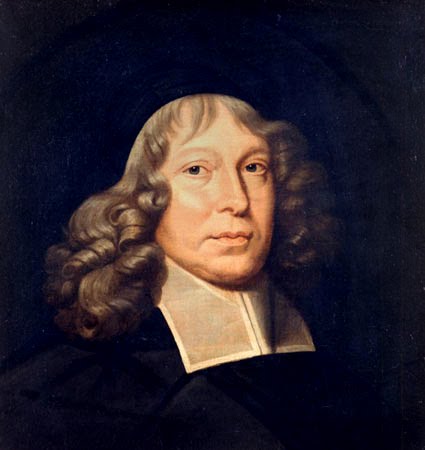
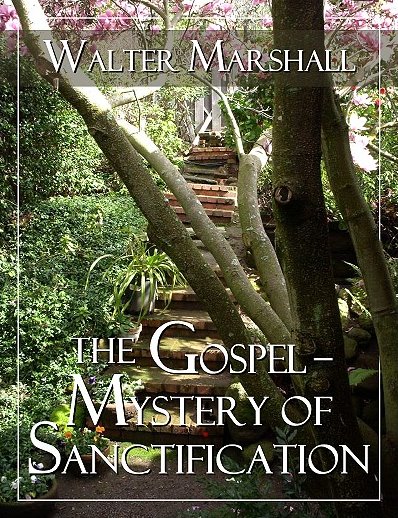
Walter Marshall (The Gospel Mystery of Sanctification Opened, p. 235, 1981 EP ed.).

Here you have holiness as a free gift received by faith, an act of the mind and soul. Whosoever will may come, take it and drink freely, and nothing is required but a willing mind (John 7:38; Isa. 55:1; Rev. 22:17). But the law is an intolerable burden (Matt. 23:4; Acts 15:10), if duty be laid on us by its terms. We are not left in this way to conquer lusts by our endeavours, which is a successless work, but what is duty is given, and the law is turned into promises (Heb. 8:6-13; Ezek. 36:25, 26; Jer. 31:33; 32:40). We have all now in Christ (Col. 3:11; 2:9, 10, 15, 17). This is a catholic medicine, instead of a thousand. How pleasant would this free gift, holiness, be to us, if we knew our own wants, inabilities and sinfulness? How ready are some to toil continually and macerate their bodies in a melancholy legal way to get holiness, rather than perish forever? And therefore, how ready should we be, when it is only, ‘Take, and have; believe, and be sanctified and saved?’ (2 Kings 5:13). Christ’s burden is light by His Spirit’s bearing it (Matt. 11:30). No weariness, but renewing of strength (Isa. 40:31).

Thomas Case (Puritan Sermons, 5:524, 525):

Hold fast the models of divine truth in your practice. – A practical memory is the best memory: to live the truths which we know, is the best way to hold them fast.

There are heretical manners as well as heretical doctrines. “Profane Christians live against the faith, whilst heterodox Christians dispute against the faith” [Augustine]. There be not a few that live antinomianism and libertinism, and atheism, and popery, whilst others preach it. Apostates are practical Arminians; a profane man is a practical atheist. Whilst others, therefore, live error, do you live the truth; whilst others deny the gospel, do you live the gospel: “As ye have received” the truth as it is in Jesus, “so walk ye” in it, to all well-pleasing (Col. 2:6; 1:10). Without this, a man forsakes the truth, while he doth profess it: “They profess that they know God, but in their works they deny him, being abominable, and disobedient, and unto every good work reprobate” (Titus 1:16).

Yea, to live the truths we hear, is the way, not to hold them only, but to hold them forth to others; as the apostle speaks, “Holding forth the word of life” (Phil. 2:16). It is a metaphor taken either from fire-lights upon the sea-coasts burning all night; the use whereof is to give notice to seamen of some neighbouring rocks and quicksands that may endanger their vessel: or else from torch-bearers in the night-time; who hold out their lights, that passengers may see their way in the dark. According to which metaphor our Saviour calls true, real Christians “the light of the world, a city set on a hill,” to enlighten the dark world with their beams of holiness (Matt. 5:14). It is a blessed thing when the conversations of Christians are practical models of gospel-truths, walking Bibles, holding forth “the graces” or “excellencies,” “of Him who hath called them out of darkness into his marvellous light” (1 Pet. 2:9).

John Owen (Works 3:278-279):

There are two sorts of things declared in the gospel: —
1st. Such as are absolutely its own, that are proper and peculiar unto it, — such as have no footsteps in the law or in the light of nature, but are of pure revelation, peculiar to the gospel. Of this nature are all things concerning the love and will of God in Christ Jesus. The mystery of his incarnation, of his offices and whole mediation, of the dispensation of the Spirit, and our participation thereof, and our union with Christ thereby, our adoption, justification, and effectual sanctification, thence proceeding, in brief, everything that belongs unto the purchase and application of saving grace, is of this sort. These things are purely and properly evangelical, peculiar to the gospel alone…

2dly. There are such things declared and enjoined in the gospel as have their foundation in the law and light of nature. Such are all the moral duties which are taught therein. And two things may be observed concerning them:—
(1st.) That they are in some measure known unto men aliunde from other principles. The inbred concreated light of nature doth, though obscurely, teach and confirm them…
(2dly.) There is on all men an obligation unto obedience answerable to their light concerning these things. The same law and light which discovereth these things doth also enjoin their observance. Thus is it with all men antecedently unto the preaching of the gospel unto them. In this estate the gospel superadds two things unto the minds of men:—
(1st.) It directs us unto a right performance of these things, from a right principle, by a right rule, and to a right end and purpose; so that they, and we in them, may obtain acceptance with God. Hereby it gives them a new nature, and turns moral duties into evangelical obedience.
(2dly.) By a communication of that Spirit which is annexed unto its dispensation, it supplies us with strength for their performance in the manner it prescribes.

Ralph Erskine (Sermons 2:22):

The believer’s own obedience to the law, or his gospel-obedience, and conformity to the law, wrought in him, and done by him, through the help of the Spirit of grace; even this obedience of his, I say, hath not the legal promise of eternal life, as if it were the legal condition of his obtaining eternal life: no, his gospel-obedience hath indeed a gospel-promise, connecting it with eternal life, as it is an evidence of his union to Christ, in whom all the promises are Yea and Amen; and as it is a walking in the way to heaven, without which none shall ever come to the end; “For without holiness it is impossible to see God.” – But the legal promise of eternal life made to obedience, and which makes our personal obedience to be the cause and matter of our justification, and as the proper condition of salvation and eternal life, this is the promise of the law, or covenant of works; and this promise it is now wholly divested of, as to the believer in Jesus Christ, who hath taken his law-room, and yielded that perfect obedience, to which the promise of eternal life is now made: and the reason why, I say, the promise of eternal life is now made to Christ’s perfect obedience in our room and stead, is, Because, the law, or covenant of works, made no promise of life properly, but to man’s own personal obedience; it made no mention of a surety; but now, in sovereign mercy, this law-rigour is abated, and the Surety is accepted, to whose obedience life is promised.

Reverend Matthew Winzer

Dear reader,

Do you understand the promise of the gospel in relation to gospel obedience? When you perform moral duties are you looking to the promise of the gospel and trusting that this obedience is accepted for Christ’s sake, and thereupon blessed of God to be the way of walking to heaven? Or do you perform moral duties out of obedience to the law, and on the understanding that law-rigour condemns all your works as the most filthy unrighteousness, so that nothing you do can ever be acceptable? These are very important questions. If good works are not done by faith in Jesus Christ, they are not good works; they are condemned at the bar of God’s justice. But if good works are done by faith in Jesus Christ, God “is pleased to accept and reward that which is sincere, although accompanied with many weaknesses and imperfections” (Westminster Confession of Faith, 16.6).

I pray that God will enable you to see the important difference between serving the law and serving the gospel.
Reverend Matthew Winzer

Thomas Brooks’ Nine Strong Consolations – Point #8

“…Now remember that this imputed righteousness of Christ procures acceptance for our inherent righteousness. When a sincere Christian casts his eye upon the weaknesses, infirmities, and imperfections that daily attend his best services, he sighs and mourns. But if he looks upward to the imputed righteousness of Jesus Christ, it shall bring forth his infirm, weak, and sinful performances perfect, spotless, and sinless, and approved according to the tenor of the gospel. They become spiritual sacrifices, and he cannot but rejoice (1 Peter 2:5). For as there is an imputation of righteousness to the persons of believers, so there is also an imputation to their services and actions . . . so the imperfect good works that are done by believers are accounted righteousness, or as Calvin speaks, “are accounted for righteousness, they being dipped in the blood of Christ.” They are accounted righteous actions; and so sincere Christians shall be judged according to their good works though not saved for them (Revelation 11:18; 20:12; Matthew 25:34-37).

And it is observable in that famous process of the last judgment (Matthew 25:34-37), that the supreme Judge makes mention of the bounty and liberality of the saints, and so bestows the crown of life and the eternal inheritance upon them. Though the Lord’s faithful ones have eminent cause to be humbled and afflicted for the many weaknesses that cleave to their best duties, yet on the other hand, they have wonderful cause to rejoice and triumph that they are made perfect through Jesus Christ, and that the Lord looks at them through the righteousness of Christ as fruits of His own Spirit (Hebrews 13:20, 21; 1 Cor. 6:11). The saints’ prayers being perfumed with Christ’s odors are highly accepted in heaven (Revelation 8:3, 4). Upon this bottom of imputed righteousness, believers may have exceeding strong consolation and good hope through grace, that both their persons and services do find singular acceptation with God as having no spot or blemish at all in them. Surely righteousness imputed must be the top of our happiness and blessedness!…”

Richard Sibbes (Works, 5:187):

Question. Now, what is it to do all things evangelically? To clear that point.

Answer. To do all things evangelically is, first of all, for a man to know that he is in the same state of grace, and that he hath his sins pardoned, and that he is accepted in Christ to life and salvation. That is the ground of all evangelical obedience. He must know that he is in the covenant of grace; that he hath the forgiveness of sins, and a right to life everlasting in Christ. And then comes obedience answerable to that condition; that is, a desire to obey God in all things: a grief that he cannot do it so well as he would; a prayer that he might do it so; and an endeavour together with prayer that he may do so, and some strength likewise with endeavour. For a Christian, as I said before, he hath the Spirit of God, not only to set him to an endeavour, but to give him some strength. So there is a desire, and purpose, and prayer, and grief of heart, and endeavour, and likewise some strength in evangelical obedience.

A Christian then in the gospel can do all things when he hath his sins forgiven, and is accepted in Christ, when he can endeavour to do all, and desire to do all, and in some measure practise all duties in truth. For the gospel requires truth and not perfection. That is the perfection that brings us to heaven in Christ our Saviour. We have title to heaven; in him is the ground, because forgiveness of sins is in him. Now a Christian’s life is but to walk worthy of this, and to fit himself for that glorious condition that he hath title unto by Christ, to walk sincerely before God. Sincerity is the perfection of Christians. Let not Satan therefore abuse us. We do all things, when we endeavour to do all things, and purpose to do all things, and are grieved when we cannot do better. For mark, this goes with evangelical obedience always. God pardons that which is ill, for he is a Father. He hath bound himself to pardon, ‘I will pity you as a father pitieth his child,’ Ps. 103:18. From the very relation he hath took upon him, we may be assured he will pity and pardon us, and then he will accept of that which is good, because it is the work of his own Spirit, and will reward it. This in the covenant of grace he will do. A Christian can do all then; and wherein he fails, God will pardon him. What is good, God will accept and reward; and what is sick and weak in him, God will heal, till he have made him up in Christ.
Living Worthy Reflecting God’s Image (Jeremiah Burroughs)

Image

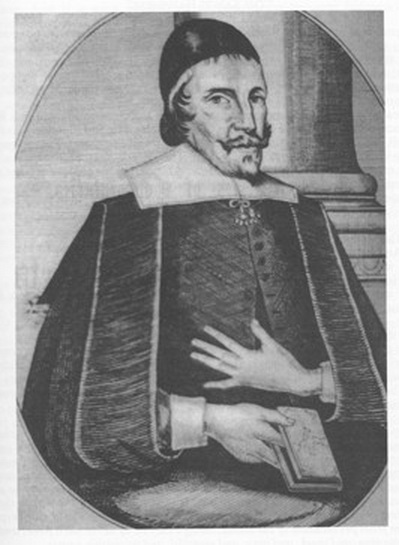
Jeremiah Burroughs

Member of the Westminster Assembly of Divines

The gospel of Christ is the good tidings that God has revealed concerning Christ. As all mankind was lost in Adam and became the children of wrath, put under the sentence of death, God, though He left His fallen angels and has reserved them in the chains of eternal darkness, yet He has thought upon the children of men and has provided a way of atonement to reconcile them to Himself again.

The second Person in the Trinity takes man’s nature upon Himself, and becomes the Head of a second covenant, standing charged with sin. He answers for it by suffering what the law and divine justice required, and by making satisfaction for keeping the law perfectly. This satisfaction and righteousness He tenders up to the Father as a sweet savor of rest for the souls that are given to Him.

And now this mediation of Christ is, by the appointment of the Father, preached to the children of men, of whatever nation or rank, freely offering this atonement unto sinners for atonement, requiring them to believe in Him and, upon believing, promising not only a discharge of all their former sins, but that they shall not enter into condemnation, that none of their sins or unworthiness shall ever hinder the peace of God with them, but that they shall through Him be received into the number of those who shall have the image of God again to be renewed unto them, and that they shall be kept by the power of God through faith unto salvation.

That these souls and bodies shall be raised to that height of glory that such creatures are capable of, that they shall live forever enjoying the presence of God and Christ, in the fullness of all good, is the gospel of Christ. This is the sum of the gospel that is preached unto sinners.

When you hear someone speaking of the gospel, your thoughts may be about this glad tiding that is come into the world for the salvation of sinful creatures through Jesus Christ, and all the good things that Jesus Christ, by His blood, has purchased for sinners. When ministers are called the ministers of the gospel, the meaning is that they are appointed by God as ministers to declare and to preach these glad tidings to the world. Oh, it is glad tidings to the world indeed! Could there be such glad tidings preached at hell’s gates, that there was any such way of reconciling them to God, we could not conceive of the joy that would be there. They would count it as acceptable news indeed.

Now, then, those who believe this gospel, or profess that they have entertained this gospel, these glad tidings, must be careful to walk in their conversation so it becomes this gospel, as becomes such glorious glad tidings sent to them from heaven.

As becomes. The word signifies “worthy of the gospel.” But this cannot mean that our conversation should be such as deserves all the good that there is in the gospel. No, the worthy, that is, as much as becomes the gospel, as is meet for the gospel, or as it is translated in your books, “becoming the gospel.” The Scripture says that he who eats or drinks unworthily eats and drinks to his own damnation. Why, can one eat and drink so as to be worthy of the body and blood of Christ? No, but he who eats and drinks so carries himself so in that ordinance of the Sacrament as is unbeseeming the body and blood of Christ that he comes to receive. On the other hand, those who eat and drink so as to sanctify God’s name in that ordinance (as you have heard) do it worthily, for so the same word is here in the phrase, “worthy of the gospel of Christ.” “And so bring forth fruit worthy of repentance,” said John to those who came to him. It is the same as saying, “Bring forth fruits fitting for, or meet for, repentance,” such fruit as may manifest your repentance, such fruit as may manifest your repentance, such fruit as is suitable for men or women who profess repentance for their sins. Further, I find that the word that is here translated “becoming” in another place is translated “convenient” and “meet.” It can be understood in no other sense. In 1 Corinthians 16:4 we read, “If it be meet that I shall go also…” The word translated “meet” is the same word which is translated “worthy” or, in this passage, “becoming.” If it is a comely thing, or a meet or convenient thing, then I’ll go. So, then, it’s clear that this word which we have here is “meet”, “convenient”, “suitable”, or “becoming the gospel.” “Let your conversation be such as is meet for, or becoming the gospel.”

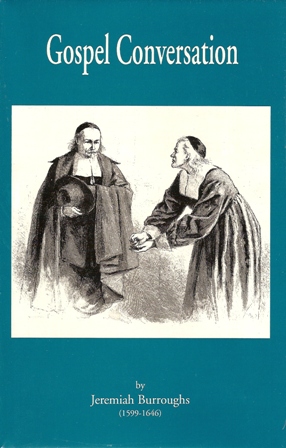
pp.4-6 Gospel Conversation by Jeremiah Burroughs

God delights to have His image held forth in the world that men may behold something of the glory of His image. But how can the world see the image of God? They cannot see it in your hearts, but God would have it conspicuous. Therefore, have a care of your conversations (conduct) that, in your conversations, you may hold forth the image of God in the world. p.12

The Great Honor That God Puts Upon Human Nature

Image

Portions of Gospel Conversation by Jeremiah Burroughs

There’s nothing in the world that God ever did that reveals the worth of man’s immortal soul as the gospel of Jesus Christ does. There God manifests to all the world what a price He puts upon Man’s soul.
p. 119

The Gospel reveals unto us the great honor that God has put upon human nature above the angels. This could never have been but by the gospel. This is as proper a thing to the gospel as any I have spoken of, and one special design that God had in the gospel was to reveal those thoughts and counsels that He had from all eternity, to put mighty and great excellencies upon our human nature in these two particulars:

One) In the personal union of man’s nature to the Second Person in the Trinity. That’s the first and great way of honor that God has crowned human nature with. Hence the Apostle, in 1 Timothy 3:16, says, “without controversy, great is the mystery of godliness.” What is it? God was manifested in the flesh. God manifested in the flesh? That’s a great mystery of godliness.

Now it could not be such a mystery if God had only taken a human shape upon Him (for so it was in the time of the Law). Jesus Christ often took human shape, as when He strove with Jacob. It was Jesus Christ, as might easily appear, but great is the mystery of godliness. Without controversy it’s great; God manifested in the human flesh. That is, God taking the flesh of a man into a personal union, which is more fully expressed in John 1:14, “The Word was made flesh.” This was a strange speech, but proper to the gospel.

A heathen would have thought this was a strange speech, especially if he knew that by the Word was meant He who was the true and eternal God. And then in Hebrews 2:16 it is said that Christ did not take the nature of angels upon Him, but the seed of Abraham. So it appears that, by the personal union of our natures to the Son of God, God has advanced human nature above angels, above all creatures. Truly, my brethren, in Christ’s taking our nature upon Him, which the gospel holds forth to us, we may see God, as it were, resolving to do a work from Himself to the uttermost, to manifest the uttermost of His glory in a work out of Himself, the work of God within Himself.

It is His eternal generation, and the possession of the Holy Ghost, but now God would work out of Himself, and work out of Himself to the uttermost extent. “I’ll make a world,” said God, “heavens and earth by My Word. Aye, but this is not such a glorious work as I am able to do. I could make ten thousand worlds and, when I have made them, I could make as many more and more glorious. But I would do some work wherein I might manifest even the uttermost of My glory.”

What work is that? The work God pitched upon. He would do no work from without to manifest the uttermost extent of His glory, and the Lord pitches upon this: to take the nature of a man into personal union with His Son. That’s the uttermost; and it is impossible that men or angels, if they were left to all eternity to imagine, could think of a work in which it would be possible for God to express more of His power, wisdom, and glory. We know but little of it now, but we shall know more in heaven.

Now, oh, how God has honored human nature in this: that when He would do a work to the utmost of His excellencies. He would pitch upon man’s nature to take it into personal union with Himself! Here’s the mystery of the gospel.

Now this is, indeed, the marrow of the mystery of the gospel: the Word made Flesh, the Second Person in the Trinity taking man’s nature upon Him. This is the mystery of the gospel that angels and saints admire, and shall be taken up to all eternity in admiring and praising and magnifying God for. That’s the first way of God honoring man’s nature.

Two) The second thing that the gospel reveals is this: God has put honor not only upon the nature of man as having soul and body, but He has put a mighty honor upon the very body of man; the meanest and the very lowest part of a man, the very shell, outside, rind, and the case of man. You have this in 1 Corinthians 6:19, “What, know ye not that your body is the temple of the Holy Ghost. You have no such thing revealed in the Old Testament, this comes by the light of the gospel that the Lord has made the bodies of the saints to be the temples to the Holy Ghost; that the Holy Ghost dwells in their bodies as in a temple. Like the King in his palace, so the Holy Ghost is in His temple. Now these two are great things revealed in the gospel, and did we have a clear understanding of these two things, oh, it would mightily elevate our spirits!

Conversations suitable to these two particulars surely must be a high-raised conversation. For instance, consider the personal union of our natures with the Second Person of the Trinity. Oh, how should this raise our hearts, and we should manifest the elevation of our spirits in our conversation so as it becomes those who may expect great things from God! Surely the fact that God has honored our natures so as to be personally united to His Son shows that He intends great things to some of the children of men.

pp. 124-127
Gospel Conversation
Jeremiah Burroughs

Samuel Rutherford

Image

This is a short biography that I did for Dr. Roy Blackwood’s last History Class at 2nd Reformed Presbyterian Church. I wanted to do this since Samuel Rutherford is my youngest son’s namesake, Samuel Rutherford Snyder. May he and my other two children inherit the same heart for the Lord their namesakes had.

Born in 1600 in the village of Nisbet, Samuel Rutherford was born to a well to do Scottish farmer and his wife. He had two brothers George and James. All three of the boys received the best education the times could afford. Upon seeing the talents and ability of Samuel, his parents decided to send him to the University of Edinburgh in 1617 where he completed a Master of Arts degree in 1621. 

Samuel was not yet converted to Christ when he graduated from the University. In fact, he stated that his home town of Nisbet was a place where Christ’s name was scarcely spoken. 1624 is the year that is recognized to be the year of his Conversion. It was not a long drawn out process for him apparently. He describes his salvation in this way. “Oh ,But Christ hath a saving eye! Salvation is in His eyelids! When He first looked on me, I was saved; it cost Him but a look to make hell quit of me.”1

After two years of theological training he was called to a new parish, Anwoth of Galloway. Samuel Rutherford was the Parish’s first Pastor. Pastor Rutherford was very laborious, it has been noted by another Pastor that he seemed to always be praying, preaching, visiting the sick, catechizing, and writing or studying. He saw little fruit of his ministry at first but the Lord enlarged the people’s hearts toward him as he had a deep affection for them. Christ was all-loving to Samuel Rutherford. The Lord gave Samuel great ability to show the beauty and love of Christ for His people.

Rutherford also suffered loss during his early ministry at Anwoth. Both his children died in infancy in 1629 and his wife Euphum took ill. She died after 13 months of illness. He was placed in a school of affliction that made him a tenderhearted, compassionate, and faithful Pastor to a people who suffered much of the same brokenness. In his brokenness and sorrow, he learned the consolation of God and was able to lead others to the Man of Sorrows whom was also acquainted with Grief, the Lord of Glory.

Samuel Rutherford also loved God’s book. It revealed the person he desired to know more than anything else in life. It revealed Jesus Christ, truth, salvation, and a peaceful comfort, which was immeasurable to Samuel. He was a man of God’s book. He ordered his life by the love that revealed this God.

Samuel lived during a time when true revival was going on. The Reformation was that time of Revival. But the Reformation was also a time of trouble, trials, and persecution. In Samuel Rutherford’s love for the truth he started writing theologically. In 1636 he wrote a book that exposed the errors of arminianism. Arminianism is a belief that man is capable of coming to Christ without mans need to overcome spiritual deadness. This teaching says that man is the chooser of his own destiny despite what God wills or does. By exposing this false teaching Samuel exposed the bad teachings of a very prominent Archbishop of King Charles I.

Archbishop Laud was King Charles I right hand man and he had no sympathy for the Reformers, Presbyterians, nor the Covenanters of Scotland. Under the authority of Archbishop Laud, Bishop Thomas Sydserff, the Bishop of Galloway, summoned Samuel Rutherford to face charges of non-conformity.

In England the King was pronounced as head of the Church. This was very unbiblical as Christ is the only King over His Church. The King appointed how the worship was to be done and whom should lead the congregations. Most of the men the King placed in positions of authority in the Church could not tell you the differences between the Old and New Testament. They did not know the Ten Commandments, Lord’s prayer, nor the four gospels. Yet these men were placed in the Churches as Pastors. The King was violating his boundaries and he was ruining the Church Christ loved and died for. If someone didn’t recognize the King’s authority over Christ’s Church he was considered a non-conformist and faced charges of treason.

At the trial Samuel Rutherford was sentenced to banishment from being a Pastor and Preacher. He was commanded to leave the area and live in exile in Aberdeen. While he was banished he didn’t stop having a Pastor’s heart. He started communicating with the members of his congregation by writing letters. They are some of the most comforting letters full of God’s expressed love and counsel. The reason they are so good is because Samuel Rutherford was a man who loved God’s book. Those letters are full of wisdom and encouragement because they express what God wrote to His Church. After Samuel’s death those letters were gathered up and made into a book. The ‘Letters Of Samuel Rutherford’ are published by Banner of Truth Trust to this day.

During his banishment the Church in Scotland was still striving to reform from the influences placed upon it during the time the Roman Catholic Church’s teachings were prominent. It was also striving against the King who wanted to be in power over the Church in Christ’s stead. In 1637 the King (Charles I) tried to enforce the Five Articles of Perth which his father (James VI) introduced. The Five articles were a step backwards for the church in that they provided a way for kneeling during communion, private baptisms, private communion, confirmation by bishops, and observance of holy days. These were steps to reintroduce some of the Roman doctrines and to bring the power of the King back over the church.

The King sensed that he needed to reintroduce and enforce the Articles or his hold over the Northern part of his Kingdom would be weak. King Charles I then enforced Archbishop Laud’s new liturgy upon the Church. This enraged the Scots so much that it became a riotous situation. The result of his enforcement of the Articles and Laud’s new liturgy backfired on the King.

The Presbyterian Scotsmen decided to answer the King by way of Covenant. The Scots were a Covenanting people. Covenanting was a personal way to declare ones spiritual intent and resolve before a Covenanting God. They did this in the presence of each other very often. In February of 1638 the National Covenant was written up on deer skin and signed by men of all backgrounds. It was based upon the Kings Covenant of 1581, which was the beginning of the Covenanting Church and the breaking of the bondage which Rome had placed upon the people. The Kings Covenant emphasized Scotland’s loyalty to King James VI but would not tolerate any moves toward Roman Catholicism. The signing of the National Covenant brought a great revival and binding of the hearts of the Scotsmen to one another and a great recognition of Christ as King over all things for the Church.

The National Covenant was read and signed at Greyfriars Kirk in Edinburgh. It repudiated popery, forms of worship that were alien to God’s written Word, and it confirmed Reformation principles that the signers adhered themselves to in both civil and church matters. Copies were distributed throughout the land for all to sign. It appears that Samuel Rutherford had not yet returned home from Aberdeen till June of that year so he could not have been one of the initial signers.

After 22 months in Aberdeen, Samuel Rutherford decided to risk his return. So he was received back into his Parish only to be summoned by the General Assembly a short time after to become a Professor of Divinity at St. Mary’s College in St. Andrews. He agreed only as long as he got to share the pulpit and preach on the Sabbath. He was so burdened for people that for him to stay silent and absent from the pulpit just wore on him physically and mentally. Being away from his flock at Anwoth caused him to worry for their souls. Not capable of feeding his flock face to face worried him so much. It was a pain he never forgot. He referred to his Sabbaths while in exile as ‘Dumb Sabbaths’. I can only imagine what that meant.

His time spent at St. Mary’s was very active and beneficial to the Kingdom. He lectured on theology, Hebrew, and Church History. He shared the pulpit with Robert Blair at St. Andrews. He also played a prominent role in the General Assembly.

In 1640, shortly after his arrival at St. Andrews, Samuel Rutherford remarried after having been a widower for ten years. He married a woman of remarkable Christian Character named Jean McMath. The Lord brought him a help meet to heal up the scars that wounds leave behind.

After the signing of the National Covenant a great revival in the Church started to appear. Along with that also came the Bishop’s Wars. King Charles I made many unsuccessful attempts to overthrow the Covenanters. During this period of time Parliament and the Royalists grew at odds. A Civil War ensued which brought Parliament and the Covenanters together against the Royalists. This resulted in what is known as the Solemn League and Covenant.

In the signing of this Covenant it was pledged by its adherents to promote a uniformity in church confessions, church government, and in the order of worship between the English and Scots. In order to do this an Assembly of Divines (clergymen) was convened which included Episcopalians (Hierarchical), Independents (Congregationalists), Erastians (who believe in states primacy over the Church), and Presbyterians. Their job was to work out a careful definitive confession of faith and practice on behalf of the English and Scottish Churches. This Assembly was the famous Westminster Assembly. The Westminster Divine’s took four years to produce one of the best systematic theologies of the Bible set in the form of a Confession of Faith. It also produced a Directory of Worship and the Larger and Smaller Catechisms, which are still being used today.

Samuel Rutherford was one of six Scottish commissioners to go to London. Samuel Rutherford, Robert Baille, Alexander Henderson, and George Gillispie were the first four commissioners sent from Scotland. Samuel went full steam into his work with unabated zeal to oversee the Presbyterian form of government established in the English Church. He wanted to see the scriptural form of Presbyterianism government to replace the hierarchical form of episcopacy. The episcopal form had threatened the Church of Scotland so much that it needed to be done away with.

During his time in London he produced a trilogy to combat those opposed to Presbyterian system. To Rutherford the glory and honour of Christ was purely bound up in the nature and worship of Christ’s Church. So he worked hard at debating and setting up the right teaching of those doctrines. Even though Samuel was strong in his opinions he was generous in complementing those who differed from him at the Assembly. Rutherford also worked diligently at producing a catechism. He is given credit for producing much of the Westminster Shorter Catechism.

Life for Rutherford was still full of trials during this time. The civil war was still in progress, he lost a very close friend and two of his children from his recent marriage died during this time. He remained steadfast in understanding that the Lord owned life and could do as he pleased. He waxed poetically upon those situations of trial, with prose of how the Lord picked his roses and lilies as he saw fit. When they were just buds or in full bloom, the gracious Lord never wasted a thing. They were his flowers and he could pluck them up whenever he chose.

In 1647 Samuel returned home. The King and Royalists had been defeated in the civil war. Peace seemed to be coming. But more trials were on their way. By the mid 50’s Samuel had become weaker and sick. He felt like his passage to the next world was coming. He so longed for this final passage. He lived for the next life. He wanted to see the one whom loved him face to face. Rutherford lived life believing that this world was a training ground where Christ’s children were being prepared for their eternal home with Him.

During this time of slow degenerating health the King of England was restored back into power. He had deceived the nobles of Scotland by signing the Solemn League and Covenant pretending that he endorsed the Presbyterian Church of Scotland. Vengeance was in the heart of the King against the Covenanters. Shortly after the King’s signing of the Solemn League and Covenant the Marquis of Argyll placed the crown back upon the Kings head. Immediately following this event the King’s deceptive nature was revealed and the Marquis of Argyll was imprisoned in the tower of London only to be executed in May of 1661.

Civil war ensued again and Samuel Rutherford was a marked man. In 1644 he published his famous work ‘Lex Rex’, the Law and the Prince. This book excited a lot of people and enraged the King. It was not original in thought but pointedly called upon the King to recognize that God was the only one who had absolute authority. The book strongly advocated obedience to Kings and authorities but the King who perverted Justice and oppressed the rights of his subjects must be restrained and in some instances removed from power. Lex Rex is one of the best defenses of constitutional democracy. The King condemned the book and copies were collected up and burned outside of St. Mary’s college where Rutherford had taught.

Not content with just the burning of the book the King set his sights on Samuel Rutherford. But he was already dying. When the Kings men arrived with a summons to arrest Rutherford for treason he was unable to go. He told them, “that I have a summons already from a superior Judge and judicatory and I behove to answer my first summons, Ere your day arrives I shall be were few kings and great folks come.”

Samuel Rutherford died with his friends around him on March 30, 1661. His only surviving daughter Agnes was by his side. He commended her care to the Lord and joyed in the fact that he was about to see his Redeemer and be with him forever.

This reveals Samuel Rutherford’s heart in the matter.
“Our fair morning is at hand, the day star is near the rising, and we are not many miles from home; what does it matter if we are ill-treated in the smoky inns of this miserable life? How soon a few years will pass and this life’s lease be expired. We are not to stay here, and we will be dearly welcome to him to whom we go. O happy soul forever! Jesus Christ is the end of your journey; there is no fear, you may look death in the face with joy.” – Samuel Rutherford, The Loveliness of Christ 

Samuel Rutherford lived like a saint and sojourner in this world. He lived like Abraham the father of all who are in Covenant with God. He died in faith having not seen the final fruit of his desire. Nevertheless, he knew the builder and King who was doing the work. He trusted in King Jesus. He lived, died, and lives evermore as one who built upon the foundation of the Master Builder’s work. He loved God’s book because God spoke to him through it. He was a man of the Bible, recognizing and extoling the King of kings.

(Heb 11:8) By faith Abraham, when he was called to go out into a place which he should after receive for an inheritance, obeyed; and he went out, not knowing whither he went.

(Heb 11:9) By faith he sojourned in the land of promise, as in a strange country, dwelling in tabernacles with Isaac and Jacob, the heirs with him of the same promise:

(Heb 11:10) For he looked for a city which hath foundations, whose builder and maker is God….

…(Heb 11:13) These all died in faith, not having received the promises, but having seen them afar off, and were persuaded of them, and embraced them, and confessed that they were strangers and pilgrims on the earth.

(Heb 11:14) For they that say such things declare plainly that they seek a country.

(Heb 11:15) And truly, if they had been mindful of that country from whence they came out, they might have had opportunity to have returned.

(Heb 11:16) But now they desire a better country, that is, an heavenly: wherefore God is not ashamed to be called their God: for he hath prepared for them a city.

References used
Samuel Rutherford and his friends by Faith Cook Banner Of Truth Trust
Dictionary of Scottish Church History and Theology IVP