Negro Slavery Unjustifiable Rev. Mcleod 1802

Exo 21:16 And he that stealeth a man, and selleth him, or if he be found in his hand, he shall surely be put to death.

The Reformed Presbyterian Church of North America was the second denomination in the United States to oppose Slavery. I believe the first was the Mennonites of German town. In their resolutions they denounced the evil in the 1600’s I believe. On 18 February 1688, they drafted a set of resolutions in opposition to slavery, or what they called “the traffic of men-body.”

Reference: http://avalon.law.yale.edu/17th_century/men01.asp

But I may stand corrected by anyone who can help me with the history.

This was one of the subjects that drew me to Christ due to the fact that I was raised to believe in the dignity of all men no matter what their ethnicity was by my parents. I was asked to join a racist organization while I was in the Navy and I refused even though I was threatened by these people. Knowing my wickedness and seeing that evil was restrained in this world, I knew there had to be a good God. Creation declared his order and control. So I ran to the scriptures for understanding. I had tried to read the scriptures as a young child but with no understanding. I was like the Ethiopian eunuch who needed understanding.

Act 8:26 And the angel of the Lord spake unto Philip, saying, Arise, and go toward the south unto the way that goeth down from Jerusalem unto Gaza, which is desert.
Act 8:27 And he arose and went: and, behold, a man of Ethiopia, an eunuch of great authority under Candace queen of the Ethiopians, who had the charge of all her treasure, and had come to Jerusalem for to worship,
Act 8:28 Was returning, and sitting in his chariot read Esaias the prophet.
Act 8:29 Then the Spirit said unto Philip, Go near, and join thyself to this chariot.
Act 8:30 And Philip ran thither to him, and heard him read the prophet Esaias, and said, Understandest thou what thou readest?
Act 8:31 And he said, How can I, except some man should guide me? And he desired Philip that he would come up and sit with him.
Act 8:32 The place of the scripture which he read was this, He was led as a sheep to the slaughter; and like a lamb dumb before his shearer, so opened he not his mouth:
Act 8:33 In his humiliation his judgment was taken away: and who shall declare his generation? for his life is taken from the earth.
Act 8:34 And the eunuch answered Philip, and said, I pray thee, of whom speaketh the prophet this? of himself, or of some other man?
Act 8:35 Then Philip opened his mouth, and began at the same scripture, and preached unto him Jesus.
Act 8:36 And as they went on their way, they came unto a certain water: and the eunuch said, See, here is water; what doth hinder me to be baptized?
Act 8:37 And Philip said, If thou believest with all thine heart, thou mayest. And he answered and said, I believe that Jesus Christ is the Son of God.
Act 8:38 And he commanded the chariot to stand still: and they went down both into the water, both Philip and the eunuch; and he baptized him.
Act 8:39 And when they were come up out of the water, the Spirit of the Lord caught away Philip, that the eunuch saw him no more: and he went on his way rejoicing.

I obviously went away rejoicing in October of 1981. I started reading the Gospels and came to know God as He gave me understanding. You can read my testimony here.

My perceived Testimony of Christ’s work in my life.

John Calvin and the Mosaic Civil and Judicial Laws

Thank You Wes.

Wes Bredenhof's avatarYINKAHDINAY

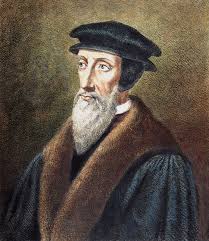
John Calvin

Today I’ll share one last excerpt from the Reformation Church History course.  This is a topic relating to John Calvin that I’ve been studying since my university years.  I was originally motivated to study it because of debates about theonomy in the CanRCs in northern Alberta.  Theonomy is a view in Christian ethics which states that the moral/civil law of the Old Testament is exhaustively and perpetually binding upon civil magistrates.  There is some overlap between that view and what John Calvin taught, but there are also some significant differences.  Some of those differences relate to the context, others to principles.  In what you’ll read below, I don’t deal with the question of the relationship of Calvin’s views to contemporary expressions of theonomy.  This is merely intended to be descriptive of the approach Calvin took.

*********************

Calvin was not only a theologian, but also a Christian political philosopher.  He gave…

View original post 3,090 more words

Persecution: Bring It On?

My Pastor Preached a wonderful Sermon to which the recording died half way through due a technology glitch. So I encouraged him to write a blog post on it. I was greatly encouraged to look back and beyond in prayer for the world by the thoughts expressed here.

This was published over at Gentle Reformation.
http://gentlereformation.org/2013/08/20/persecution-bring-it-on/

image


Persecution: Bring It On?

by James Faris on August 20, 2013

It is not uncommon to hear Christians say something like “Maybe persecution would be good for the church in our culture.” Certainly, the church of Jesus Christ in the West has too-often strayed from Biblical truth in recent decades and centuries, in spite of enjoying great peace and freedom. Now, we see the judgment of God in our culture in various ways as a result. Some people are bracing for intense persecution of the church as a presumed certainty. Would it be good for the church today? God alone knows, and he will accomplish all his holy purpose.

A better question for us to ask is “What kind of attitude should we have towards persecution and the future of the church in the West?” Some Christians almost seem to have a “bring it on!” attitude because of the purification that has come in past ages through such suffering. The motive is not all wrong; people want to see Jesus glorified, and they are willing to die for it. There is also a desire for purity and holiness.  However, those desires must be shaped by the pure and holy word of God. So, what kind of attitude should we have toward persecution and the future of the church in the West? Here are five truths that will help shape our attitude:

1.  We should expect persecution through the ages. Jesus said “Remember the word that I said to you: ‘A servant is not greater than his master.’ If they persecuted me, they will also persecute you” (John 15:20). Paul affirmed the same when he wrote to Timothy “Indeed, all who desire to live a godly life in Christ Jesus will be persecuted” (2 Timothy 3:12). History teaches that persecution will vary in intensity. With the expectation of persecution, we should also know that God uses even the wrath of man to praise him (Psalm 76:10), that affliction will bring greater spiritual maturity in some (Psa 119:67, 71), and that the Lord will cause all things to work together for the good of his people (Romans 8:28).

2.  We should abhor the ungodliness and injustice that drives persecution. Proverbs 6:16-17 teaches that ‘There are six things that the LORD hates, seven that are an abomination to him,” including “hands that shed innocent blood.” We are called to pray that God’s will be done on earth as it is in heaven. We should not desire injustice on earth in any way. If our desire is truly for the glory of God, then we cannot desire the multiplication of sin on earth. We cannot say “Let others sin that good may come.” This truth should also lead us to pray for saints presently suffering and to “Remember those who are in prison, as though in prison with them, and those who are mistreated, since you also are in the body” (Hebrews 13:3).

3.  We should pray against persecution. As noted, we are taught in the Lord’s Prayer to pray that God’s will be done on earth as it is in heaven. Biblical examples of prayers for peace abound; here is a small sample:

  • The souls of the martyrs, in the symbolic imagery of Revelation 6:10, cry out “O Sovereign Lord, holy and true, how long before you will judge and avenge our blood on those who dwell on the earth?” They want the persecution to end.
  • The Psalmist repeatedly prays that he would be delivered from his persecutors (e.g. Psalm 6:4, 17:13, 43:1).
  • Paul asks the saints to pray that he “may be delivered from wicked and evil men” (2 Thessalonians 3:1).
  • He also urges “that supplications, prayers, intercessions, and thanksgivings be made for all people, for kings and all who are in high positions, that we may lead a peaceful and quiet life, godly and dignified in every way. This is good, and it is pleasing in the sight of God our Savior, who desires all people to be saved and to come to the knowledge of the truth” (1 Timothy 2:1-4). We are to pray for peace, because discipleship in all areas of life (i.e. in every way), and the conversion of all peoples is made the more possible when the church and state are working in harmony. The ordinary means of grace are able to operate where there is peace. Parents are only able to teach their children if they are still with them. Let us glory in and desire the normal operation of God’s grace.

4.  We should learn from history not to romanticize persecution, especially intense persecution. Sitting in a Roman jail, Paul confessed that his imprisonment had really served the advance of the gospel, because the whole imperial guard had heard the gospel and the believers had grown in boldness by watching Paul suffer (Philippians 1:12-14). He also recognized that if he would die and be with Christ, it would be better for him (1:23). But, he knew that it would be better for the church if he were not executed. He wanted to be released and continue to minister to them freely (1:19, 24-26). Paul saw God work through persecution, but he did not desire it because he knew that God’s ordinary design is for the church to grow when its preachers are not in prison or dead. The church loves Tertullian’s famous statement “The blood of the martyrs is the seed of the church.” Too often, however, Tertullian is quoted flippantly, with the assumption that wherever blood is shed, the church will magically be stronger. Yes, God caused the church in Acts to spread through persecution (Acts 8:1), the church took the gospel to northern Europe through the collapse of the Roman Empire, and the Lord has used intense persecution for growth, but not always, and I daresay, not normally. Consider the following:

  • The church once flourished in lands such as Persia, North Africa, and China. It was then was largely stamped out through persecution, as documented by historians Samuel Moffett (A History of Christianity in Asia) and Philip Jenkins (The Lost History of Christianity). Summarizing Moffett on the persecution in Persia, David Calhoun says: “[He] talks about this fourth century persecution as the most massive persecution of Christians in history, unequaled for its duration, veracity, and the number of martyrs. One estimate is that 190,000 Persian Christians died in the fourth century in the Great Persecution. That may be far more than all the people who died in all the two-and-a-half centuries of persecution in the Roman Empire. And yet, as we look at the history of those suffering Christians in Persia, there appears to have been far more faithfulness. Far fewer numbers of people apostatized in Persia under persecution than those who apostatized under persecution in the West.” The Muslims nearly wiped out the North African church in the seventh century. China crushed the church there with the fall of the T’ang dynasty in the tenth century. No doubt, heresy, theological weakness, and political dependence were also factors in these lands, but not the only factors. Within the West, French Protestantism has been weak, especially since the St. Bartholomew’s Day Massacre and subsequent persecution. The Lord is at work in these lands today, but usually through the reintroduction of the gospel from other lands. Recognize that the blood of the martyrs left essentially no church in some places for many centuries. Though the Lord is working today, the church is small, as a percentage of the total population in these lands.
  • Intense persecution purifies the church, but often only for a generation. Doctrinal depth is lacking in lands that have lost their teachers. One man from China pled with me and my seminary classmates to go to China because the doctrinal standards are so low, so much misunderstanding of Scripture abounds, and people are vulnerable to cults and other false teachings.
  • The church has grown in depth of doctrine most in times of peace. Paul was often protected by his Roman citizenship in order to serve the church. Augustine was free to think deeply and write profoundly because he was not on the run. John Wycliffe had his body exhumed and burned by the pope only after his death. He was not burned alive and was able to translate Scripture and train laborers because the House of Lancaster protected him. Martin Luther led the reformation as a wanted man under the safety Frederick the Wise afforded him. John Calvin fled persecution in France; the safe haven of Geneva became the incubator of his brilliant contributions and the training ground of Europe’s spiritual leadership. Though times were stormy, the Westminster Confession was composed because the greatest scholars were able to deliberate peaceably for months and years on end.
  • Missionary activity flows strongest from free lands. For example, the United States, which has been a relatively peaceful home for Christians for several hundred years, sends out more than three times as many missionaries as the next closest country, according to Christianity Today’s recent article. True, the United States spews out a lot of bad theology, but don’t forget to give thanks for all the faithful efforts in missions, publishing, and in other ways. Where there is peace, there is a platform for reaching the world.

5.  We should labor to minimize persecution through godly influence in civil government. The Scripture is clear that those who are leaders in every sphere are to bow to Jesus (Psalm 2:10-12, 1 Timothy 6:15-16). Christians are called to serve in such positions. We have had great freedom thus far because people have served Jesus as Christians this way – even if imperfectly. Difficult questions abound regarding how to serve and engage. Serving Jesus in the public realm has never been easy. It is not easy now. It never will be easy. But, we are not called to wait for a golden age in which to act. We ought to pray and labor for to see servant-leaders raised up to wield the power of the sword who will be a terror to those who do evil and a praise to those who do good (Romans 13:1-7). Our hope is not in men, but let’s not make pious-sounding excuses for abdicating our work in this realm. One question every Christian should ask is this: “How am I striving this week to see Christ honored in civil government so that those who do evil are terrified and those who do good are praised?”

God alone knows whether intensifying persecution would do the church in the West good. We simply know that we are to expect persecution but not to desire it or romanticize it. Be aware that if God brings suffering at the hands of wicked men, visible good could come in God’s providence. Or, it could remove the lampstand from our physical descendants, as he has done in other lands in the past.

From our perspective, we should never see intensifying persecution as the need of the hour. The need of the hour is intense prayer for mercy. Let’s pray that God’s will be done on earth as it is in heaven. And, let’s rise from our knees to labor for what we are promised will do the church good every day: greater faithfulness to Jesus Christ.

The Expository Genius of John Calvin

This was an interview with Steven Lawson. William F. Hill Jr. discussed today’s preaching in light of Calvin’s Expository methods with Steven Lawson the author of a book by the same title. It is both biographical and reveals Calvin’s method of preaching.

“The Modern Reformed Church is in trouble, Not because of her traditional forms…”

Image

Someone in advocating a new Confessional Standard wanted to cut out some of the sticky points of contention that seem to plague the Reformed Church. His position was that minimalizing the standards a bit would bring more Unity.

http://www.puritanboard.com/f30/time-new-reformed-confession-62902/index3.html#post811544

A then Prominent PCA Pastor Jason Stellman asked,

“Wouldn’t that minimalization have a unifying effect?”

Jason Stellman is now Roman Catholic.  https://rpcnacovenanter.wordpress.com/2012/11/22/did-jason-really-know-the-gospel-and-presbyterian-covenant-theology/

Reverend Matthew Winzer responded splendidly in my opinion. His last statement is spot on as usual. 

Quote Originally Posted by armourbearer View Post

In what universe could it have that effect? While there are men who conscientiously act with the vows of God upon them there is obviously going to be a group of people who maintain, assert, and defend every article of the confession which they have subscribed with their own hand in the sight of God and men. And why shouldn’t they? Afterall, they not only promised to the church that they would do so, but the church also promised her support and nurture in the process.

The modern reformed church is in trouble, not because of her traditional forms, but because her traditional forms are being maintained without traditional values of integrity, respect, and trust

http://www.puritanboard.com/f71/why-traditional-reformed-churches-struggling-79049/#post999996

In a recent post by Reverend Winzer he made this statement.

“Who hath believed our report? and to whom is the arm of the Lord revealed?”

“But though he had done so many miracles before them, yet they believed not on him: That the saying of Esaias the prophet might be fulfilled, which he spake, Lord, who hath believed our report? and to whom hath the arm of the Lord been revealed?”

“But they have not all obeyed the gospel. For Esaias saith, Lord, who hath believed our report?”

The carnal kingdom of the Jews is a tempting prospect but in the end it comes to nothing. Christ’s kingdom is not of this world but will also outlast the world. Let’s adhere to the doctrine of our Lord Jesus Christ, be faithful to the corner of the vineyard He has committed to us, and leave the numbers with the Lord be they few or many. As Isaiah also says, “the pleasure of the Lord shall prosper in his hand. He shall see of the travail of his soul, and shall be satisfied.” If it is the Lord’s work it is not in vain regardless of what it looks like to the eyes of men.

Amen Reverend Winzer! added 5/15/13

The Mediatorial Kingdom of Christ

The Mediatorial Kingdom of Christ by Dr. Roy Blackwood

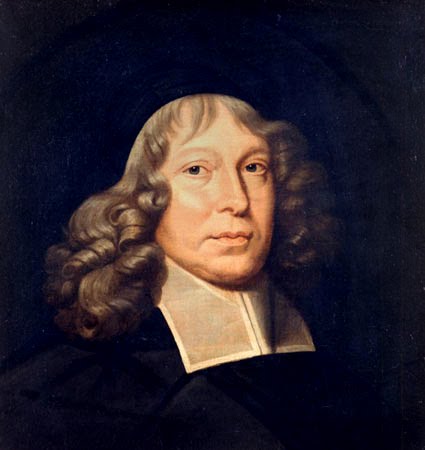
Samuel Rutherford

Image

This is a short biography that I did for Dr. Roy Blackwood’s last History Class at 2nd Reformed Presbyterian Church. I wanted to do this since Samuel Rutherford is my youngest son’s namesake, Samuel Rutherford Snyder. May he and my other two children inherit the same heart for the Lord their namesakes had.

Born in 1600 in the village of Nisbet, Samuel Rutherford was born to a well to do Scottish farmer and his wife. He had two brothers George and James. All three of the boys received the best education the times could afford. Upon seeing the talents and ability of Samuel, his parents decided to send him to the University of Edinburgh in 1617 where he completed a Master of Arts degree in 1621. 

Samuel was not yet converted to Christ when he graduated from the University. In fact, he stated that his home town of Nisbet was a place where Christ’s name was scarcely spoken. 1624 is the year that is recognized to be the year of his Conversion. It was not a long drawn out process for him apparently. He describes his salvation in this way. “Oh ,But Christ hath a saving eye! Salvation is in His eyelids! When He first looked on me, I was saved; it cost Him but a look to make hell quit of me.”1

After two years of theological training he was called to a new parish, Anwoth of Galloway. Samuel Rutherford was the Parish’s first Pastor. Pastor Rutherford was very laborious, it has been noted by another Pastor that he seemed to always be praying, preaching, visiting the sick, catechizing, and writing or studying. He saw little fruit of his ministry at first but the Lord enlarged the people’s hearts toward him as he had a deep affection for them. Christ was all-loving to Samuel Rutherford. The Lord gave Samuel great ability to show the beauty and love of Christ for His people.

Rutherford also suffered loss during his early ministry at Anwoth. Both his children died in infancy in 1629 and his wife Euphum took ill. She died after 13 months of illness. He was placed in a school of affliction that made him a tenderhearted, compassionate, and faithful Pastor to a people who suffered much of the same brokenness. In his brokenness and sorrow, he learned the consolation of God and was able to lead others to the Man of Sorrows whom was also acquainted with Grief, the Lord of Glory.

Samuel Rutherford also loved God’s book. It revealed the person he desired to know more than anything else in life. It revealed Jesus Christ, truth, salvation, and a peaceful comfort, which was immeasurable to Samuel. He was a man of God’s book. He ordered his life by the love that revealed this God.

Samuel lived during a time when true revival was going on. The Reformation was that time of Revival. But the Reformation was also a time of trouble, trials, and persecution. In Samuel Rutherford’s love for the truth he started writing theologically. In 1636 he wrote a book that exposed the errors of arminianism. Arminianism is a belief that man is capable of coming to Christ without mans need to overcome spiritual deadness. This teaching says that man is the chooser of his own destiny despite what God wills or does. By exposing this false teaching Samuel exposed the bad teachings of a very prominent Archbishop of King Charles I.

Archbishop Laud was King Charles I right hand man and he had no sympathy for the Reformers, Presbyterians, nor the Covenanters of Scotland. Under the authority of Archbishop Laud, Bishop Thomas Sydserff, the Bishop of Galloway, summoned Samuel Rutherford to face charges of non-conformity.

In England the King was pronounced as head of the Church. This was very unbiblical as Christ is the only King over His Church. The King appointed how the worship was to be done and whom should lead the congregations. Most of the men the King placed in positions of authority in the Church could not tell you the differences between the Old and New Testament. They did not know the Ten Commandments, Lord’s prayer, nor the four gospels. Yet these men were placed in the Churches as Pastors. The King was violating his boundaries and he was ruining the Church Christ loved and died for. If someone didn’t recognize the King’s authority over Christ’s Church he was considered a non-conformist and faced charges of treason.

At the trial Samuel Rutherford was sentenced to banishment from being a Pastor and Preacher. He was commanded to leave the area and live in exile in Aberdeen. While he was banished he didn’t stop having a Pastor’s heart. He started communicating with the members of his congregation by writing letters. They are some of the most comforting letters full of God’s expressed love and counsel. The reason they are so good is because Samuel Rutherford was a man who loved God’s book. Those letters are full of wisdom and encouragement because they express what God wrote to His Church. After Samuel’s death those letters were gathered up and made into a book. The ‘Letters Of Samuel Rutherford’ are published by Banner of Truth Trust to this day.

During his banishment the Church in Scotland was still striving to reform from the influences placed upon it during the time the Roman Catholic Church’s teachings were prominent. It was also striving against the King who wanted to be in power over the Church in Christ’s stead. In 1637 the King (Charles I) tried to enforce the Five Articles of Perth which his father (James VI) introduced. The Five articles were a step backwards for the church in that they provided a way for kneeling during communion, private baptisms, private communion, confirmation by bishops, and observance of holy days. These were steps to reintroduce some of the Roman doctrines and to bring the power of the King back over the church.

The King sensed that he needed to reintroduce and enforce the Articles or his hold over the Northern part of his Kingdom would be weak. King Charles I then enforced Archbishop Laud’s new liturgy upon the Church. This enraged the Scots so much that it became a riotous situation. The result of his enforcement of the Articles and Laud’s new liturgy backfired on the King.

The Presbyterian Scotsmen decided to answer the King by way of Covenant. The Scots were a Covenanting people. Covenanting was a personal way to declare ones spiritual intent and resolve before a Covenanting God. They did this in the presence of each other very often. In February of 1638 the National Covenant was written up on deer skin and signed by men of all backgrounds. It was based upon the Kings Covenant of 1581, which was the beginning of the Covenanting Church and the breaking of the bondage which Rome had placed upon the people. The Kings Covenant emphasized Scotland’s loyalty to King James VI but would not tolerate any moves toward Roman Catholicism. The signing of the National Covenant brought a great revival and binding of the hearts of the Scotsmen to one another and a great recognition of Christ as King over all things for the Church.

The National Covenant was read and signed at Greyfriars Kirk in Edinburgh. It repudiated popery, forms of worship that were alien to God’s written Word, and it confirmed Reformation principles that the signers adhered themselves to in both civil and church matters. Copies were distributed throughout the land for all to sign. It appears that Samuel Rutherford had not yet returned home from Aberdeen till June of that year so he could not have been one of the initial signers.

After 22 months in Aberdeen, Samuel Rutherford decided to risk his return. So he was received back into his Parish only to be summoned by the General Assembly a short time after to become a Professor of Divinity at St. Mary’s College in St. Andrews. He agreed only as long as he got to share the pulpit and preach on the Sabbath. He was so burdened for people that for him to stay silent and absent from the pulpit just wore on him physically and mentally. Being away from his flock at Anwoth caused him to worry for their souls. Not capable of feeding his flock face to face worried him so much. It was a pain he never forgot. He referred to his Sabbaths while in exile as ‘Dumb Sabbaths’. I can only imagine what that meant.

His time spent at St. Mary’s was very active and beneficial to the Kingdom. He lectured on theology, Hebrew, and Church History. He shared the pulpit with Robert Blair at St. Andrews. He also played a prominent role in the General Assembly.

In 1640, shortly after his arrival at St. Andrews, Samuel Rutherford remarried after having been a widower for ten years. He married a woman of remarkable Christian Character named Jean McMath. The Lord brought him a help meet to heal up the scars that wounds leave behind.

After the signing of the National Covenant a great revival in the Church started to appear. Along with that also came the Bishop’s Wars. King Charles I made many unsuccessful attempts to overthrow the Covenanters. During this period of time Parliament and the Royalists grew at odds. A Civil War ensued which brought Parliament and the Covenanters together against the Royalists. This resulted in what is known as the Solemn League and Covenant.

In the signing of this Covenant it was pledged by its adherents to promote a uniformity in church confessions, church government, and in the order of worship between the English and Scots. In order to do this an Assembly of Divines (clergymen) was convened which included Episcopalians (Hierarchical), Independents (Congregationalists), Erastians (who believe in states primacy over the Church), and Presbyterians. Their job was to work out a careful definitive confession of faith and practice on behalf of the English and Scottish Churches. This Assembly was the famous Westminster Assembly. The Westminster Divine’s took four years to produce one of the best systematic theologies of the Bible set in the form of a Confession of Faith. It also produced a Directory of Worship and the Larger and Smaller Catechisms, which are still being used today.

Samuel Rutherford was one of six Scottish commissioners to go to London. Samuel Rutherford, Robert Baille, Alexander Henderson, and George Gillispie were the first four commissioners sent from Scotland. Samuel went full steam into his work with unabated zeal to oversee the Presbyterian form of government established in the English Church. He wanted to see the scriptural form of Presbyterianism government to replace the hierarchical form of episcopacy. The episcopal form had threatened the Church of Scotland so much that it needed to be done away with.

During his time in London he produced a trilogy to combat those opposed to Presbyterian system. To Rutherford the glory and honour of Christ was purely bound up in the nature and worship of Christ’s Church. So he worked hard at debating and setting up the right teaching of those doctrines. Even though Samuel was strong in his opinions he was generous in complementing those who differed from him at the Assembly. Rutherford also worked diligently at producing a catechism. He is given credit for producing much of the Westminster Shorter Catechism.

Life for Rutherford was still full of trials during this time. The civil war was still in progress, he lost a very close friend and two of his children from his recent marriage died during this time. He remained steadfast in understanding that the Lord owned life and could do as he pleased. He waxed poetically upon those situations of trial, with prose of how the Lord picked his roses and lilies as he saw fit. When they were just buds or in full bloom, the gracious Lord never wasted a thing. They were his flowers and he could pluck them up whenever he chose.

In 1647 Samuel returned home. The King and Royalists had been defeated in the civil war. Peace seemed to be coming. But more trials were on their way. By the mid 50’s Samuel had become weaker and sick. He felt like his passage to the next world was coming. He so longed for this final passage. He lived for the next life. He wanted to see the one whom loved him face to face. Rutherford lived life believing that this world was a training ground where Christ’s children were being prepared for their eternal home with Him.

During this time of slow degenerating health the King of England was restored back into power. He had deceived the nobles of Scotland by signing the Solemn League and Covenant pretending that he endorsed the Presbyterian Church of Scotland. Vengeance was in the heart of the King against the Covenanters. Shortly after the King’s signing of the Solemn League and Covenant the Marquis of Argyll placed the crown back upon the Kings head. Immediately following this event the King’s deceptive nature was revealed and the Marquis of Argyll was imprisoned in the tower of London only to be executed in May of 1661.

Civil war ensued again and Samuel Rutherford was a marked man. In 1644 he published his famous work ‘Lex Rex’, the Law and the Prince. This book excited a lot of people and enraged the King. It was not original in thought but pointedly called upon the King to recognize that God was the only one who had absolute authority. The book strongly advocated obedience to Kings and authorities but the King who perverted Justice and oppressed the rights of his subjects must be restrained and in some instances removed from power. Lex Rex is one of the best defenses of constitutional democracy. The King condemned the book and copies were collected up and burned outside of St. Mary’s college where Rutherford had taught.

Not content with just the burning of the book the King set his sights on Samuel Rutherford. But he was already dying. When the Kings men arrived with a summons to arrest Rutherford for treason he was unable to go. He told them, “that I have a summons already from a superior Judge and judicatory and I behove to answer my first summons, Ere your day arrives I shall be were few kings and great folks come.”

Samuel Rutherford died with his friends around him on March 30, 1661. His only surviving daughter Agnes was by his side. He commended her care to the Lord and joyed in the fact that he was about to see his Redeemer and be with him forever.

This reveals Samuel Rutherford’s heart in the matter.
“Our fair morning is at hand, the day star is near the rising, and we are not many miles from home; what does it matter if we are ill-treated in the smoky inns of this miserable life? How soon a few years will pass and this life’s lease be expired. We are not to stay here, and we will be dearly welcome to him to whom we go. O happy soul forever! Jesus Christ is the end of your journey; there is no fear, you may look death in the face with joy.” – Samuel Rutherford, The Loveliness of Christ 

Samuel Rutherford lived like a saint and sojourner in this world. He lived like Abraham the father of all who are in Covenant with God. He died in faith having not seen the final fruit of his desire. Nevertheless, he knew the builder and King who was doing the work. He trusted in King Jesus. He lived, died, and lives evermore as one who built upon the foundation of the Master Builder’s work. He loved God’s book because God spoke to him through it. He was a man of the Bible, recognizing and extoling the King of kings.

(Heb 11:8) By faith Abraham, when he was called to go out into a place which he should after receive for an inheritance, obeyed; and he went out, not knowing whither he went.

(Heb 11:9) By faith he sojourned in the land of promise, as in a strange country, dwelling in tabernacles with Isaac and Jacob, the heirs with him of the same promise:

(Heb 11:10) For he looked for a city which hath foundations, whose builder and maker is God….

…(Heb 11:13) These all died in faith, not having received the promises, but having seen them afar off, and were persuaded of them, and embraced them, and confessed that they were strangers and pilgrims on the earth.

(Heb 11:14) For they that say such things declare plainly that they seek a country.

(Heb 11:15) And truly, if they had been mindful of that country from whence they came out, they might have had opportunity to have returned.

(Heb 11:16) But now they desire a better country, that is, an heavenly: wherefore God is not ashamed to be called their God: for he hath prepared for them a city.

References used
Samuel Rutherford and his friends by Faith Cook Banner Of Truth Trust
Dictionary of Scottish Church History and Theology IVP