Galatians 5:4 But when the fullness of the time came, God sent forth His Son, born of a woman, born under the Law, 5 so that He might redeem those who were under the Law, that we might receive the adoption as sons (Gal*4:4-5*NAU).
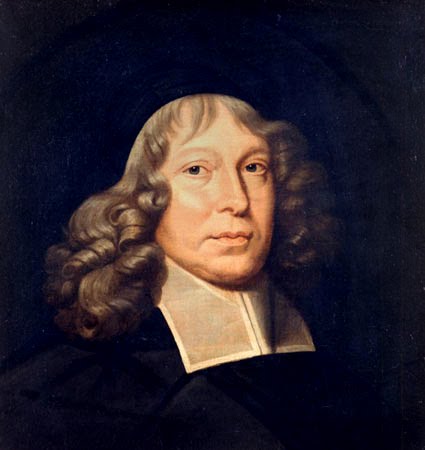
“I am far from thinking that the mount Sinai dispensation was a covenant of works to Israel, as if the design and intention of God therein had been to afford eternal life to Israel upon their own doing; but yet it is called the law, Rom. 10:5; Gal. 3:10, 13, 17, even in way of opposition to the promise, verse 12, yea, verse 8, God preached before the gospel to Abraham. Here the covenant with Abraham is expressly called gospel, and that in constradistinction from the very Sinai dispensation, which is called the law; undeniably he speaks of the law, not as given to Adam before the fall, (for then man himself must have been the door for life, and not another for him), but as given at mount Sinai, four hundred and thirty years after that promise to faithful Abraham, verse 17. So that the covenant of grace is rightly distinguished by legal and evangelical, for the Holy Spirit here gives us both parts of the distinction, speaking expressly of that at mount Sinai as one member of it; yea, he makes these so opposite, as he says, verse 12, and the law is not of faith, and so is not the covenant of grace; but yet the Sinai law appertains and refers to it, viz. as holding forth the condition thereof to be fulfilled by Jesus Christ.” The Mosaic covenant “[i]n general, …was a covenant of works, as to be fulfilled by Jesus Christ, but not so to Israel.” ~ Samuel Petto.
I am going to deal with the scriptures mentioned above in more depth soon (but don’t have it done yet). I believe I have been helped in understanding the Law / Gospel situation mentioned in Galatians by comparing the Roman’s 10:5 and Leviticus 18:5 passages to the Galatian controversy in light of Patrick Ramsey’s short exegesis of the passages.
I believe Samuel Petto and many get this passage all mixed up and out of context when they start thinking the Mosaic Law and Gospel oppose each other. It is an old problem that dates back to even the divines and before. In context Paul is addressing how the Israelite’s turned the law into something it wasn’t intended on being. As I have noted in a few places, “we can turn the New Covenant into a Covenant of Works if we wanted to even when that is the farthest thing from God’s mind.” In the letter to the Galatian Church I believe St. Paul is addressing two issues concerning the Mosaic Covenant and in the broader context he reveals that the Law’s intent was to expose the Gospel. Even Jesus and the author of Hebrews state that the Gospel was preached by Moses and in the Mosaic Covenant.
(Luk 24:27) And beginning at Moses and all the prophets, he expounded unto them in all the scriptures the things concerning himself.
(Joh 5:46) For had ye believed Moses, ye would have believed me: for he wrote of me.
(Joh 5:47) But if ye believe not his writings, how shall ye believe my words?
(Heb 4:2)
For unto us was the gospel preached, as well as unto them: but the word preached did not profit them, not being mixed with faith in them that heard it.
(Heb 4:3)
For we which have believed do enter into rest, as he said, As I have sworn in my wrath, if they shall enter into my rest: although the works were finished from the foundation of the world.
Yes, the Law used as a legal means to obtain a right to something can be considered here. That is precisely the problem that St. Paul is confronting. When the Law is used outside of faith it becomes a task master. But the Law in context with this passage was to be more than something that can dissannul. The following passages reveal this. It is a schoolmaster that was to take the Israelite’s somewhere. God gave them circumcision as a sign of His Covenant of Grace toward them. They turned it into an instrument by which something was appropriated instead of a sign and seal of the promises annexed to it. They turned obedience to perform duties into something it wasn’t intended to do. Performing duties is good. But the motivation behind those duties can make them null and void. Thus, they did exactly what the law (The Mosaic) in it’s function here was not intended to do. They used it in a way that was opposing God’s purpose. God’s purpose was to make the Mosaic Covenant a schoolmaster that took them to faith by shadows in light of reality. In all reality the Gospel is not opposed to the law nor is the law opposed to the Gospel. How we use the law can be. In fact we are being conformed back into the image that will have us being restored fully into sinless creatures that will reflect the Law perfectly again. The Gospel is bringing us back by faith into being what we are going to be. I agree that the Law cannot dissannul the promises. But there is a reason for that. It wasn’t intended to. It was to point to the Promises in Christ. The condemnation that the Covenant revealed was in effect from Adam. Not from the Mosaic. The Mosaic is only something that reveals the Covenant of Works and taught by shadows faith in Christ for the propitiation and expiation of sin.
The Law is not in opposition to the Gospel and the Gospel establishes the law (Galatians 3.:21 and Romans 3:31) . The Law being in opposition to the Gospel is something that is being presented way too much now days. This is bad thinking in my estimation and an over reaction to the opposite end of the problem presented here in the Galatians (and Hebrews) situation which was NeoNomism or Covenantal Nomism. And NO!, I do not hold to those positions. The Galatians were being coaxed to turn to circumcision (which is the context of this letter) for justification before God. Fulfilling the rights of passage were being touted as the way one gained favor with God instead of by faith. As I noted above, “Even we can turn the New Covenant into a Covenant of Works.” The Church through the centuries has done this with Baptism also. Same situation, different ordinance. The Law being referenced here is not just the Decalogue but the (over 600) commands of ordinances and regulations that were imposed upon the Israelite’s. Circumcision being included in that group and the main contention of this letter.
I disagree with Petto and those of his vein of thought now. The Law was intended to be a schoolmaster and it is not in opposition or against the Gospel. That is what Galatians states. The way the Israelite’s were using the Law was in opposition to God’s purpose for making that Covenant with Israel. He never intended for them to seek Justification by the works of any Covenant after Adam fell. (A Side Note) Neither was he intending to make any kind of Covenant of Works with Israel in order for them to remain in the Land either.
Just for some background let me reference a small commentary on the Law as it relates to St. Paul’s reference in Romans 10:5 so that we can understand that Leviticus 18:5 is not being used to say man was to perform the Law to acquire any kind of justification before God.
Paul’s Use of Lev. 18:5 in Rom. 10:5
Pastor Patrick Ramsey
The following is (I trust) a simple but not simplistic explanation of Paul’s use of Leviticus 18:5 in Romans 10:5.
In 9:30-10:5 Paul explained the reason the Jews did not attain righteousness even though they pursued it. They mistakenly pursued it by works (9:32). Hence, they stumbled over the stumbling stone (9:33). They sought to establish their own righteousness (10:3). Ignorant of the right way to righteousness, although they should have known better, they zealously pursued life on the basis of their own obedience to the law.
In Rom. 10:5 Paul describes this wrong way of pursuing life (righteousness) from the OT, namely Leviticus 18:5 (see also Neh. 9:29; Eze. 20:11, 13, 21): “For Moses writes about the righteousness that is based on law, that the person who does the commandments shall live by them.” Now the fact that Paul appeals to Moses to describe the wrong way, or if you will, the Pharisaical way of pursuing righteousness, is somewhat perplexing. As a result, this verse, along with its counterpart in Gal. 3, is quite controversial among commentators and theologians.
Here is the difficulty from three different perspectives. First, in 9:32, Paul had said that the law itself did not teach that righteousness was based on works or obedience to the law. The Jews pursued the law as if it led to righteousness. The Jews, as the NT says elsewhere, misread the OT. And yet Paul seems to be saying in vs. 5 that the OT did in fact teach and exhort the people to pursue life/righteousness by keeping the law. How then can Paul (or the rest of the NT) condemn the Pharisees for seeking righteousness by works if that is what Moses told them to do?
Second, in vs. 8 Paul will quote Deut. 30 and later on he will cite Isaiah and Joel in direct contrast to Lev. 18:5 to describe the right way to find life and righteousness. So then it would seem that Paul pits Moses against Moses and the OT against the OT.
Third, the context of Lev. 18:5 doesn’t seem to support the way Paul uses it in Rom. 10:5. Moses exhorts Israel to keep God’s commandments in the context of redemption and covenant. Verses 1-3 highlight the point that Israel already belongs to God as his redeemed people. These verses are very similar to the prologue to the Ten Commandments, which teaches that salvation precedes obedience. God didn’t give Israel the law so that they might be saved. He saves them so that they might keep the law. In short, the context of Lev. 18:5 speaks against the idea that it teaches legalism or a work-based righteousness. Yet, that is how Paul is using this verse!
Now some have sought to solve this difficulty by saying that there is no actual contrast between verses 5 and 6. The “but” of vs. 6 should be translated “and.” The problem with this, however, is that it doesn’t fit the context of Paul’s argument. The apostle, beginning in 9:30 is contrasting two ways of seeking righteousness—works and faith—and this contrast clearly continues in vs. 5. This is confirmed by the fact that Paul speaks of works righteousness or righteousness based on law elsewhere (Gal. 3; Phil. 3:9) in a negative way.
So then how are we to understand what Paul is saying in vs. 5 (and in Gal. 3)? Well, Paul is citing Lev. 18:5 according to how it was understood by the Jews of his day; and no doubt how he understood it before his conversion. The Jews of Paul’s day saw obedience to the law (which included laws pertaining to the atonement of sins) as the source of life and as the basis of salvation. Keeping the law was the stairway to heaven. The way to have your sins forgiven and to be accepted by God was to observe the law. Lev. 18:5 provided biblical support for this Pharisaical position. And it is not hard to see why they would appeal to this verse since it says that the person who does the commandments shall live by them.
In Rom. 10:6ff Paul refutes this works-based righteousness position including the Jewish appeal to Lev. 18:5. Now he doesn’t do it in the way you or I might think of doing it. We might tend to respond to the Pharisee and say: “Look, you have completely misunderstood what Moses is saying in Lev. 18:5. The specific and general context of that verse indicates that your interpretation is incorrect…” Instead, Paul uses a technique that was quite common in his day. He counters their interpretation of Lev. 18:5 by citing another passage: Deut. 30:12-14. In other words, Paul is saying that Deut. 30 demonstrates that the Jewish understanding of Lev. 18:5 is incorrect. We of course sometimes use this type of argument today. For example, some people today appeal to James 2 to prove that we need to obey the law in order to be justified. One way to disprove that interpretation would be to cite Paul in Romans or Galatians. So Paul is not pitting Moses against Moses in vv. 5-6 or saying that Moses taught salvation by works. Rather the apostle is using one Mosaic passage to prove that the legalistic interpretation of another Mosaic passage is wrong.
I don’t want to wear you out by my repetition of referring you to the above but it is so pivotal in my estimation. I find repetition boring but needful sometimes. In light of this I want to move forward with a few more thoughts on the book of Galatians. What are the two Covenants mentioned in Galatians 4:24? I use to view them as two covenants that were in the Mosaic Covenant as a Particular (Reformed) Baptist. But what are they really representative of in this text? Wouldn’t they be representative of the Old and New Covenant? The Old would be the one where men were bound (over 600 commandments and ordinances) to shadows and things that point to Christ and the forgiveness of sin? The old was a schoolmaster which is hard and the the New was liberating freeing us from the hard schoolmaster?
I believe Calvin has the same understanding as I read his commentary on Galatians 4:24…
“But all this may, at first sight, appear absurd; for there are none of God’s children who are not born to freedom, and therefore the comparison does not apply. I answer, what Paul says is true in two respects; for the law formerly brought forth its disciples, (among whom were included the holy prophets, and other believers,) to slavery, though not to permanent slavery, but because God placed them for a time under the law as “a schoolmaster.” (Galatians 3:25.) Under the vail of ceremonies, and of the whole economy by which they were governed, their freedom was concealed: to the outward eye nothing but slavery appeared. “Ye have not,” says Paul to the Romans, “received the spirit of bondage again to fear.” (Romans 8:15.) Those holy fathers, though inwardly they were free in the sight of God, yet in outward appearance differed nothing from slaves, and thus resembled their mother’s condition. But the doctrine of the gospel bestows upon its children perfect freedom as soon as they are born, and brings them up in a liberal manner.
…What, then, is the gendering to bondage, which forms the subject of the present dispute? It denotes those who make a wicked abuse of the law, by finding in it nothing but what tends to slavery. Not so the pious fathers, who lived under the Old Testament; for their slavish birth by the law did not hinder them from having Jerusalem for their mother in spirit. But those who adhere to the bare law, and do not acknowledge it to be “a schoolmaster to bring them to Christ,” (Galatians 3:24,) but rather make it a hinderance to prevent their coming to him, are the Ishmaelites born to slavery.
…But why does Paul compare the present Jerusalem with Mount Sinai? Though I was once of a different opinion, yet I agree with Chrysostom and Ambrose, who explain it as referring to the earthly Jerusalem, and who interpret the words, which now is, τη νυν ιερουσαλημ , as marking the slavish doctrine and worship into which it had degenerated. It ought to have been a lively image of the new Jerusalem, and a representation of its character. But such as it now is, it is rather related to Mount Sinai. Though the two places may be widely distant from each other, they are perfectly alike in all their most important features. This is a heavy reproach against the Jews, whose real mother was not Sarah but the spurious Jerusalem, twin sister of Hagar; who were therefore slaves born of a slave, though they haughtily boasted that they were the sons of Abraham.
It seems that the situation the Galatians (very similar to the Hebrew Church) were facing was being turned back to the shadows instead of to the real and significant Anti-type. They were being turned to the shadows instead of being turned to the one who came and set us free. They were being turned to a darker Administration of the Covenant of Grace which was idolatrous to turn back to after the actual Person it signified came in His Fullness. They were also seeking to be just before God by their supposedly correct sacramental obligation. This in reality was a distortion and false teaching concerning the purpose of circumcision and in our own day concerning baptism as I have noted before. They were changing the meaning of the sign and seal.
Thus they were falling prey to bad teaching which was bondage to things that were shadows instead of to the substance. For Christ’s yoke is easy. The yoke Moses put on them, with all of the laws that pointed to Christ, was very burdensome. Being set free from the shadows by the substance was entering a real rest.
Does that make sense? I always viewed this differently as being two covenants in the Mosaic but I am not sure I was getting that correct. I believe I am seeing this analogy a bit clearer now. Maybe I aint. What thinkest thou?
Here are some highlighted scriptures that I believe become evidence for what I am saying.
(Gal 3:11)But that no man is justified by the law in the sight of God, it is evident: for, The just shall live by faith.
(Gal 3:12) And the law is not of faith: but, The man that doeth them shall live in them.
(Gal 3:13) Christ hath redeemed us from the curse of the law, being made a curse for us: for it is written, Cursed is every one that hangeth on a tree:
(Gal 3:14) That the blessing of Abraham might come on the Gentiles through Jesus Christ; that we might receive the promise of the Spirit through faith.
(Gal 3:15) Brethren, I speak after the manner of men; Though it be but a man’s covenant, yet if it be confirmed, no man disannulleth, or addeth thereto.
(Gal 3:16) Now to Abraham and his seed were the promises made. He saith not, And to seeds, as of many; but as of one, And to thy seed, which is Christ.
(Gal 3:17) And this I say, that the covenant, that was confirmed before of God in Christ, the law, which was four hundred and thirty years after, cannot disannul, that it should make the promise of none effect.
(Gal 3:18) For if the inheritance be of the law, it is no more of promise: but God gave it to Abraham by promise.
(Gal 3:19)Wherefore then serveth the law? It was added because of transgressions, till the seed should come to whom the promise was made; and it was ordained by angels in the hand of a mediator.
(Gal 3:20) Now a mediator is not a mediator of one, but God is one.
(Gal 3:21)Is the law then against the promises of God? God forbid: for if there had been a law given which could have given life, verily righteousness should have been by the law.
(Gal 3:22) But the scripture hath concluded all under sin, that the promise by faith of Jesus Christ might be given to them that believe.
(Gal 3:23) But before faith came, we were kept under the law, shut up unto the faith which should afterwards be revealed.
(Gal 3:24)Wherefore the law was our schoolmaster to bring us unto Christ, that we might be justified by faith.
(Rom 3:27) Where is boasting then? It is excluded. By what law? of works? Nay: but by the law of faith.
(Rom 3:28) Therefore we conclude that a man is justified by faith without the deeds of the law.
(Rom 3:29) Is he the God of the Jews only? is he not also of the Gentiles? Yes, of the Gentiles also:
(Rom 3:30) Seeing it is one God, which shall justify the circumcision by faith, and uncircumcision through faith.
(Rom 3:31) Do we then make void the law through faith? Certainly not! On the contrary, we establish the law.
(Gal 4:1) Now I say, That the heir, as long as he is a child, differeth nothing from a servant, though he be lord of all;
(Gal 4:2) But is under tutors and governors until the time appointed of the father.
(Gal 4:3) Even so we, when we were children, were in bondage under the elements of the world:
(Gal 4:4) But when the fulness of the time was come, God sent forth his Son, made of a woman, made under the law,
(Gal 4:5) To redeem them that were under the law, that we might receive the adoption of sons.
(Gal 4:6) And because ye are sons, God hath sent forth the Spirit of his Son into your hearts, crying, Abba, Father.
(Gal 4:7) Wherefore thou art no more a servant, but a son; and if a son, then an heir of God through Christ.
(Gal 4:24) Which things are an allegory: for these are the two covenants; the one from the mount Sinai, which gendereth to bondage, which is Agar.
(Gal 4:25) For this Agar is mount Sinai in Arabia, and answereth to Jerusalem which now is, and is in bondage with her children.
(Gal 4:26) But Jerusalem which is above is free, which is the mother of us all.
(Gal 4:27) For it is written, Rejoice, thou barren that bearest not; break forth and cry, thou that travailest not: for the desolate hath many more children than she which hath an husband.
(Gal 4:28) Now we, brethren, as Isaac was, are the children of promise.
(Gal 4:29) But as then he that was born after the flesh persecuted him that was born after the Spirit, even so it is now.
(Gal 4:30) Nevertheless what saith the scripture? Cast out the bondwoman and her son: for the son of the bondwoman shall not be heir with the son of the freewoman.
(Gal 4:31) So then, brethren, we are not children of the bondwoman, but of the free.
(Gal 5:1) Stand fast therefore in the liberty wherewith Christ hath made us free, and be not entangled again with the yoke of bondage.
(Gal 5:2) Behold, I Paul say unto you, that if ye be circumcised, Christ shall profit you nothing.
(Gal 5:3) For I testify again to every man that is circumcised, that he is a debtor to do the whole law.
(Gal 5:4) Christ is become of no effect unto you, whosoever of you are justified by the law; ye are fallen from grace.
(Gal 5:5) For we through the Spirit wait for the hope of righteousness by faith.
(Gal 5:6)For in Jesus Christ neither circumcision availeth any thing, nor uncircumcision; but faith which worketh by love.
As a side note this also reminds me of the following passage as application.
(Rom 11:15) For if the casting away of them be the reconciling of the world, what shall the receiving of them be, but life from the dead?
(Rom 11:16) For if the firstfruit be holy, the lump is also holy: and if the root be holy, so are the branches.
(Rom 11:17) And if some of the branches were broken off, and you, being a wild olive tree, were grafted in among them, and with them became a partaker of the root and fatness of the olive tree,
(Rom 11:18) Boast not against the branches. But if thou boast, thou bearest not the root, but the root thee.
(Rom 11:19) Thou wilt say then, The branches were broken off, that I might be graffed in.
(Rom 11:20) Well; because of unbelief they were broken off, and thou standest by faith. Be not highminded, but fear:
(Rom 11:21) For if God spared not the natural branches, take heed lest he also spare not thee.
(Rom 11:22) Behold therefore the goodness and severity of God: on them which fell, severity; but toward thee, goodness, if thou continue in his goodness: otherwise thou also shalt be cut off.
(Rom 11:23) And they also, if they abide not still in unbelief, shall be graffed in: for God is able to graff them in again.
(Rom 11:24) For if thou wert cut out of the olive tree which is wild by nature, and wert graffed contrary to nature into a good olive tree: how much more shall these, which be the natural branches, be graffed into their own olive tree?
(Rom 11:25) For I would not, brethren, that ye should be ignorant of this mystery, lest ye should be wise in your own conceits; that blindness in part is happened to Israel, until the fulness of the Gentiles be come in.
(Rom 11:26) And so all Israel shall be saved: as it is written, There shall come out of Sion the Deliverer, and shall turn away ungodliness from Jacob:
(Rom 11:27) For this is my covenant unto them, when I shall take away their sins…
(Rom 11:31) Even so have these also now not believed, <strong>that through your mercy they also may obtain mercy.
(Rom 11:32) For God hath concluded them all in unbelief, that he might have mercy upon all.
(Rom 11:33) O the depth of the riches both of the wisdom and knowledge of God! how unsearchable are his judgments, and his ways past finding out!
(Rom 11:34) For who hath known the mind of the Lord? or who hath been his counsellor?
(Rom 11:35) Or who hath first given to him, and it shall be recompensed unto him again?
(Rom 11:36) For of him, and through him, and to him, are all things: to whom be glory for ever. Amen.
The Mosaic is an administration of the Covenant of grace and not works.
Romans 7:13 Was then that which is good made death unto me? God forbid. But sin, that it might appear sin, working death in me by that which is good; that sin by the commandment might become exceeding sinful.
 Puritan Covenanter
You must be logged in to post a comment.