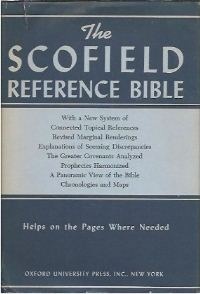
Why I Left Scofieldism by William Cox

Published Presbyterian and Reformed Publishing.Co. Box 817. Phillipsburg. New Jersey 08865 ISBN:0-87552-154-1 as a small booklet. No Date. No Copyright claim.


Image

WHY I LEFT SCOFIELDISM
by
William E.Cox

Breaking away from the fascinating teachings of The Scofield Reference Bible was one of the most difficult decisions of my entire life. Even after doubts arose in my mind, it took some seven or eight years to relinquish the ready-made theological clothing I had worn since the day of my conversion. For I was saved, at the age of sixteen, in a Baptist church where almost everyone carried a Scofield Bible. My spiritual tutors knew the footnotes and headings placed in the Bible by C. I. Scofield as well as they knew the Bible itself. Indeed, the two had become almost synonymous in their minds even as they were destined to become in my own mind. Even today it is difficult at times to clear my mind of some of Scofield’s presuppositions when I study God’s Word.

It was while I was serving in Europe as a member of a medium tank crew that God called me into the ministry of his dear Son. Even before the beginning of World War II – in fact, from the time of my conversion, I had been active as a Sunday School teacher and had taken other active interests in the local church. However, acting on the advice of Scofield himself, I had distrusted the outstanding Bible commentaries and had felt that all I needed for a thorough understanding of the Bible was supplied by the notes of my favorite “Bible.”

With my call to the ministry came the jolting realization that I would be called upon to say to members of my congregation, “This is why we believe thus and so about the Bible; here is the verse and chapter for our belief on a given subject.” With this thought in mind I deliberately took my theology apart to see whether or not I could put it together again, based on the Bible. My thinking was that if I could not convince myself, then certainly I could not convince others. In other words, I asked myself, concerning each and every major doctrine in which I believed, “What saith the scripture?” (Romans 4:3).

This was a helpful experience in my life and ministry. I heartily recommend it to every preacher and teacher. Let me caution you, however, that there are risks involved in such a procedure. You might have to burn some favorite sermons or lessons! I did. Still, it was a rewarding experience, too. To me it was like walking out of a dimly lighted room into one flooded with light. My God and his Book appeared larger than ever before.

Getting back to the dissecting of my beliefs, it was disconcerting, to say the least, to find that some of my most cherished beliefs simply would not stand up under a close scriptural scrutiny. I got most of Humpty-Dumpty back together with relative ease. I could show, from the Bible, why I believed in such great doctrines as the Virgin Birth, deity of Christ, his literal Second Coming, the inspiration and infallibility of the Scriptures, believers’ immersion, eternal security, perseverance of the saints, the bodily resurrection of all, the judgment, eternal heaven, an equally eternal hell, and many other cardinal doctrines.

But, try as I would, certain beliefs kept embarrassing me. For I could not find the verse and chapter to support my beliefs concerning national Israel. I had been taught that the Jews would go back to Palestine, rebuild the Temple, reinstitute the blood sacrifices, serve as Christ’s missionaries during an earthly millennium, and be involved in many other related events. I was so determined to find scriptural support for these teachings that oftentimes I became angry with myself for being so lacking in Bible knowledge.

Finally, after some seven or eight years of searching in vain, God jolted me into reality. It finally dawned upon me that what I sincerely thought were verses of the Bible actually were footnotes put inside the covers of the Bible by a man. I acknowledged, too, that C. I. Scofield was a man. like ourselves and that he did not belong in the same authoritative category as Peter, James, and John.

I broke with Scofieldism grudgingly. He had been such a help in preparing a Sunday School lesson and, later, in “getting up a sermon.” All one needed to do was to turn to the passage in mind. In most cases the headings and footnotes presented a ready outline, requiring very little study. Also, just about every Christian in my peer group seemed to agree that here was profound teaching.

Perhaps one of my greatest surprises came with the realization that followers of Scofield actually represented a comparatively small minority among Christians. It was only their dogmatism, plus the fact that they were so vocal, which made them appear to be in the majority. It was a comfort to learn that Scofield’s “rediscovered truths,” which he had learned at the feet of John Nelson Darby, a Plymouth Brethren, differed not only from most known commentaries, but from the great majority of the church fathers, and the reformers as well. I learned, too, that most of the critics of Scofieldism had, as I had, been devoted followers at one time.

Having come out of Scofieldism, I passed through at least three stages to arrive at my present position. My first feeling was that, although many things my former hero taught were not so, the good points (and he has many of these) in his system outweighed the bad. From this stage continued study led me to believe that I must leave The Scofield Reference Bible alone completely, but that I should not make an issue of it with equally sincere Christians. Further study led me to the position which I now hold. That position is that Scofieldism is heresy, and that, since God has given me this light, I must seek in love to warn others of the household of faith against this subtle, intriguing heresy.

It has been some 14 years since my final break with Scofieldism. Let me share with you some of the objections to this teaching as they are now formulated in my mind.

1. SCOFIELD DOWNGRADES THE CHURCH AND HER ROLE IN GOD’S PLAN.

Historic Christian teaching always has been that the church was the antitype of national Israel. This teaching goes on to say that the church succeeded Israel at the first advent, and that all unfulfilled promises to Abraham will be fulfilled in and through the church.

Scofield admits that this is the historic Christian teaching, then proceeds to teach that it is erroneous. He says: “Especially is it necessary to exclude the notion – a legacy in Protestant thought from post-apostolic and Roman Catholic theology – that the Church is the true Israel, and that the Old Testament foreview of the kingdom is fulfilled in the Church” (p. 989, S.R.B.).

He begins early in his footnotes to lay the groundwork for his teaching that the church will end in failure and be replaced by national Israel, who will succeed where the church failed. On page 8, in footnote I, he states that Eve is a type of the church! Like most of Scofield’s “types,” this one is arbitrary, artificial, and forced. Any interested reader may turn to the passages given as “proof” that Eve is a type of the church, and he will see that there is no mention whatsoever of this fact. He lists John 3:28,29; 2 Corinthians 11:2; Ephesians 5:25-32; and Revelation 19:7,8. This is typical of Scofield’s scriptural references; they rarely say what he says they do. He apparently counted on the fact that his readers would not turn to the passages given. Either that, or he slighted the intelligence of his readers.

On page 9, footnote I, Scofield says: “The Adamic Covenant conditions the life of fallen man – conditions which must remain till, in the kingdom age, ‘the creation also shall be delivered from the bondage of corruption into the glorious liberty of the sons of God’ (Rom. 8:21).” Here again the reader will find that the passage given does not even refer to people, but to the creation.

One might ask just what harm could come from fixing in people’s minds that Eve and Adamic conditions represent the church. The subtle danger is that when Scofield’s disciples think of the church they just automatically think of sinful, fallen, unfaithful children of Satan, and Adam and Eve! Then it is a simple step to teach, without scriptural proof, that the church is destined to end in failure (apostasy).

Coming to the Tower of Babel (p. 18) Scofield continues his slander-by-association. He says that the history of Babel strikingly parallels that of the professing church. He then refers his readers to his footnote on Isaiah 13:1. There he says that Babylon means confusion and is used symbolically to refer ahead to the church. Babylon, he says on page 725, refers to apostate Christianity, destroyed by the nations headed up under the Beast and false prophet (Rev. 17:16).

One could go on piling footnotes on top of each other, showing that Scofield teaches that the church will end in failure, and also showing the type of “reasoning” he uses in arriving at such a conclusion. Let us give one last statement to this effect. “Each of the Dispensations may be regarded as a new test of the natural man, and each ends in judgment – marking his utter failure” (C. 1. Scofield, Rightly Dividing the Word of Truth, p. 13).

In this teaching, as in many others, Scofield unveils his weak Christology. For he admits elsewhere that this church, which he says will end in failure, is the Body and the Bride of Christ! Paul says that the church is destined to glorious victory: “And hath put all things under his feet, and gave him to be the head over all things to the church, which is his body, the fulness of him that filleth all in all” (Eph. 1:22,23). Should one believe Scofield or the apostle Paul? And what should one do with the statement of our Lord (Matt. 16:18) that not even the gates of hell should prevail against his church?

II. SCOFIELD TEACHES THAT GOD HAS TWO BODIES – ISRAEL AND THE CHURCH.

Let us first get before us the age-old Christian teaching on this subject: God always has had but one people. In the Old Testament this people (the type) was called Israel. In the New Testament the antitype was known as the church, or “the Israel of God.” The elect number from Israel plus the elect number of Gentiles constitute one and the same olive tree (Rom. 11: 17,24).

Here, again, Scofield begs to differ from the New Testament writers, the church fathers, the reformers, and the outstanding commentators. He chooses rather to accept another of John Nelson Darby’s “rediscovered truths” instead of the historic Christian teaching. He teaches that Israel is an earthly people while the church is a heavenly people; that God has two separate plans for these two distinct peoples; and that Israel and the church have separate destinies. Israel, he says, will spend eternity on earth while the church, made up of Jews and Gentiles, will spend eternity in heaven.

Facing one of the many quandaries to which this teaching naturally leads, Scofield says (p. 922, S.R.B.) that one must make a distinction between the wife of God and the bride of Christ (the church). He says that a wife and a bride are two different things! Here again, Scofield betrays his weak Christology. Does God the Father have attributes which God the Son does not have? Or, to pose the question another way, does God the Son have possessions to which God the Father may not lay claim? Jesus said, “I and the Father are one.”

Scofield flies in the face of many scriptures when he teaches that God has two separate bodies. Let a few such passages suffice.

And other sheep I have, which are not of this fold: them also I must bring, and they shall hear my voice; and there shall be one fold, and one shepherd (John 10:16, italics mine).

For if thou were cut out of the olive tree which is wild by nature, and were grafted contrary to nature into a good olive tree: how much more shall these, which be the natural branches, be grafted into their own olive tree (Rom. 11:24)?

In this verse Paul teaches two things pointing to one body, which is made up of Jews and Gentiles:

(1) Gentiles were grafted into the faithful remnant of national Israel (not into a separate olive tree), and (2) the believing part of Israel will be grafted into the same olive tree. In other words, Paul explicitly teaches (by way of analogy) that God is grafting Jew and Gentile into one and the same olive tree. If God had two bodies, Paul’s logic would break down and he would need two separate olive trees.

Let us continue with other scriptures which show conclusively that God has, not two bodies, but one.

There is neither Jew nor Greek, there is neither bond nor free, there is neither male nor female: for ye are all one in Christ Jesus. And if ye be Christ’s then are ye Abraham’s seed, and heirs according to the promise (Gal. 3:28,29, italics mine.)

But now in Christ Jesus ye who sometimes were far off are made nigh by the blood of Christ. For he is our peace, who hath made both one, and hath broken down the middle wall of partition between us; Having abolished in his flesh the enmity, even the law of commandments contained in ordinances; for to make in himself of twain one new man, so making peace; and that he might reconcile both unto God in one body by the cross, having slain the enmity thereby (Eph. 2:13-16, italics mine).

Whereby when ye read, ye may understand my knowledge in the mystery of Christ, Which in other ages was not made known unto the sons of men, as it is now revealed unto his holy apostles and prophets by the Spirit; That the Gentiles should be fellow heirs, and of the same body, and partakers of his promise in Christ by the gospel (Eph. 3:4-6, italics mine).

It would be difficult to find language any plainer than that used by Paul in the above-quoted scriptures. Paul states emphatically that God took two peoples and made them into one people. He says that God, in effect, took two men (Jew and Gentile) and made the two of them become one man.

Truly Scofield contradicts the apostle Paul by teaching that God has two bodies.

III. SCOFIELD TEACHES THAT GOD’S PROMISES TO NATIONAL ISRAEL AWAIT FUTURE FULFILLMENT.

What is the historic Christian teaching on this subject? All such promises have been either fulfilled or invalidated through unbelief. Those on which Scofield rests most of his case have been literally fulfilled, and these fulfillments are clearly recorded in the Bible.

Scofield, on the other hand, teaches that God has future plans to regather national Israel to Palestine, rebuild the Temple, and reinstitute the Old Testament economy (including the blood sacrifices). The reader might find it interesting to look at some of the typical scriptures on which Scofield builds this argument. On page 157, note 2, one reads: “The feast of Trumpets, vs. 23-25. This feast is a prophetical type and refers to the future regathering of long-dispersed Israel.” This footnote goes on to state that trumpets are always symbols of testimony and that they are connected with the regathering and repentance of Israel after the church, or pentecostal, period is ended.

Remember now, that this conclusion is based on Leviticus 23:23-25. Let us quote these verses word for word in order that one might see more clearly Scofield’s handling of the Scriptures.

And the Lord spake unto Moses, saying. Speak unto the children of Israel, saying, in the first day of the month, shall ye have a sabbath, a memorial of blowing of trumpets, an holy convocation. Ye shall do no servile work therein: but ye shall offer an offering made by fire unto God.

You expected more? Honestly now, that is all the passage says! Check it in your own Bible. And on this passage, and others equally unrelated, Scofield bases a doctrine of the regathering of Israel to Palestine.

Realizing that the Bible records two regatherings of Israel to Palestine in fulfillment of prophecies (see note on p. 25, S.R.B.), Scofield says that three such regatherings are predicted in Scripture. His only proofs for this alleged return are scriptures such as Leviticus 23:23-25, which we have quoted above. Actually, no third regathering to the land is mentioned anywhere in the Bible. Scofield lists a number of scriptures on page 25, purporting to show by these that a third such regathering is promised. However, each of these passages clearly refers either to the first or second regathering to the land (already fulfilled, as attested to in the Old Testament), or to the first advent of Christ.

It is not necessary here to refute all of Scofield’s claims for national Israel. His argument actually rests on whether or not they have ever occupied all the land promised them through Abraham. Scofield argues thus: (1) Israel has never received all the land promised in the Abrahamic Covenant (p. 250, S.R.B.); (2) therefore, she must some day return to the land; (3) associated with the land are the Temple, blood sacrifices, etc.; therefore, since they will return to the land, it stands to reason that they will rebuild the Temple and all that goes with the land.

So, if Scofield is wrong concerning the land, his entire plan for national Israel goes begging. Let us examine the Bible itself to see whether or not God has kept his promise that Israel would inherit all the land of Palestine.

Behold, I have set the land before you: go in and possess the land which the Lord sware fathers, Abraham, Isaac, and Jacob, to them and to their seed after them (Deut. 1:8, italics mine).

Please note which land it is into which God says Joshua will lead the Israelites. It is the same land promised to Abraham.

And he brought us out from thence, that he might bring us in, to give us the land which he sware unto our fathers (Deut. 6:23).

Moses stated explicitly that God’s purpose in the Exodus from Egypt was to fulfill his promise to Abraham to give the land to Abraham’s seed.

Be strong and of a good courage; for unto this people shalt thou divide the land, which I sware unto their fathers to give them (Joshua 1:6).

Here God but reaffirms to Joshua the promise given through Moses, i.e., that God was now about to fulfill his promise to Abraham with reference to the land. Did God keep this promise through Joshua? What saith the scripture?

So Joshua took the whole land, according to all that the Lord said unto Moses; and Joshua gave it for an inheritance unto Israel according to their divisions by their tribes. And the land rested from war (Joshua 11:23).

And the Lord gave unto Israel all the land which he sware to give unto their fathers; and they possessed it, and dwelt therein. And the Lord gave them rest round about, according to all that he sware unto their fathers: and there stood not a man of all their enemies before them; the Lord delivered all their enemies into their hand. There failed not ought of any good thing which the Lord had spoken unto the house of Israel; all came to pass (Joshua 21:43-45, italics mine).

Their children also multipliedst thou as the stars of heaven, and broughtest them into the land, concerning which thou hadst promised to their fathers, that they should go in to possess it (Nehemiah (9:23).

The above scriptures record the first regathering of Israel to the land. Scofield devotes not a single footnote to either of these verses! The prophets later predicted a second such return. This second return literally came to pass under the leadership of Zerubbabel, and its fulfillment is recorded in such books of the Bible as Ezra and Nehemiah (whose books, incidentally, were written after those of all the prophets with the possible exception of Malachi). Following this second return and the literal rebuilding of Solomon’s temple, in 516 B.C., there is not a single scripture reference, either in the Old Testament or the New, regarding a return to the land. What saith the scripture?

IV. SCOFIELD MISHANDLES MANY CLEAR VERSES OF SCRIPTURE.

In 2 Corinthians 4:2 Paul prided himself on walking without craftiness and on not handling the Word of God deceitfully. Unfortunately, this claim could not be made for Dr. Scofield. For he posits his teachings on craftily manufactured premises, then handles the Word deceitfully in order, to support these premises. Lest this statement seem too harsh, let us look at only a few of the plain scriptures on which he places interpretations altogether contrary to their obvious meaning.

Let us begin with Acts 15:16, since this verse is said by leading dispensationalists to be the most important verse of scripture in their entire school of thought (p. 1169, S.R.B.). Scofield interprets James as saying that, after the time that James was speaking, God would return and rebuild the tabernacle of David. Actually, Acts 15:16 is a quotation from Amos 9:11, and the words are those of Amos, not those of James. So that the “after this” refers to a time following Amos’s time, not to a time subsequent to James. In fact, James says (read the entire context) that Amos’s prophecy was fulfilled when Cornelius’ household (Gentiles) were added to the church.

If this be spiritualizing then the blame must be placed on James, who spoke under the inspiration of the Holy Spirit. And James definitely disagrees with Scofield on this interpretation.

On page 1015, note 2, Scofield says: “The parable of the wheat and tares is not a description of the world, . . .” Verse 38 of this passage which the footnote is interpreting says, “The field is the world.” Here we have the words of Jesus versus the words of C. I. Scofield!

On page 1036, note 1, one reads that the judgment of Matthew is to be distinguished from the judgment of the great white throne. One of the “proofs” of this is that “three classes are present, sheep, goats, brethren. . .. These ‘brethren’ are the Jewish Remnant who will have preached the Gospel of the kingdom to all nations during the tribulation.” What saith the scripture? In Matthew 12:48-50 our Lord asked a question and also gave the answer to it. “… and who are my brethren? . . . whosoever shall do the will of my Father which is in heaven, the same is my brother, and sister, and mother.” Jesus’ own words would make the brethren of Matthew synonymous with the sheep of that same passage. This would give, not three, but two groups of people at the judgment of Matthew 25 – the same two groups present in Revelation 20:11-15. Acts 1:15 and Hebrews 2:11,12 also refer to Christians as the brethren of Christ.

On page 1023, note 1, Scofield says: “Christ confirms the specific and still unfulfilled prophecy of Mal. 4:5,6: ‘Elias shall truly first come and restore all things.’ ” He goes on to speak of “that yet to be fulfilled in Elijah.” Here again, Scofield is daring to contradict the words of Christ himself. Jesus said: “But I say unto you. That Elias is indeed come, and they have done unto him whatsoever they listed, as it is written of him” (Mark 9:13, italics mine). Is any further comment necessary here?

Scofield assigns Zechariah 12:10 (“they shall look on him whom they have pierced”) to a time following the tribulation and says it teaches that national Israelites will accept Christ at a future date. John says explicitly that this prophecy was fulfilled when the spear pierced Jesus’ side on the cross at Calvary (John 19:34-37).

On page 1115, note 2, these words appear: “As a dispensation, grace begins with the death and resurrection of Christ (Rom. 3:24-26; 4:24,25). The point of testing is no longer legal obedience as the condition of salvation, but acceptance or rejection of Christ, with good works as a fruit of salvation. . . .” And on page 1011, note 2, he speaks on this same subject. “The new message of Jesus. The rejected King now turns from the rejecting nation and offers, not the kingdom, but rest and service to such in the nation as are conscious of need. It is a pivotal point in the ministry of Jesus.” Here Scofield lays himself open to the charge leveled against him, i.e., that he has more than one plan of salvation in his system. Note his words, “no longer legal obedience as the condition of salvation.” He plainly implies that:

(1) before Christ came, people were saved by good works (legal obedience); (2) now that Jesus has come, they are saved through Christ; and (3) good works now are a fruit of salvation, whereas before they were the means of salvation. And if Jesus offered people one thing in his “old” message while offering something else in his “new” message, what other conclusion can be drawn except that he offered two plans of righteousness?

That thinking people have taken dispensationalism to present various means of salvation is evident in the report adopted by the Southern Presbyterian Church in the United States. That report, adopted by this assembly in May, 1944, was in part as follows:

It is the unanimous opinion of your Committee that Dispensationalism is out of accord with the system of doctrines set forth in the Confession of Faith, not primarily or simply in the field of eschatology, but because it attacks the very heart of the theology of our Church. Dispensationalism rejects the doctrine that God has, since the Fall, but one plan of salvation for all mankind and affirms that God has been through the ages administering various and diverse plans of salvation for various groups. . . .

CONCLUSION.

Many other discrepancies could be pointed to in Scofieldism. However, to discredit any of the points dealt with above is to bring his entire system into serious question, since these are pivotal dogmas.

It has not been the intention of this writer to discredit a person, but to challenge unscriptural teachings put forth by a person. This pamphlet is sent forth in Christian love for all the household of faith, and with the prayer that it might lead many to a “more excellent way” of handling the Word of God.

 

RSI Luncheon

I am so blessed to have a long distance friend from India to be able to come and share his life with us. Venky is doing an internship at 2nd Reformed Presbyterian Church for the Summer. This coming Fall he will be attending Reformed Presbyterian Theological Seminary as he prepares to stir up the gift that is in him from the LORD so that he can be most effectual in his calling. Thanks for the fine Reformation Society review
Venky! I love participating in the assembly of the fine men of God who meet every two Months.

Venkatesh's avatarVenky's Blog

RSI stands for Reformation Society of Indiana. RSI is a fellowship of churches who hold to the Five Solas of the Protestant Reformation. Leaders from Presbyterian, Congregational, Baptist and Independent churches from around central Indiana come together for luncheon meetings once in two months to study and discuss the word of God, and encourage one another in prayer. I went for one such luncheon a week before and I was thoroughly blessed.

Pastor Rich and I drove to Gray Road Baptist Church at noon and were warmly greeted by the church staff who were busy preparing lunch for us. After twenty minutes of our arrival, people started trickling in and I was able to fellowship with a few brothers before the meeting. One among them was Bob Amon, a Princeton graduate, who has shared about his faith in Jesus Christ on national radio unapologetically. His testimony encouraged me tremendously.

View original post 334 more words

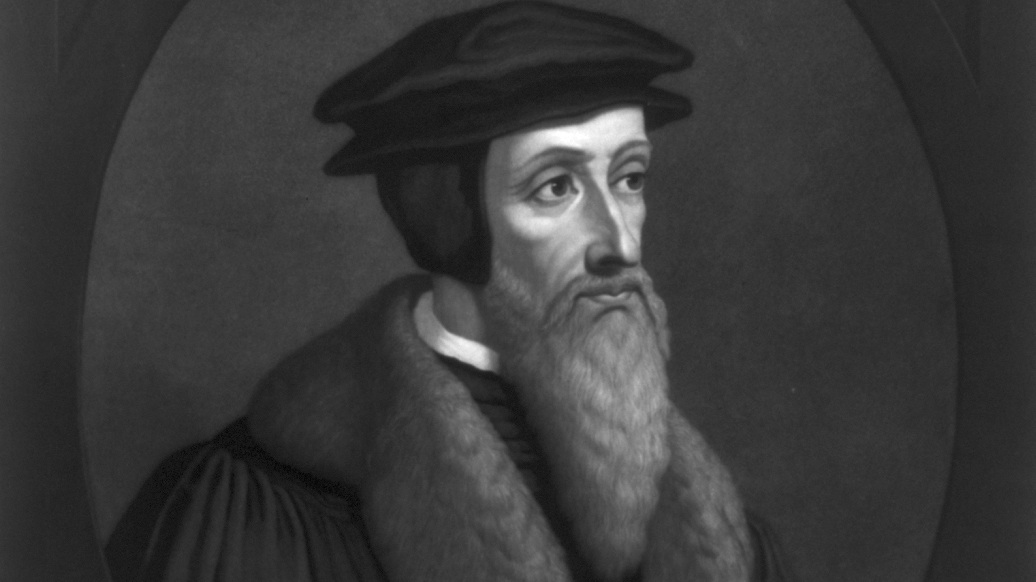
John Calvin on Civil Government and Law.

Image
Institutes of the Christian Religion
Book 4
CHAPTER 20.

OF CIVIL GOVERNMENT.

14. In states, the thing next in importance to the magistrates is laws, the strongest sinews of government, or, as Cicero calls them after Plato, the soul, without which, the office of the magistrate cannot exist; just as, on the other hand, laws have no vigour without the magistrate. Hence nothing could be said more truly than that the law is a dumb magistrate, the magistrate a living law. As I have undertaken to describe the laws by which Christian polity is to be governed, there is no reason to expect from me a long discussion on the best kind of laws. The subject is of vast extent, and belongs not to this place. I will only briefly observe, in passing, what the laws are which may be piously used with reference to God, and duly administered among men. This I would rather have passed in silence, were I not aware that many dangerous errors are here committed. For there are some who deny that any commonwealth is rightly framed which neglects the law of Moses, and is ruled by the common law of nations. How perilous and seditious these views are, let others see: for me it is enough to demonstrate that they are stupid and false. We must attend to the well known division which distributes the whole law of God, as promulgated by Moses, into the moral, the ceremonial, and the judicial law, and we must attend to each of these parts, in order to understand how far they do, or do not, pertain to us. Meanwhile, let no one be moved by the thought that the judicial and ceremonial laws relate to morals. For the ancients who adopted this division, though they were not unaware that the two latter classes had to do with morals, did not give them the name of moral, because they might be changed and abrogated without affecting morals. They give this name specially to the first class, without which, true holiness of life and an immutable rule of conduct cannot exist.

15. The moral law, then (to begin with it), being contained under two heads, the one of which simply enjoins us to worship God with pure faith and piety, the other to embrace men with sincere affection, is the true and eternal rule of righteousness prescribed to the men of all nations and of all times, who would frame their life agreeably to the will of God. For his eternal and immutable will is, that we are all to worship him and mutually love one another. The ceremonial law of the Jews was a tutelage by which the Lord was pleased to exercise, as it were, the childhood of that people, until the fulness of the time should come when he was fully to manifest his wisdom to the world, and exhibit the reality of those things which were then adumbrated by figures (Gal. 3:24; 4:4). The judicial law, given them as a kind of polity, delivered certain forms of equity and justice, by which they might live together innocently and quietly. And as that exercise in ceremonies properly pertained to the doctrine of piety, inasmuch as it kept the Jewish Church in the worship and religion of God, yet was still distinguishable from piety itself, so the judicial form, though it looked only to the best method of preserving that charity which is enjoined by the eternal law of God, was still something distinct from the precept of love itself. Therefore, as ceremonies might be abrogated without at all interfering with piety, so, also, when these judicial arrangements are removed, the duties and precepts of charity can still remain perpetual. But if it is true that each nation has been left at liberty to enact the laws which it judges to be beneficial, still these are always to be tested by the rule of charity, so that while they vary in form, they must proceed on the same principle. Those barbarous and savage laws, for instance, which conferred honour on thieves, allowed the promiscuous intercourse of the sexes, and other things even fouler and more absurd, I do not think entitled to be considered as laws, since they are not only altogether abhorrent to justice, but to humanity and civilised life.

16. What I have said will become plain if we attend, as we ought, to two things connected with all laws—viz. the enactment of the law, and the equity on which the enactment is founded and rests. Equity, as it is natural, cannot be the same in all, and therefore ought to be proposed by all laws, according to the nature of the thing enacted. As constitutions have some circumstances on which they partly depend, there is nothing to prevent their diversity, provided they all alike aim at equity as their end. Now, as it is evident that the law of God which we call moral, is nothing else than the testimony of natural law, and of that conscience which God has engraven on the minds of men, the whole of this equity of which we now speak is prescribed in it. Hence it alone ought to be the aim, the rule, and the end of all laws. Wherever laws are formed after this rule, directed to this aim, and restricted to this end, there is no reason why they should be disapproved by us, however much they may differ from the Jewish law, or from each other (August. de Civit. Dei, Lib. 19 c. 17). The law of God forbids to steal. The punishment appointed for theft in the civil polity of the Jews may be seen in Exodus 22. Very ancient laws of other nations punished theft by exacting the double of what was stolen, while subsequent laws made a distinction between theft manifest and not manifest. Other laws went the length of punishing with exile, or with branding, while others made the punishment capital. Among the Jews, the punishment of the false witness was to “do unto him as he had thought to have done with his brothers” (Deu_19:19). In some countries, the punishment is infamy, in others, hanging; in others, crucifixion. All laws alike avenge murder with blood, but the kinds of death are different. In some countries, adultery was punished more severely, in others more leniently. Yet we see that amid this diversity they all tend to the same end. For they all with one mouth declare against those crimes which are condemned by the eternal law at God, viz., murder, theft, adultery, and false witness; though they agree not as to the mode of punishment. This is not necessary, nor even expedient. There may be a country which, if murder were not visited with fearful punishments, would instantly become a prey to robbery and slaughter. There may be an age requiring that the severity of punishments should be increased. If the state is in a troubled condition, those things from which disturbances usually arise must be corrected by new edicts. In time of war, civilisation would disappear amid the noise of arms, were not men overawed by an unwonted severity of punishment. In sterility, in pestilence, were not stricter discipline employed, all things would grow worse. One nation might be more prone to a particular vice, were it not most severely repressed. How malignant were it, and invidious of the public good, to be offended at this diversity, which is admirably adapted to retain the observance of the divine law. The allegation, that insult is offered to the law of God enacted by Moses, where it is abrogated and other new laws are preferred to it, is most absurd. Others are not preferred when they are more approved, not absolutely, but from regard to time and place, and the condition of the people, or when those things are abrogated which were never enacted for us. The Lord did not deliver it by the hand of Moses to be promulgated in all countries, and to be everywhere enforced; but having taken the Jewish nation under his special care, patronage, and guardianship, he was pleased to be specially its legislator, and as became a wise legislator, he had special regard to it in enacting laws.

Objection answered concerning Establismentarianism ( a Nation’s acknowledgement of Christ’s rule)

Image

Noted an observation that my buddy Josh Hicks blogged about and thought I would pass it along.  I am also adding something that Austin Williamson directed attention to on the Puritanboard.com from Robert Shaw’s commentary on the Westminster Confession of Faith chapter 20. 

Just two excellent points I will note here quickly….

“And pray would you have all thieves, robbers, murderers, &c. to have full liberty in their courses, till their wickedness can be got rooted out of their heart?” John Brown of Haddington

This is an excellent point. When Jesus cleansed the temple he didn’t first change the hearts of evil men. He did cleanse it and give report of the Temple’s purpose. The Law must first be expounded in the first place for the word and incorruptible seed to take root. The Law of the Lord converts the soul as Psalm 19:7 states. When it is neglected we end up with the money changers even in the temple.

“…yet they are to repress these evils, not formally as sins, which is the prerogative of God, nor as scandals, in which light they come under the cognisance of the Church, but as crimes and injuries done to society.” Robert Shaw

And this is the issue. When the Law is neglected and relegated to naught men have no place to grow in their understanding that they are offensive and odious to God and harmful to their neighbors and life. It is for the community’s good that the Law of God be established, promoted, understood, and heeded. It is a wonderful thing that punishment for harming society is performed according to God’s law. It also reflects the judgment of God as it is supposed to do.

Here is the blog post Josh posted.
http://www.doyouconfess.com/2013/04/23/straw-man-objection-of-wcf-establishmentarianism/

Usually, the first, most common, and least substantial objection -which is a straw man- that I have received when it comes to pressing the duties of the magistrate a la Westminster (unrevised, unabridged, unobjected to by external denominational documents) Establishmentarianism, is that we shouldn’t look to change the hearts of people by way of the government. Of course, no WCF Establishmentarian would ever rightly assert such, as that is no function of the Magistrate in the first place. Here is what Mr. John Brown of Haddington has to say pertaining to aforementioned objection:

 Image

Objection XI. “Men ought to be persuaded, not forced into faith and holiness. It is in vain to attempt rooting out corruptions, especially in religion, out of men’s outward behaviour unless they be first rooted out of their hearts.”

ANSW. (1.) It requires no small share of ignorance, impudence and fraud, to insinuate that the many thousands of Protestant advocates for the magistrates power to restrain gross heresy, blasphemy or idolatry, plead for the FORCING of men to faith and holiness, when they so harmoniously plead for the contrary. (2) None ought to be forced into the faith and profession of the true religion, as hath been repeatedly declared, but all proper methods taken to render their compliance judicious and voluntary. Yet that will not infer, that no man ought to be restrained from, or even suitably and seasonably punished for, open and gross heresy, blasphemy or idolatry, which, while they publicly oppose, insult, and undermine the true religion,—produce terrible immoralities and disorders in churches and nations, and draw upon them the ruinous vengeance of God;—and far less will it infer, that magistrates, as vicegerents of God, ought, in his name and authority, to license a false religion, and promise men protection and encouragement in it. No magistrate hath power to force me to esteem, love, delight in, sympathize with, maintain, or even commend my neighbour. But he hath power to refuse me a warrant to calumniate, rob or murder him, and even to restrain or punish me for so doing. It would be absurd to attempt forcing of the British Jacobites, to believe and solemnly profess, that [King] George, not the Pretender is rightful Sovereign of this kingdom. But would it therefore be absurd, to restrain and punish them for publicly and insolently reviling him as an usurper,—or seducing their fellow subjects to dethrone him,—or for taking arms against him, or paying his just revenues to the Pretender? (3) It is certain, that Christ, who hath power over the hearts of all men, curbed the external corruptions of the Jewish buyers and sellers in the temple, without first casting the corruptions out of their heart. And pray would you have all thieves, robbers, murderers, &c. to have full liberty in their courses, till their wickedness can be got rooted out of their heart?

Robert Shaw Commentary on Chapter 20 sections 3 and 4.

Image


“…Although civil rulers may restrain, and, when occasion requires, may punish the more flagrant violations of the first table of the moral law, such as blasphemy, the publishing of blasphemous opinions, and the open and gross profanation of the Sabbath; yet they are to repress these evils, not formally as sins, which is the prerogative of God, nor as scandals, in which light they come under the cognisance of the Church, but as crimes and injuries done to society.

All sound Presbyterians disclaim all intolerant or compulsory measures with regard to matters purely religious. They maintain that no man should be punished or molested on account of his religious opinions or observances, provided there is nothing in these hurtful to the general interests of society, or dangerous to the lawful institutions of the country in which he lives. The section now under consideration, however, has sometimes been represented as arming the civil magistrate with a power to punish good and peaceable subjects purely on account of their religious opinions and practices, or as favourable to persecution for conscience’ sake. In vindicating the Confession from this serious charge, we shall avail ourselves of the judicious remarks of Dr M’Crie. “The design of section fourth,” says that eminent author, “is to guard against the abuse of the doctrine” of liberty of conscience “in reference to public authority. “And because the powers which God hath ordained, and the liberty which Christ hath purchased, are not intended by God to destroy, but mutually to uphold and preserve one another, they who, upon pretence of Christian liberty, shall oppose any lawful power, or the lawful exercise of it, whether it be civil or ecclesiastical, resist the ordinance of God.’ He who is the Lord of the conscience has also instituted the authorities in Church and State; and it would be in the highest degree absurd to suppose that he has planted in the breast of every individual a power to resist, counteract, and nullify his own ordinances. When public and private claims interfere and clash, the latter must give way to the former; and when any lawful authority is proceeding lawfully within its line of duty, it must be understood as possessing a rightful power to remove out of the way everything which necessarily obstructs its progress. The Confession proceeds, accordingly, to state: “And for their publishing of such opinions, or maintaining of such practices, as are contrary to the light of nature; or to the known principles of Christianity whether concerning faith, worship, or conversation, or to the power of godliness; or such erroneous opinions or practices as, either in their own nature or in the manner of publishing and maintaining them, are destructive to the external peace and order which Christ hath established in the Church; they may lawfully be called to account, and proceeded against by the censures of the Church, and by the power of the civil magistrate.’ Now, this does not say that all who publish such opinions, and maintain such practices as are mentioned may be proceeded against, or punished (if the substitution of this word shall be insisted for) by the civil magistrate; nor does it say that any good and peaceable subject shall be made liable to this process simply on the ground of religious opinions published, and practices maintained by him. For, in the first place, persons of a particular character are spoken of in this paragraph, and these are very different from good and peaceable subjects. They are described in the former sentence as “they who oppose lawful power, or the lawful exercise of it,’ and “resist the ordinance of God.’ The same persons are spoken of in the sentence under consideration, as appears from the copulative and the relative. It is not said, “Any one for publishing,’ &c., but, “they who oppose any lawful power,’ &c., “for their publishing,’ &c. In the second place, this sentence specifies some of the ways in which these persons may become chargeable with the opposition mentioned, and consequently “may be called to account;’ but it does not assert that even they must or ought to be prosecuted for every avowed opinion or practice of the kind referred to. All that it necessarily implies is, that they may be found opposing lawful powers, or the lawful exercise of them in the things specified; and that they are not entitled to plead a general irresponsibility in matters of that kind. Notwithstanding such a plea, “they may be called to account, and proceeded against.’ For, be it observed, it is not the design of this paragraph to state the objects of Church censure or civil prosecution; its proper and professed object is to interpose a check on the abuse of liberty of conscience, as operating to the prejudice of just and lawful authority. It is not sin as sin, but as scandal, or injurious to the spiritual interests of Christians, that is the proper object of Church censure; and it is not for sins as such, but for crimes, that persons become liable to punishment by magistrates. The compilers of the Confession were quite aware of these distinctions, which were then common. Some think that if the process of the magistrate had been limited to offences “contrary to the light of nature,’ it would have been perfectly justifiable; but the truth is, that it would have been so only on the interpretation now given. To render an action the proper object of magistratic punishment, it is not enough that it be contra to the law of God, whether natural or revealed; it must, in one way or another, strike against the public good of society. He who “provides not for his own, especially those of his own house,’ sins against ” the light of nature,’ as also does he who is “a lover of pleasures more than of God;’ there are few who will plead that magistrates are bound to proceed against, and punish every idler and belly-god. On the other hand, there are opinions and practices “contrary to the known principles of Christianity; or grafted upon them, which, either in their own nature, or from the circumstances with which they may be clothed, may prove so injurious to the welfare of society in general, or of particular nations, or of their just proceedings, or of lawful institutions established in them, as to subject their publishers and maintainers to warrantable coercion and punishment. As one point to which these may relate, I may mention the external observance and sanctification of the Lord’s day, which can be known only from “the principles of Christianity,’ and is connected with all the particulars specified by the Confession, “faith, worship, conversation, the power of godliness, and the external order and peace of the Church.’ That many other instances of a similar description can be produced, will be denied by no sober thinking person who is well acquainted with Popish tenets and practices, and with those which prevailed among the English sectaries during the sitting of the Westminster Assembly, and he who does not deny this, cannot be entitled, I should think, upon any principles of fair construction, to fix the stigma of persecution on the passage in question.”

Knowing God by His Majestic Grace

olivyaz-landscape-ephesians-2-8.

Here is something I wrote over twenty years ago.   Back then radio preachers were popular.  Cable Television was starting to add more channels than the local 4 or 5 we already had.  The Cassette Player was the best audio component we could install in the dash of our car and being Borked was the headline of the day.   I actually started typing this study out on a Remington portable typewriter.

The doctrines (teachings) of grace were very important to those who had spent hours teaching me the Bible.  They became very important to me.  But the simple definition of grace being God’s unmerited favor and the acronym God’s Riches At Christ’s Expense just seemed so truncated and deficient to me.  The Bible seemed to say much  more to me about this wonderful word.  At the same time I noticed that those simple and truncated definitions of grace were influencing a generation to be apathetic and overly narcissistic.   Salvation was just about the individual and his or her assurance of going to heaven because Jesus paid it all.  The most popular question for evangelizing the world was, “If you were to die today and God were to ask you why He should let you into His heaven, what would you tell Him?”   All the focus was upon us the individual and where we would spend eternity.  After someone prayed the prayer or went forward at the local revival crusade they were saved and need not worry about sin or eternal judgment because salvation was by grace through faith and not by anything we contributed to earn our salvation.

Now that question about why God should let us into His heaven is a very important question and the answer to that question has eternal significance in every person’s life.  I am not trying to downplay the situation.  But salvation is about more than where we will spend eternity.  Salvation is also about how we live here and now and the eternal significance the here and now play in that.  And the doctrines of Grace have taught that from Adam and Eve till now.  So that is the backdrop to why I started this study back in the 80’s.

The link below is a link to dropbox where you download the paper I wrote.  Keep in mind that I wrote it a long time ago.  I am not a writer.  I was definitely not a writer back then.  Also know that I didn’t understand Covenant Theology and my theology has definitely been refined much in the past 20 years.  So please just bear with some of the underdeveloped theology, terrible grammar, and writing style.   I used this paper to disciple a lot of people.  I hope it can still be used to help others out.  Have at it.

Click on the dropbox link

https://www.dropbox.com/s/bugpvkwqlnif6p1/Knowing%20God%20By%20His%20Majestic%20Grace.pdf?dl=0

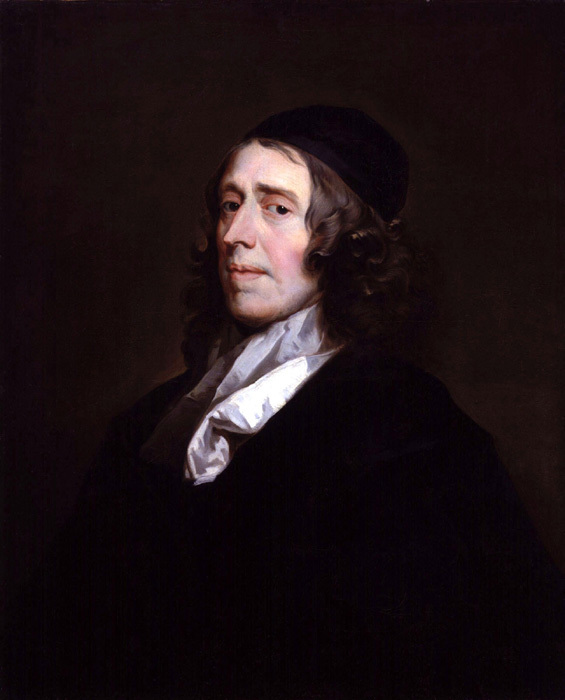
John Owen on Secterians

Image

John Owen in his Epistle to the Reader
Biblical Theology pp. XXX – XXXIII
On Sectarians

…In the second place, many students of theology who are not brought down by idleness or pleasure seeking are sadly driven off course and greatly impeded in their search for divine truth by the influence of sects, factions, and heresies. In religious studies, differences of opinion are very prone to harden into differences of sect. Secondary matters then come into play to widen the breach. How frequently we find a man, who adheres to a sect which is numerous in his own corner of the world, consider it to be his life’s work to do nothing but condemn and vilify all other parties as guilty of folly and sin. This may give the impression that the differences are more ones of locality than reality, and places give their names to sects but, whatever their origin, it is certain that a sect becomes more destructive the greater the number of its adherents as it engenders a servile party – in a word, a sectarian spirit.

But it is not my intention to discuss the nature of sectarianism or condemn its vices. I wish merely to demonstrate how zeal for a sect will obscure zeal for true wisdom. This is quite certain, for the leaders of a sect will always fight against any knowledge beyond the tenets that make their distinctives, and a sectary must surrender to the group all piety, knowledge, doctrine, and wisdom. Imagine the evils which arise when this servile spirit takes hold on minds which are already open to receive unjust suspicions and, like all natural minds, always prone to evil thoughts, and how fatally any ability to search for the truth will be injured. What is worse, a sectarian spirit induces into the thinking an evil, arrogant, and disputaceous tendency; the very thing with which the Holy Spirit cannot be expected to associate His gifts. “What man is he that feareth the Lord? Him will He teach in the way that He shall choose…. The secret of the Lord is with them that fear Him, and He will show them His Covenant.” (Psalm 25:12 and 14) Other men are indeed not slaves to a sect, but are willing to agree with the blind zeal of sectarians as a means to an end –the advancement of their own interests. Still, for such a purpose, they will defend the sect as violently as others and show as much hatred for those who dissent from them.

There can be few worse impediments to the study of divine truth than for a student, either from birth and upbringing, by the false teaching of others or for worldly advantage, to be ensnared into a vigorous sect before he has had the chance to develop independent, candid, and mature judgment of his own.  How many turn aside in this way for the lure of wealth, honors, or esteem!  The touchstone and measure of all truth for such enslaved men becomes the teachings of the sect, and all of their studies are guided by no other pole-star than a horror of falling unawares into the opinions of any other sect but their own! They are terrified of receiving, truth and light from other men at the expense of their lucrative errors! And all the while they consider themselves to be most learned, intelligent, prudent, and pious of men; judging all of these things by the yardstick of their sect, that is, within the blinkered vision of a worthless faith. The natural result is seen in those eternal squabbles, law-suits, hatreds, and quarrels which are so far removed from Christian meekness and charity.

Great emperors are quicker to make peace after bloodshed and disasters given and received than are theologians fired by sectarian zeal. The followers of a sect will seize as gleefully upon anything which comes from their leaders or comrades as did the heathen of old a fabled “shield fallen from heaven,” even though it is the most foolish, outrageous, futile, nay, wicked teaching possible. Their enthusiasm runs all one way – to defend and propagate the base teachings of their sect and vilify the wise teachings of others. If it finally dawns upon them that man who is not of their faction is not a fool or a villain (which sometimes happens), then he is at once a danger to them and they must stir up all kinds of hostile encounters with him. Each one of them would gladly gain a triumph over him, be it never so small a matter, or rejoice to see him worsted by anyone at all.

Imagine these wretched creatures who, accepting the very basest servitude themselves, still have the arrogance to hurl out accusations of errors and ignorance, of heresy and schism, against the orthodox, from what they consider to be an impregnable position-built mostly with bricks of pure stupidity! I could not go on in my work to advance God’s truth if I felt that I had anything of this spirit about me. Why, they know already all of the bounds of wisdom, and can map out all of the territory of Divine truth; it is confined within the bounds of their sect! No man will run the risk of sailing uncharted seas if he has gold enough, or what is worth more than gold, at home. What we pursue is so far removed from the ideals of such men that I have never considered that studies such as ours would be of interest to them or be tasty to their palates. If love of themselves and of party has so extinguished the light of reason that man cannot see that he is enchained by a sect and bound for perpetual bitter enmity to all other sects for the supremacy of their own, then I, as a teacher, see it as my duty to strictly neglect and ignore them. But note well, I do not say these things as if every man of faith was obliged to associate himself with some particular congregation professing faith in Christ and worshipping God as He has ordained, unless he would be judged eccentric or blameworthy. What makes an almost infinite difference is the spirit in which a man associated himself with any of them.

Let me state what, in my judgment, is required for a man to act rightly and in obedience to Christ and the gospel. It is this: Let him, after first surrendering himself in faith to our Lord Jesus Christ, seek out and attach himself to a body of believers who have zeal for and profession of divine truth, who observe the commands of the Lord Jesus, who cultivate true and conscientious piety, sobriety, modesty, justice, and separation from the world. Then he may share in the spiritual privileges of the Church and the gifts of the Spirit to the Church and strive manfully towards the building up of the body Christ in faith and love. I simply bring accusation of withstanding the progress of truth against those who defend so narrow a sect as to look upon all others as if they had never been born. I think particularly of those so engaged for reasons secular or sinful, or by an onrush of worldly business which drives them upon the shores of a sect and leaves them stranded there. Such sickness of mind is incurable without a special intervening of the grace of God. They take pleasure in their folly and triumph in their delusions, and cannot be persuaded that the spiritual physicians who would save them from their follies mean to cure and not to kill them. But we must put aside further considerations of such wretchedness.

A Better Priest and Covenant. A Better Mediator of the Word of God.

heb8-725x410

The more I read Hebrews 8 the more I think I understand about how the shadows have passed away (v. 5) and how a lot of the modern Church is not reading this text or Jeremiah 31 correctly.  There is a Priesthood that is being extinguished here and one that is being exalted. We no longer need the shadows or Levitical Priesthood to mediate or teach Covenant Members as mediators since Christ (the substance) has become the High Priest and removed the shadows. The Substance is here and we can approach God directly through Christ by His Holy Spirit. The veil was torn from top to bottom. As the text repeated from Jeremiah 31 states, we all shall know God from the least to the greatest. His Law will be placed in all of our hearts without the need for a Levitical Priest to mediate His word to us. That is the part that is being missed.  This is about the transference of priesthood from the shadows and types to Christ our High Priest and antitype. The Old Covenant was given a Priesthood as a type that would show us the way to the real thing.  We have a better Covenant with a better Priest who is in heaven now. Christ is the minister of the sanctuary, and of the true tabernacle, which the Lord pitched, and not man.  We no longer will tell our neighbor to go seek out the local Priest to mediate God’s word for us.  For it has now been fulfilled as it was written and is mediated differently since Christ our High Priest has come..
(1 Timothy 2:5,6) For there is one God, and one mediator between God and men, the man Christ Jesus; Who gave himself a ransom for all, to be testified in due time.
Rom 3:23 For all have sinned, and come short of the glory of God;
Rom 3:24 Being justified freely by his grace through the redemption that is in Christ Jesus:
Rom 3:25 Whom God hath set forth to be a propitiation through faith in his blood, to declare his righteousness for the remission of sins that are past, through the forbearance of God;
Rom 3:26 To declare, I say, at this time his righteousness: that he might be just, and the justifier of him which believeth in Jesus.
Rom 3:27 Where is boasting then? It is excluded. By what law? of works? Nay: but by the law of faith.
Rom 3:28 Therefore we conclude that a man is justified by faith without the deeds of the law.
Rom 3:29 Is he the God of the Jews only? is he not also of the Gentiles? Yes, of the Gentiles also:
Rom 3:30 Seeing it is one God, which shall justify the circumcision by faith, and uncircumcision through faith.
Rom 3:31 Do we then make void the law through faith? God forbid: yea, we establish the law.
My point about this is that I read the text saying that the New Covenant is about a regenerate Church membership when the text isn’t about that but about how the Word of God is mediated and about how we have a better High Priest and Covenant now that the shadows are done away with.  Does that make sense?

The Little Things Matter

Image

The small things that seem somewhat insignificant seem to be the significance that God desires.  So should we seek the insignificant and find out why?

(Luk 16:10,11)  He that is faithful in that which is least is faithful also in much: and he that is unjust in the least is unjust also in much.  If therefore ye have not been faithful in the unrighteous mammon, who will commit to your trust the true riches?

It seemed insignificant that Aaron’s sons Nadab and Abihu would use common fire and be condemned.  It seems insignificant that a man would put forth his hand to stable the ark of the Covenant so that it wouldn’t fall in the mud.  But evidently the small matters were very important to God as these actions brought death upon the violators.

Lev 10:1  Now Nadab and Abihu, the sons of Aaron, each took his censer and put fire in it and laid incense on it and offered unauthorized fire before the LORD, which he had not commanded them.
Lev 10:2  And fire came out from before the LORD and consumed them, and they died before the LORD.

Then there is the instance where the Lord just killed the men of Bethshemesh for looking inside the Ark of the Covenant.  Their curiosity killed them as the proverbial saying goes, “Curiosity killed the cat.”  The ark of the Covenant was sent away by the Philistines as the people perceived they were being cursed for having possession of it.  Maybe upon its return the people of Behshemesh just wanted to see if the Philistines took any of the items out of it.  Who knows?  Either way, they did something and it provoked God.
1Sa 6:19  And he smote the men of Bethshemesh, because they had looked into the ark of the LORD, even he smote of the people fifty thousand and threescore and ten men: and the people lamented, because the LORD had smitten many of the people with a great slaughter.

The Little Things Matter.  And that should bring reverence to our hearts.  We should be crying as the men of Bethshemesh who said, “Who is able to stand before this holy LORD God?   I thank my God for giving us this answer.

Rom 7:24  O wretched man that I am! who shall deliver me from the body of this death?
Rom 7:25  I thank God through Jesus Christ our Lord. So then with the mind I myself serve the law of God; but with the flesh the law of sin.

Rom 8:1  There is therefore now no condemnation to them which are in Christ Jesus, who walk not after the flesh, but after the Spirit.
Rom 8:2  For the law of the Spirit of life in Christ Jesus hath made me free from the law of sin and death.
Rom 8:3  For what the law could not do, in that it was weak through the flesh, God sending his own Son in the likeness of sinful flesh, and for sin, condemned sin in the flesh:
Rom 8:4  That the righteousness of the law might be fulfilled in us, who walk not after the flesh, but after the Spirit.

The little things matter and God has provided a Lamb for the Mercy Seat.

A National Divorce.

Image

I was sent an email that snopes.com says is somewhat messed up but I couldn’t argue with the logic of the second part of it.  It seems our Nation is divorcing God.  Some believe we did that when our Constitution didn’t acknowledge His Kingship over this Country.  I am not so sure I hold to that extreme position but in a previous discussion I was told that my ideas and morals (which I know were foundational in this Country) are outdated and that we live in a different era. I had decried how homosexuality was perverse on facebook and to my amazement I found out that my Bible and my morals are now considered perversion according to one of my liberal friends.

So when I read the message below I thought it was applicable. The basis for why we do what we do culturally as a Nation has a foundation. Remove that foundation and we will have no reason for what we do or why we do the things we do.  We obviously have been taking these things for granted every day, week, month, and year. The following comment illustrates where we are headed in my estimation if we don’t experience a revival of truth and love for God in our Nation. .

Here is a portion of the email that I found fascinating with some changes and editing that I have done.  It was supposedly compiled from Governor Lepage’s comments which Snopes disputes.

THE LAW IS THE LAW!

“THE LAW IS THE LAW So “if” the US government determines that it is against the law for the words “under God” to be on our money, then, so be it.

And “if” that same government decides that the “Ten Commandments” are not to be used in or on a government installation, then, so be it.

I say, “so be it,” because I would like to be a law abiding US citizen

I say, “so be it,” because I would like to think that smarter people than I are in positions to make good decisions.

I would like to think that those people have the American public’s best interests at heart.

BUT,

Since we can’t pray to God, can’t Trust in God and cannot post His Commandments in Government buildings, I don’t believe Government (Federal, State and Local) and its employees should participate in Easter and Christmas celebrations which honor the God that our government is eliminating from many facets of American life.

I’d like my mail delivered on Saturdays, Sundays, Christmas, Good Friday, Thanksgiving & Easter. After all they are just another day.

I’d like the” US Supreme Court to be in session on Christmas, Good Friday, Thanksgiving & Easter as well as Sundays.” After all they are just another day.

I’d like the Senate and the House of Representatives to not have to worry about getting home for the “Christmas Break.” After all it’s just another day.

I’m thinking a lot of my taxpayer dollars could be saved, if all government offices & services would work on Christmas, Good Friday & Easter at normal hourly pay. It shouldn’t cost any overtime since those days would be just like any other day of the week to a government that is trying to be “politically correct.”

In fact….I think our government should work on Sundays with normal pay (AFTER ALL, It was initially set aside for worshiping God) because, AFTER ALL, our government will end up saying it is just ANOTHER DAY.

:(

Eight years ago I wouldn’t have thought it possible that marriage could be redefined and homosexuality sanctioned by our Nations law makers. Twenty years ago it was unthinkable in my mind.  So maybe a 7 day work week isn’t that far off.  The Blue Laws are being removed state by state and we are seeking a better economy, aren’t we?  What better way to get more work done than remove those pesky religious days for the sake of productivity. Think I am off base on this one?  I was obviously off base thinking that homosexuality wouldn’t be sanctioned in America.  I worked 7 days a week 12 hours a day when I was at sea in the U. S. Navy.  I guess time will tell.

As a sidenote please know that I don’t hate homosexuals.  I do believe that homosexual sin is more of an abomination according to the scriptures than other kinds of sin.  I also know that all men are capable of repentance and being redeemed by Messiah the Prince if He is willing to set them free.  And He knows how to save sinners and reconcile them to God.

Rom 5:8 But God commendeth his love toward us, in that, while we were yet sinners, Christ died for us.

2Ch 7:14 If my people, which are called by my name, shall humble themselves, and pray, and seek my face, and turn from their wicked ways; then will I hear from heaven, and will forgive their sin, and will heal their land.

.Gal 6:7 Be not deceived; God is not mocked: for whatsoever a man soweth, that shall he also reap.

.

The Expository Genius of John Calvin

This was an interview with Steven Lawson. William F. Hill Jr. discussed today’s preaching in light of Calvin’s Expository methods with Steven Lawson the author of a book by the same title. It is both biographical and reveals Calvin’s method of preaching.