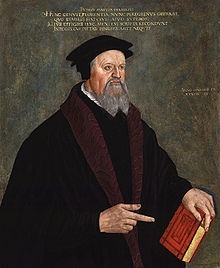
Peter Martyr Similarities and Differences Between the Old and New Covenants

Image

The following is taken from Peter Martyr Vermigli’s Common Places, published in English in the year 1574, and translated by Anthonie Marten. Much of the spelling has been modernized for easier reading, and the sentence structure has been slightly modified from time to time. In no place have I willingly or knowingly altered the sense of his statements. Vermigli’s locus on the covenant comes in part 2, chapter 16, and is entitled all the likeness and unlikeness of the old and new league or covenant. The work as a whole (in its original type) can be read here. Just go to page 207 in the PDF file for the section on the covenant. I have only made it part way through this transcription, and am currently trying to complete it. However, I figured that even part of it would be better than nothing. You can read the whole chapter in the link above, but this should be a little easier going for you who can’t read older English very well. Not only are the words spelled differently, the type is hard to read, too! I hope ye haue a goode tyme reeding thys updayted texte.

I did not write this or Translate it. I borrowed this from the site link below. I have done this before with the authors permission. Just trying to get the word out.
Randy Martin Snyder

https://sites.google.com/site/themosaiccovenant/peter-martyr-vermigli/of-the-similarities-and-differences-between-the-old-and-new-covenants

Of The Likeness and the Unlikeness of the Old and New Covenants

The word league, in Latin foedus, is derived from the verb Ferire, “to Strike,” because the ambassadors of each party killed a pig, from which etymology perhaps the Hebrew word Berith differs very little. By which outward sign also, they wished by prayer the destruction of that part which should violate the covenant. We may gather this out of Livy, in his first book after the building of the city: and as the same author writers in his fourth book De bello Macedonico. There are three kinds of leagues [or covenants].

  1. The first kind is where the conquerors make laws unto those they have conquered, in punishing and commanding them in such things, as they will afterward have them to do.
  2. The second kind is, when things being yet in their own state and neither party overcome, they agree together, that such things, as are taken from each party, may be restored, and that covenants of peace may be established.
  3. The third kind is, where there hath been no war between the parties; and when certain cities or princes are joined together by some covenants either to live the more peacably, or else to take some public affairs in hand.

These things being on this wise declared, let us show what a league [covenant] is. A league [covenant] is that bond between men, whereby they testify, both by words and signs one to another, that they are bound to perform certain things, so long as they deal faithfully either towards the other.

And it be a bond, and pertain to relation, it is grounded upon human actions; and I referred to those things, which the parties confederate ought to perform one towards another. It is expressed by words, and for the most part, signs are added, When God made a covenant with mankind, after the flood, he not only set forth the form of the bond by words; but he also put the rainbow in the clouds as a witness [pg. 583] and in the covenant, which he made with Abraham, he put the sign of circumcision. Furthermore, in the same, which was made by Moses at Mount Sinai, there were twelve pillars erected, and the people were sprinkled with blood. Joshua also, when he should die, erected by a very great stone; thereby as it were to sign the league renewed between God and the people. And what the promises were, which should be kept by each party, the Scripture often times teaches. For God promised, that he would be the God of his people; namely, that he would be with them, to help them, to deliver them, and by all means (as touching all kind of good things) to bless them. The people again promised, that they would count the Lord Jehovah for their God, in believing, worshipping, and obeying him. And Christ was in the league [covenant], as the mediator between each party. This is the exposition and nature of the covenant between God and man.

The League [covenant] is divided into the new, and into the old. Which division is not of a general thing, into special things; but of the subject into accidents. Forsomuch as in either league, the thing itself, and the substance, is utterly one and the self-same: only certain qualities do vary. For the old league was made with only one nation of the Jews, and had certain things annexed; I mean the possession of the land of Canaan, the kingdom of the Jews, and the priesthood of Aaron, and also the promise of the Messiah, according to the birth of the flesh. Moreover, it had very many signs of ceremonies, and sacrifices very fit for that age. It also were mysteries of salvation, and promises of eternal life; although far more obscure than they were afterward taught to us. And on the other hand, in the new league there are properties, in a manner contrary. For it pertains not to any one certain nation, but two all nations, however far the world is extended: neither is there any peculiar civil administration joined to it.

Furthermore, there are but very few ceremonies and outward signs, and they are very plain and simple, annexed unto it. And (to conclude) all things are contained more openly, plainly, and manifestly in the new testament, than they are in the old. By these qualities both the old and new league [covenant] differ from one another: however, the thing itself, and the substance remains one and the same. For as Jehovah would then be the God of the Hebrews: so has he now decreed to be the God of the Christians. And that also, which they in those days promised; namely, that they would believe in the true God, and obey, and worship him as he hath prescribed; we also ought to perform. Christ comes between both parties as a mediator: and forgiveness of sins; yea and eternal life also is promised by him. Also, the moral laws remain the very same now, which they were then.

Paul, in the eleventh chapter to the Romans, has very well declared, that the league of the fathers in old time, and ours, is all one; when he compares the church with the tree, which hs Christ as it were the root. Then he adds that from such a tree certain branches were cut off; namely, the Hebrews, who did not believe; and we who are Gentiles, were planted in their place; that is to say, we were chosen into the same league [covenant] wherein they were comprehended. The same tree is affirms to remain, into which some are grafted in by faith; and from the which other some, because of the incredulity, he cut off. Wherefore, each league [covenant] contains both the law and the Gospel. And there be in either of the testaments, the self-same sacraments: as it is declared in the first epistle to the Corinthians, the tenth chapter: for, the fathers were all under the cloud, and were baptized into the sea, and did eat the same spiritual meat, and drank of the spiritual rock following them, and the rock was Christ. Furthermore, we grant, that as touching outward signs, there is some difference between their sacraments and ours: which nevertheless, as concerning the things signified by the sacraments, is found to be nothing at all.

Otherwise, the argument of Paul might not have persuaded the Corinthians, to be subject unto the same punishments that the Hebrews were. For they might have said, that they had far better sacraments than had the Hebrews; and that therefore they should not so much need to fear, lest they should suffer the like; forsomuch as the excellency of the sacraments might put off those misfortunes, from which the Hebrews could not be delivered by the sacraments of the law. So as the apostle took away this shift from them, and makes our sacraments and their equal and alike, as touching the things themselves. He writes also to the Romans, the first chapter, concerning the Gospel; that it was in the old time promised by the prophet in the holy Scriptures [Rom. 1:2]. And in the third chapter he speaks on this wise; But now is the righteousness of God made manifest, being testified by the law and the prophets [Rom. 3:21].

Neither may you say to me, that these things were indeed promised in the holy Scriptures of the old testaments; but not that they should be performed unto the men that lived in those days. For the apostle does very well show the meaning of this place, when he [pg. 584] says; that Every aw doth speak to those men, which live under it. And it is not to be doubted, but that the fathers were justified after the same sort that we are now at this present. For even they were no less justified by faith only in Christ, than we are. Wherefore it is written in the book of Genesis of Abraham, that he believed, and the same was counted to him for righteousness. John also testified that Christ said of Abraham, that he had seen his day, and rejoiced. The epistle to the Hebrews, chapter 13, affirms that Christ was yesterday, and today, and remains forever. Wherefore, even as we are said now to be saved, not by works, but by the meer mercy of God, through faith in Christ: so was it with the fathers at that time; for they were justified by no merits, but only by faith in Christ. Furthermore, what obedience so ever the fathers had toward the commandments of God, and also faith in the promises: those things were not derived from their own strength and power; but (even as it also happens unto us) they came unto them by the grace of God and Christ.

It is true indeed, that Jeremiah, in the 31st chapter (as it is also alleged in the eighth chapter to the Hebrews;) thatThere must be another league made in the name of God, not as it was made in the old time with the fathers. And among other things he says, God would give his laws in the hearts and inward parts of men; so that none should need any more to teach his neighbor: because all, from the least to the greatest, should have the knowledge of God. And further it is said, in the person of God; I will be merciful unto their sins, and will no more remember their iniquities, etc. As touching those words, both of Jeremiah, and also of the epistle to the Hebrews, we must understand; that they prove not that there is any difference between the testaments, as touching the substance and the thing itself; but touching the properties and qualities: as we have before said. Neither must we think, that the old fathers (who in obeying the commandments of God, and in right faith, worshipped him purely) could perform those things of their own strength or natural power. For, unless they had had the laws and promises of God written in their hearts and minds, by the Holy Ghost; and also a will, bu the grace of God, ready to obey his commandments: they had never been able to perform such things.

They wanted not therefore the light of God, which shined before their eyes, to make them believe: yea and their sins were forgiven them through Christ. So then they had also the fruition of those things, which god promised to give in the new covenant. The only difference herein was touching the largeness, and perspicuity. Far at that time, those gifts were kept within the compass of a few; but now they are everywhere communicated to the Gentiles. In that age, they were somewhat obscure, but to us they are made evident and clear, that we have no more need of the old discipline. Hereby it manifestly appears, how they err from the truth, who affirm that the old league [covenant] had promises only for possessing the land of Canaan, and for worldly felicity; and that the people of the Hebrews were bound only to an outward observation of certain rites and works, and not to show forth good and perfect motions of the mind towards God. The prophets do not interpret the matter to be in such wise; nay rather, they deny that God esteems any outward works without inward godliness: and they pronounce in every place, that the ceremonies, which be void of faith, and of the fear of God, are a most grievous burden; and so troublesome, as he cannot abide them.

Yea, and the law itself makes express mention of the circumcision of the heart; and God every where requires, that we should hear his voice: which is nothing else, but to deal with him by faith. Wherefore, the faith of the promises and commandments of God, ought to be counted as the root and foundation, which always abides: when as outward sacraments, and visible rites, should at the length be changed. So that it is very manifest, that God would not have them for their own sakes. Howbeit, they endured so long, as men were indued with a childish spirit; as Paul speaks to the Galatians, while they lived as yet under tutors, and as yet differed very little from servants. But when they received a more full spirit, then were the sacraments and childish rites (as Augustine says) taken away. It is manifest therefore, that the difference between the two covenants must not be taken of the thing or substance; but of the qualities and properties.

Let them therefore forsake their soul error, which think, that God in the old law only promised earthly things, as though at that time he only provided for the bodies, and not for the souls: as do shepherds, ploughmen, and hogheards; which only have a care of the bodies and carcasses of their sheep, swine, and oxen; neither endeavor they any thing else, but to make those beasts strong and fat. We must not so imagine of God, who in such sort made a league with the gathers, as he promised them the chief felicity, which specially appertains unto the soul. Also it is written in Ps. 144:15, Blessed are the people, which have the Lord for their God. In Deut. 30:6 also, God took upon him to bring to pass, that they should walk in [pg. 585] his commandments. But what more? Our Savior, out of the words of the old league [covenant], has most aptly taught the resurrection of the dead. For when the Lord said, that he was the God of Abraham, Isaac, and Jacob (and they were then dead;) Christ inferred, that they were not then dead, but that they still lived, and that their bodies should be resuscitated; namely, in the blessed resurrection. Hereunto pertains that which God asserted to Abraham; to wit, that he himself would be his reward (Gen. 15:1). Which words plainly teach us, that in that covenant were not promised carnal and earthly good things alone.

Undoubtedly, it were a great shame, even for kings and princes, which (being compared unto God) are but flesh and blood; if they should be counted to govern the public weales, in respect only of the bodies of subjects; seeing they profess, that they provide for the outward commodities, quietness, and peace of their citizens; because they may live happily, and according to virtue. So then, if earthly princes provide goods of the mind for their subjects, is it not fit, that God himself did provide far more excellent things for the public weale of the Israelites, whom he faithfully governed? Furthermore, I say not how foolish it is to believe, that the forefathers, by the league (covenant), bound themselves only to outward rites, and visible ceremonies, whereby they would worship God; seeing the very Ethniks (Gentiles) were not ignorant: but rather, they have most planly testified, that the worshipping of God does not consist in those things. For Plautius in Rudentewrites thus; they think that they please God with figts and sacrifices, but they loose both their labor and cost. I will not declare those which Plato writes in his Alcibiades concerning this matter. Yea, and (as I have taught before) the law itself and the prophets declare, that the things was far otherwise.

We will note also, that the fathers made a league (covenant) with God; not only for themselves, but also for their posterity: as God again, for his part, promised that he would be God not only to them, but also to their seed and posterity. Wherefore, it was lawful for them to circumcise their children who were yet infants. And in like manner it is lawful for us also to baptize our little children, when they are yet infants; inasmuch as they also are included in the league [covenant]. For they, who already have the thing itself, there is nothing that may lett, but that they should receive the sign. It is plainly written in Deuteronomy 29 that “the covenant was made, not only with them, which were present, but also with them who were absent, and not yet born.” But some doubt, whether the posterity may be bound by their forefathers. We do answer: we must look whether the things which were promised to our forefathers were just and honest; then we must consider whether these promises pertained unto civil things, or unto godliness. When they are made for civil things, the bond is firm; because it is not lawful for the posterity to infringe the contracts of their forefathers: such as are buyings, sellings, bargains, and things like these. Provided that they contain nothing that is shameful, dishonest, and unjust. But if the bonds and covenants belong to godliness, or to a right faith, then the obligation is of full strength, because we are all bound to true godliness, and to a sound faith, although there were no covenant to bind us. But if the forefathers have bound themselves and their posterity, unto dishonest and wicked things, it is no bond at all. But whereas God so humbled himself, as to enter in league [covenant] with men, that comes of his own mere mercy and good will; to stir us up thereby more and more, to do those things, which otherwise is our duty to do.

But some affirm that Paul takes something away from the Old Testament, when in 2 Corinthians he calls it “the ministry of death.” And to the Galatians he writes, “you have begun in the Spirit, take heed that you do not end in the flesh.” And in the same epistle he shows that whose who are under the law do persecute those which belong to the Gospel. But in such places as these, Paul speaks of the Old Testament as it was thrust upon them by the false apostles—without Christ and without faith. Then it is as if you should take away the very life from it, and leave nothing remaining but death and offense of the flesh. But when the apostle speaks of the law by itself, he writes far otherwise. To the Romans it is written: “The law is indeed spiritual, a holy commandment, just and good; but I am carnal, etc.” And to Timothy: “For we know that the law is good, if a man uses it lawfully.” Wherefore, when as it seems that the law is diminished or reproved by Paul, that is not said in respect of itself, but for our fault’s sake. For it meets with those who are defiled, and endeavor to resist it, then it breeds those discommodities. Or else (as I have said) he speaks thereof, so far as the false apostles severed Christ from the same [the law]. Perhaps you will affirm that the false apostles did not take away Christ, but rather preached the law together with him. But nevertheless, seeing that they taught that he was not sufficient unto salvation, no doubt they took him away. For he that has need of the law to save man is not [pg. 586] the true Christ that was promised.

But because Paul said out of the testimony of Isaiah that “this is a testament,” and that we read the same thing in Jeremiah 31, that “the new covenant herein cnsists, that the deliverer should come, and be merciful to iniquities,” there arises a doubt, whether the new testament be diverse or not. Concerning this matter I have spoken a little before, but now I intend to treat it more largely. At first sight they seem to be altogether diverse, sot that the one is altogether distinguished from the other. For in Jeremiah it is said that “there should be a new covenant, and not according to that which he made with the fathers.” And the Epistle to the Hebrews adds, “When it is said, a new, then that which is old is abolished.” But does not see, that if one thing abolishes and makes void another thing, it differs altogether from it. There is also another argument, for (as they say) in the Old Testament, there was no forgiveness of sins. For the epistle to the Hebrews, chapter 10, says that “the blood of goats, and of oxen, and of calves could not take away sins.” But in the New Testament, no man doubts that there is remission of sins: so as no man will say, but that the things, which in so great a matter differ, are diverse.

Yet this on the other side is to be considered, that that faith, in which justification consists, is all one in either testament. Moreover, the Mediator is one and the same, namely, Christ Jesus. And the promise of remission of sins, and of eternal life through him, are all one. The commandments (at least those which are moral) are all one. The signification of the sacraments is all one. The root and plant our which some Jews were cut off and into which we were grafted in their place is all one. All these things plainly declare that either testament, as touching the substance or essence (if I may so call it) is all one thing. Although there must be granted some differences, by reason of the accidents. These are that Jesus Christ was there known, as he who was to come, but with us he is known as he who has already come. Also, their signs were different from ours in form, but of like strength in signification, as Augustine says. Moreover they had certain and assured public wealth, for the preservation whereof, they had civil precepts delivered to them, which we do not have. And finally, unto the promise of remission of sins by the Messiah, there were in old time added a great many other promises, as of the incrase and preservation of their posterity, and of the possession of the land of Canaan, which promises we do not have. And besides all this, our sacraments are easier and fewer in number, and are also more manifest and extend much further, seeing that they are not shut up in a corner, as theirs were in Jewry; but are spread abroad throughout the whole world. Wherefore we may affirm, that the New Testament and the Old are indeed all one, as touching the substance; and differ only in certain accidental things, which we have now mentioned.

But now it remains to answer the two arguemtns which were brought forth before concerning the remission of sins. We do not deny that the same [remission of sins] was in the Old Testament, seeing that if we consider the promise, which there also was of force, the old fathers were justified by the same. For it was said of Abraham, “He believed God, and it was imputed to him to righteousness,” as the apostle has declared. And David says, “Blessed are they whose iniquities are forgiven, and whose sins are covered” (Ps. 32:1). Yet if we look upon the sacraments or ceremonies, they did not pardon sins, as touching the work; neither yet do our sacraments have strength to do so. But whereas Paul says to the Hebrews that “the blood of goats, oxen, and calves could not take away sin” (Heb. 10:4), we do not deny this to be true. But yet in the meantime, neither does Paul deny that the faith of the old fathers (whereby they had a respect unto Christ, and embraced him in the signification of those sacrifices) did justify and obtain remission of sins. Doubtless the blood of those sacrifices washed not away the sins of the world, but the the blood of Christ alone, as he himself said, “This cup is the new testament in my blood, which shall be shed for you, and for many for the remission of sins” (Luke 22:22).

But whereas we are said to be baptized into the remission of sins, the meaning whereof is that by the sacrament is remission of sins is sealed and signified unto us, which we have already obtained by the blood of Christ. This same thing is also done in the Eucharist. And faith always ought to go before the receiving of the sacraments, if we receive them rightly, and the order not be inverted. For just as without faith men eat and drink unworthily, so also without faith baptism is unworthily received. Yet this must be understood concerning those who are of full age. Concerning how it is with infants, we will declare elsewhere. If faith, then, goes before [the sacraments] it is manifest that sins are forgiven, because the sacraments that follow seal and also confirm us concerning the will of God. And when they are set forth unto us, they oftentimes stir up faith; no otherwise than the word of God does, when it is heard.

So that is not possible but that faith, being [pg. 587] newly stirred up is apprehended more and more, justification is apprehended more and more, and new strength of restoring is laid hold upon. And therefore, whereas Chysostom (interpreting these words, “When I shall take up their sins”) says upon the same: When they were yet uncircumcised, when they did not yet offer, and when they did not yet other things pertaining to the law, their sins were taken away. Certainly he must no be so understood to mean that the fathers in ancient times, when they did these things and by them exercised their faith (because they saw Christ to be signified in them) had not thereby fruit as we have. But rather, he meant that these things now after Christ has suffered are unprofitable, and that in ancient times they did not give grace by the work itself, as the Jews dreamed. Wherein also in our day the sophistical Divines are deceived concerning our sacraments.

But concerning the other argument, that in the Epistle to the Hebrews it is said that “The Old Testament is abolished, and made void, the new taking its place”; and whereas Jeremiah says (31:33) that “God would make a new league, not according to the league he made witht he fathers, when he brought them out of the Land of Egypt,” we answer as follows. There the league is taken for the law, and is distinguished from the Gospel. This is clear because he said that he will write his laws in their hearts, and ingrave them in their inward parts. But that thing is not agreeable with the law, which only shows sins, condemns and accuses. Neither does it give strength; yea, it rather after a sort commands infinite things, and lays such a burden upon us that we are not able to bear. And therefore the prophet there says that “They did not abide in his covenant.” So as this word league, or testament, is not there so taken as we now take it. For as where here intreat of it, it comprehends both the Law and the Gospel. And in this respect there is no difference between the old testament and the new, but only as we have declared.

And if you will say that the prophet there also understands this word “testament,” in such a way as we now speak of it, we may then grant that by the coming of Christ, some abrogation is made, seeing that theose accidents, conditions, and qualities, which we have shown in the old testament, are now abrogated. Wherefore, therein is used the figureSynechodoche; whereby a thing is perfectly or absolutely said to be abolished or made void when it is only taken away as touching some part of it. The Jews are wonderfully troubled with this sentence of the prophet, and can scarcely tell what to say. For while they seek to defend the old law, and so to defend it, as they say nothing of it is to be changed. And they reprove us because we have changed circumcision into baptism, and the Sabbath day into the Lord’s Day, and have rejected many other things. How can they affirm that a new league shall be made, and not according to that which was made, when they were brought out of Egypt?

Here they can scarce tell which way to turn themselves. Howbeit, lest they should seem to give place, they say, that only the manner shall be different, and think that the league, as concerning the thing itself, shall be all on: but that under the Messiah it shall be more firmly and more surely established. But we may more truly say that this was done at the beginning of the church, when so great an abundance of the Holy Spirit was poured out into believers; that not only they spread abroad the Gospel throughout the whole world, but also no torments, no persecutions, were they never so horrible, nor death, though it were most sharp, could cause them to depart from the league which they had now through Christ made with God. And as many as are faithful indeed, do willingly and of their own accord cleave to this truth, and unto holiness. And forasmuch as here is made mention of the league, let this be understood; that it is for the most part of the Latins calledTestamentum; of the Grecians diatheke; of the Hebrews Berith, all which words do fitly express it.

But here again rises a doubt: because if the thing be all one as well as on the one part as well as the other, in the sacraments of both testaments, how may ours be said to be greater in power and vertue [efficacy]. Furthermore, how could it be that they did eat the flesh of the Lord, seeing that the Son of God had not yet taken the same upon him. To the latter question I say: in the Apocolypse it is written, that the Lamb was slaine fromt he beginning of the world (Rev. 13:8; cf. 1 Cor. 10:4). For to the foreknowledge of God all things are present, though they be never so far off. Wherefore, Christ, seeing he was to come, and was to be offered for us upon the cross, in this respect was comprehended of the fathers by faith, and was food for their souls unto eternal life. For those things which be furthest off from us, the same does faith make present. So that they took hold of the same Christ which we at this time do enjoy. But the difference stands in the time: for they believed that he should be born, and we that he is already born. They affirmed that he should die, and we affirm that he has died.

Wherefore Augustine, in his 16th book Against Faustus, says, that he vehemently errs, who thinks that the sacraments of the Jews ought to be retained in the Christian religion; seeing that God has now finished what he would have [pg. 588] to be done. And it was necessary that other signs should be ordained. Neither ought this to seem absurd. For when we signify anything that is done, or that is to be done, we use many different manners of speech. He writes the very same thing unto Ianuarius, to Optatus, and elsewhere. Neither is that any left, which the same father, upon the 73rd Psalm, speaks on this way: Their sacraments promised salvation, ours declare a Savior. The Papists wonderfully boast about these words, and cry out: “our sacraments give grace, which the sacraments of the Hebrews could not give.” Howbeit, what Augustine’s mind was in that place, they cannot tell. He meant nothing else, but that which he taught against Faustus, namely, that our sacraments do give and exhibit Christ. That is, they testify and bear record that he is given and exhibited. For he adds: I say not, that it has now salvation, but because Christ is now come. And if Augustine at any time says that the thing, which is now unto us, and that was in times past promised unto the Jews is not all one, undoubtedly he deals concerning other things, and not touching that which was principal in the promises of God. For in them, besides Christ, there was promised an earthly kingdom. Also the country of Canaan, which was a land flowing with milk and honey, and other such similar things were promised, which are strange and different from the promises of the Gospel. But Christ is common, both to us and to them, and is to us no otherwise than he was to them.

Now I come to the former question, in which it was asked, “How can our sacraments be of no more power, if the thing is one on both parts?” To this I answer: whe the self-same thing is set before us, of which one man takes more than another, there is difference in the thing itself, but in the instrument whereby it is taken. As if so be that a heap of money is set before any man, from whence it may be lawful for every one to take as much as he is able to hold in his hand; the larger and stronger are anyone’s hands, so much the more may he take from the money set before him: even so, seeing our faith, by which we comprehend Christ is greater and stronger than was that of the Jews, so we take more of Christ than those in the old time did. But you will say, “How can our faith be greater than the faith of the Jews?” Here it is necessary to answer warily. For there were some among the Hebrews endowed with excellent faith, namely, the prophets and patriarchs, of which many gave even their lives for the sake of religion. Neither is there any more believed by us than was by them, seeing that there Church and ours is all one, & Christ is ours alike. But the difference is in the perpecuity of the things believed. For to us in these days all things are more clear and manifest than they were to them. Unto us Christ is born, is dead, is risen out of the grave, and is taken up into heaven: all which things they also had, but more obscurely, and as it were in a shadow.

Seeing therefore that these things are more bright and manifest to us, our faith also may be called greater and more sure, because it is more stirred up by things that are clear, than by things that are obscure. For this reason in the past the faith in Christ was barely [“verie smallie”] advanced beyond the borders of Jewry, whereas at this day it is spread over all the world. And when I say that our faith is greater than the faith of the Jews, I mean that conerning their universal state, and as it happened for the most part and in most places generally. I do not mean it concerning particular persons. For I dare not affirm that the faith o fany man was more steadfast than the faith of Abraham, of David, of Isaiah, and men like them. For Christ testified of Abraham that

Creative Arts for the Persecuted Church

One of the most loveliest souls I know, whose life God has graciously loved me through, has been given a platform for a wonderful venture on behalf of the persecuted Church. Thank You Alliance of Confessing Evangelicals. RMS

“Alliance of Confessing Evangelicals”

Image

Interview taken from here:
Creative Arts for the Persecuted Church [The Alliance of Confessing Evangelicals]

Creative Arts for the Persecuted Church
The following is an interview with Heidi Zartman who has recently started an internet business selling beautiful greeting cards. The unique feature of this business is that the profits are raised to help the persecuted church. The interview was conducted by Carolynne Waddington. We are encouraged by this kind of outreach and wanted a larger audience to know about it.

1.Tell us a little about yourself.

I am a stay at home wife, married twelve plus years to my increasingly dear husband Ruben. I’m a member of the Free Presbyterian Church of Indianapolis, which I’ve been attending since I was 13 years old — I was married in this church by our present minister. I grew up in a Christian family, for which I am deeply thankful, but did not really come to know and love the Lord until I was a teenager; and it was very evident in the circumstances by which He drew me again after I rebelled against Him, that He loved and knew me first.

2. What is the persecuted church?

When we speak of the persecuted church, we are generally referring to the body of Christ in circumstances where it is dangerous to confess His name. This is what I mean when I use that term on my website. Christians in many countries face serious consequences for their profession of faith — social ostracism, fines, loss of employment, loss of their homes, their well being, their freedom, their dignity, their loved ones, their lives. They often do not have the same freedoms we do to meet and encourage one another in worship.

My profession of faith unites me to these Christians, in uniting me to Christ. We are one body in the Lord. He is our tie. I cannot be part of His body without becoming a partaker of their witness and of their sufferings.

John Calvin said that God designs not to deal with his church ‘too delicately’ in her earthly condition. All of us, as we are in Christ, will experience tribulation in some form; and we are always to be seeking to love and minister to one another’s need — this is one of the ways the world identifies us as belonging to Christ (John 13:35). But we are called to especially consider and support those suffering hostility for their faith (Hebrews 13:3).

3.How did you become interested in helping the persecuted church?

My earliest encounter with the persecuted church was as a little girl, reading a book written by a former member of the KGB who had been converted to Christ. I remember a section in which they disrupted a baptism and stripped the women, extinguishing their cigarettes in these womens’ bodies. I felt so ill I could scarcely function for some time. I couldn’t understand why God would allow this to happen to those who were calling on Him to save them, who were identifying with His name.

As I have grown older, my consciousness of the suffering of my family in Christ has not diminished, but it has been contextualised in various ways. One is that the world is full of suffering, it has always been full of suffering since the fall of Adam, and God’s people are not called to be a witness by being spared this devastating experience. Another thing I have become aware of is the beautiful progression of Hebrews 11. It begins with the examples of people who altered their circumstances by faith, and without any warning it suddenly transitions at the height of its eloquence to people whose circumstances were not altered, and who seem to have been, in earthly terms, destroyed by their circumstances. The focus is changed from the miracles that were performed by believing to the miracle of belief itself in the face of everything. This is the victory Christ gives His own. This is the witness the world really needs.

The most important change in my context for the suffering of believers is an increasing consciousness of the earthly suffering of Christ, and how sharing His experience is the only life worth living here.

My husband and I experienced, in a small way, the loss of a home due to violence last year. We were advised by the police to immediately vacate our first home after a break-in in which a knife was left in our wall. We’ve been able to stay with my wonderful family while our own lives have been disrupted. We need our families for practical support when our circumstances fall apart. And we in free countries and more prosperous circumstances are the family for the persecuted church.

4.Tell us about your cards and your website.

The cards sold through October Wednesday are handmade. Most of the pictures are of the beautiful back yard of the home we lost; and that seems appropriate. Some of them are from other travels. The texts are from figures throughout church history. I hope the images of God’s work in creation and the texts will serve to cheer and comfort other people, as they have me.

The store website is: http://www.octoberwednesday.com

5.How do your cards help our brothers and sisters in the persecuted church?

Net profits (minus the cost of materials, postage, transaction and website fees, and taxes) from the cards go to the needs of our brothers and sisters in Christ. Every time a card is purchased through October Wednesday, at least half the purchase price will go directly to donation. Presently the cards are priced at 3.00 each with free shipping included, and 1.50 of that will go directly to donation. Whatever profits remain when I do taxes and come up with a statement will then be donated.

But this effort would not be possible without ministries like that of the Middle East Reformed Fellowship. The Middle East Reformed Fellowship provides literature and radio broadcasts, training, and diaconal aid to believers and churches throughout the Middle East, Africa, and Asia. I am not officially affiliated with them, but I did contact one of their representatives when starting the business, and he verified that all funds could be donated through their diaconal aid program, earmarked for the needs of those suffering for their faith.

The Middle East Reformed Fellowship’s website is: http://www.merf.org/ There is a link as you scroll down on the left to sign up to receive MERF news. This helps us to know better how to pray for the work they are engaged in and the Christians they are ministering to, and I am also very grateful for that aspect of their ministry.

Old Posts on the Mosaic Covenant / the New Reformed Paradigm

image

Old Posts on the Mosaic Covenant vs. the New Reformed Paradigm

Why I was drawn into this.

https://rpcnacovenanter.wordpress.com/2014/06/28/why-i-was-drawn-into-the-nuanced-republication-and-mosaic-covenant-study/

Dr. Robert Strimple on Republication and the Mosaic Covenant

Dr. Robert B. Strimple on the Mosaic Covenant and Republication of the Covenant of Works

It isn’t about disctinctions it is about dichotomy

The Charge of Lutheranism is not about distinction, it is about dichotomy

A Very Good Discussion on R. Scott Clark’s 7 point Summary of Republication /  He mistakenly thinks

https://rpcnacovenanter.wordpress.com/2014/10/22/very-good-discussion-on-r-scott-clarks-7-point-summary-of-republication/

The Marrow of Modern Divinity and the Recent Republication Issue

The Marrow of Modern Divinity and the Recent Republication Issue.

The Covenant of Grace, the Sinaitic and the New

The Covenant of Grace, The Sinaitic and the New

OPC Special Committee Report

Confusion in the Camp / Merit and Reformed Theology

OPC Presbytery Northwest Debates Republication: Merit, Grace, and the Mosaic Covenant. Vote to send it to General Assembly

OPC Presbytery of the Northwest Debates Republication: Merit, Grace, and the Mosaic Covenant. Votes to Send Overture to the 81st General Assembly.

OPC Video – Session Two – Presentation on Particular view of Republication

OPC-PNW Republication Session 2

WCF 19

Westminster Confession of Faith Chapter 19. The Law and the Covenant of Works.

Republication Beeke / Jones

What is Republication of the Covenant of Works?

Lutheran and Reformed Differences in the Divines.

Lutheran / Reformed differences recognized during the time of the Westminster Divines

Mosaic Covenant and the modern justification / sanctification controversy

The Mosaic Covenant and the Modern Day Justification and Sanctification Controversy

The Mosaic Covenant same in Substance as the New Covenant

The Mosaic Covenant, same in substance as the New?

THe Modern Day Controversy justification / Sanctification

The Mosaic Covenant and the Modern Day Justification and Sanctification Controversy

Depraved Christianity might be antinomian Christianity

(What is the Gospel?) Depraved Christianity might be Antinomian Christianity pt. 3

Samuel Rutherford the Covenant of Life opened.

The Covenant of Life Opened chapter XI

James Durham the Covenant of Works and the Mosaic

The Covenant of Works and the Mosaic Law / James Durham

Vindication of the Law and Covenants Anthony Burgess

Vindication of the Law and the Covenants (1647) pp.231-237

Skirting the Issue  / Clark

Skirting the issue?

Dr. R. Scott Clark is not teaching the Broad View of the Westminster Divines

Clark is not teaching the Broad view of the Westminster Divines.

I know Dr. Clark seems to get a lot of attention here.  It isn’t because I have some personal vendetta.  Dr. Clark is accessible and easy to reference since he writes and contributes often in the world of modern media.

Typology and Republication (Patrick Ramsey)

http://patrickspensees.wordpress.com/2013/11/22/typology-and-republication/

“Two Kingdoms” Propositions and some Responses

https://rpcnacovenanter.wordpress.com/2013/02/06/two-kingdoms-propositions-with-some-responses-or-counterpoints/

Modern Day Reformed Thought and Two Kingdoms

https://rpcnacovenanter.wordpress.com/2012/09/18/modern-day-reformed-thought-two-kingdoms-view-vs-the-biblical-one-kingdom-view/

Sundry Quotes from Solid Reformed Men on Law and Gospel

https://rpcnacovenanter.wordpress.com/2012/09/19/sundry-quotes-from-solid-reformed-men-on-law-and-gospel/


OPC REPORT ON REPUBLICATION

I am somewhat satisfied with the final report.  It should prove and settle the problem that some of our Modern Popular Professors and Authors are teaching contrary to the Scriptures and the Westminster Standards when it comes to the Mosaic Covenant.

http://www.opc.org/GA/republication.html


2013 Reformation Society Conference Sanctification Overcoming Modern Challenges

Image

Is a believer’s sanctification simply believing more in his or her justification? What place do effort and discipline have in this process? How can we focus on growing in Christ as we live in a fast-paced and distracted society? Through this conference, Dr. David Murray and Tim Challies will address these questions, focusing on four modern challenges to our sanctification and giving practical steps to overcome them so that we daily grow more and more to be like our Lord Jesus Christ. They will address the radical and extra-ordinary kind of life strongly advocated by many Evangelicals and look at the modern version of “let go and let God.” They will call us to live lives of focused godliness and pursue positive sanctification. In all, we will be strengthened as we seek to fight the “good fight of faith” and press on in righteous and holy living.


The conference is free of charge. A freewill offering will be collected to help defray expenses.


For more information, see the conference brochure athttp://www.secondrpc.org/wp-content/uploads/2013/07/2013-brochure.pdf

Confusion in the Camp / Merit and Reformed Theology

Image

Confusion in the Camp

Merit and Reformed Theology

In the Reformed Church, there has been much debate in the past decade over issues such as Natural Law, The Two Kingdoms, the Law-Gospel distinction, Justification and Sanctification, the Covenant of Works, the Covenant of Grace, and even the definition of the Gospel.

In the past few years, it has come to the attention of some ministers of the Orthodox Presbyterian Church that doctrinal confusion has arisen over the doctrine of republication. The heart of the issue lies in a particular formulation of the Mosaic covenant, including the notion that Israel as a “corporate Adam” is under a typological arrangement which entails meritorious works on the temporal level. This confusion is coming to the forefront in OPC Presbyteries when licensure and ordination exams are being conducted. As I understand it, these issues are having far reaching consequences as the church pursues its peace, purity, doctrinal integrity, and practice.

In April of 2012, an Overture was proposed to the Presbytery of the Northwest OPC. This overture called for the 79th General Assembly to establish a study committee to examine teachings propagated in a publication, The Law is Not of Faith, edited by Bryan D. Estelle, J. V. Fesko, and David VanDrunen. Overtures are proposed requests for consideration of doctrinal matters or how things should function in the church. At the April 2012 meeting of the Presbytery of the Northwest OPC, the motion to approve the overture was replaced with a motion to establish a Special Presbytery Committee to study the issues concerning the doctrine of Republication as presented in the teachings of Meredith Kline and the book The Law is Not of Faith. This teaching has far reaching implications concerning the doctrines mentioned in the first paragraph.

Three Ministers from the Presbytery of the Northwest OPC (Randy Bergquist, Andy Elam, and Rob Van Kooten), have submitted their own study regarding the presbytery committee’s new proposed overture for all to review. The study first sets out to give some historical background for the publication the The Law Is Not Of Faith. It discusses the motives and reasons that are stated in the book itself. Next, it analyzes the covenant theologies of John Murray, Norman Shepherd, and Meredith Kline. The authors of the study booklet believe that these three men are the main reasons that this issue of Republication has come to the forefront in recent theological discussion. Their teachings are examined in light of the Westminster Confession of Faith and historic Reformed thought. Part 2 of the booklet turns to a critical examination of the doctrine of republication. Its basic thesis can be summarized as follows: ….the Republication Paradigm (ie., the views of Kline and The Law is not of Faith) uses traditional language and concepts, but redefines them in the service of its own paradigm. Not only do these new definitions fail to harmonize with those contained in the Westminster Standards, they may lead to other systematic changes in our confessional theology.” I would also note that when there are systematic doctrinal changes, there will also be changes in how we apply the Scriptures and practice our faith.

All three ministers are graduates from Westminster Seminary California from which most of this controversial teaching is emanating. A pre-presbytery discussion will be held on September 26, 2013 at First OPC in Portland, Oregon.

https://sites.google.com/site/mosaiccovenant/home

https://sites.google.com/site/mosaiccovenant/paper

Is the PCA liberal or just going off the rails a bit?

image

     I am one who wants to conserve Confessional Integrity because I believe the Westminster Standards are a wonderful summary of the Holy Scriptures. Anyone who doesn’t want to conserve Confessional Integrity wants freedom from them on some level. If that makes them liberal then so be it, I guess.
Conserve
1. to prevent injury, decay, waste, or loss of:
     The Confession is a whole document. It is historically tried and truthful in my estimation. I admit there are things that are unclear to me and my Church has a testimony that runs along with it. But it is my whole denomination’s testimony and we confess it. Maybe we are liberal in some ways compared to what others think.The term Liberalism is not monolitic in understanding. It definitely needs some attachment to a topic.
     There are topics that seem to be more pertinant than others maybe.  The first area that concerns most people has to do what they think about the nature of Scripture. The Confession speaks concerning that issue. Another area has to do with God and who he is. The Confession speaks to that issue. I guess we need to discern what issue we are discussing. When it comes to Soteriology the Confession is quite clear on that issue also. While a person may affirm the confessional standards concerning the nature of scripture and who God is they might not affirm the confessional standard concerning soteriology.
     In the Presbyterian Church the integrity of the Westminster Standards is what the measuring stick is. At what point do we start to label someone liberal? That is a hard question. J. G. Machen definitely set a standard and noted that Liberalism is not Christianity. I guess I need to reread him and find out where he drew the line maybe. Concerning his libertarianism I might consider him a Liberal. LOL. I do not believe the Westminster Standards are Libertarian.
     I have been catching up on some of the Greenbaggins blogs. I normally stay away from it because the commentators seem to speak past each other and it is so disheartening. The recent last few blogs have had to do with the past G.A.( General Assembly)  From appearance and reports even outside of the PCA the last G. A. looks more like American Politics where posturing and heathen tactics are being used.than the methods of assembled prayer and seeking God’s face. As I noted, it is starting to look more like heathen godless politics than a Church following Jesus Christ. How is it that this came to be? Whatever happened to the High Calling in Christ Jesus and the reverence we are to have for His Kingship?
     As sheep we are to consider the conduct of our Elders and follow them. Where does this leave the laymen now? According to Hebrews 13 we are to consider the conduct of our Elders and follow them. Liberal or not, this can’t be anything the writer of Hebrews had in mind when he wrote that we are to consider the conduct of our Elders and follow them. I pray that repentance springs from somewhere. This is too confusing to be from the Hand of The Lord. I don’t want to see a situation likened unto the past where Moses said, “Who is on the LORD’s side? Come to me.” Exodus 32:26 I am saddened in spirit and for our brothers.
 I have heard communication that other PCA Elders wouldn’t recognize the blog posts on Greenbaggins (concerning the General Assembly) as being accurately reported.
My reply to that is…

In all due respect, maybe that is part of the problem. I am not relying upon Greenbaggins. I have been hearing ripples even outside and they aren’t necessarily the bloggers who are of the mind to announce overly harsh criticism. Sure there are plenty of those. There are some solid facts being presented from others that are acknowledging the polity and the results as the things that should have happened per polity. But the discord and maneuvering appears more like political wrangling than looking like a Church that is to seek Christ and adhere to a Standard known as the Westminister Confession of Faith.

It is probably a sad thing that most PCA Elders don’t recognize it as being accurate. I remember when the Federal Vision started raising its head. I was in the PCA then. Most Pastors were clueless as to what it was or even if it was a problem and the Doug Wilson books were filling the pew sitter’s libraries as the teaching was. Most PCA Pastors are tending to real life issues and working out situations in their congregations. That is hard work. They didn’t have the time nor see the urgency of the situation. They were Pastoring (dealing with sinners) and preparing for worship. So they were clueless for a time being. It just seemed like a heresy hunt to some. And I understand that.

All I am trying to say is that I am praying and hope many others are for a recovery. We have a wonderful set of Standards and they are not silent on these issues. We have God’s word and I know it isn’t silent either. The situation represented by many resembled more of a picture of English Parliament and American Politics than it did the picture given to us in Acts 15.  Maybe I am wrong. Either way, where is our example?

I was encouraged to have an optimistic outlook (by a very sound Deacon with whom I have a lot of respect) and consider the fact that the PCA cannot allow false confessionalism to stand as in the recent cases brought up. Especially concerning baptism, justification, Union with Christ, the visible Church, invisible Church, covenant of works, etc. I was exhorted to see that some people do not believe that there is significant sentiment in the denomination for the contrary views that have been discussed recently.


There was also reason to have hope as we see a very committed man heading Covenant Seminary now. We should also recognize that in Revelation 1-3, most of the types of Churches then (and now) have attributes of both commendation and chastisement. Most have some struggle with maintaining right doctrine and even those that were apostatizing sometimes are commended for having a faithful remnant in there midst.


WE MUST BE CAREFUL TO PROTECT TRUTH AND THE GOOD NAME OF OUR NEIGHBOR, ESPECIALLY WHEN BROADLY ASSESSING THE HOUSEHOLD OF FAITH, AND WHOLE COMMUNIONS.

My reply…

I appreciate the optimism some people have. I also appreciate the advice about protecting the good name of our neighbor.  At the same time I cringe because of the many issues I have been noticing in the past few years concerning Law / Gospel, Creationism, Communion, Soteriology, etc, have not been dealt with as they should have been. There are many issues that have been discussed and cautioned about. The leading authors in the PCA today are not leading others down the paths that Dr. Sproul and others from the past 30 years were solidly contending for. For instance, I steer my kids and disciples away from some prominent PCA authors. Do I need to name them? Some are very popular right now.

Also when we consider Revelation 1-3 we should note that Candlesticks were removed as The Lord promised. That isn’t something we should neglect. There was a reason for their removal. We surely don’t want to see that happen. But realistically there are major problems that seem to be swept under the carpet for the time being. As I noted above the recent situation should bring a lot of concern. Whose example are we to follow? Why is the leadership appearing to perform on a level of ineptness that renders confusion and looks more like political wrangling than a Church seeking the Lord’s will?

I appreciate the optimism but it seems to neglect a lot of the reality. Things are not being dealt with properly on a level it seems it should be. We have a PCA Church here in town that has an art museum exhibit as one of its main attractions. It is obviously a model Church from one in New York where many strange issues are spewing forth from. The New York Church is touted by many as a model to immulate. This ought not be in my estimation as I see a lot of confusion and strangeness being spewed forth from that place. There is much to be concerned about. Whose example are we to follow?

I hope this past G. A. is not one that will be touted as a fine example. Ineptness is what it seems to be marked by. Sure the praise and worship may have seemed to be edifying but I am wondering what The Lord thought of it. I am not going to pretend to know the mind of The Lord concerning how edifying the worship was. If the worship was all that great and uplifting I would have thought that it would have transferred over into the other areas of the General Assembly and it appears it didn’t.

I appreciate the optimism but I am very cautious about it also. There does seem to be something very amiss somewhere.

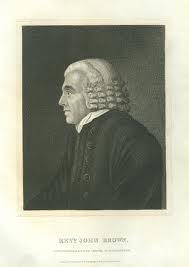
Objection to Establishmentarianism answered by John Brown of Haddington

image

Again, Joshua Hicks has noted another fine answer to an objection concerning Establishmentarianism.  The first one he noted is here. https://rpcnacovenanter.wordpress.com/2013/04/25/objection-answered-concerning-establismentarianism-a-nations-acknowledgement-of-christs-rule/

Another objection commonly put to Establishmentarianism is the fear of tyranny on the part of a non Christian magistrate.  If we press a state established religion, what if a Muslim, Mormon, __________ comes to power? Relatedly, John Brown of Haddington has this to say (and, really, I think his last sentence is quite pithily to the point):

[Objection]:The Christian law of doing to others that which we would have them do to us, demands, That we should allow every man to think, profess, and act in religion as he pleaseth. If we think men heretics, blasphemers or idolaters, our proper method is to manifest the utmost kindness and familiarity to them, that we may gain them to the truth. Every other method is no less dangerous than uncharitable. If orthodox Christian magistrates restrain and punish the spreading of Heathen, Mahometan, and Popish errors or worship,—Heathen, Mahometan and Popish princes will be thereby tempted to restrain and punish the spread of gospel-truth in their dominions, and can plead the very same right for their conduct.
[Answer]:
(1.) Strange! Did not God know the meaning of his own law of equity and kindness between man and man, and the true method of securing or propagating his own religion, when he made or encouraged the laws against seducers, idolaters, and blasphemers above mentioned;—when he commanded his people to avoid false teachers, and not so much as to lodge them in their houses.
(2) With all your pretended benevolence, Would you familiarly lodge in your in your family a notorious pick pocket or an harlot, along with your own children, in order to gain them to the ways of piety and virtue? You would not. Why then, in direct contradiction to the command of God, do you plead for familiarity with robbers of God, defilers, or murderers of souls!
(3) The Christian law of kindness and equity requires me to do all that for the real welfare of my neighbour, in subordination to the glory of God, which I could lawfully wish him, in like circumstances, to do for me? But, must I do evil that good may come, rendering my damnation just? Must I procure “my just liberty to believe and serve God according to his own appointment, by granting my neighbour an unjust, an authoritative licence to insult and blaspheme God, and worship the devil in his stead? Because I wish my neighbour to be helpful to me, in honouring God, and in labouring to render myself and others happy in time and eternity, Must I assist and encourage them in horribly dishonouring God, and destroying themselves and others. None but an atheist, who believes no real difference between moral good and evil, can pretend it.
(4.) When and Where have Faithful adherents to gospel-truth, got much liberty and safety by means of their friends encouraging and protecting gross heresy, blasphemy and idolatry?. . . .
(5) Ought Elijah to have spared, nay protected and encouraged the prophets of Baal, as a mean of securing for himself the protection of Ahab and Jezebel, or, because she was disposed to avenge their death? Must thieves and robbers be benevolently used, protected and suffered to pass unpunished, for fear of provoking their associaus to revenge the just severities used towards them? Let magistrates do their duty, and leave events to God.

(6.) Till you honestly profess yourself an atheist, who believes no intrinsical difference between moral good and evil, never pretend that magistrates, who have their whole power from God, have any power against the truth, or have a right to exercise that power derived from God for the good of mankind, to his dishonour and to the hurt of mankind. Astonishing! Because a power originating from God may be rightfully exercised in promoting his declarative glory, the spread or protection of his gospel, and the happiness of mankind,—May it, must it, therefore, in the hand of other magistrates, be rightfully exercised in promoting blasphemy and robbery of God, and worshipping of devils?—Because it may be rightfully exercised in punishing obstinate and notorious heretics, blasphemers and idolaters,—May it, must it, therefore be rightfully exercised in persecuting and murdering the faithful preachers and professors of Gospel-truths, and worshippers of the true God?—Because magistrates in Britain have a right to punish thieves and murderers, must these in France have as good a right to use Alms givers and skilful and diligent Physicians in the same manner?—Because that which tends to the highest honour of God, and temporal and eternal happiness of mankind ought to be authoritatively tolerated, nay established, every where,—may,—must, that which tends to his highest dishonour, and the most dreadful temporal and eternal ruin of mankind, be every where, in like manner, tolerated or established?—Because in a dearth, benevolent persons may be tolerated, nay highly encouraged in freely distributing wholesome provisions to the poor and needy, may, or must, malicious murderers be therefore tolerated and encouraged in distributing their poisoned morsels, especially if abundantly sweetened among the unwary infants or others?

(7.) The restraint or suitable and seasonable punishment of that which is contrary to God’s law, being commanded by himself, can never have any tendency to introduce corruptions in religion, or persecution for an adherence to gospel-truth. And if some will abuse their power, that must not hinder others, either in church or state, to use theirs aright.

In Light of Recent Supreme Court Decisions, Please Allow My Lament And Thoughts

Image


I am saddened that my children are reaping the immoral decisions of their forefathers. May we be vexed in our souls as Righteous Lot. I lament that our Nation is actively hardening itself against what is good and loving. I lament the fact that freedom from sin is being eroded away. I am greatly disturbed and tormented by the evil that is approaching. I fear the harm that will come when the Law of God’s grace is thwarted for some new bondage to sin. At the same time I take great comfort that we have a God who bends his ear and hears the cries of His children. He is the rewarder of those who diligently seek Him. Hebrews 11:6. I pray that God will grant repentance and that we will have enough common grace to sense the harm this deep sin is creating and going to create. I pray for repentance. I pray for our Nation. God is able to do above and exceedingly more than I can hope for. He is still a God who loves His people and their children. He is the Covenant God of Abraham, Isaac, and Jacob who gave us a wonderful promise in Abraham that he would….. Gen 12:3 And I will bless them that bless thee, and curse him that curseth thee: and in thee shall all families of the earth be blessed.


I want all of the families of the earth to know how good God is and how good His Law is. Jesus summed up the Law in two great commandments and both of them had the word love in them. I want my world, Nation, and all families to know how good God is and how unloving and selfish sin is. I know how unloving and selfish I can be when I don’t want to know God’s will.


I am grateful for the past generations where God used his office of civil authority to recognize truth and call forth counsel from the Church to establish the way we should walk in. Those periods of grace and peace had their birthing pains that bore fruit. May it please the Father to do such a work again. May we be prepared and given the grace to function and work for such an end. God doesn’t cast away his Covenant people but for chastisement and reformation. He is faithful. He will honour those whom honour him.


1Sa 2:30 Wherefore the LORD God of Israel saith, I said indeed that thy house, and the house of thy father, should walk before me for ever: but now the LORD saith, Be it far from me; for them that honour me I will honour, and they that despise me shall be lightly esteemed.


May we, In meekness instruct those that oppose themselves; if God peradventure will give them repentance to the acknowledging of the truth; that they may recover themselves out of the snare of the devil, who are taken captive by him at his will. 2 Timothy 2:25,26

Why Are You Doing This?

This has been a blessed opportunity that 2nd Reformed Presbyterian Church has taken on.

James Faris's avatarGentle Reformation

The Lord led one college student to organize and lead a ministry of teaching English as a second language (ESL) as a ministry of Second Reformed Presbyterian Church here in Indianapolis this summer. As pastor, I have encouraged, supported, and prayed for this ministry, and have been blessed to see other saints take up the hands-on work.

Since we began about a month ago, God has brought twenty to thirty different students from Hispanic, Chinese, and West African backgrounds one or two times each week. They range from young children to grandparents and from those who know almost no English to those who are nearly fluent and simply want to meet more Americans. The work is hard and requires commitment and diligence, but wonderful relationships are being formed, and the Lord has opened many doors in a short period of time. The teachers and students sometimes even share meals together…

View original post 988 more words