Dr. Robert B. Strimple on the Mosaic Covenant and Republication of the Covenant of Works

Image

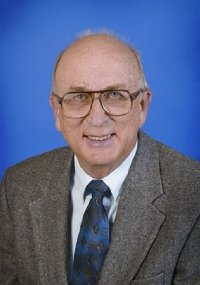
Dr. Robert B. Strimple
I found Dr. Strimple’s thoughts on Republication of the Covenant of Works as portrayed in ‘The Law is Not of Faith’ very true.   “Here in the WCF, it is claimed,one also finds the same legal characterization of the Mosaic covenant even in terms of the republication of the covenant of works…” (p. 43). And I wrote in the margin of my copy: “No, no, no!” That is precisely what is not found in the Confession!” RBS

I find it strange that David Van Drunen is the Robert B. Strimple Professor of Systematic Theology and Christian Ethics at Westminster Seminary California, Dr. R. Scott Clark is the Professor of Church History and Historical Theology at Westminster Seminary California, J. V. Fesko is Acedemic Dean, Professor of Systematic and Historical Theology at Westminster Seminary California, and Bryan Estelle is Professor of Old Testament at Westminster Seminary California.  It is strange that these men have taken up a position that is not confessional especially since one of Dr. Clark’s books is claiming the Recovery of Confessionalism.

Here is the conclusion of the paper by Dr. Strimple concerning Dr. Robert Scott Clark’s position concering WCF chapter 19.

The other relevant blog by Dr. Clark was published much earlier; it is dated  July 16, 2007 (quoted here from footnote 87 on p. 356 of Covenant,  Justification and Pastoral Ministry. Essays by the Faculty of Westminster  Seminary California). There he presented essentially the same argument that he presented in his more recent blog (which we considered above), but with the additional factor of following Thomas Boston in appealing “to the logic implied by the grammar of WCF 19:1 and 2,” and claiming that “the phrase ‘covenant of works’ in 19:1 is appositive to the noun ‘law'” (italics added). “Thus the ‘Law’ is reckoned here as a covenant of works. Thus when, 19:2 establishes ‘this law’ as the subject of the verb “was delivered,” the antecedent can be none other than the law defined as a covenant of works in 19:1.”

Thus, if I am following the “logic of the grammar” correctly, if (as we have shown above) then all the references to “this law” in this chapter, since they all have the same ultimate antecedent (namely the “law” referred to in sec. 1), must also be understood as referring to “none other than the ‘Law’ defined as a covenant of works in 19:1.” But that, of course, is impossible, for that would mean that “this law” spoken of there in sec. 2 as continuing for us is a covenant of works; as also the “law” spoken of in sec. 5 as “forever bind(ing) all, as well justified persons as others”; as well as the references to “the law” twice in sec. 6 as that which “true believers” are “not under…as a covenant of works”! I know Dr. Clark doesn’t believe that, but that is where the logic of his argument would lead him.

When Dr. Clark says in this blog that “the phrase ‘covenant of works,’ in 19:1 is appositive to the noun ‘Law’—”the second expression identifying or supplementing the first” The American College Dictionary—his argument is that therefore “this law” in sec. 2 “can be none other than the ‘Law’ defined as a covenant of works in 19:1.” But if all references to “law” or “this law” in this chapter must be  references to law as a covenant of works, because that is the definition of law in this chapter, that would lead to the consequences noted in our previous paragraph, which cannot be true. The error in Dr. Clark’s argument is that the phrase “as a covenant of works” in sec. 1 is not appositive but restrictive. The little word “as” in the sec. 1 —”God gave to Adam a law, as a covenant or works—is a preposition here in the first sense listed in the Webster New World Dictionary: “as—preposition 1. in the role, function, capacity, or sense of “. The Confession says that God gave to Adam a law as a covenant of works, but it never says, or even suggests, that God ever so gave it to any person or nation after the fall.

In sec. 2 the important phrase “as such” appears, appears immediately after the reference to “this law, after his fall, continued to be a perfect rule of righteousness; and…” The first usage of the word “such” as an adjective listed in the Webster New World Dictionary is: “such—adjective 1. of the same kind mentioned or implied.” Here in sec. 2 the phrase is “as such,” where “such” is a pronoun, meaning “as being what is indicated or suggested” Webster. And what is indicated in the sentence in sec. 2 is the purpose/function stated in the words immediately preceding “as such,” i.e., “to be a perfect rule of righteousness.” The words “as such” do not leap over all the words in the sentence in which it appears to go back to “as a covenant of works” at the beginning of sec. 1!

Note also that the two references to “covenant of works” with negative force in sec. 6—”not under the law as a covenant of works” and later “although not as due to them by the law as a covenant of works”—must be read alongside the positive statement of sec. 2. Question: If true believers after the fall (including those who received the law on Mt. Sinai) be “not under the law, as a covenant of works” (sec. 6), how does the law relate to them?  Answer: As “a perfect rule of righteousness.”

The meaning of 19:1-2 is so clear that I do not understand why any question concerning that meaning should ever have arisen. To state that meaning I can use no clearer words than the words the divines used: “God gave to Adam a law, as a covenant of works…This law, after his fall, continued to be a perfect rule of righteousness; and, as such, was delivered by God upon Mount Sinai…”

Download the short document here.http://tinyurl.com/m26yecj
http://tinyurl.com/q7ftuq5

Religious Autonomy, The Scripture, and the Church

Image

…Deism makes human beings independent of God and the world, teaches the all-sufficiency of reason, and leads to rationalism. Pantheism on the other hand, teaches that God discloses himself and comes to self-consciousness in human beings and fosters mysticism. Both destroy objective truth, leave reason and feeling, the intellect and the heart, to themselves, and end up in unbelief or superstition. Reason criticizes all revelation to death, and feeling gives the Roman Catholic as much right to picture Mary as the sinless Queen of Heaven as the Protestant to oppose this belief. It is therefore noteworthy that Holy Scripture never refers human beings to themselves as the epistemic source and standard of religious truth. How, indeed, could it, since it describes the “natural” man as totally darkened and corrupted by sin in his intellect, … In his heart, … in his will, … as well as in his conscience. For the knowledge of truth Scripture always refers us to objective revelation, to the word and instruction that proceeded from God,… And where the objective truth is personally appropriated by us by faith, that faith still is never like a fountain that from itself brings forth the living water but like a channel that conducts the water to us from another source.

Rome, understanding perfectly well this impossibility of religious moral autonomy, bound human beings to the infallible church on pain of losing the salvation of their souls.  For Roman Catholic Christians the infallible church, and so in the final analysis the infallible pope, is the foundation of their faith.  The words Papa dixit (the Pope has spoken) is the end of all back talk.  History teaches, however, that this theoretical and practical infallibility of the church has at all times encountered contradiction and opposition not only in the churches of the Reformation but inside the Roman Catholic Church as well.  It is not unbelievers primarily but the devout who have always experienced this power of the hierarchy as a galling bond to their consciences.  Throughout the centuries there has not only been scientific, societal, and political resistance but also deeply religious and moral opposition to the hierarchical power of the church.  It simply will not do to explain this opposition in terms of unbelief and disobedience and intentionally to misconstrue the religious motives underlying the opposition of various sects and movements.  No one has been bold enough to damn all these sects because they were moved to resist the church and its tradition. Even Rome shrinks from this conclusion.  The extra ecclesiam nulla salus (no salvation outside the church) is a confession that is too harsh for even the most robust believer.  Accordingly, the “law” we see at work in every area of life is operative also in religion and morality.  On the one hand, there is a revolutionary spirit that seeks to level all that has taken shape historically in order to start rebuilding things from the ground up.  There is, however, also a false conservatism that takes pleasure in leaving the existing situation untouched simply because it exists and—in accordance with Calvin’s familiar saying—not to attempt to change a well-positioned evil (malum bene positum non movere).  At the proper time everywhere and in every sphere of life, a certain radicalism is needed to restore balance, to make further development possible, and not let the stream of ongoing life bog down.  In art and science, state and society, similarly in religion and morality, there gradually develops a mindless routine that oppresses and does violence to the rights of personality, genius, invention, inspiration, freedom, and conscience.  But in due time there always arises a man or woman who cannot bear that pressure, casts off the yoke of bondage and again takes up the cause of human freedom and that of Christian Liberty.  These are turning points in history. Thus Christ himself rose up against the tradition of the elders and returned to the law and the prophets. Thus one day the Reformation had the courage, not in the interest of some scientific, social or political goal, but in the name of Christian humanity, to protest against Rome’s hierarchy…

Herman Bavinck Reformed Dogmatics Volume I pp.80-82

The Wedding of Exclusive Redemptive-HIstorical Hermeneutics with neo-Two Kingdoms Theory

Image

I’m convinced that the wedding of exclusive redemptive-historical hermeneutics with neo-Two Kingdoms theory, resulting in the view that pastors shouldn’t teach/preach on public policy issues lest they jeopardize “the spirituality of the pastoral call,” would have excluded from ordination and the pastorate John Calvin, John Knox, and pretty much all the English Puritans and Scottish Presbyterians of the sixteenth through nineteenth centuries, including pretty much all the members of the Westminster Assembly. A theory the implication of which would be that is, I think, simply not credible.

Let the neo-Two-Kingdom guys urge that we maintain the centrality of the focus on the gospel; let them urge that we keep our priorities straight; let them urge that before pastors speak on public policy issues they take the time really to learn enough about them to speak credibly; let them even recommend, as a matter of prudence, that no pastor devote more than, say, 5 hours a week to studying a public policy issue, and therefore that he not presume to teach on it until he’s been studying it (i.e., the broad principle question–a specific legislative or regulative proposal might be new and susceptible of much quicker understanding) for at least two years, or something like that. But, unless they really just want to jettison the Reformed/Presbyterian heritage (and for that matter the heritage of all the Biblical prophets), let them not say that pastors must simply eschew teaching about public policy issues. The members in the pews, some of whom must fill public offices and all of whom are called, in this democratic republic, to vote for those who will fill public office, need their Biblically–and economically or historically or scientifically, etc.–informed wisdom.

E. Calvin Beisner 

The Legacy of Faithful Parents

I first read this article in Table Talk magazine in 1992.  The author, Russ Pulliam, is my Elder and faithful friend at Second Reformed Presbyterian Church in Indianapolis, Indiana.  This article reveals the level of importance that we need to place upon our availability and accessibility in the lives of our children.   I have known Russ for about 30 years now and I am watching him perform at the same level and with the same results that Dr. Charles Hodge did.  I pray this article will benefit you as it did me and all those whom I have shared it with these past many years.  


The Legacy of Faithful Parents

by Russ Pulliam


Image 

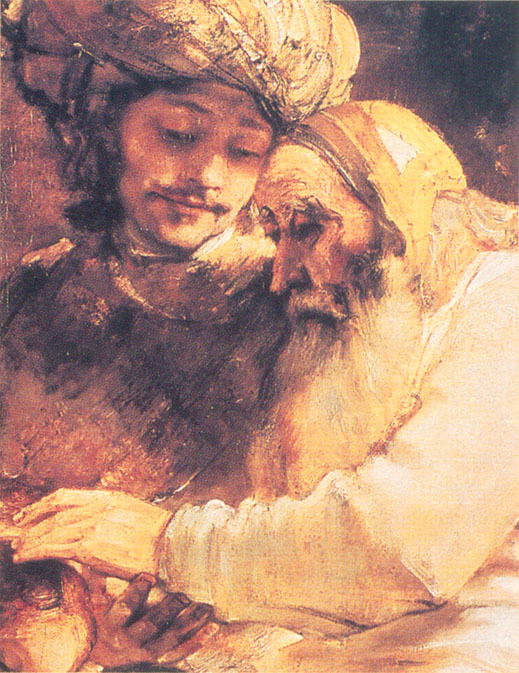
Jacob blessing the sons of Isaac, by Rembrandt, Superstock, NY

He decreed statutes for Jacob and established the law in Israel, which He commanded our forefathers to teach their children, so the next generation would know them, even the children yet to be born, and they in turn would tell their children.

—Psalm 78:5–6

A HARD TEST OF A father’s Christian faith is his capacity to pass it on to his children. It is a test that challenges any Christian and drives fathers and mothers to the Scriptures and prayer. Further wisdom is available through the pages of Christian history. How did some parents prepare their children for service to Christ’s kingdom? Where did others seem to fall short and why, and how?

In the nineteenth century, several influential theologians and church leaders were also influential fathers. Their example provides a perspective for parents who want to learn from the success of others.

In the United States, Charles Hodge (1797–1878) is well known as a theologian, the dominant teacher at Princeton Theological Seminary and author of a three-volume systematic theology. He was involved in the training of an estimated 3,000 pastors, but he should also be famous as a father and grandfather.

His two sons, Archibald Alexander Hodge and Caspar Wistar Hodge, followed in their father’s footsteps at Princeton Theological Seminary. Archibald first served as a missionary in India, then a pastor and teacher in the United States. Near the end of his father’s life, he joined the Princeton faculty, succeeding his father when he died. He also was the author of Outlines of Theology, which is still being published. The other son, Caspar Wistar Hodge, served as a pastor for several years before joining the Princeton faculty.

From the second son’s marriage came a grandson and third-generation teacher at the seminary, also named Caspar Wistar Hodge. All three generations shared the same basic orthodox Christian faith, based on the authority of the Scriptures, in a time of intense pressure to shift into modernism or theological liberalism.


 Image

Charles Hodge, Princeton University Archives.

Charles Hodges’ own personal walk with the Lord must have been a crucial factor in the lives of his children, as well as his careful attentiveness to them. His story, told by his son, Archibald, in The Life of Charles Hodge, reveals the flexibility that his father developed: “They were at every age and at all times allowed free access to him. If they were sick, he nursed them. If they were well, he played with them. If he were busy, they played about him.”

Another important nineteenth century American theologian was Augustus H. Strong (1836–1921), author of Systematic Theology and president of Rochester Theological Seminary. There is some contrast between Strong and Hodge, in their intellectual development and perhaps in their attentiveness to their children. Yet Strong, a Baptist, and Hodge, a Presbyterian, would agree on so many of the classical Christian doctrines.

In the 1880s and 1890s, however, Strong wrestled with modernist views of relativism which had undermined much Christian scholarship in that era. To an extent, Strong accepted it yet retained some conviction about the truth of the Christian faith. As a result, both fundamentalists and modernists claimed Strong as one of their own. Which was he? Probably some of both.

Was he able to pass his faith on to his children? Yes and no. One son, John, was an evangelical theologian, like his father, and was not allowed to succeed his father as president of Rochester Theological Seminary. The modernists had control of the seminary by the time his father had retired. Yet many of those modernists had been appointed by his father.

Another son, Charles Augustus Strong, a teacher of psychology at Columbia University, repudiated the Christian faith, and wrote A Creed for Skeptics. In his autobiography, A. H. Strong suggests that he reacted too much to the philosophy his son learned at Harvard. But could the content of the Harvard education have been the problem? One of Strong’s grandsons, Richard Sewell, remembers that his grandfather did not have time to spend talking to children. Perhaps the open study door for his young children was missing, or at least was not as open as the door to the study of Charles Hodge.

With respect to doctrine, did A. H. Strong play with the modernistic spirit a little, only to see one son carry that indulgence to an extreme? As seminary president, Strong practiced a kind of theological pluralism, appointing both modernists to the faculty, as well as evangelical teachers.

What we tolerate a little bit of in our lives, our children may carry to an excess. King David indulged in some polygamy, then his son Solomon had 700 wives, with devastating consequences. Can we see a warning about sins we tolerate? And can we see the importance of opening the door of our study, or business, or mission, to our children and grandchildren? If the door is shut, or we are too busy, the children may turn to other influences.

Across the ocean in Scotland, William Symington (1795–1862), was a pastor in the Reformed Presbyterian Church. Symington and his wife taught their seven children at home. “The evenings are devoted to family reading,” he wrote. “Besides, I give the children a part of every forenoon and afternoon. Now that I have got into it, I do not dislike teaching them.” Why did his children continue in the Christian faith of the father? His willingness to teach his own children may have been a factor, like the open door to the study of Charles Hodge.

Contrast this with J. C. Ryle (1816–1900), bishop of Liverpool, a leading evangelical in the Church of England. Ryle’s son Herbert did not abandon all faith in Christ or openly reject Christ. But he accepted much of the liberal modernist thinking of his time. Higher criticism appeared to be more progressive, more respectable, compared to traditional belief in the trustworthiness of Scripture.

Why did he part company with his father over the authority of Scripture? Turning the education of the children over to others, far away from home at boarding school, may have played some part. “Poor little Herbert cried most bitterly at parting,” Ryle wrote after he put Herbert on the train to boarding school at the age of 9. “Herbert’s life … has been so easy and happy hitherto that he naturally feels this first wrench. And he has been so accustomed to look up to me and be always with me … that the separation strikes him more. It is sad work, and nothing but the sense of positive duty and the wisdom of it would make me go through it.”

What about fathers and daughters? Lyman Beecher and his daughter, Harriet Beecher Stowe, offer a family history worthy of study. Her novels reveal a clear Christian worldview and grasp of vital Christian character qualities, such as her depiction of the cynicism of Aaron Burr contrasted with the Christian faith of other characters in The Minister’s Wooing. Her most famous novel, Uncle Tom’s Cabin, was a major inspiration in the movement to abolish slavery.


 Image

Charles Hodge, Princeton University Archives.

What can we as parents, potential parents, or as grandparents learn from these family histories?

1) CONSISTENCY—at least one parent in these families had a consistent and faithful walk with the Lord. The parents were growing and changing Christians, based on regular, daily personal Bible study and prayer.

2) PRAYER IS SO CRUCIAL—we need a consistent time in prayer for the children, for the church, for the advancement of Christ’s kingdom on earth as it is in heaven. St. Augustine’s mother, Monica, is famous for her prayers for her son. But a pattern of parental prayer reveals itself in so many of the biographies of Christians who were prepared well for kingdom service by their parents.

3) A GOOD AND GROWING relationship to the local church also has been used by God in the lives of the children over the long run. An indifference to the church, in contrast, must send a wrong message on to subsequent generations.

4) PSALM-SINGING WAS A part of the family worship in several of these families. You cannot measure the impact of singing God’s Word over the years, especially the early years of a person’s life (see Isaiah 55:11).

5) THE OPEN DOOR that Charles Hodge kept in his study for his children suggests the attentiveness our children need. The point is to provide concentrated time with our children, reading to them, talking with them, being especially attentive to the development of their minds and hearts.

The purpose of this kind of research is not to point a finger of judgment across the generations. But the lesson is to discern what has worked well, through the Scriptures, as well as through people who have sought to apply the Scriptures in passing their faith on to the next generation.

And who is equal to such a task?

Not that we are competent in ourselves to claim anything for ourselves; our competence comes from God (see 2 Corinthians 2:16; 3:5). ▲

Russ Pulliam is an editor for The Indianapolis Star and a longtime Ligonier student.


 Image

In The Life of Charles Hodge, his son, Archibald Alexander Hodge recalls his father’s open-door policy in his study, allowing easy access for children and grandchildren and providing a vivid example of Deuteronomy 6:5–9.

“His study had two doors, one opening outward toward the seminary for the convenience of the students, and a second one opening inward into the main hall of the home. Hence his study was always the family thoroughfare, through which the children, boys and girls, young and old, and after them the grandchildren, went in and out for work and play. When he was too lame to open the door, and afterward when he was too busy to be interrupted by that action, he took the latch from the doors and caused them to swing in obedience to gentle springs, so that the least child might toddle in at will unhindered. He prayed for us all at family prayers, and singly, and taught us to pray at his knees with such soul-felt tenderness, that however bad we were our hearts melted to his touch.” ▲


[1]


[1] Pulliam, R. (1992). The Legacy of Faithful Parents. In R. F. Ingram (Ed.), Tabletalk Magazine, July 1992: The Covenant Family (R. F. Ingram, Ed.) (7–9). Lake Mary, FL: Ligonier Ministries.

: From Ligonier Ministries and R.C. Sproul. © Tabletalk magazine. Website: http://www.ligonier.org/tabletalk. Email: tabletalk@ligonier.org. Toll free: 1-800-435-4343.

Personal Update

Image

It is 2014. In 2000 I was diagnosed with Viral Cardio-Myopathy. A viral infection had attacked my heart and greatly enlarged and weakened my left ventricle. Some people do recover from it. For some it is just a downward weakening and after years of taking it easy they succumb to the damage. I asked the Lord to grant me life till Samuel Rutherford, my youngest son, turned 18 and graduated. God has been very gracious to me and my sons by allowing me to live this long. I have acquaintances who weren’t granted that privilege who had the same disease and level of damage done. So I am grateful.

Some of my friends know that this past year has been rather hard on me. I have had a pacemaker / defibrillator put in and experienced a few episodes where my Congestive Heart Failure has flared up. The outer shell or part of my heart is hardening and losing its elasticity. The left Ventricle valve is also weakening so that after it pumps blood the blood does swish back in to the chamber evidently. I have been trying to stay active and live life as I have for the past many years Drag Racing Slot cars and doing things with my Church family. But I have slowed down significantly this past year with Church and my Racing. Things really wear me out more significantly. But I have been blessed to be able to spend a lot more time with my Sister and Mother going antiquing and wondering around local cities visiting stores and working in my yard and on the house. I love spending time with Mom and Sis. I have also been able to spend good time with my Dad.

Recently some of you know I have started having problems with coughing up blood from my lungs. It was rather alarming to me. I have had a few blood tests done and I am awaiting results from an xray I had done on Monday. It seems my CHF is acting up again and during the coughing episodes it may be that some blood vessels have burst in my lungs. So my dosage of my water pills have been increased and it seems to be doing the job.

I usually don’t like talking about this openly but I shared a bit on the Puritanboard and asked for prayer as I was anxious about it. I personally don’t like being the center of attention and hate drama. Life is good and focusing on the bad stuff usually just depresses me. So I try to focus on the positive stuff. I prefer to be thankful my cup has some water in it at all instead of thinking about how much is gone. Contentment is priceless and I struggle to be content. Especially as I look upon my life and all the failure I have given myself to. God is surely a merciful, gracious, and Loving God.

Anyways, I just thought I would update you all and say thank you all for the warm friendships I have and all of the kind hugs, words of encouragement, and gifts to help me overcome lifes wonderful trials. Yes, my trials have been wonderful (even though I have not liked many of them) as God has proven himself to be my God and my Treasure. They have also proven to me who my friends are and how important the body of Christ is. Without the faithful guidance and oversight of my friends and Elders I would have been ship wrecked many times over as I am given to desire many things that are not pleasing to God or beneficial for life in general. Faithful are the wounds of a friend as the scriptures say.

I plan on spending more time reading good books this year and reading my Bible a bit more purposefully. After all, Jesus said man cannot live by bread alone but by EVERY WORD that proceeds out of the mouth of God. We know that we have that word written down for us as St. Peter called it A MORE SURE WORD as he compared it to the audible voice of God which he heard in the Mount of Transfiguration.

(2Pe 1:12) Wherefore I will not be negligent to put you always in remembrance of these things, though ye know them, and be established in the present truth.

(2Pe 1:13) Yea, I think it meet, as long as I am in this tabernacle, to stir you up by putting you in remembrance;

(2Pe 1:14) Knowing that shortly I must put off this my tabernacle, even as our Lord Jesus Christ hath shewed me.

(2Pe 1:15) Moreover I will endeavour that ye may be able after my decease to have these things always in remembrance.

(2Pe 1:16) For we have not followed cunningly devised fables, when we made known unto you the power and coming of our Lord Jesus Christ, but were eyewitnesses of his majesty.

(2Pe 1:17) For he received from God the Father honour and glory, when there came such a voice to him from the excellent glory, This is my beloved Son, in whom I am well pleased.

(2Pe 1:18) And this voice which came from heaven we heard, when we were with him in the holy mount.

(2Pe 1:19) We have also a more sure word of prophecy; whereunto ye do well that ye take heed, as unto a light that shineth in a dark place, until the day dawn, and the day star arise in your hearts:

(2Pe 1:20) Knowing this first, that no prophecy of the scripture is of any private interpretation.

(2Pe 1:21) For the prophecy came not in old time by the will of man: but holy men of God spake as they were moved by the Holy Ghost.

I don’t think I am ready to pass anytime soon but I do love St. Peter’s admonition to pay more attention to God’s word. I certainly do and admonish all of my friends and loved ones to run to the word and keep their lamps fully fueled as the 5 wise virgins in Matthew 25. Having been a student of the scriptures for over 30 years complacency has set into my life a few times. May I not be apathetic nor complacent. It is so easy for me to become complacent and be like the 5 foolish virgins.

(Mat 25:1) Then shall the kingdom of heaven be likened unto ten virgins, which took their lamps, and went forth to meet the bridegroom.

(Mat 25:2) And five of them were wise, and five were foolish.

(Mat 25:3) They that were foolish took their lamps, and took no oil with them:

(Mat 25:4) But the wise took oil in their vessels with their lamps.

(Mat 25:5) While the bridegroom tarried, they all slumbered and slept.

(Mat 25:6) And at midnight there was a cry made, Behold, the bridegroom cometh; go ye out to meet him.

(Mat 25:7) Then all those virgins arose, and trimmed their lamps.

(Mat 25:8) And the foolish said unto the wise, Give us of your oil; for our lamps are gone out.

(Mat 25:9) But the wise answered, saying, Not so; lest there be not enough for us and you: but go ye rather to them that sell, and buy for yourselves.

(Mat 25:10) And while they went to buy, the bridegroom came; and they that were ready went in with him to the marriage: and the door was shut.

(Mat 25:11) Afterward came also the other virgins, saying, Lord, Lord, open to us.

(Mat 25:12) But he answered and said, Verily I say unto you, I know you not.

(Mat 25:13) Watch therefore, for ye know neither the day nor the hour wherein the Son of man cometh.

Pray for my sons. They need it. Two aren’t walking with God at all. One of those two has totally abandoned the faith. The youngest one struggles as we all do. I was a poor example in many ways. I let my battle scars show too much in front of them and it effected them. Being a single parent was hard. We all are still close and love each other very deeply. At least God has given us grace to know and love each other despite ourselves. There is still a lot of work for me to do here so I am not ready to give in to my health issues. God’s grace is sufficient.

Thanks for your prayers and love.
Sincerely in Christ,
Randy

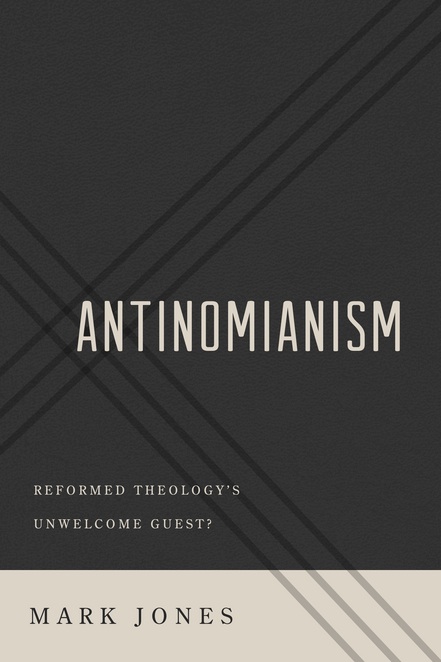
Book review ‘Antinomianism: Reformed Theology’s Unwelcome Guest?’

image

http://www.amazon.com/Antinomianism-Reformed-Theologys-Unwelcome-Guest-ebook/dp/B00GM3WQZ6/ref=sr_1_1?s=books&ie=UTF8&qid=1384895185&sr=1-1&keywords=antinomianism


The topic of antinomianism (a term Luther coined) has many difficulties when trying to define it. Dr. Mark Jones does a magnificent job laying the foundation for understanding the subject in historical context. 
Approaching the subject he starts with the historical reasons why the term was coined and who it was that contended with the subject. He gives a fair balanced reading exposing the differences between various Lutheran, Reformed, and Independent theologians who tried to discover the impact of grace in the Christian life. He addresses concerns about legalism and shows that the Pharisees of Jesus time were antinomian (against the Law) by paying particular attention to obeying certain doctrines but neglecting the weightier issues of the law such as justice and mercy.

Dr. Jones works his way through the history of the Reformation and its writers as they struggle with the issue of antinomianism. A major factor that was helpful for me was how Dr. Jones proved that this doctrine should be driven by a proper understanding of Christology. A few years ago I heard Dr. Jack Kinneer from Reformed Presbyterian Theological Seminary say, “All aberrations and heresies in theology tend to distort the doctrine of Christ.” Dr. Jones sees this to be the case in this situation and directs us to look at the teachings of Christ as well as the teachings about Christ.

What do good works, reward, merit, the love of God and sin have to do with this topic? What are acceptable motivations for obedience to God? There is a lot of confusion concerning these issues now days. The Divine’s (ordained men) from the period of the Reformation were greatly concerned about getting these issues correct as they had eternal ramifications. Dr. Jones does a splendid job shining the light of truth on these matters by helping us unclutter these issues by examining the Love relationship between the Father and the Son of God. Mark also discusses how our good works are required and pleasing to God. When we do sin does God love us any less? Does He love us any more when we obey in Christ? Drawing from the writings of the Reformers and scriptures like John 14:21,23 Mark reveals the teaching of God’s benevolent love which never changes and God’s complacent love which is based upon how we respond in obedience or disobedience.

Agree with Dr. Jones or not you will walk a way from the book understanding the historical components of the topic at hand. I personally got a lot of encouragement from the book to look more completely at Christ and to consider him as the book of Hebrews tells us to.

Hebrews 12:1-6 Wherefore seeing we also are compassed about with so great a cloud of witnesses, let us lay aside every weight, and the sin which doth so easily beset us, and let us run with patience the race that is set before us, Looking unto Jesus the author and finisher of our faith; who for the joy that was set before him endured the cross, despising the shame, and is set down at the right hand of the throne of God. For consider him that endured such contradiction of sinners against himself, lest ye be wearied and faint in your minds. Ye have not yet resisted unto blood, striving against sin. And ye have forgotten the exhortation which speaketh unto you as unto children, My son, despise not thou the chastening of the Lord, nor faint when thou art rebuked of him: For whom the Lord loveth he chasteneth, and scourgeth every son whom he receiveth

typo on page 17
“pre-1925” surely means “pre-1525”

OPC Presbytery of the Northwest Debates Republication: Merit, Grace, and the Mosaic Covenant. Votes to Send Overture to the 81st General Assembly.

opc_banner

Last July, I wrote a blog “Confusion in the Camp / Merit and Reformed Theology” to bring attention to a then upcoming meeting of the Presbytery of the Northwest, Orthodox Presbyterian Church (PNWOPC).  An Overture written in 2011 had been considered for the 79th General Assembly of the OPC.  The motion to approve that Overture was replaced in the Spring of 2012 by a motion to establish a Special Committee of the PNW to study and process the matters related to a particular view of teaching about the Republication of the Law as a covenant of works in the Mosaic Covenant.  It had come to the attention of some ministers of the OPC that doctrinal confusion had arisen through the years over the doctrine of Republication.  This confusion is coming to the forefront in the OPC Presbyteries when licensure and ordination exams are being conducted.  The heart of the issue lies in a particular formulation of the Mosaic Covenant originating in the writings of Meredith G. Kline.  More recently, a book edited by OPC ministers and professors of Westminster Seminary California, The Law Is Not of Faith (2009), was written to defend Kline’s formulation.  The ministers who have raised questions about the legitimacy of this particular form of the republication doctrine have indicated that the heart of their concern lies in the redefinition of merit and the mixing of grace and works in the Mosaic Covenant, as articulated by Meredith Kline and the authors of The Law is Not of Faith.

What is unique and troubling about this “Klinean” formulation of the republication of the covenant of works in the Mosaic covenant? The critics of the Klinean view happily acknowledge that the Reformed tradition often speaks in terms of a republication of the covenant of works in the Mosaic covenant.  The majority of writers in the Reformed tradition teach that the same moral law given to Adam was “republished” or “re-proclaimed” by Moses at Mt. Sinai.  The moral law of God is unchanging and always demands perfect obedience.  Since the fall, no man is able to perfectly obey God’s moral law and, as the Augustinian-Reformed tradition has made clear, therefore no man is able to merit any blessing from God.  However, Meredith Kline has introduced a new, retooled version of the republication doctrine by teaching three unique elements: 1) Israel serves as a corporate Adam (a third “Adam,” if you will), who 2) is under a meritorious works arrangement at Sinai, by which 3) he is able to meritoriously earn temporal-typological blessings from God on the basis of works, apart from grace.  These distinctive points of teaching concerning the Mosaic covenant are not found in any of the Reformed creeds and confessions of the 16th and 17th centuries or in later theologians such as Charles Hodge or Louis Berkhof.

This Klinean version of the “republication of the covenant of works” at Sinai is causing no small amount of concern within OPC and Reformed circles. It appears to deviate from the traditional, historical Reformed version of the “republication of the moral law” and redefine the historical conception of merit.  The demand for perfect obedience to earn God’s blessing is no longer required, as it was for Adam before the fall, and for Christ as the second and last Adam.  Imperfect, sincere obedience performed by Israel is said to be enough to earn temporal blessings from God (contrary to Westminster Larger Catechism Q&A 193).  Also, an arrangement of meritorious works is said to operate within the Mosaic administration of the covenant of grace—wherein God would be obligated to reward the works of fallen sinners apart from grace (contrary to Chapter 16 of the Westminster Confession of Faith).  These issues are having far reaching consequences as the Church pursues its peace, purity, doctrinal integrity, and practice. I highly recommend viewing this video (presentation to PNW) to understand what the concerns are and what the ramifications might be.

http://www.youtube.com/watch?v=rHo0NO21a4w

In light of these things, a special committee was established by the PNW to study the doctrine of republication.  In the Spring of 2013, this special committee submitted a report, a proposed Overture, and recommended that Presbytery set up a time for theological discussion on these matters on September 26, 2013, at a pre-presbytery conference.  The report the committee submitted can be found here.  The paper / booklet can be read here.  The pre-presbytery conference audio and papers can be found here.  The result of the Presbytery meeting was to Overture the 81st General Assembly of the OPC.  Overtures are proposed requests for consideration of doctrinal matters or how things should function in the Church.  The approved Overture can be found here

Testing the Waters of the Tiber? Peter Leithart

image

“Protestantism has had a good run. It remade Europe and made America. It inspired global missions, soup kitchens, church plants, and colleges in the four corners of the earth. But the world and the Church have changed, and Protestantism isn’t what the Church, including Protestants themselves, needs today. It’s time to turn the protest against Protestantism and to envision a new way of being heirs of the Reformation, a new way that happens to conform to the original Catholic vision of the Reformers.” Peter Leithart
The End of Protestantism by Peter Leithart

Is Peter Leithart drinking water from the Tiber. The refusal of the Presbyterian Church of America to deal with this scholar’s aberrations seems to have emboldened him even more. I might be wrong about that but his recent rant on First Things seems to imply he is attacking the heritage of our Presbyterian distinctions. Our theology was forged in the fire of what the scriptures say about Justification before God. We protested that the Church needed to be Reformed and landed squarely where the “Five Solas” took us in opposition to Roman Catholic Dogma. Maybe Dr. Leithart is forgetting what it was all about.

http://www.monergism.com/thethreshold/articles/onsite/qna/fivesolas.html
The “five solas” is a term used to designate five great foundational rallying cries of the Protestant reformers. They are as follows: “Sola Scriptura” (Scripture Alone); “Sola Gratia” (Grace Alone); “Sola Fide” (Faith Alone); “Solus Christus” (Christ Alone); and “Soli Deo Gloria” (To God Alone Be Glory).

These “five solas” were developed in response to specific perversions of the truth that were taught by the corrupt Roman Catholic Church. The Roman Church taught that the foundation for faith and practice was a combination of the scriptures, sacred tradition, and the teachings of the magisterium and the pope; but the Reformers said, “No, our foundation is sola scriptura”. The Catholic Church taught that we are saved through a combination of God’s grace, the merits that we accumulate through penance and good works, and the superfluity of merits that the saints before us accumulated; the reformers responded, “sola gratia”. The Catholic Church taught that we are justified by faith and the works that we produce, which the righteousness that God infuses in us through faith brings about. The reformers responded, “No, we are justified by faith alone, which lays hold of the alien righteousness of Christ that God freely credits to the account of those who believe”. The Catholic Church taught that we are saved by the merits of Christ and the saints, and that we approach God through Christ, the saints, and Mary, who all pray and intercede for us. The Reformers responded, “No, we are saved by the merits of Christ Alone, and we come to God through Christ Alone”. The Catholic Church adhered to what Martin Luther called the “theology of glory” (in opposition to the “theology of the cross”), in which the glory for a sinner’s salvation could be attributed partly to Christ, partly to Mary and the saints, and partly to the sinner himself. The reformers responded, “No, the only true gospel is that which gives all glory to God alone, as is taught in the scriptures.”

Today, the Catholic Church teaches the same essential perversions of truth; and much of Protestantism has seen a regress to many of the same corruptions, in many circles and denominations. It is a pressing need for Christians everywhere to reaffirm and champion anew the “five solas” which underlay and gave impetus to the Protestant Reformation.

Some of what he notes might be true about the state of the Church today.

Mainline churches are nearly bereft of “Protestants.” If you want to spot one these days, your best bet is to visit the local Baptist or Bible church, though you can find plenty of Protestants among conservative Presbyterians too.

But it seems he has changed the focus and forgotten the focus of the Protestant Reformation.

He also makes some sweeping accusations that I find to be out of touch from the Protestants I know.

A Protestant exaggerates his distance from Roman Catholicism on every point of theology and practice, and is skeptical of Roman Catholics who say that they believe in salvation by grace.

This is just simply not true. Maybe this is Peter Leithart being hyperbolic but it certainly does not represent the Protestants I know and it may even be that he is violating the 9th commandment here by making this such an absolute statement.

Maybe he has been drinking water from the Tibris and is thinking of swimming partially to the other side. Either way, something seems very amiss here and I believe things have been for along time. The Presbyterian Church of America needs to deal with the aberrations this man has been putting forth. They have consistently been covering this guys tracks. The time is past for discipline. The pursuit of peace and purity has been overly compromised. Now they are going to have bigger problems since they refused to act properly in the first place. Peter Leithart seems to be emboldened to trash the heritage he claims to have roots with.

I wonder how Gary Demar and Joel McDurmon are going to try to spin this one.