For those who think they are Confessional as R. SCOTT CLARK…
Now about the book.. I sincerely believe that some who host the White Horse Inn or adhere to some of the Westminster Seminary California doctrines have fallen into the errors this book describes. Just type in anti-nomianism in the search of this site. Also remember Clark was a major defender of Tullian.
The original title of the book was going to be ‘Antinomianism: The Golden White Devil’ which is based upon a phrase by Samuel Rutherford where he said, “But to speak a little of this for the times; the papist is the black devil, taking away all certainty of assurance that we are in Christ, or that any man can know this. The Antinomian is the golden white devil, a spirit of hell clothed with all heaven,.” But the title change was made by the Publisher to ‘Antinomianism: Reformed Theology’s Unwelcomed Guest’
Had it been included in the publishing campaign it would have caused more to run out to buy the book in my estimation. Both foe and friend alike. Had Zondervan published this back in the late 80’s they would have highly encouraged the banter. I say this remembering how they pitted books they published against each other. They displayed John MacArthur’s book “The Gospel According to Jesus” next to Zane Hodges book “Absolutely Free” in a cardboard display case at all the local Christian bookstores. The debates were hot. Even Charles Ryrie wrote a responsive book, ‘So Great a Salvation,’ and Michael Horton chimed in with his book, ‘Christ the Lord’.
On a more serious note, here is Mark Jones speaking more seriously about his 4th book.
Here was my lame review of the book. I am not a writer and don’t pretend to be.

Amazon site to purchase.
http://www.amazon.com/Antinomianism-Mark-Jones/dp/1596388153
For more reference to Samuel Rutherford’s comment I am going to post what Chris Coldwell has from the Puritanboard here.
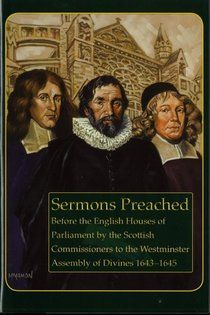
Sermons Preached before the English Houses of Parliament by the Scottish Commissioners to the Westminster Assembly of Divines, 1643–1645. p. 422-427. See context below.
Therefore, I, John, Peter, Anna, have a clear evidence to my own feeling, that I have interest in Christ.
The proposition is Scripture (John 3:36; 5:24; 11:25, 26; Rom. 8:1, 2; 1 John 1:4; 2:3). The assumption is made sure by sense, not at all times, but when the wind is fair, and the Spirit is breathing upon the soul; for though I do believe and walk after the Spirit, yet to my own feeling I have only evidence of my interest in Christ, when the Spirit stirs up my sense to compare my faith, walking with the promises of God in Christ. But the Antinomian says, ‘Alas all the certainty then, and the whole personal evidence that I have to know that I have interest in Christ, is ultimately and principally resolved on this weak and rotten foundation, to wit, on my own good works, which being examined by the Law of God, will be found so sinful as they shall involve me under the curse of God, and so the debate of conscience shall stand in full vigor, and I shall never be satisfactorily resolved of my interest in Christ, for you lead me from the impression of the immediate seal of the Spirit to my good works; and this is to drive me off Christ, and put me back again to my old jailer, and my old keeper, the Law.’
But I answer, this consequence is just nothing; for if my good works of sanctification were causes of my peace of conscience, this connection had some color of truth; but though those works are sinful by concomitance, because sin cleaves to them, yet because my supernatural sense of the Spirit suggest that these works are the fruits of faith, and are done in some measure of sincerity, and flow not from the spirit of the law, but from the spirit of the gospel, therefore they lead me to Christ, and drive me upon a clear evangelic promise, that:
(1) The adhering sinfulness of my works are purged in Christ’s blood.
(2) That this promise is a shore before mine eyes. He that fights the good fight, a crown of righteousness is laid up for him (2 Tim. 4:7, 8); He that runs, shall obtain (1 Cor. 9:24). And here is an evangelic word, Blessed are they that do his Commandments, that they may have right to the tree of life, and may enter in through the gates to the city (Rev. 22:14). So that the right of your peace and clear evidence, in assurance of your right to the tree of life, is not laid upon your works, but upon the promises of the gospel. Only your inherent qualification leads you as a moral motive to look to the promises of God, which is the bottom and the foundation of your peace, even as my walking, eating, drinking, may assure me I am a living man, and from the knowledge that I live, I come to know what I stand in relation to the king, as a son and an heir of a crown. Yet my right to the crown (suppose I were the eldest son of a king) stands not on this pillar that I eat and drink and live, but upon my birth and my relation to such a father. All my inherent qualifications do well prove that the tree and stock they grow on is faith, but is it hence proved that the tree is bottomed upon the branches? Nay, but by the contrary, the branches are stocked upon the tree.
(3) If works of sanctification are no sure marks of my interest in Christ, because sin adheres to them, and the sin adhering to them involves me in condemnation, then neither can faith in Christ be a sure mark of my interest in Christ, because faith is always mixed with sinful doubting. For I do not think that Antinomians do believe with all their heart, and sin of unbelief adhering to our faith no less involves the sinner in a curse, being committed against the gospel, than sins against the law. And therefore as faith justifies, not because great and perfect, but because lively and true, as the palsy hand of a man may receive a sum of gold, no less then a strong and healthy arm, so also do our inherent works of sanctification give us evidences that we are in Christ, and so lead us to the promises of the gospel, as signs, not causes of our interest in Christ, and that under this notion, because they are sincerely performed, not because they are perfect and without all contagion of sin cleaving to them.
(4) In exalting Christ’s righteousness one way, by making Christ all, they make Christ nothing another way, by vilifying the glory of sanctifying grace. For we are not by good works to make our calling and election sure to ourselves, and in the evidence of our own consciences, if our good works are no signs of our interest in Christ.
(5) The spirit which these men make the only witness, must be known to us, by Scripture, not to be a deluding spirit, for if this spirit cannot be known by these things which are called, the fruits of the Spirit (Gal. 5:22), to wit, by love, joy, peace, long suffering, gentleness, goodness, faith, meekness, temperance, as the fruits are evidences of the life of the tree, men are to labor for faith and the raptures, impressions, and immediate and personal influence of a Spirit from heaven without any conscience of holy living; and this is the pathway for men void of all sanctification and inherent qualifications to believe they are in Christ. So the devil puts upon holiness inherent and constant walking with God, the soul scandal of fair white civility, and market morality, that so men may walk after the flesh, and believe the testimony of the broad seal of an immediate working Spirit.
———————
1. Dr. Tobias Crisp, Christ Alone Exalted [(London, 1643; ed. S. Crisp, 1690)], Sermon 15, 16, 17.
To order the Sermons book click here.
http://www.naphtali.com/products-page/product-category/pre-publication-sale-scottish-commissioners-sermons/
 Puritan Covenanter
You must be logged in to post a comment.